

Louis XV Bedside Chests
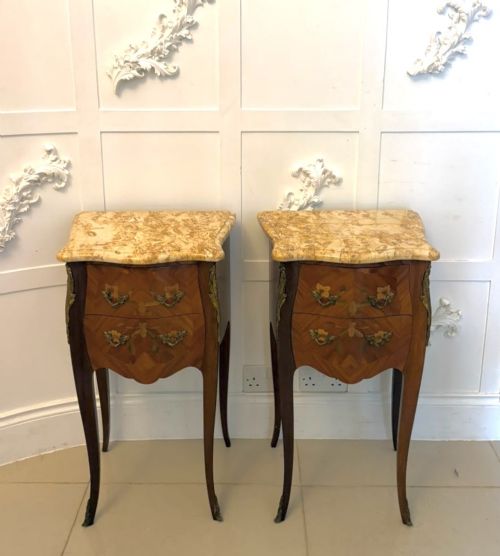
Louis xv bedside chests bring fluid curves and French rococo elegance to smaller rooms, offering surface space and concealed storage.
Louis XV Bedside Chests
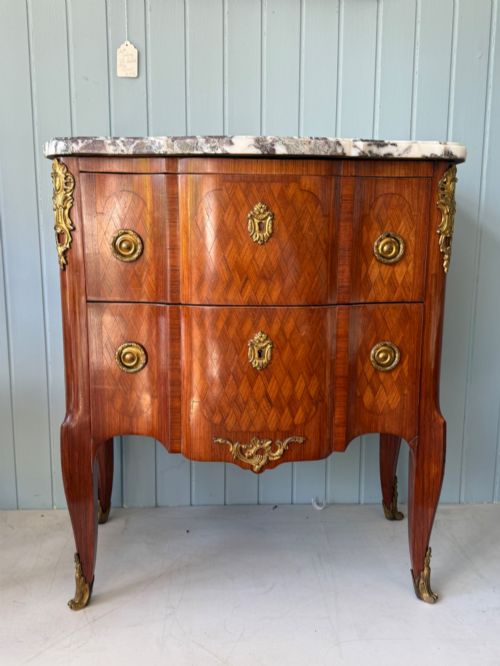
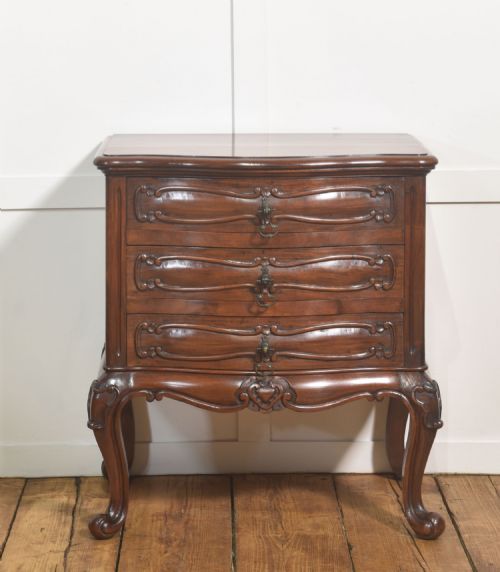
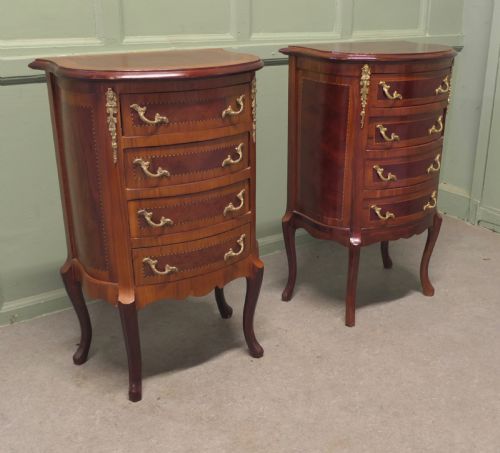
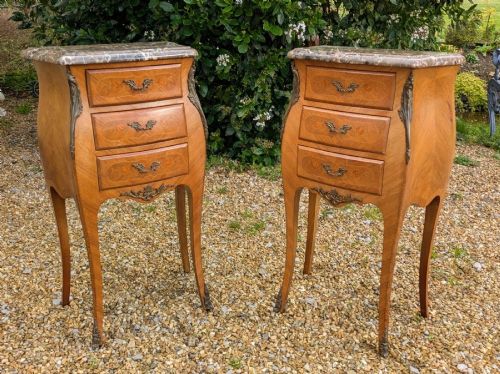
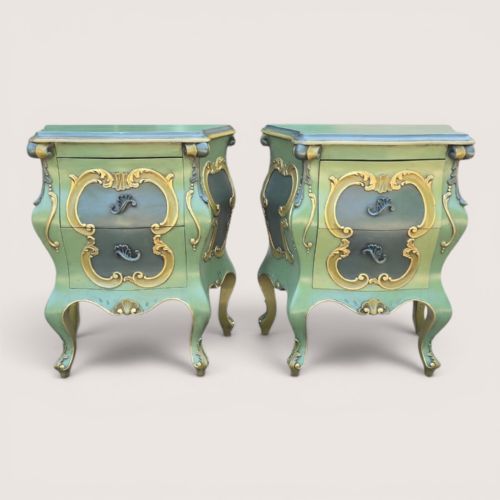
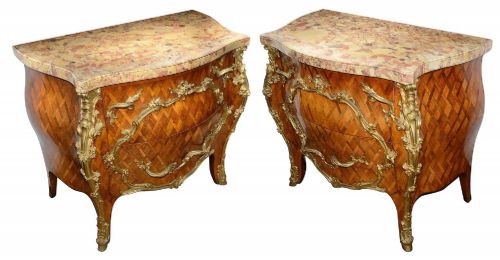
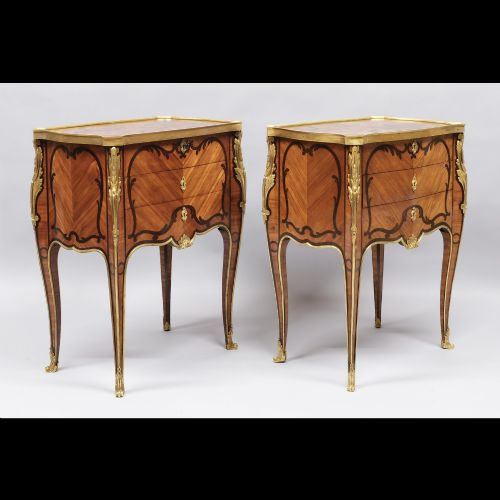
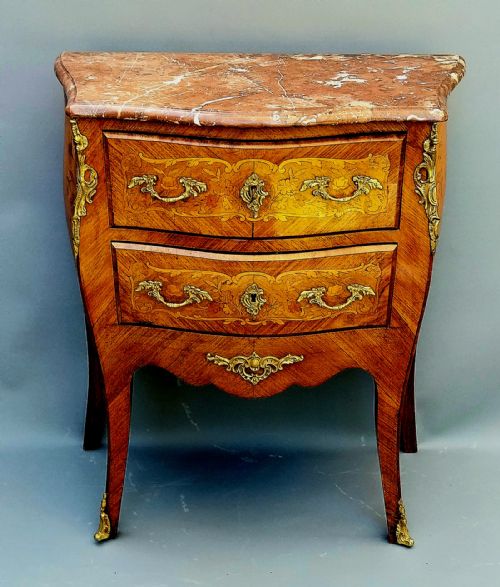
These pieces are compact bedside tables, small commodes, and side cabinets designed with the asymmetric lines and graceful proportions characteristic of the rococo taste. Most examples found here date from the nineteenth and early twentieth centuries, spanning periods from the eighteen-seventies through the nineteen-thirties, with occasional eighteenth-century models appearing.
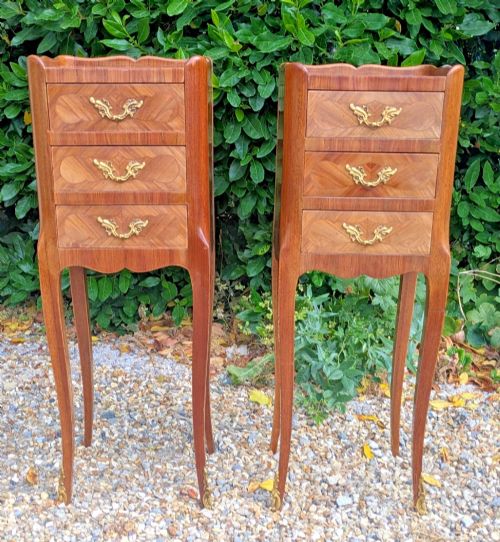
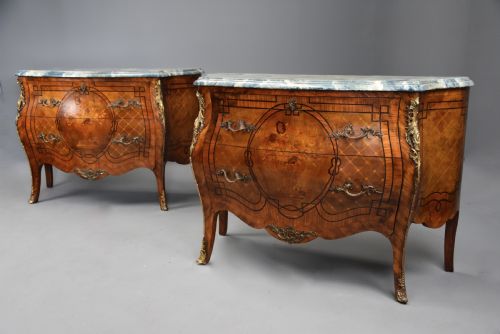
Makers drew heavily on French provincial and Parisian aesthetics, producing forms that include bombe silhouettes, serpentine fronts, and neat rectangular cabinets. Buyers encounter freestanding tables, drawer chests, and nightstands equipped with cupboards or small drawers suited for bedside use.
The aesthetic vocabulary encompasses revival styles labelled as French Rococo, Louis XV Style, and French Chateau, often sharing floor space with simpler provincial interpretations. These forms provide practical utility while maintaining historical decorative character in a bedroom setting.
Materials and construction
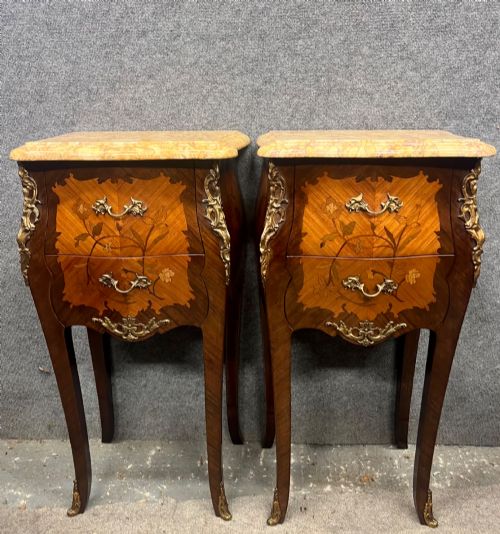
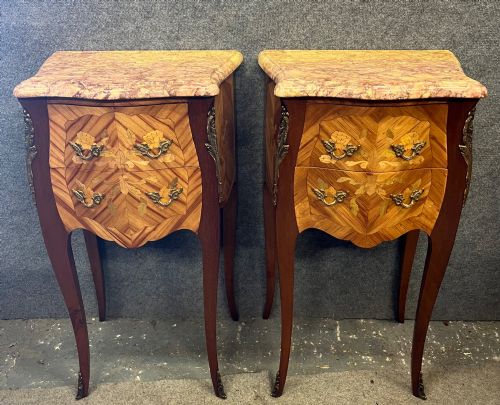
Cabinet makers utilised dense structural timbers such as walnut, mahogany, and oak, frequently applying decorative veneers of kingwood, rosewood, and tulipwood to exterior surfaces. Marquetry and parquetry patterns create geometric or floral imagery across drawer fronts and sides, employing contrasting wood grains to catch the light.
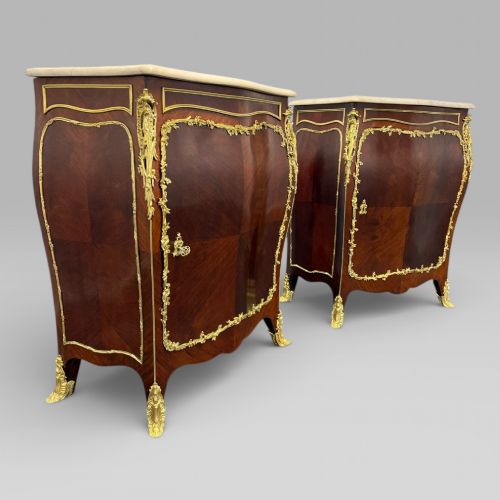
Metal mounts cast in brass, ormolu, and gilt bronze accentuate the structural contours, framing corners, drawer edges, and apron scrolls. Heavy marble slabs, shaped to follow serpentine or bombe profiles, form durable tops on many cabinets and commodes.
Early twentieth-century makers occasionally built bedside chests with hidden compartments for midnight reading glasses and secret snacks.
Assessing craftsmanship and finish
Quality rests upon the precision of the veneer work and the integration of the bronze or brass mounts with the wooden carcase. Finely executed marquetry displays tight joints and subtle tonal shifts in the timber, whereas simpler pieces rely entirely on plain polished walnut or painted surfaces.
The weight and sculptural detail of the gilt bronze mounts distinguish higher tier examples from standard production pieces. Additionally, the integration of thick, contoured marble tops indicates superior manufacturing standards across nineteenth and twentieth-century workshops.
E. Kahn·Sormani
The Louis XV Bedside Chests Glossary
- Bombe
- A bulging, outward-curving chest or cabinet form swelling on the front and sides. This technique requires skilled veneer work to follow the complex three-dimensional curves.
- Marquetry
- The art of applying small pieces of veneer to form decorative patterns or pictures on a wooden surface. Different timber species provide natural colour variations without the use of paint.
- Ormolu
- Gilded bronze mounts applied to furniture for decorative enrichment. These accents frame drawer sections and highlight structural corners.
- Parquetry
- Geometric wood inlay forming repetitive patterns such as cubes or chequers. This technique decorates table tops and drawer fronts.
- Serpentine
- A curved line that dips inward in the centre and swells outward at the ends. It appears frequently on the front edges of commodes and bedside cabinets.
Louis XV Bedside Chests: Frequently Asked Questions
What defines louis xv bedside chests?
These pieces feature curved lines, cabriole legs, and asymmetrical rococo ornamentation inspired by French furniture design. They typically combine small proportions with functional drawers or cupboards.
Craftsmen often employed kingwood, walnut, and marquetry veneers alongside marble tops and gilt bronze mounts to achieve a decorative finish.
Are these chests eighteenth century?
Most pieces available date from the nineteenth and early twentieth centuries, representing revival periods rather than the original eighteenth-century reign. Nineteenth-century and nineteen-thirties interpretations capture the same aesthetic vocabulary.
Actual eighteenth-century examples occur less frequently, while revival pieces from nineteen-hundred to nineteen-thirty appear regularly in various finishes.
How do I style a bedside chest?
These cabinets suit traditional and eclectic bedrooms where their warm wood tones and decorative mounts add texture. Their compact footprints allow placement beside standard beds without dominating the room.
Pairing a marble-topped commode with simple lamps creates a balanced bedside arrangement that highlights the grain of the kingwood or walnut.
What is vernis martin?
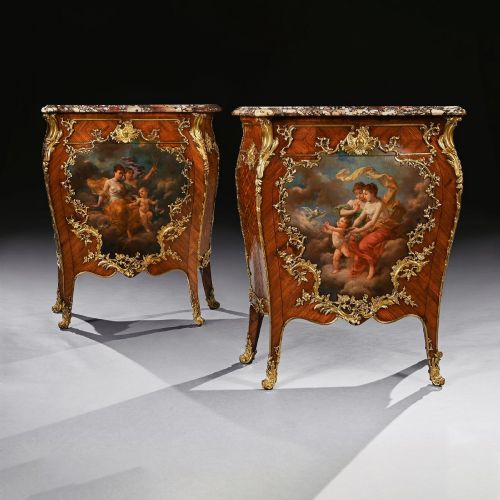
Vernis martin is a decorative lacquering technique developed in France to imitate Asian lacquer finishes. It provides a glossy, translucent surface often seen on petit commodes.
Cabinet makers used this technique to add colourful painted scenes or floral motifs to the exterior panels of luxury furniture.