


Antique Rococo Nightstands
Antique rococo nightstands bring exuberant curves, intricate marquetry and classical French styling to the bedroom as practical bedside storage.
Antique Rococo Nightstands
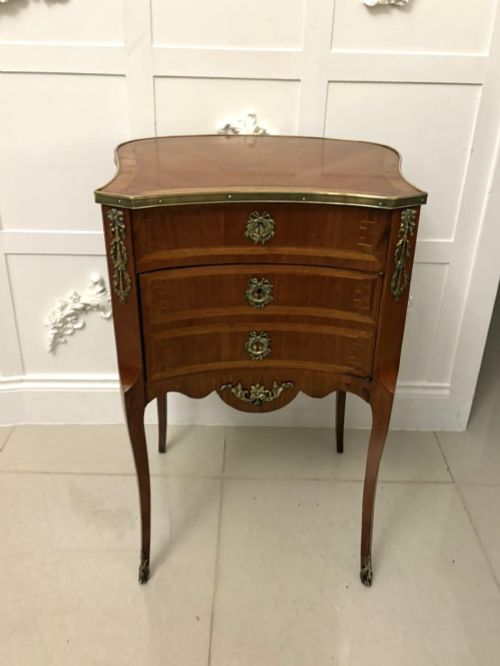
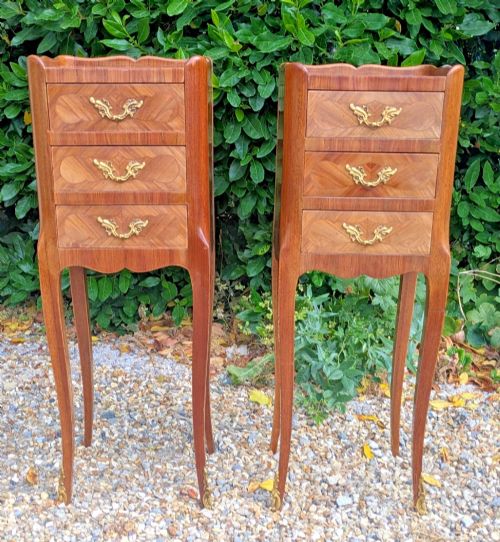
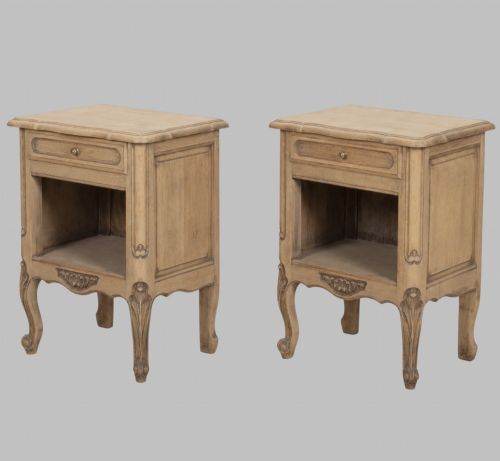
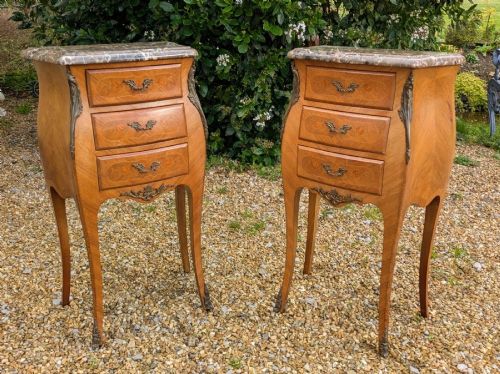
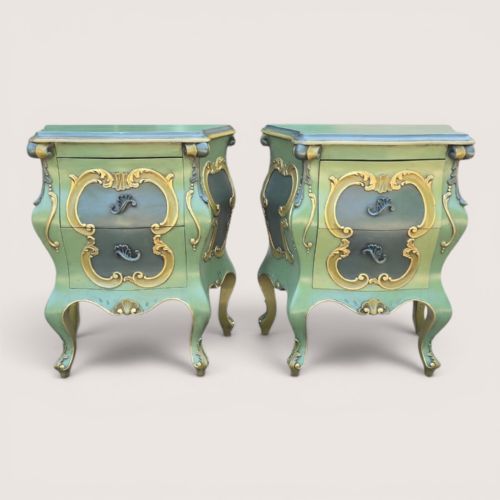
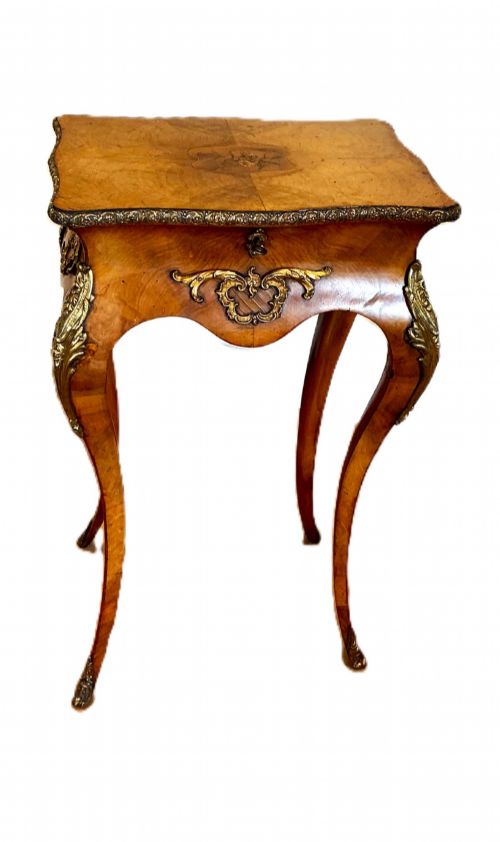
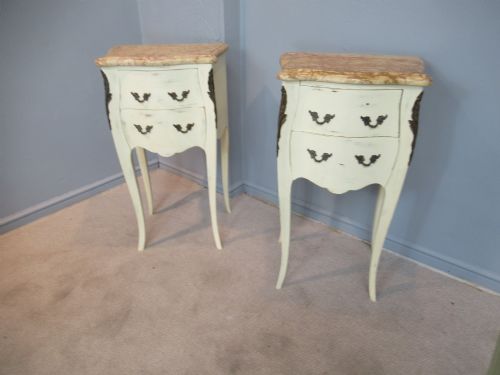
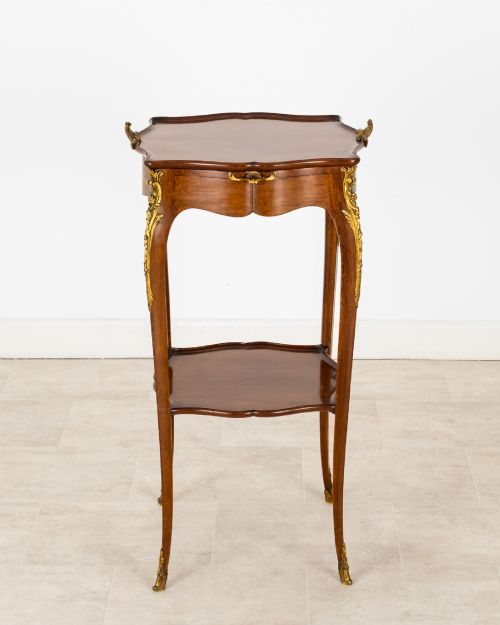
When you search for antique rococo nightstands, you encounter pieces spanning the eighteenth century to the early twentieth century, drawing heavily on French Louis XV and revival aesthetics. The forms most frequently met include bedside cabinets, lamp tables and small chests of drawers featuring characteristic serpentine and bombe silhouettes.
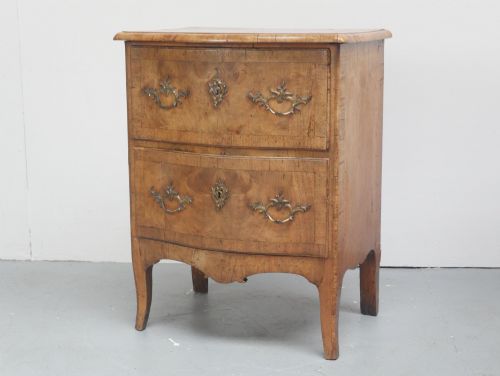
Makers and cabinetmakers working in France, Italy and Sweden produced these companion pieces in styles such as French Rococo Revival and Italian Rococo. They serve as compact storage beside a bed while introducing decorative flair through shaped tops and elaborate veneer work.
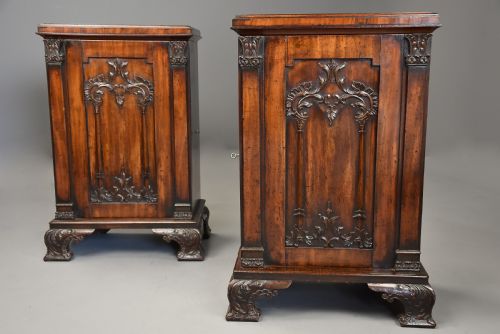
The selection ranges from mid eighteenth century Swedish and English pedestal cabinets to nineteenth and twentieth century French kingwood and walnut examples. Buyers find pairs and single items designed to hold a lamp and small personal items within a distinctive curved framework.
How they were made
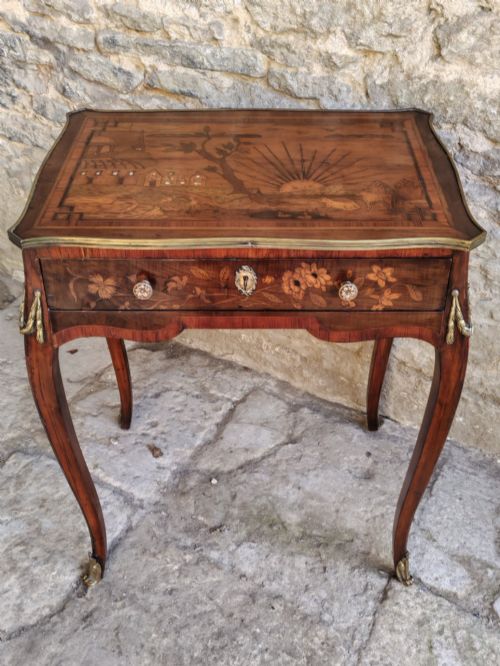
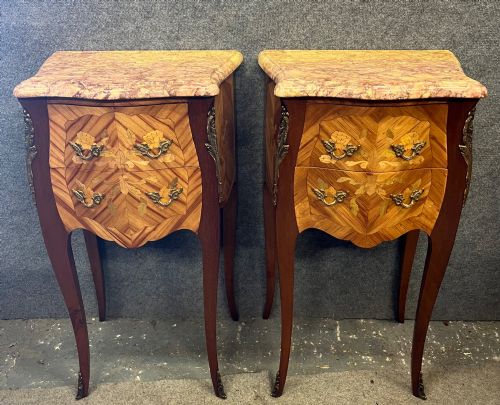
Cabinetmakers constructed these pieces using a foundation of solid timbers like walnut, mahogany and oak, overlaid with decorative veneers including kingwood, burr walnut and exotic marquetry patterns. Craftspeople shaped the wood into flowing serpentine and bombe curves that define the style.
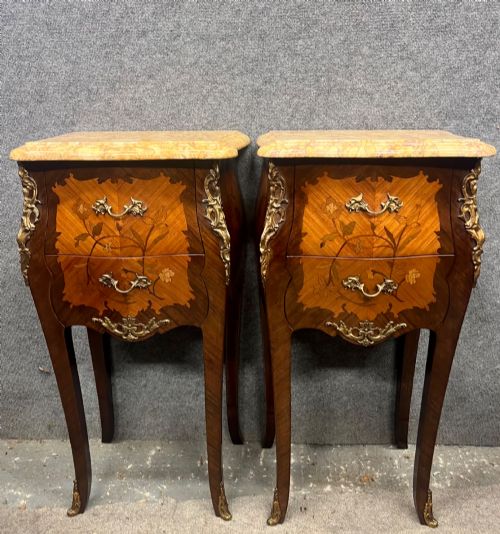
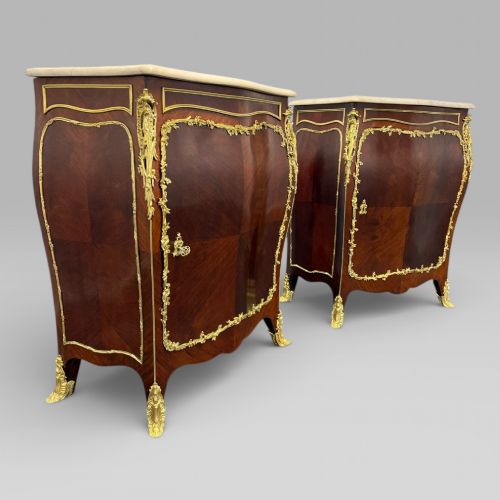
Mounts cast from brass, ormolu and gilt bronze accent the corners, handles and feet, providing metallic contrast to the timber surfaces. Many examples incorporate fitted marble tops in shades of white or coloured stone, cut to follow the undulating contours of the wooden carcase.
Floral marquetry so detailed it blooms forever without needing water.
What varies in quality
The distinction between standard production and exceptional execution rests in the precision of the marquetry and the crispness of the bronze mounts. Finer cabinets display complex floral inlays rendered in varied timbers, whereas simpler versions rely on plain figured veneers.
Structural integrity depends on the retention of original marble slabs, well-fitted drawers that glide smoothly within curved housings, and the quality of the hand-chased ormolu details. Maker attributions and signatures elevate certain nineteenth century French pieces significantly above anonymous workshop output.
E. Kahn·François Linke
The Antique Rococo Nightstands Glossary
- Bombe
- A swollen or bulging out-curved shape characteristic of advanced case furniture. This profile demands advanced woodworking skill to maintain structural harmony.
- Marquetry
- The art of applying pieces of veneer to a structure to form decorative patterns and pictorial designs. Craftsmen select contrasting timbers to achieve tonal depth.
- Ormolu
- Gilt bronze mounts applied to furniture edges and feet for decoration. The technique involves coating bronze in a mercury and gold amalgam before firing.
- Pedestal cabinet
- A tall, narrow freestanding cupboard designed to stand beside a bed or desk. These pieces offer enclosed vertical storage within a compact footprint.
- Kingwood
- A dense, heavily figured Brazilian timber prized for its rich dark violet-brown colouring with golden streaks. It appears frequently in fine eighteenth and nineteenth century French cabinetwork.
Antique Rococo Nightstands: Frequently Asked Questions
Are these nightstands usually sold in pairs?
Many of the listed bedside cabinets and lamp tables survive and are offered as matched pairs. This reflects the traditional arrangement of placing matching tables on either side of a bed.
Single examples also appear frequently, originating from sets that were separated over time or designed originally as standalone occasional pieces.
How do I care for marble-topped bedside tables?
Marble surfaces require gentle cleaning with mild, pH-neutral soap and warm water to avoid etching the stone. Acidic liquids like citrus juice or wine should be wiped away immediately.
Applying a specialist stone wax periodically helps protect the polish and guard against staining from everyday bedside use.
What is the difference between Louis XV and revival pieces?
Original pieces date from the eighteenth century reign of Louis XV and exhibit authentic period construction methods and patination. Revival pieces were produced later, particularly during the nineteenth and early twentieth centuries, copying the earlier aesthetic.
Both categories utilise similar curved lines and marquetry techniques, but differ significantly in age and material maturity.
Can these tables support heavy lamps?
The sturdy timber carcases and solid marble tops provide a stable platform for standard bedside lighting and accessories. The curved legs and substantial corner joints are engineered to bear everyday weight securely.
Care should be taken when placing exceptionally heavy decorative objects on pieces with delicate ormolu mounts or slender cabriole legs.