



Marquetry Two Drawer Chest
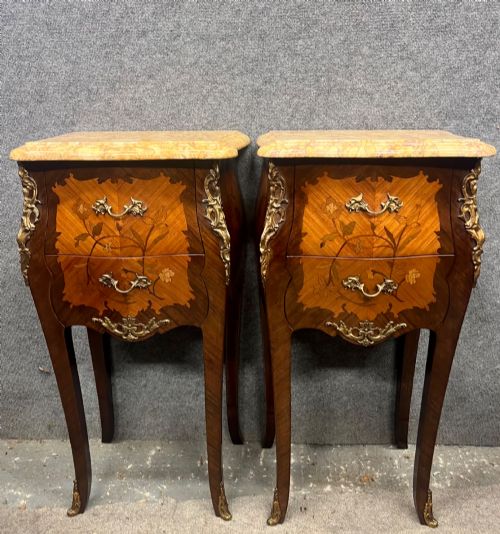
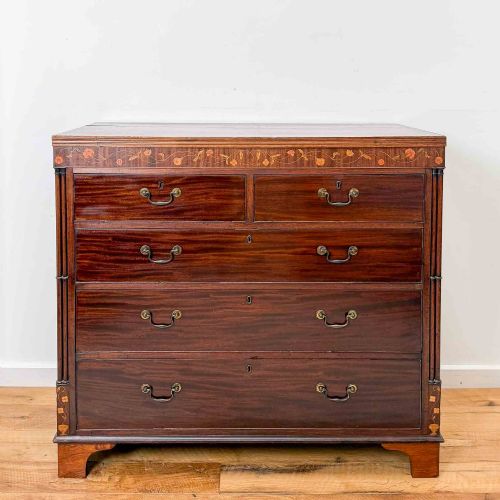
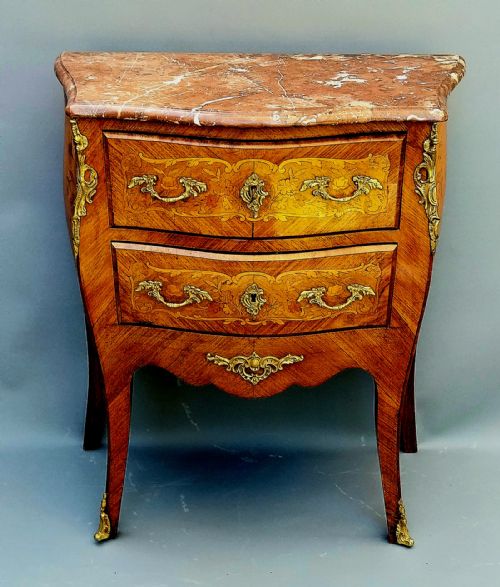
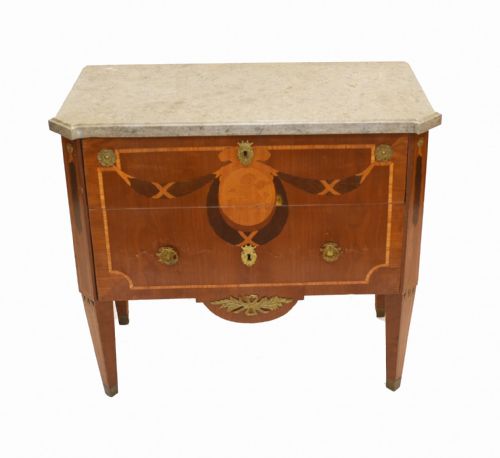
These marquetry two drawer chest examples bring together floral detail, figured timber and marble surfaces for any room.
Marquetry Two Drawer Chest
A marquetry two drawer chest combines storage with decorative surface work, appearing in forms such as commodes, bedside tables and lamp tables. You will most frequently encounter French commodes and bedside chests dating from the eighteenth century to the early twentieth century.
Makers utilised various regional designs, including French Louis XV, Louis XVI Neoclassical, Regency and Georgian traditions. The smaller scale of bedside chests makes them adaptable companions for modern interiors while retaining traditional proportions.
Materials and construction methods
Carpenters constructed carcasses from foundational timbers such as walnut and mahogany, applying fine wood veneers and detailed wood inlay to create intricate floral and geometric patterns. This decorative surface work requires precise cutting and fitting of contrasting veneer elements onto the drawer fronts and sides.
Many pieces incorporate heavy marble slabs, including breccia marble, fitted directly to the top surface above the drawer framework. Ormolu and brass mounts frequently accent the corners, handles and aprons, adding metallic contrast to the polished timber and stone.
Distinguishing quality across examples
Quality rests in the precision of the veneer work and the complexity of the timber selection, where finer execution shows seamless alignment across drawer joints and curved surfaces. Superior specimens display greater depth in the floral inlay and tighter control over the grain patterns.
The integration of structural elements also separates pieces, visible in the handling of serpentine and bombe contours alongside the thickness and selection of the top marble slab. Original mountings in ormolu or brass that complement the case proportions indicate higher workshop standards.
The Marquetry Two Drawer Chest Glossary
- Marquetry
- Decorative veneer work arranged in pictorial or geometric patterns on a furniture surface. Craftsmen cut thin slices of various woods to form intricate designs.
- Ormolu
- Gilded bronze mounts used as decorative trim on furniture. This material provides metallic highlights against dark timber.
- Bombe
- An outwardly bulging or swelling furniture front or side profile. This shaped form is characteristic of certain French styles.
- Breccia
- A type of multicolored marble composed of broken fragments cemented together. It frequently appears as a polished top surface on commodes.
- Commode
- A low chest of drawers, often of French origin and decorative character. The term covers various elegant two drawer storage forms.
Marquetry Two Drawer Chest: Frequently Asked Questions
Where should I place a two drawer chest?
These compact chests suit bedrooms as bedside tables or smaller living spaces where surface area is useful. Their decorative fronts also allow them to stand freely in hallways or reception rooms.
The marble tops provide a durable surface for lamps or decorative objects, protecting the timber underneath from daily wear.
How do I identify a French commode?
French commodes often feature distinct characteristics such as bombe or serpentine fronts, ormolu mounts, and fitted marble tops. The construction frequently utilises walnut or exotic veneered woods.
Regional styles like Louis XV and Louis XVI dictate the shaping of the apron and legs, helping to distinguish French work from British or other European cabinetmaking.
What is the difference between inlay and marquetry?
Inlay generally involves inserting contrasting materials into a solid wooden recess. Marquetry covers the entire surface with assembled veneer pieces to form a picture or pattern.
Both techniques appear across the listed chests to decorate drawer fronts and top surfaces with floral and geometric motifs.
How do I care for marble top chests?
Marble surfaces require gentle cleaning with a damp cloth and mild soap to preserve the polish. Avoid acidic cleaners that can etch the stone.
The timber body benefits from occasional polishing with suitable wax to maintain the grain and protect the veneer work.
What periods are represented?
The pieces span several centuries, starting from seventeenth century Charles II examples through eighteenth and nineteenth century items. Twentieth century pieces up to the 1930s also appear.
Each period brings specific stylistic influences, ranging from heavy geometric framing to fluid rococo curves and neoclassical symmetry.