
Brown Marquetry Nightstand
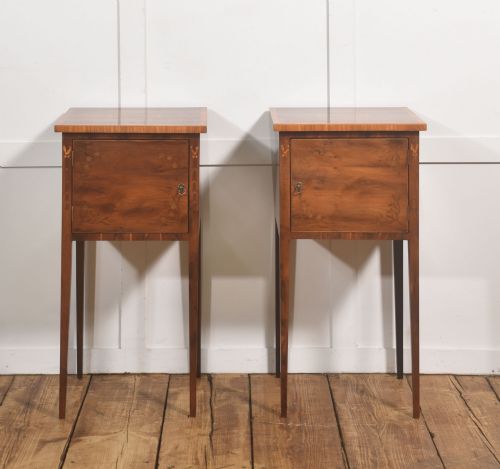
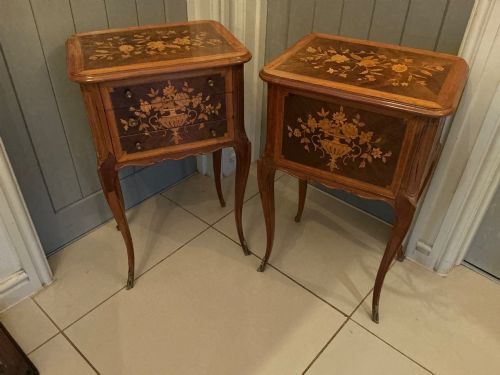
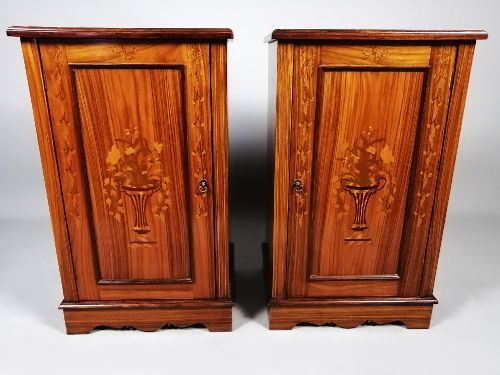
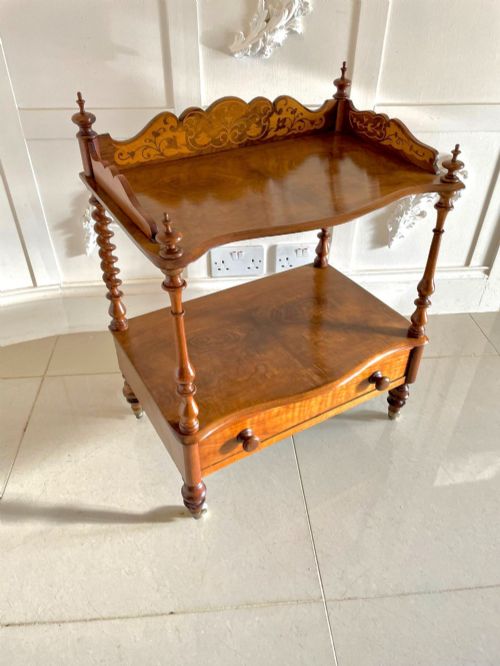
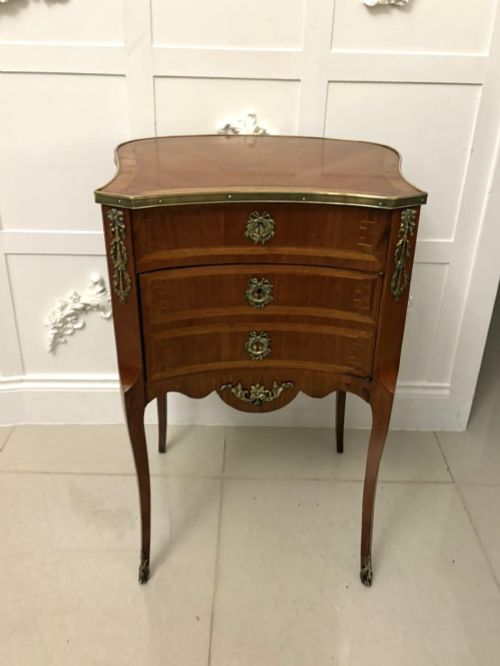
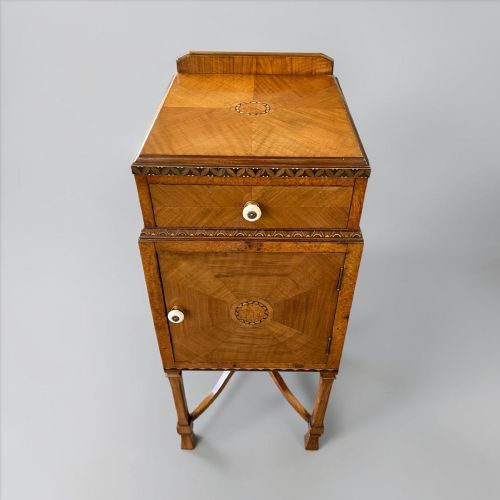
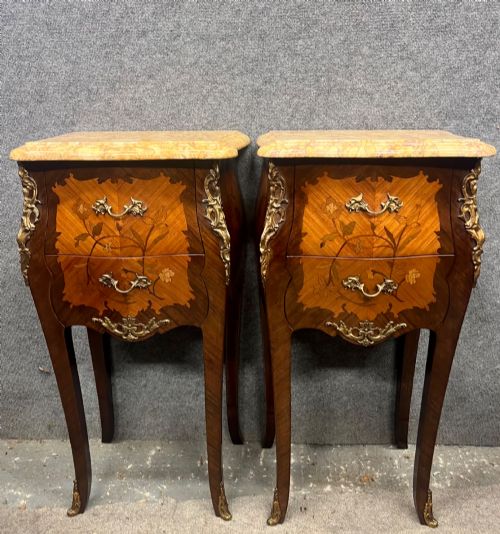
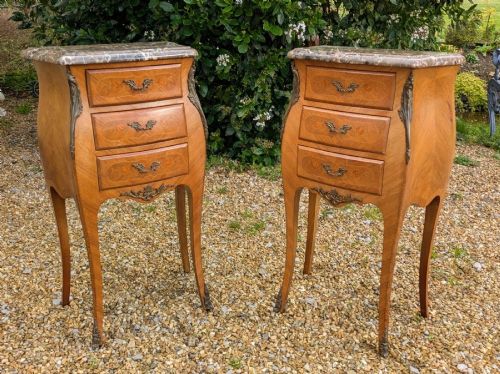
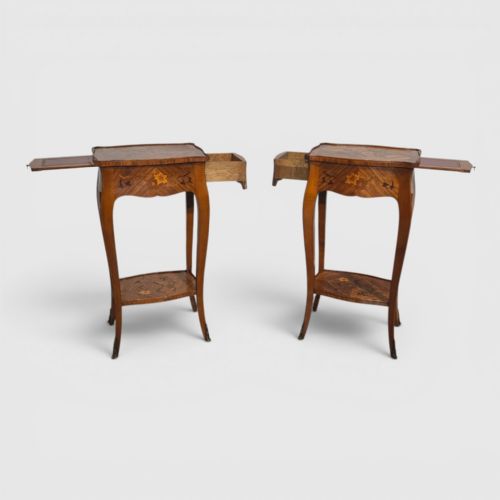
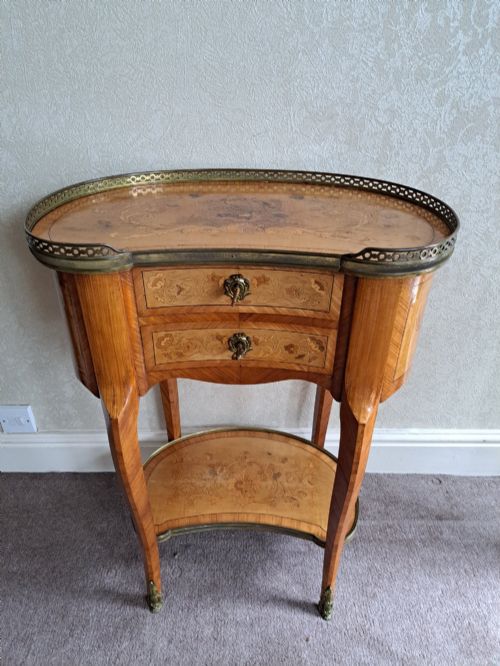
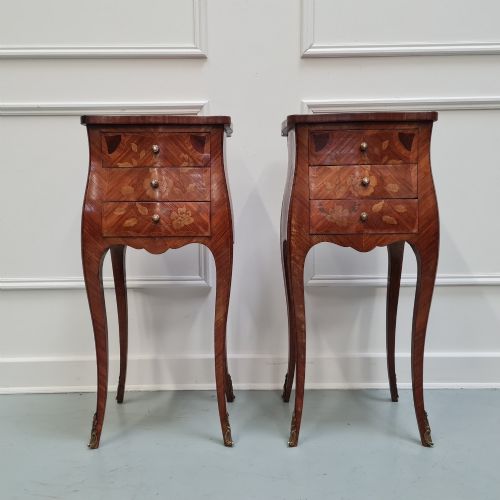
A brown marquetry nightstand brings intricate floral patterns and figured woods to the bedside.
Brown Marquetry Nightstand
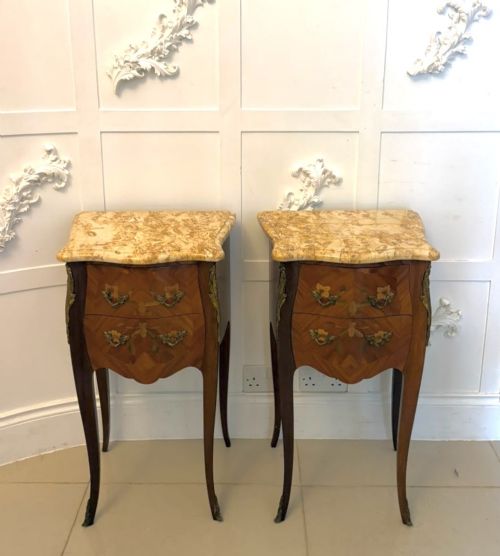
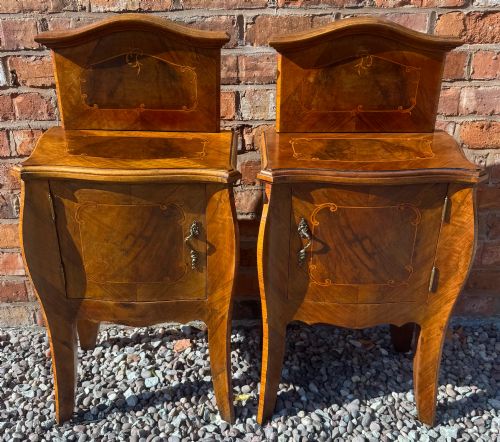
A brown marquetry nightstand serves as a compact bedside cabinet, commode, or lamp table designed to hold small personal items while introducing decorative timber into a bedroom. You will frequently encounter French and English pieces styled after Louis XV and Edwardian aesthetics, often appearing in matched pairs.
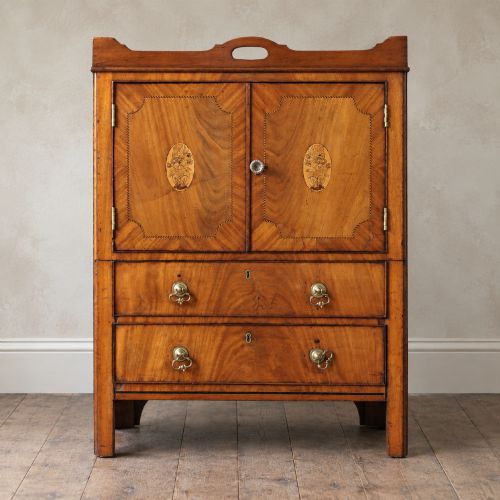
The corpus spans the nineteenth and early twentieth centuries, drawing on Victorian, Edwardian, and Art Deco periods alongside eighteenth-century revivals. Builders shaped these small tables and cupboards with serpentine fronts, tray tops, and two-tier configurations.
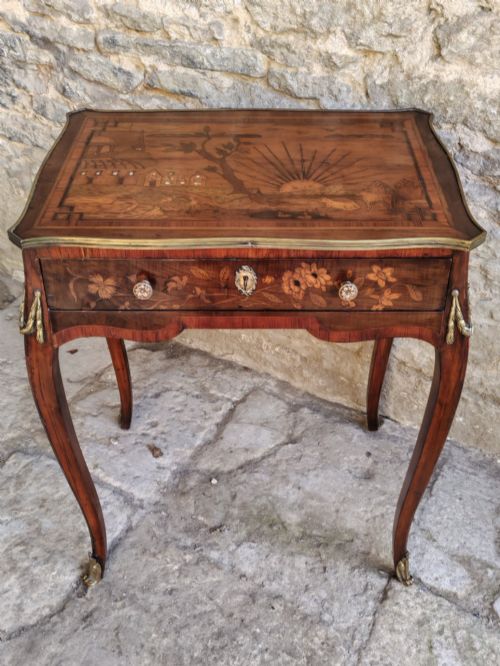
Origin points cluster around French cabinetmakers working in walnut, kingwood, and rosewood, alongside Dutch floral workshops and English makers adhering to Sheraton traditions. These pieces range from marble-topped bedside cabinets to open lamp tables.
Materials and Construction
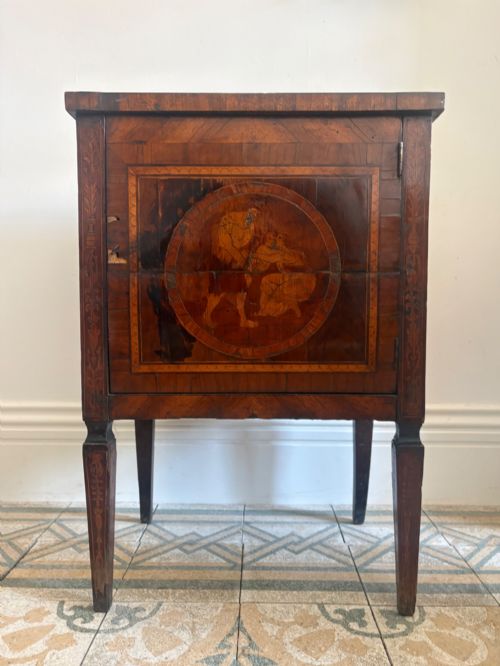
Cabinetmakers constructed the carcase using structural timbers such as mahogany and walnut, then applied veneers of exotic woods including kingwood, rosewood, and satinwood. Marquetry cutters sliced contrasting timbers into floral and geometric motifs, pressing them into the surface veneers.
Workshops integrated cast brass and ormolu mounts to edge marble tops, frame drawer fronts, and protect vulnerable corners. French polishers finished the timber surfaces to draw out the natural grain and contrast of the inlaid woods.
Dutch floral marquetry tables often conceal tulips and roses within their wood grain, bringing a perennial garden indoors.
Judging Marquetry and Timber
The distinction between tiers of quality rests on the precision of the veneer cutting and the complexity of the botanical or geometric inlay. Tighter joints in the marquetry and sharper definition in the floral motifs denote superior cabinet work.
Selection of the underlying timber dictates visual depth, where richly figured burr walnut or vibrant kingwood creates a stronger contrast against the inlay. The integration of heavy ormolu mounts and substantial marble slabs rather than thin veneers elevates the standing of the piece.
François Linke·Sormani
The Brown Marquetry Nightstand Glossary
- Marquetry
- The decorative technique of applying thin veneers of wood in intricate pictorial patterns, such as floral sprays. Artisans cut contrasting timber sections to fit together precisely like a puzzle.
- Kingwood
- A dense, richly grained tropical timber used extensively in French eighteenth-century revival furniture. Its dark violet-brown tones feature striking golden streaks.
- Ormolu
- Gilded bronze mounts applied to furniture edges, feet, and handles for decorative accent. Workshops cast and chased these metal elements by hand.
- Serpentine
- A furniture front or top shaped with a curving contour that swells outward in the centre and recedes at the sides. This fluid outline requires careful woodworking.
- Commode
- A low standing cabinet with drawers or doors, often adapted as a bedside table in later periods. The form originated in France as a substantial storage piece.
Brown Marquetry Nightstand: Frequently Asked Questions
How do I spot an antique nightstand?
Examine the construction methods visible inside the drawers and beneath the carcase, looking for hand-cut dovetails and traditional timber shrinkage rather than modern mechanical fixings.
Check the timber species and veneer thickness, as nineteenth-century pieces utilise solid secondary woods beneath exotic surface veneers like rosewood or kingwood.
What is the difference between a commode and a nightstand?
A commode typically offers larger proportions with multiple drawers designed for general bedroom storage, whereas a nightstand functions primarily as a compact bedside companion.
Many French bedside cabinets share the serpentine curves and marble tops of larger commodes but scale down to fit beside a bed.
How do I care for marble-topped tables?
Wipe marble surfaces with a damp cloth and mild soap, avoiding acidic cleaning solutions that can etch the polished stone surface.
Use coasters under glasses and protect the timber base from moisture to preserve both the French polish and the underlying marquetry.
Are these pieces usually found in pairs?
Many bedside cabinets and lamp tables survive as matched pairs created for twin beds in Edwardian and Victorian bedrooms.
Single pieces often appear as occasional tables or standalone bedside cabinets from various European workshops.