
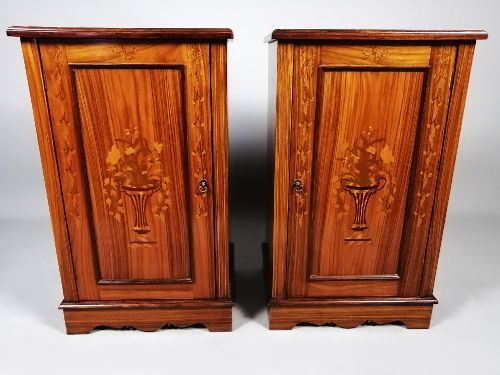
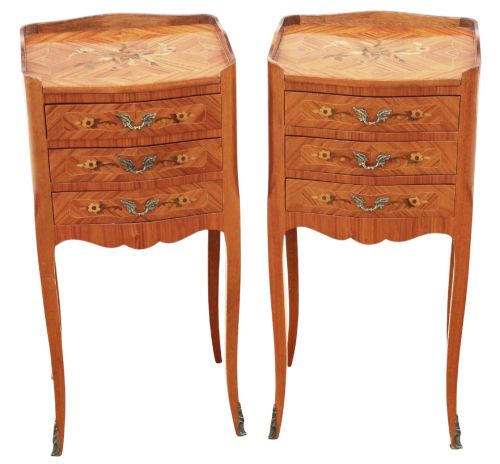
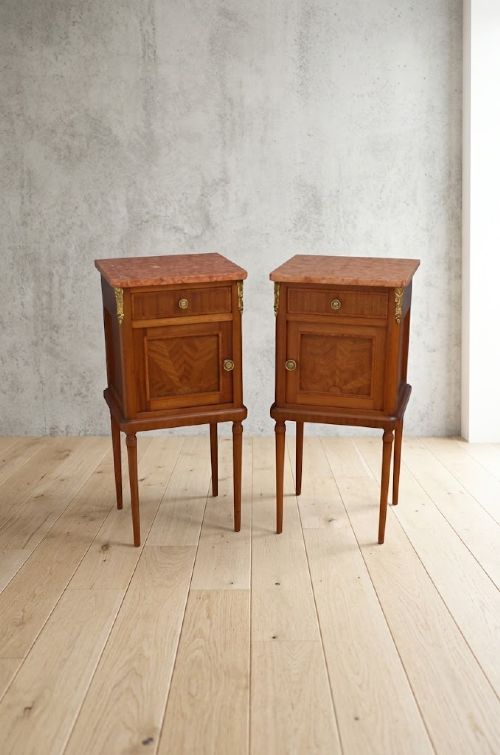
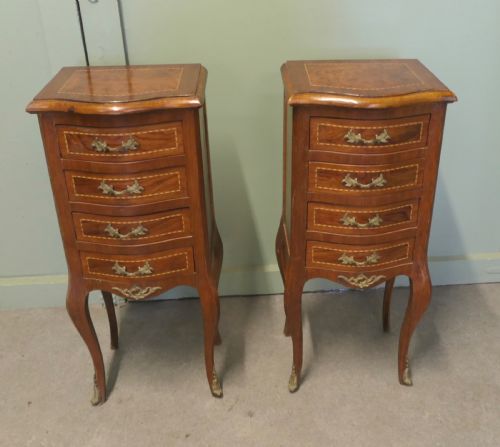
Pair Marquetry Bedside Cabinets
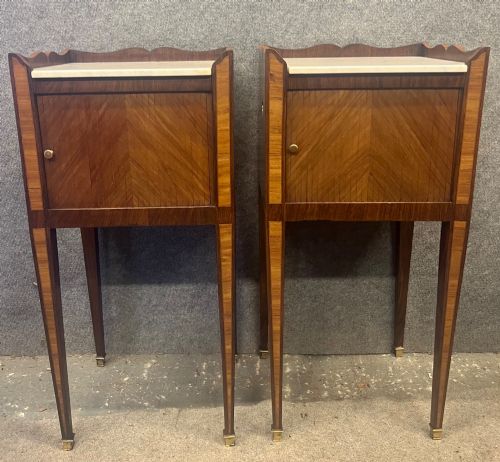
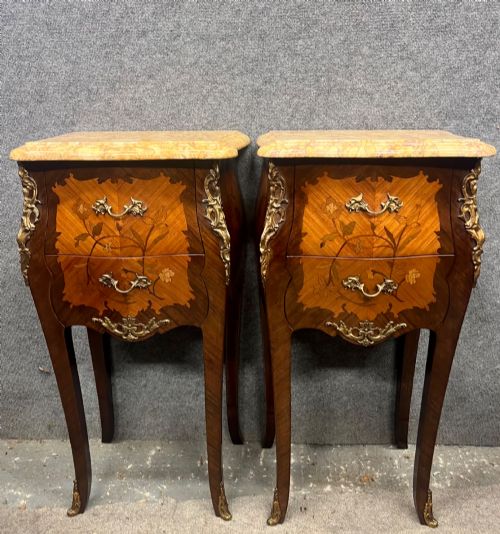
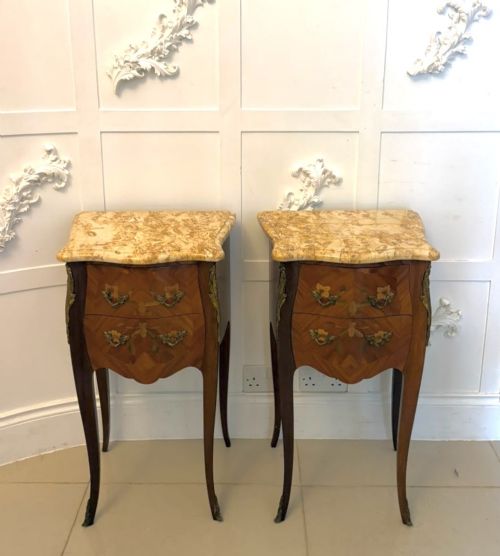
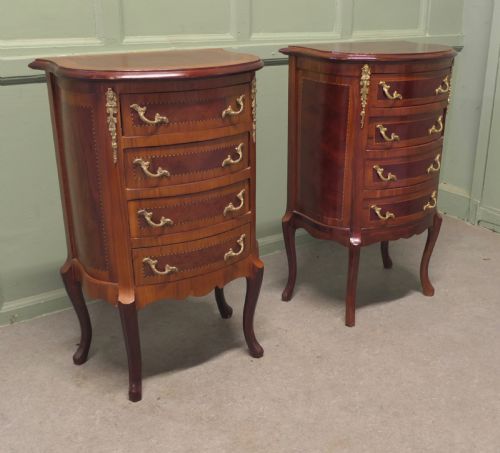
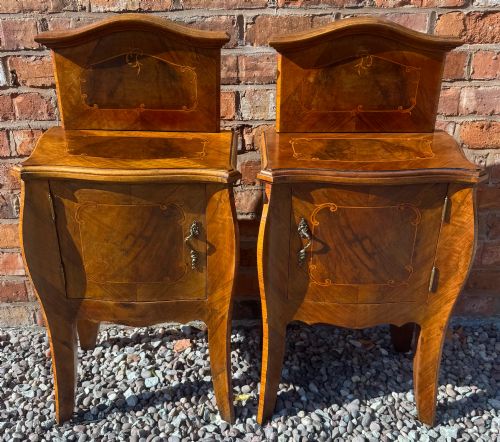
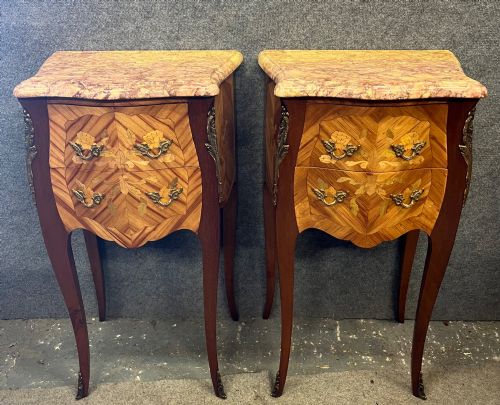
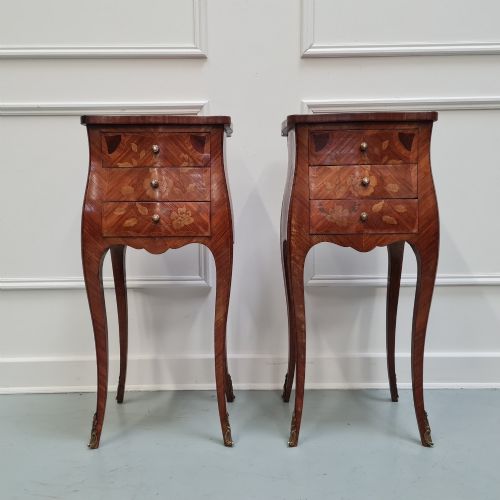
These pair marquetry bedside cabinets bring patterned wood veneers and balanced French style to the bedroom.
Pair Marquetry Bedside Cabinets
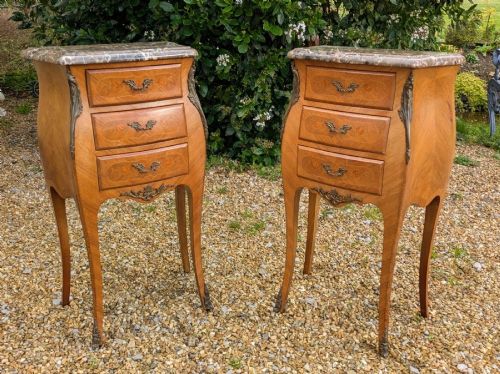
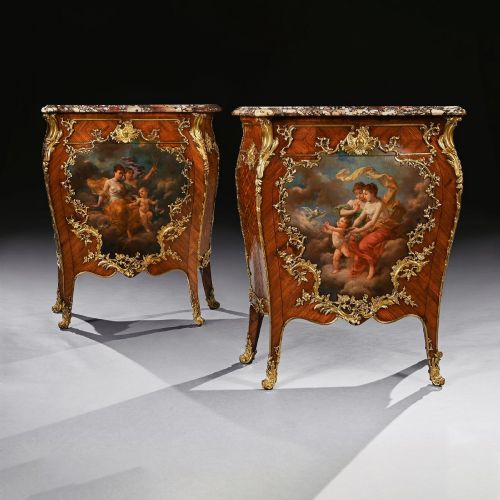
When you search for pair marquetry bedside cabinets, you find symmetrical sets of small bedroom tables and cupboards adorned with intricate wood veneers. These pieces originate predominantly from the nineteenth and early twentieth centuries, reflecting continental tastes such as Louis XV and Louis XVI revivals.
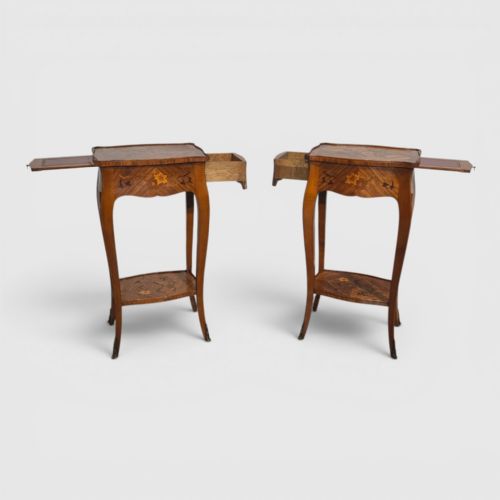
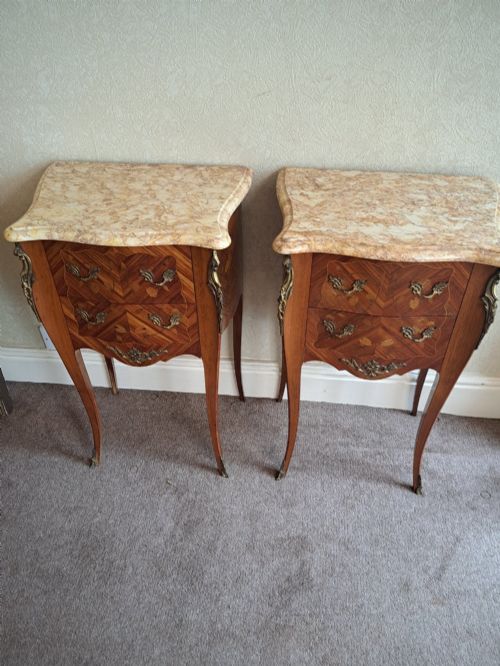
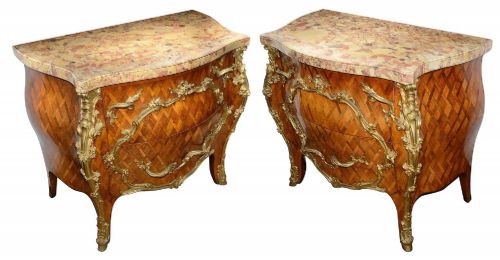
The selection ranges from marble-topped commodes and serpentine chests to narrow lamp tables and bedside cupboards. French designs dominate the record, frequently pairing fitted drawers or doors with decorative floral or geometric inlays.
How They Were Made
Cabinet makers utilised dense hardwoods like kingwood, rosewood, walnut, and satinwood as the foundation for intricate veneer work. Contrasting timbers were hand-cut and pieced together to form elaborate pictorial marquetry designs across the surfaces.
Many examples incorporate polished marble tops alongside cast mounts in ormolu, gilt bronze, or brass. These metallic accents frame the doors, drawers, and corners to protect the edges and highlight the contours of the furniture.
Some petite nineteenth-century bedside cabinets include hidden compartments designed originally for clandestine nighttime reading materials.
What Varies in Quality
The sophistication of the veneer work separates standard items from exceptional ones. Finer examples display precise cutting and varied natural wood tones that create depth within the floral or geometric patterns.
The choice of supplementary materials defines the tier of the piece. Heavy marble slabs with matching veining, substantial gilt bronze mounts, and secondary timbers like mahogany indicate superior workshop production.
Sormani
The Pair Marquetry Bedside Cabinets Glossary
- Marquetry
- Decorative veneer work arranged in pictorial or geometric patterns using various coloured woods. It differs from parquetry by forming pictures or floral motifs rather than repeating geometric tiles.
- Ormolu
- Gilt bronze mounts applied to furniture for decorative and protective purposes. The technique involves finishing bronze with a gold amalgam.
- Bombe
- A swelling, outward-curving contour found on the front and sides of case pieces. This rounded profile requires advanced carpentry skills to fit drawers and doors accurately.
- Chevet
- A French term for a bedside table or small cabinet. These compact units frequently feature a small cupboard door and a marble top.
Pair Marquetry Bedside Cabinets: Frequently Asked Questions
How do I clean marble tops?
Wipe the marble surface gently with a damp cloth and mild neutral soap to remove dust and daily marks. Avoid acidic cleaners or lemon juice, which etch the polished stone finish.
Dry the surface thoroughly with a soft cloth to prevent water spots. Spills should be blotted immediately to protect the porous stone.
Can I use them as lamp tables?
These cabinets serve well as bedside lamp tables, offering surface space for lighting alongside storage within drawers or cupboards. Their height aligns appropriately with standard bed frames.
Care should be taken to protect the wood and marble surfaces from moisture or heat by using coasters under lamps and glasses.
How do I date these cabinets?
Dating relies on examining the construction methods, secondary woods used inside the drawers, and stylistic revival periods. Pieces from the nineteenth century often show hand-cut dovetails and older backing boards.
Twentieth-century examples might incorporate machine-cut elements while mimicking earlier French royal styles. Comparing the hardware and the style of the marquetry helps narrow the decades.
Are matched pairs original?
Most listed sets are designed as symmetrical pairs from the outset, sharing identical dimensions, timber selections, and marquetry layouts. Workshops constructed them together to flank a bed evenly.
Slight variations in the wood grain or hand-cut veneer indicate natural timber differences rather than a mismatched assembly. Close inspection of the internal construction confirms if both pieces originated from the same workshop batch.