
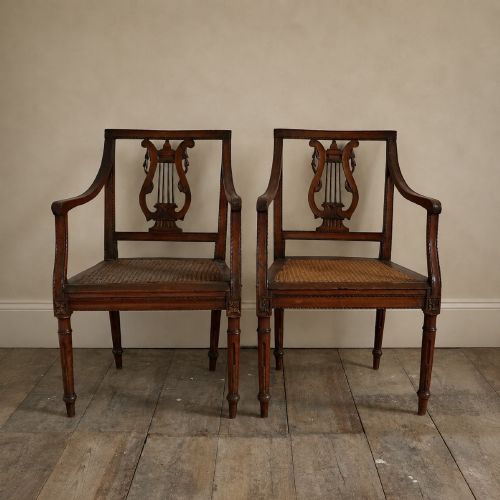

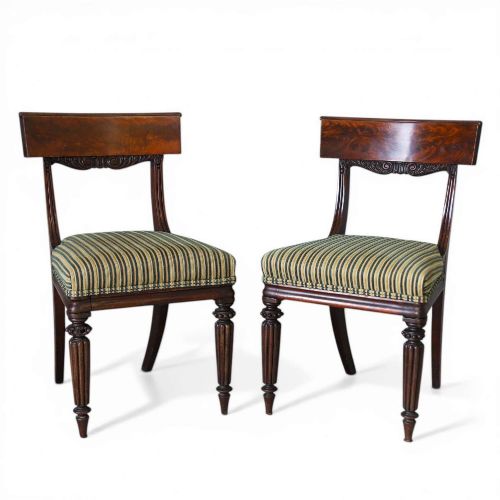
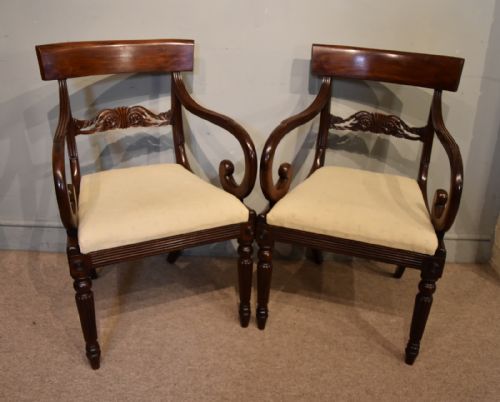
Pair Mahogany Desk Chairs
Pair mahogany desk chairs bring formal workspace seating into period interiors with substantial timber frames, leather seats, and classic proportion.
Pair Mahogany Desk Chairs
When searching for pair mahogany desk chairs, buyers encounter seating designed for libraries, studies, and offices spanning the Georgian, Regency, and Victorian periods.
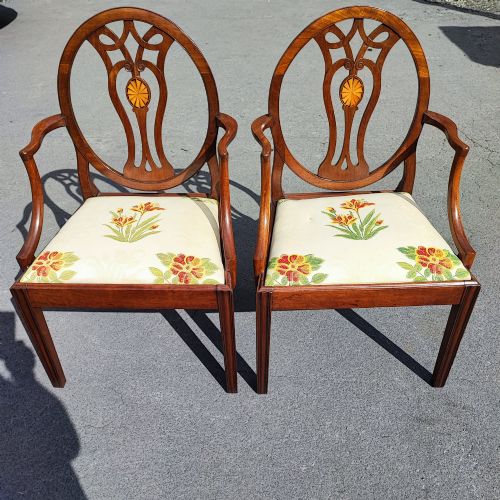
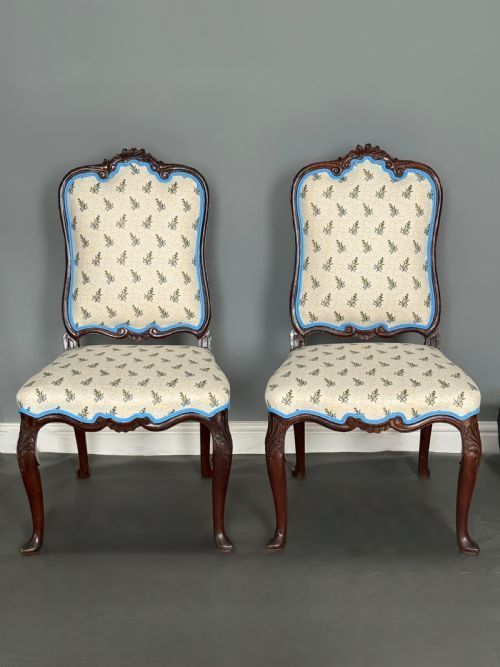
The inventory on this page ranges from early nineteenth-century carvers with restrained lines to later revival pieces incorporating brass inlay, leather upholstery, and carved back rails.
Armchairs and elbow chairs dominate the selection, offering sturdy frameworks suited to daily use at a partner desk or writing table.
Materials and construction methods
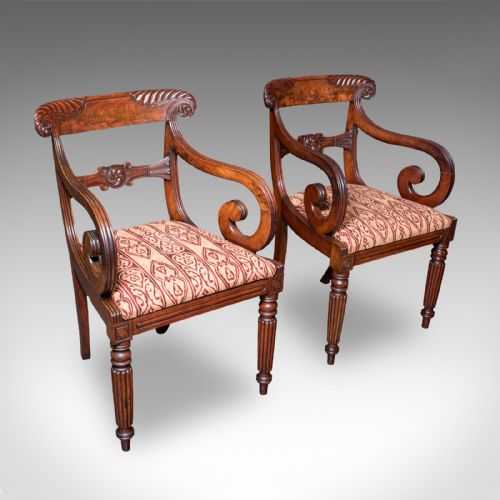
Cabinet makers utilised dense tropical mahogany for structural strength, often selecting figured timber for prominent back splats and curved arm supports.
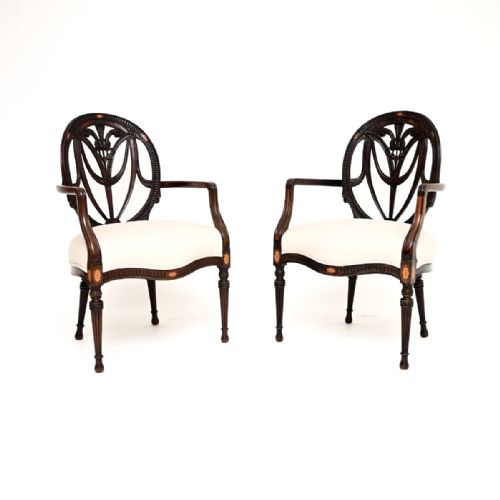
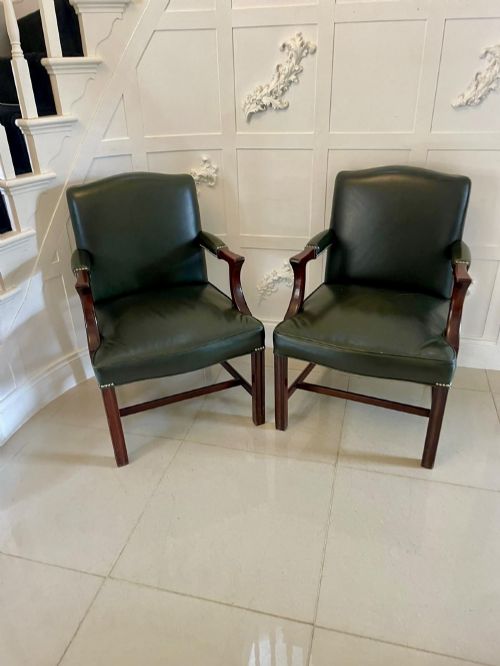
Seating surfaces typically feature bonded leather, velvet, or woven fabric secured with brass tacking, while decorative details rely on hand-carved motifs, satinwood stringing, and applied ormolu mounts.
Pair Mahogany Desk Chairs Retail Price Guide 2026
Typical asking prices for pair mahogany desk chairs among the pieces listed under this phrase on Sellingantiques today, from the lower quarter to the upper quarter. They describe what is for sale here now, not the wider market.
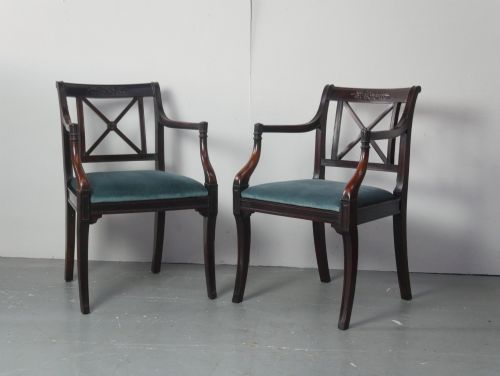
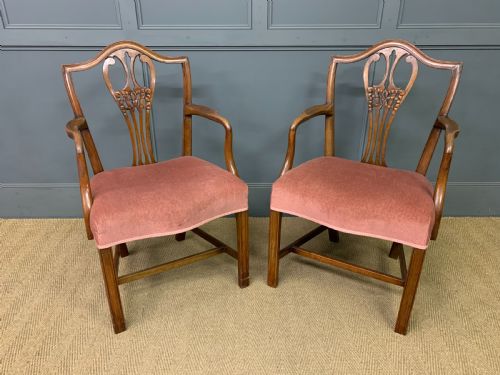
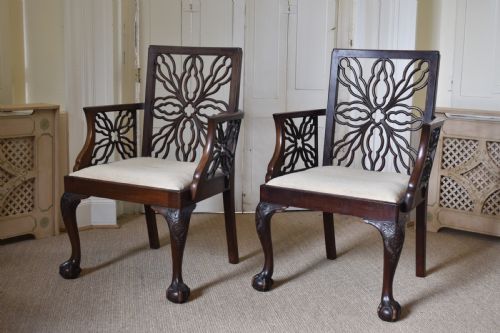
Spider web back designs offer an intricate web of carved timber that keeps office correspondence company.
Assessing quality in desk seating
Superior examples display crisp hand-carving on the back rails and tight joinery at the stress points where the arms meet the uprights.
The grade of the timber and the depth of the figure in the mahogany distinguish workshop pieces from later mass-produced alternatives.
The Pair Mahogany Desk Chairs Glossary
- Carver chair
- An armchair designed to match a set of dining or desk chairs. These seats generally feature open arms and wider proportions than standard side chairs.
- Gainsborough chair
- A wide, upholstered armchair with a low back and open padded arms, originating in the mid eighteenth century. They frequently serve as desk or library seating.
- Bergère
- An enclosed upholstered armchair with exposed wooden framing and cane or upholstered side panels. They appear in Regency and revival forms.
- Satinwood
- A pale, hard timber utilised for contrasting inlay work and stringing on mahogany furniture. It creates distinct geometric borders on back panels.
- Ormolu
- Gilded bronze used for decorative mounts on furniture frames. This technique appears primarily on pieces influenced by French Empire styles.
Pair Mahogany Desk Chairs: Frequently Asked Questions
How do I date a mahogany desk chair?
Dating relies on stylistic markers such as leg shapes, carving techniques, and assembly methods. Earlier Georgian items exhibit straightforward joinery and hand-shaped timber components.
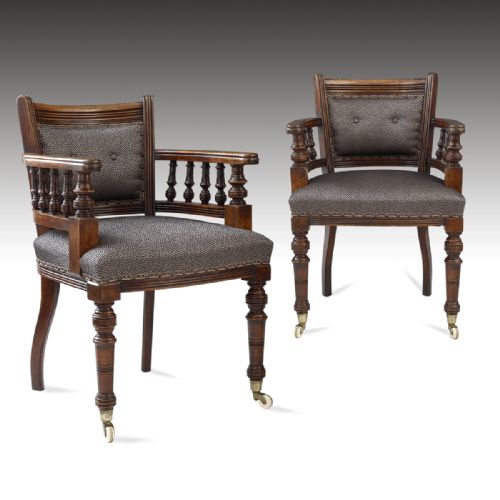
Later Victorian and revival pieces often display machine-cut elements or heavier applied ornamentation that reflects the manufacturing standards of the late nineteenth century.
Are these chairs comfortable for daily workspace use?
Many period examples offer supportive upright posture through curved back rails and padded armrests. Leather or upholstered seats provide appropriate firmness for extended writing tasks.
Buyers intending daily office use should check the seat height and internal framing stability to ensure suitability for modern desks.
What is the difference between a carver and a side chair?
Carver chairs include structural armrests built into the frame, making them ideal for the ends of a table or primary desk positions. Side chairs omit arms to allow closer placement along a desk or dining table.
Both forms share matching leg designs and backrest motifs within a coordinated pair.
How should I maintain leather desk chair seats?
Leather surfaces benefit from periodic cleaning with a damp cloth followed by a suitable leather conditioner to prevent drying and cracking. Avoiding direct sunlight helps preserve the colour and suppleness of vintage hide.
Wooden frames require only occasional dusting and polishing with traditional beeswax.