








Pair Imari Wall Plates
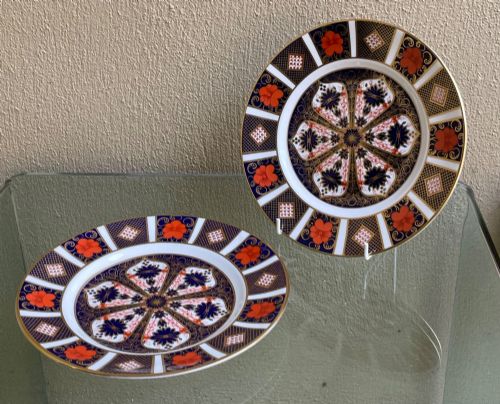
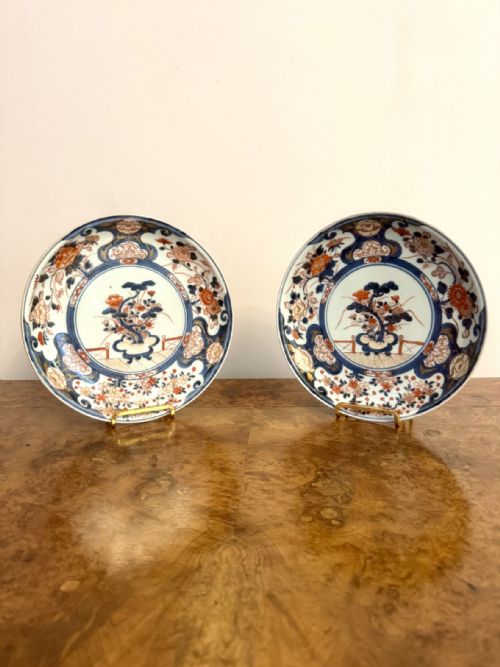
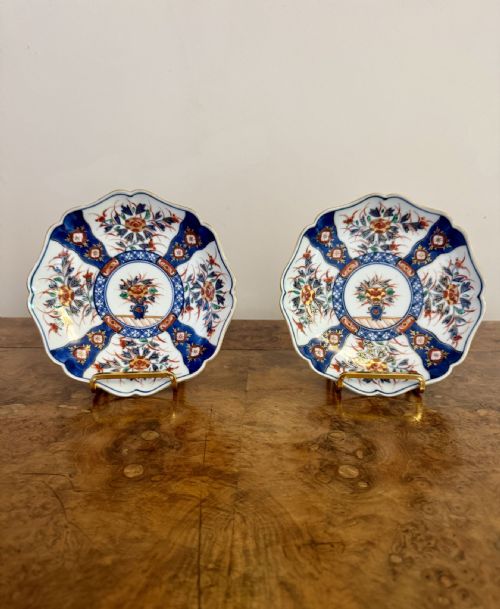
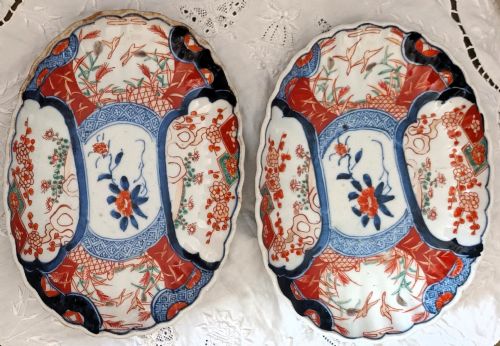
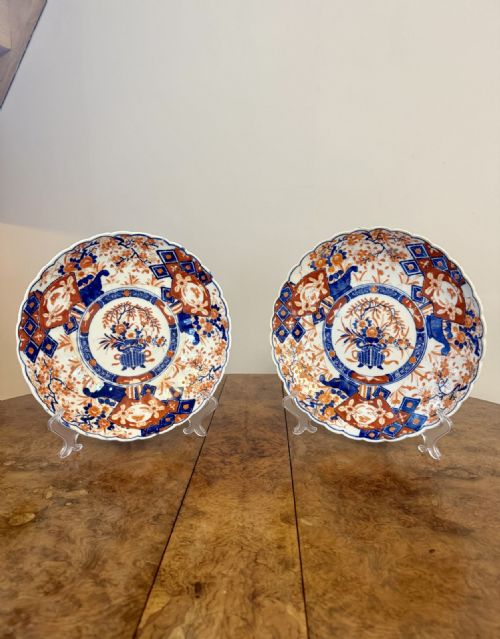
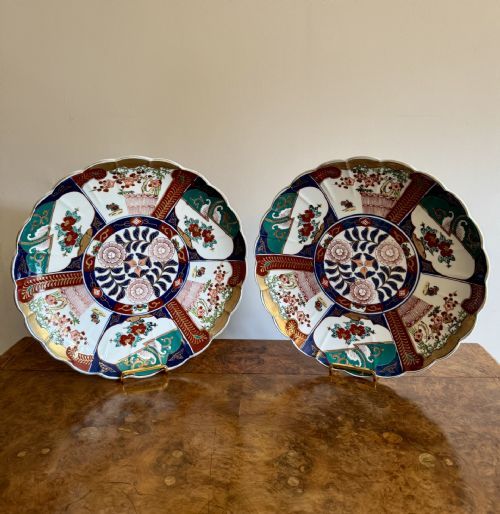
Pair imari wall plates bring together rich cobalt pigment and iron red enamels, offering dual display pieces for collectors of decorative ceramics.
Pair Imari Wall Plates
When searching for pair imari wall plates, collectors encounter matching ceramic vessels designed specifically for vertical display or surface placement. The selection spans distinct periods including the Edo and Meiji eras, alongside Victorian interpretations and twentieth-century British production.
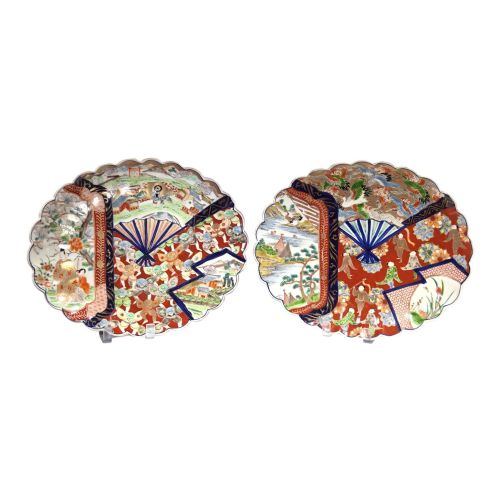
Japanese Arita export wares dominate the physical evidence, accompanied by Chinese export examples and European adaptations such as Mintons and Royal Crown Derby. Forms range from standard circular plates to scalloped chargers, hexagonal shapes, and shell-designed dishes.
Most items on this page date from the nineteenth century, specifically around nineteen hundred, reflecting the height of international demand for Japanese porcelain. Buyers find both large scale wall chargers and smaller decorative dishes configured in matching pairs.
Manufacturing methods and materials
Potters shaped these ceramics using hard-paste porcelain and bone china, applying cobalt pigment beneath the glaze to establish deep blue foundational motifs. Artisans then fired the pieces before adding secondary surface layers.
Overglaze enamel colours, predominantly iron red and green, combine with gold leaf or gilt details to create the signature palette. Hand-painted execution appears frequently across the historical record, uniting traditional Asian firing techniques with decorative export standards.
Several plates depict the Seven Lucky Gods sharing space with exotic birds on a single surface.
Assessing quality in matching ceramic pairs
The precision and complexity of the hand-painted brushwork distinguish superior examples from standard production wares. Finer pieces display crisp botanical or figural scenes, such as depictions of the Seven Lucky Gods or exotic birds, rendered with controlled detail.
The harmony between the two items determines the strength of the pairing, as true matches share consistent glaze depth, colour saturation, and identical dimensions. Variations in the vibrancy of the enamel glaze and the application of gold leaf dictate the visual impact of each set.
Royal Crown Derby·Mintons
The Pair Imari Wall Plates Glossary
- Imari style
- A decorative scheme originating in Japan utilising a distinct palette of underglaze blue, iron red, and gilt highlights. This aesthetic influenced both Chinese export kilns and European potteries.
- Charger
- A large decorative plate intended primarily for display on a wall or sideboard rather than dining use. These substantial vessels often showcase the most elaborate painted compositions.
- Meiji Period
- The era of Japanese history spanning from eighteen sixty-eight to nineteen twelve, representing a major period of ceramic export to Western markets. Pieces from this time often feature intricate enamel work.
- Cobalt pigment
- A mineral oxide used beneath the glaze to produce deep blue tones that withstand high kiln temperatures. It forms the stable structural base for traditional blue and white designs.
- Bone china
- A type of soft-paste porcelain incorporating animal ash, developed in England to create durable ceramic bodies. British makers utilised this material for domestic interpretations of Eastern designs.
Pair Imari Wall Plates: Frequently Asked Questions
How do I hang pair imari wall plates safely?
Display these ceramics using coated spring clips that distribute pressure evenly around the rim without scratching the porcelain body. Ensure the wall fixings match the combined weight of the chargers.
Position the matching pair at eye level with adequate spacing to appreciate the individual hand-painted enamel details and gilt highlights.
Were these plates made for export or domestic use?
The majority of these ceramics originated as export wares produced in Japan and China specifically for Western markets during the nineteenth century. European factories subsequently adopted the aesthetic for local buyers.
This cross-cultural exchange explains the variety of shapes, including hexagonal and shell-designed dishes alongside traditional circular chargers.
How do Japanese and European imari differ?
Japanese originals typically utilise a denser porcelain body and characteristic Arita potting techniques with cobalt pigment beneath a clear glaze. European versions often employ bone china or earthenware bodies with distinct factory date marks.
Both traditions maintain the core palette of iron red and blue, though European interpretations frequently reflect Victorian design movements.
What does Meiji period mean for these plates?
The Meiji period designates the historical era in Japan when decorative arts flourished for international trade. Pieces from this time demonstrate exceptional skill in combining underglaze blue with overglaze enamel.
Collectors prize these items for their historical association with the opening of Japanese trade routes to the West.