
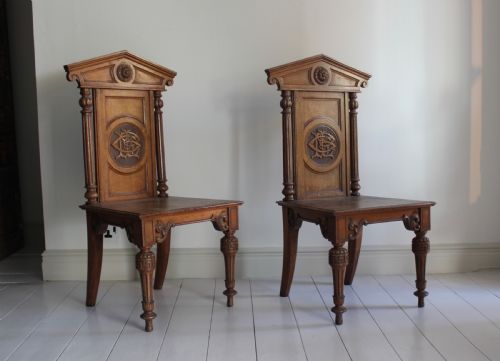
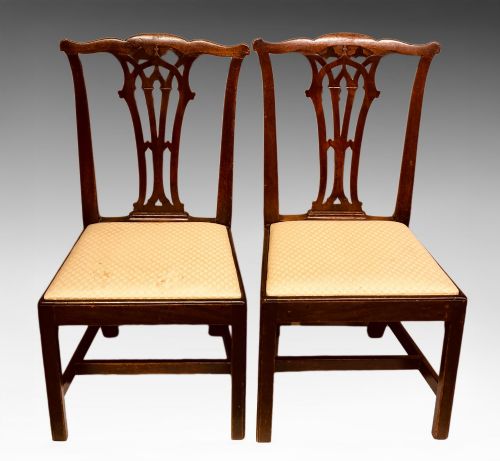
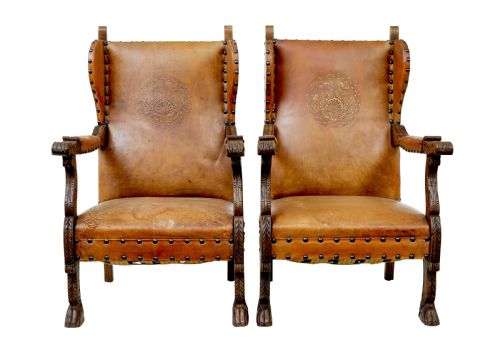
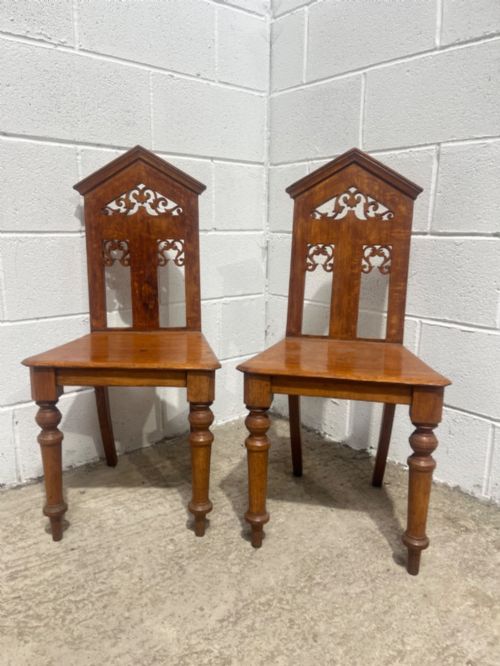

Pair Gothic Accent Chairs
These pair gothic accent chairs deliver dramatic architectural presence and historic character to any room.
Pair Gothic Accent Chairs
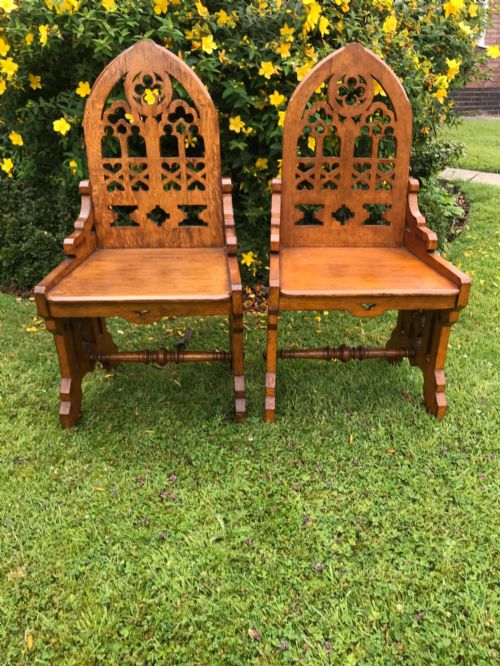
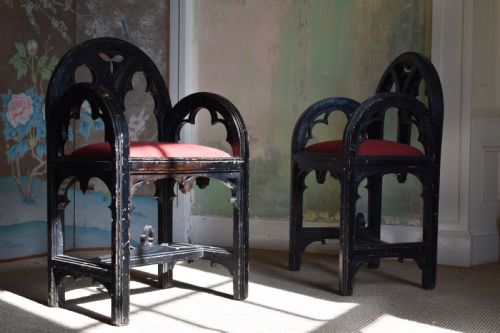
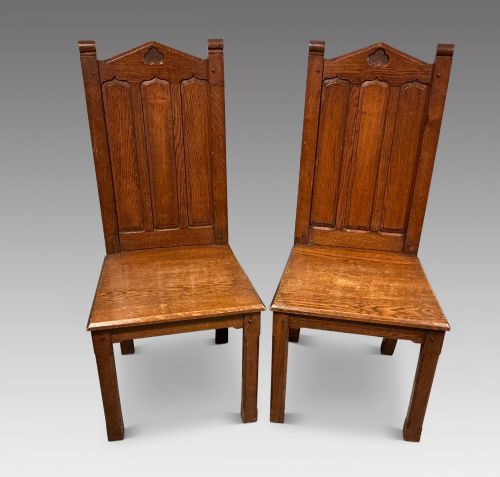
When you search for pair gothic accent chairs, you encounter seating designed with medieval architectural motifs, pointed arches, and sturdy timber frames. The selections here span the Georgian, Victorian, and early twentieth-century eras, reflecting revivals of Gothic and Renaissance styles.
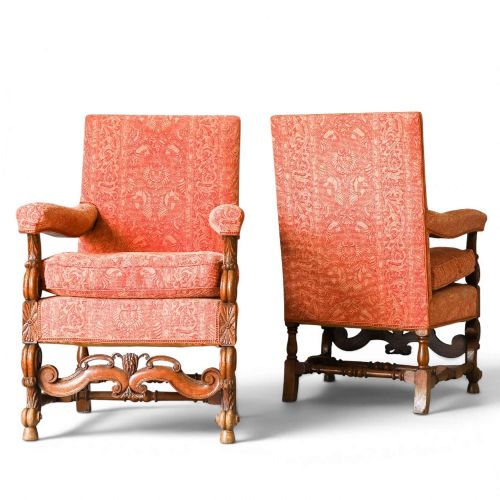
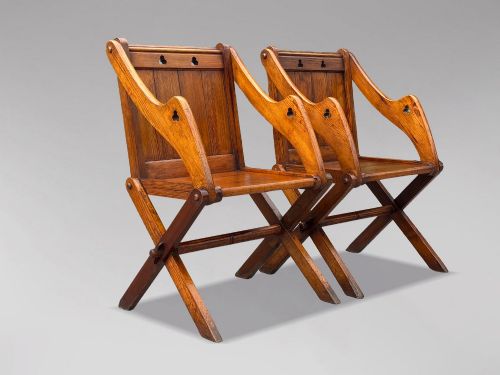
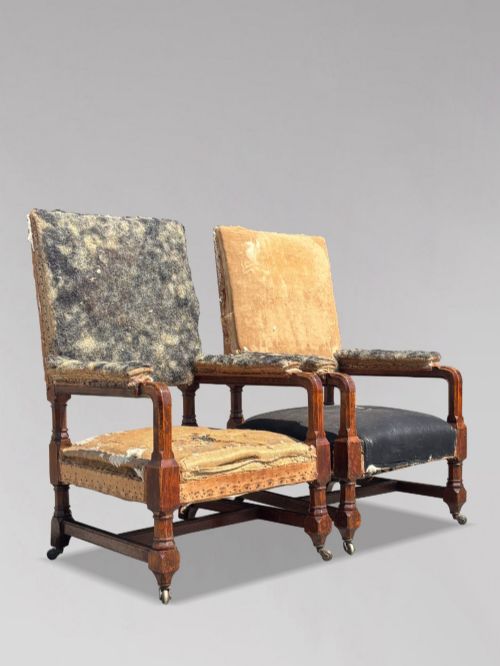
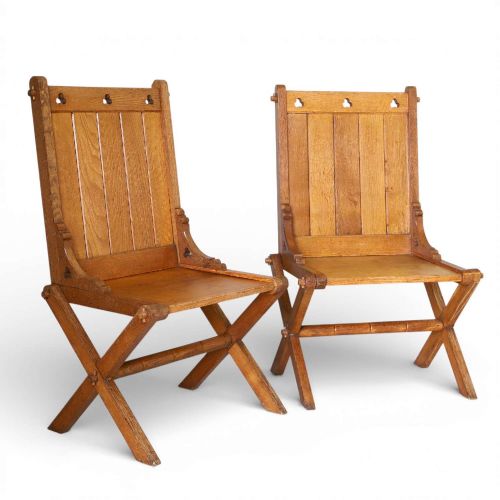
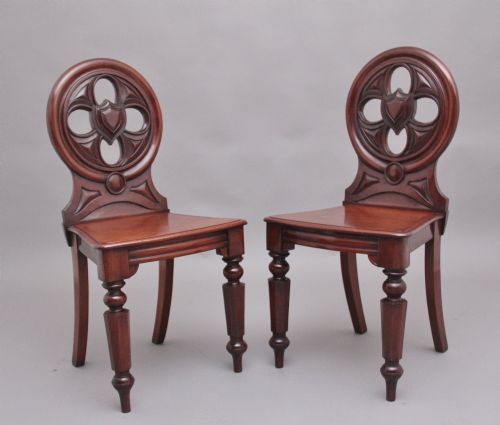
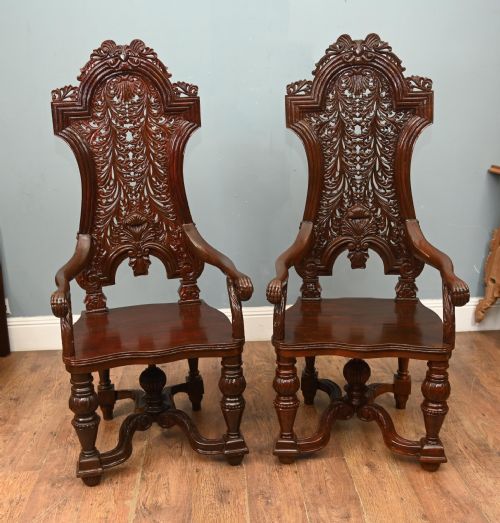
The most frequent forms on this page are matched pairs of hall chairs, armchairs, and side chairs fashioned primarily from oak, mahogany, and walnut. These seating options range from tall-backed throne chairs and Glastonbury chairs to low-profile gossip and side chairs.
Origins stretch across English, French, and Austro-Hungarian workshops, capturing aesthetic movements from the mid-nineteenth century onward. Such seating brings a theatrical, historicist weight to domestic interiors through carved heraldic shields, trefoil details, and embossed leather.
How they were made
Carpenters and cabinetmakers utilised solid hardwoods such as oak, mahogany, and walnut, selecting dense grains capable of supporting deep hand-carving. Frames frequently feature mortise and tenon joinery to endure the structural demands of heavy chair backs and X-frame bases.
Upholstered variants incorporate tactile surfaces like embossed leather, velvet, and buttoned hides fastened with brass tacks. Decorative elements rely on direct woodwork rather than applied veneers, showcasing chamfered edges, turned spindles, and inlaid satinwood details.
Design influences span from Georgian proportions through Victorian Gothic Revival to Arts and Crafts and Renaissance Revival movements.
What varies in quality
Depth and crispness of hand-carving separate standard production models from exceptional workshop output. Relief work on heraldic shields, trefoils, and linenfold panels displays varying levels of sculptural confidence.
Selection of timber grain and structural integrity define the upper tier of survivals. Denser native oaks and well-figured mahoogany retain tighter joints and less timber shrinkage over generations of use.
Gillows of Lancaster·Bruce J. Talbert·A.W.N. Pugin
The Pair Gothic Accent Chairs Glossary
- Gothic Revival
- An architectural and decorative movement drawing inspiration from medieval forms, pointed arches, and ecclesiastical ornaments. This style heavily influences nineteenth-century seating design.
- Glastonbury chair
- A folding armchair style with X-shaped supports and a sloping panel back, often constructed in oak. It derives from ancient ecclesiastical designs.
- Hall chair
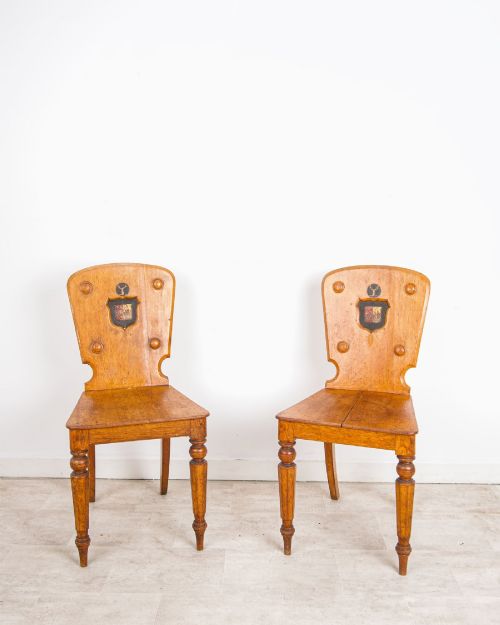
- A rigid wooden seat intended for entrance halls rather than prolonged lounging, frequently featuring a solid carved back displaying family crests or heraldic shields.
- Curule chair
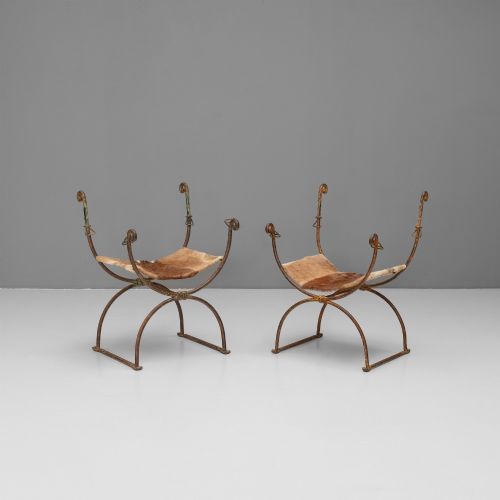
- An ancient Roman magistrate seat design featuring crossing curved legs forming an X-frame, often referenced in Renaissance Revival armchairs.
- Trefoil
- A graphic ornament composed of three overlapping rings or lobes, commonly pierced through the wooden splats of Gothic chair backs.
Pair Gothic Accent Chairs: Frequently Asked Questions
Where did people place pair gothic accent chairs?
These seats were historically positioned in entrance halls, formal parlours, and libraries where guests would encounter their striking architectural silhouettes immediately.
Today, they function effectively as statement pieces in living rooms, studies, or hallways, offering both a place to sit and a strong historical focal point.
How do I identify a Victorian Gothic piece?
Victorian Gothic examples typically display characteristic ecclesiastical details such as pointed archways, trefoil cutouts, and heavy carved oak frames dating from the middle to late nineteenth century.
Look for hand-carved heraldic motifs, dark finishes, and structural references to medieval cathedrals that define the revival aesthetic.
Are these chairs comfortable for daily use?
Many of these chairs, particularly the wooden hall and side variants, were built for formal posture rather than lounging for hours.
Armchair versions featuring embossed leather or buttoned upholstery offer a softer sit, while wooden forms suit occasional use at a desk or in an entryway.
What is the difference between side chairs and hall chairs?
Hall chairs are almost entirely made of solid wood with rigid, high backs carved with heraldic shields or family crests intended for display in entryways.
Side chairs generally offer lighter domestic seating for dining or parlours, though nineteenth-century revival makers often blurred these distinctions with heavy Gothic carving.