




Pair Garden Urn Planters
These pair garden urn planters bring sculptural weight to outdoor spaces, combining classical form with practical planting depth.
Pair Garden Urn Planters
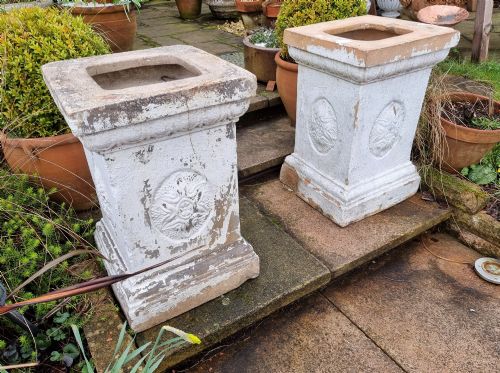
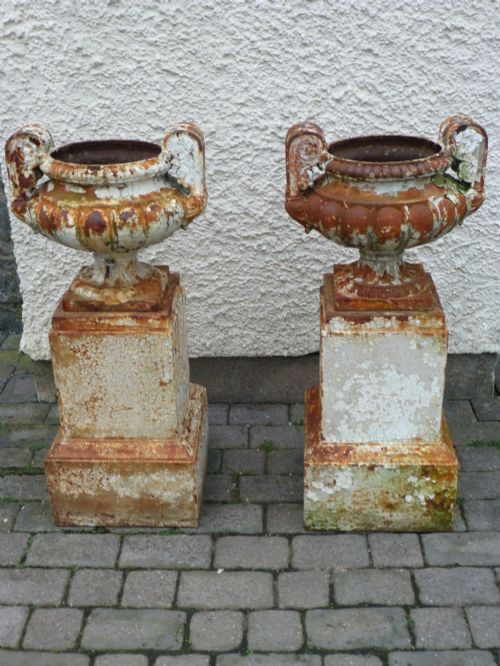
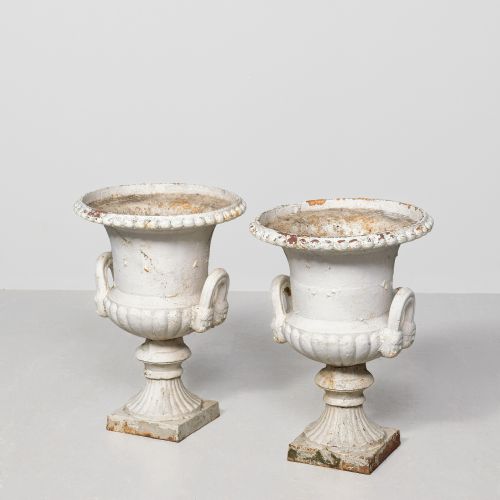
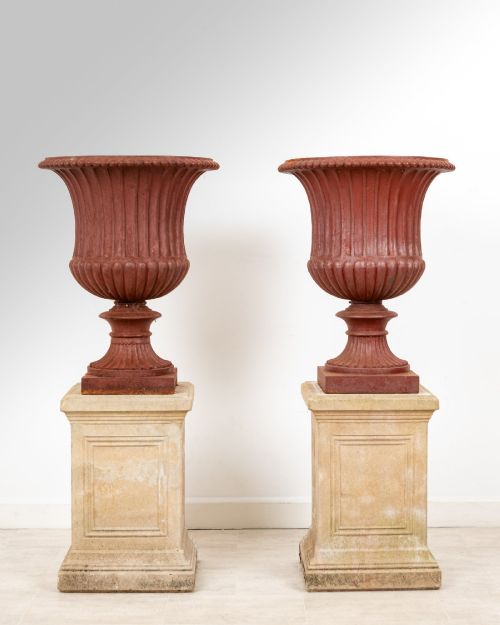
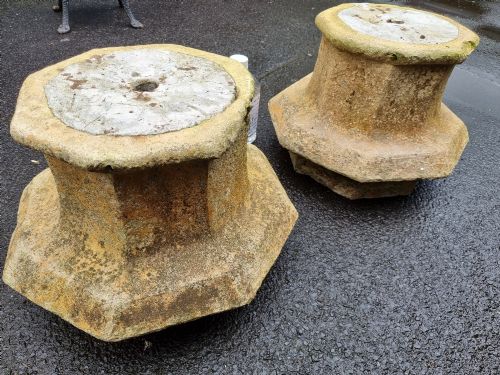
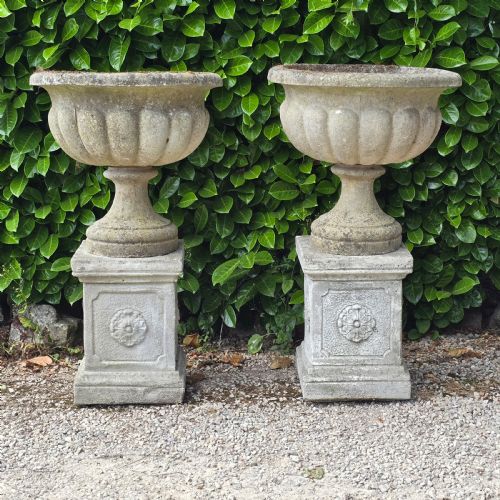
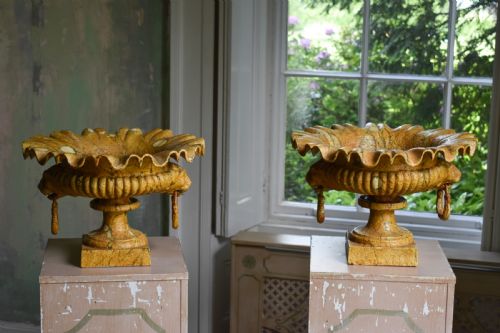
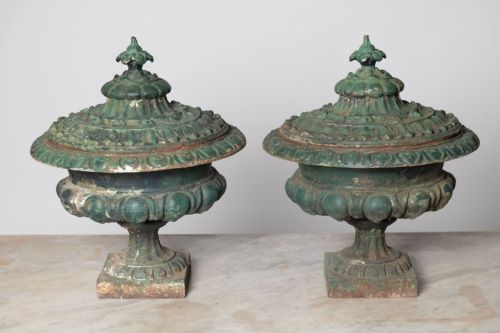
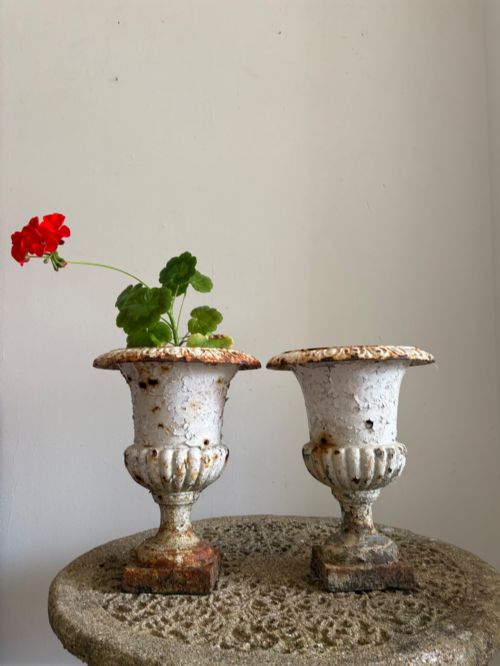
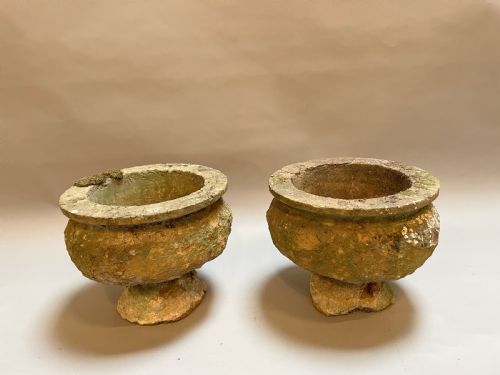
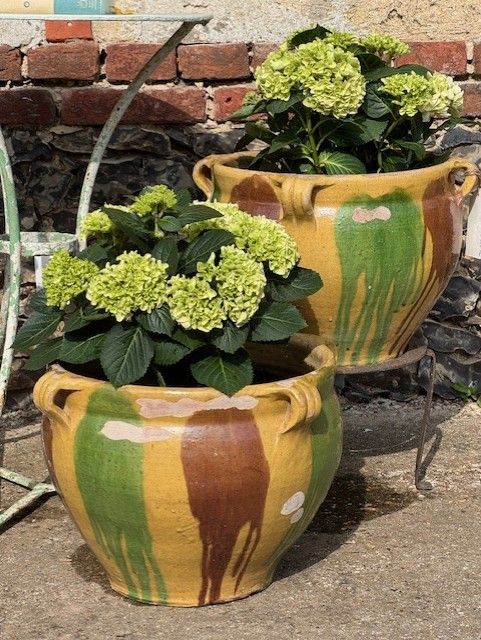
When you search for pair garden urn planters, you are looking at symmetrical vessels designed for outdoor display, terrace planting, and formal garden placement. The forms follow classical traditions, often sitting upon matching pedestals or plinths to elevate the planting. You will most frequently meet cast iron examples from the nineteenth century, alongside versions in terracotta, stone, and reconstituted stone.
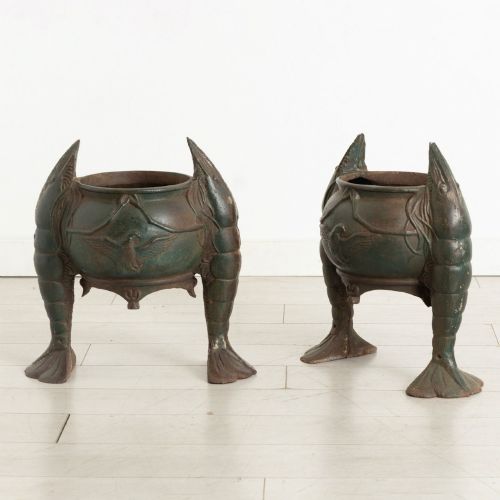
The selection ranges from campana shapes and tazza urns to gothic revival designs and novelty forms such as shrimp or baskets. Many are paired with original plinths or feature period painted surfaces and weathered patinas accumulated through decades outdoors.
How they were made
Foundries produced the metal examples by pouring molten iron into sand moulds, often resulting in heavy, robust walls designed to withstand the elements. Other pieces rely on hand-carved stone, moulded terracotta, or composite stone cast with binders to replicate natural masonry.
Surfaces were frequently finished with protective paint layers, which over time age into distressed patinas, or left as bare metal and porous clay that weather naturally in gardens.
What varies in quality
Quality rests in the crispness of the casting detail, the depth of relief mouldings on classical motifs, and the integrity of the original material. Finer metalwork displays sharp foliate ornament and clean fluting without distortion from worn moulds.
The presence of matching original plinths, lids, and untouched historical painted surfaces elevates certain examples above standard utilitarian garden vessels.
Dunfermline Clay Company·Falkirk Carron foundry·Coalbrookdale·LEFCO
The Pair Garden Urn Planters Glossary
- Campana
- A bell-shaped garden urn with an everted rim and a tapering body. This form derives from classical antiquity and remains a staple of Victorian garden design.
- Tazza
- A shallow bowl-shaped urn raised on a stem and foot. These pieces offer a wider viewing profile for low-growing plants.
- Plinth
- A heavy base block or pedestal that elevates an urn. They provide architectural presence and improve drainage for planted arrangements.
- Reconstituted stone
- A durable material made from crushed stone bound with cement and moulded into decorative forms. It mimics natural stone while allowing repeatable architectural shapes.
Pair Garden Urn Planters: Frequently Asked Questions
Where should I place garden urns?
These vessels suit formal entrances, terrace corners, and the ends of garden paths where symmetry creates visual balance. Elevating them on stone pedestals helps frame views and keeps plantings prominent.
Ensure the ground beneath is level and capable of supporting substantial weight, particularly with cast iron and stone examples.
How do I care for cast iron urns?
Cast iron requires periodic inspection for surface rust, which can be treated and repainted to protect the metal from deep corrosion. Keeping drainage holes clear prevents trapped water from expanding during winter frosts.
Allowing the paint to weather naturally adds character, but active flaking benefits from gentle brushing and touching up.
Can terracotta urns stay outside in winter?
Terracotta is porous and absorbs moisture, which can freeze and crack the clay during hard frosts. Move unglazed or fragile pots into sheltered areas or greenhouses during freezing months.
Raising containers slightly off the ground on pot feet also improves drainage and prevents winter waterlogging.
How do I date an antique urn?
Dating relies on material composition, casting quality, foundry marks, and stylistic clues such as Victorian gothic revival motifs or Regency classical lines. Patina, old paint layers, and wear patterns also indicate age.
Comparing the construction seams and bolt fixings helps distinguish nineteenth-century foundry work from later twentieth-century reproductions.