
Pair French Bronze Candlesticks
Pair french bronze candlesticks bring sculptural weight and historical design to a mantelpiece, combining cast metal with classical ornament.
Pair French Bronze Candlesticks
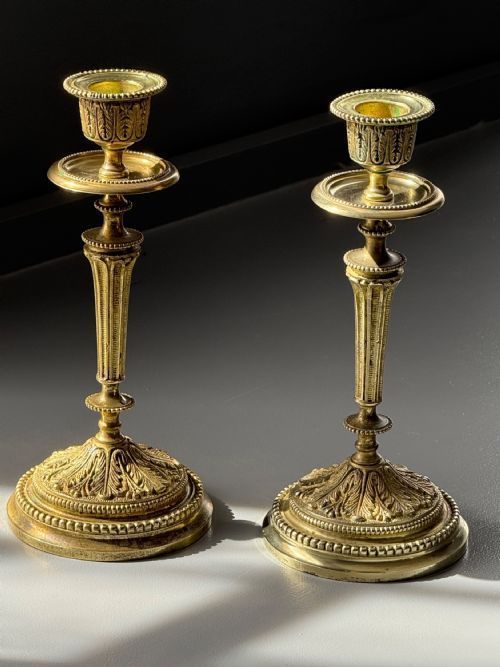
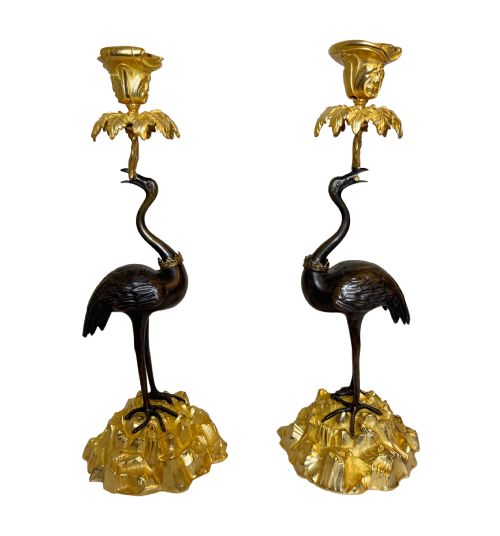
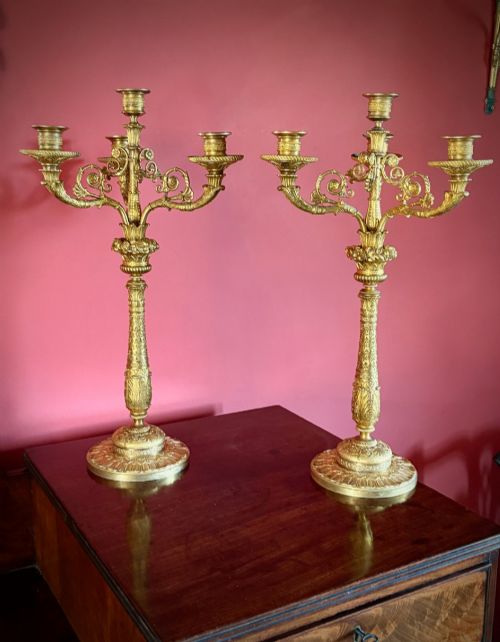
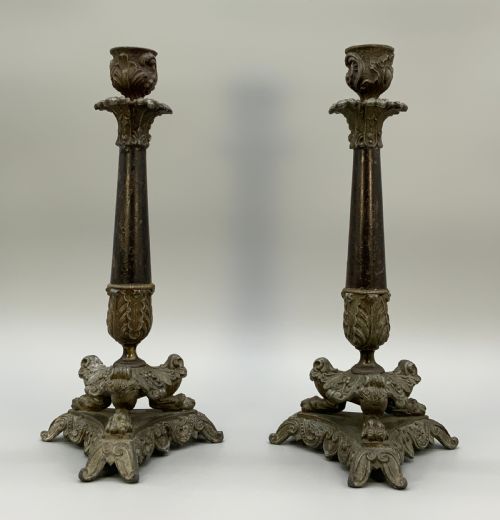
Pair french bronze candlesticks span the eighteenth, nineteenth and early twentieth centuries, drawing on Regency, Empire, Louis XVI and Rococo revivals. These objects range from simple single-socket holders to multi-branch candelabra and table lamps.
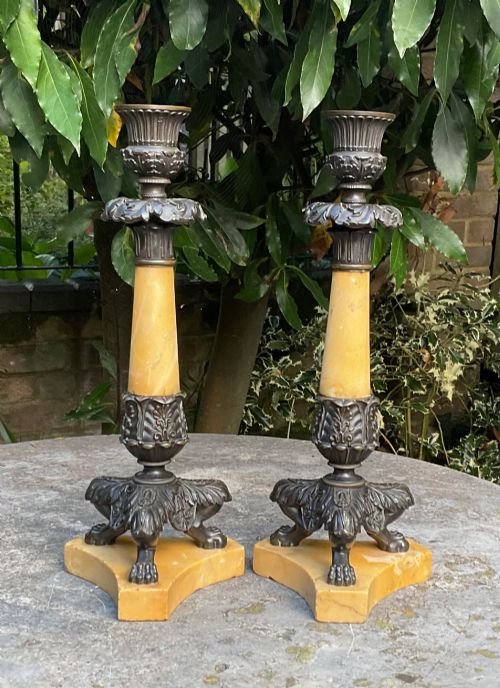
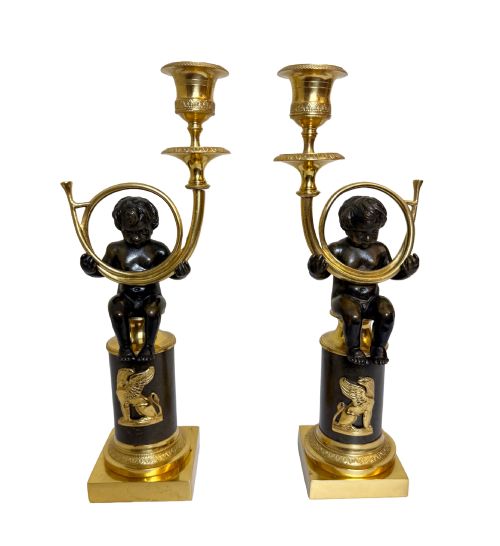
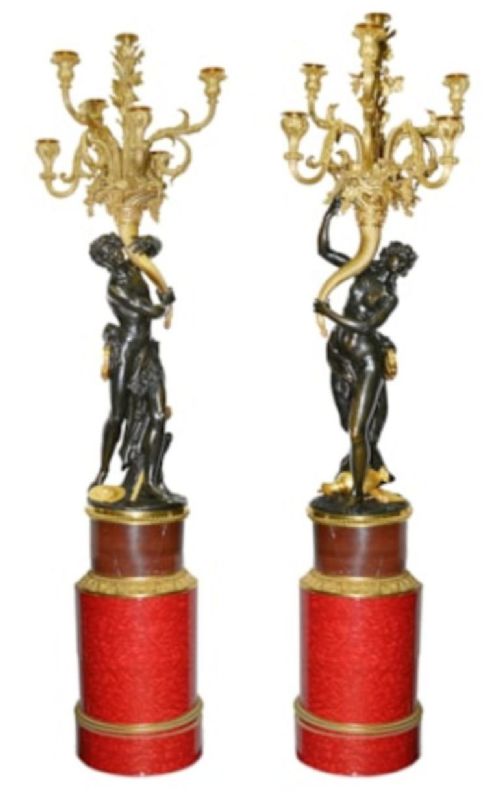
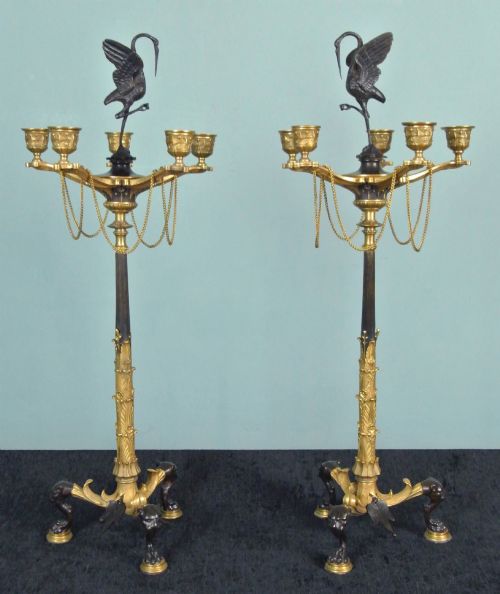
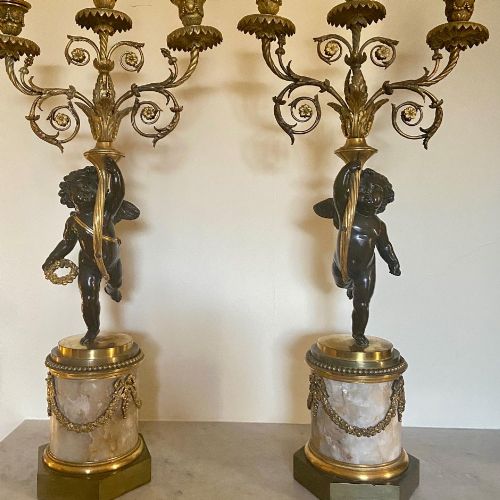
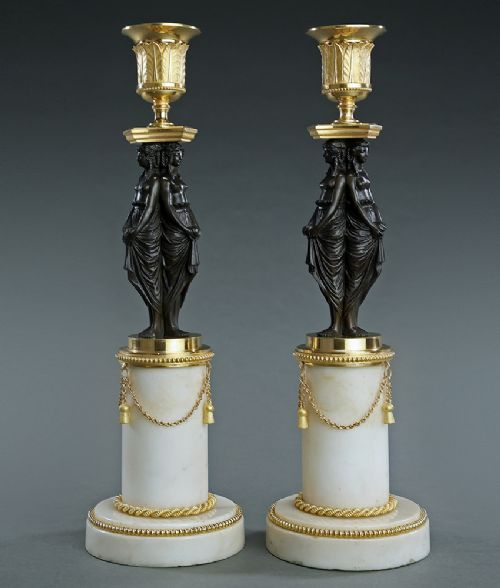
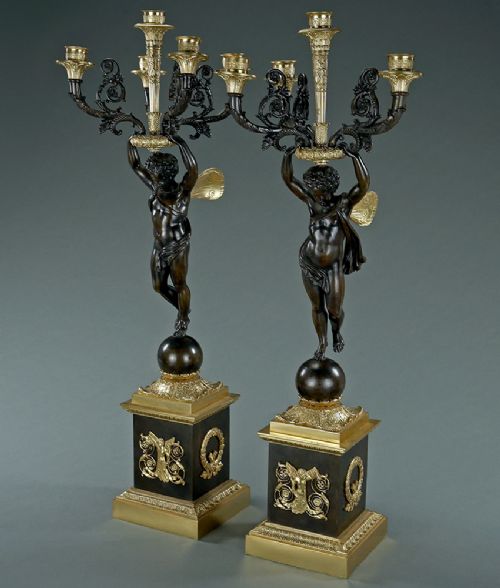
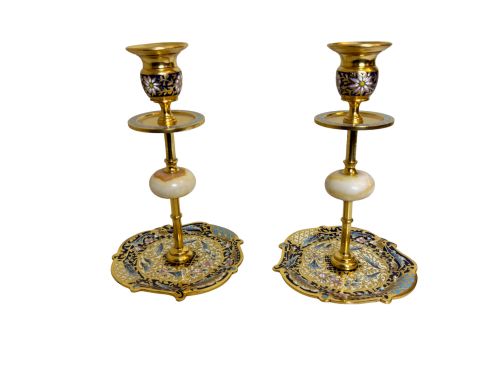
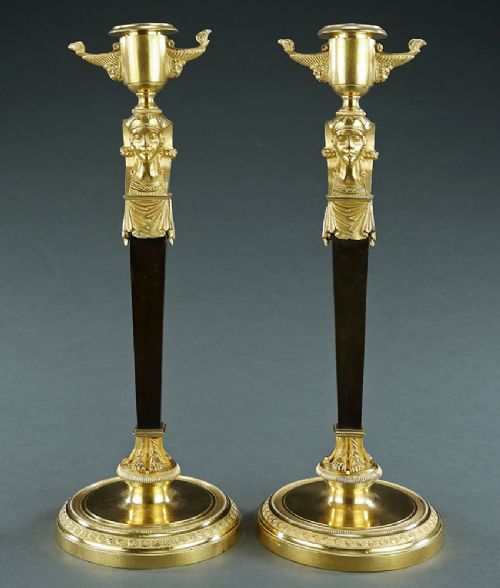
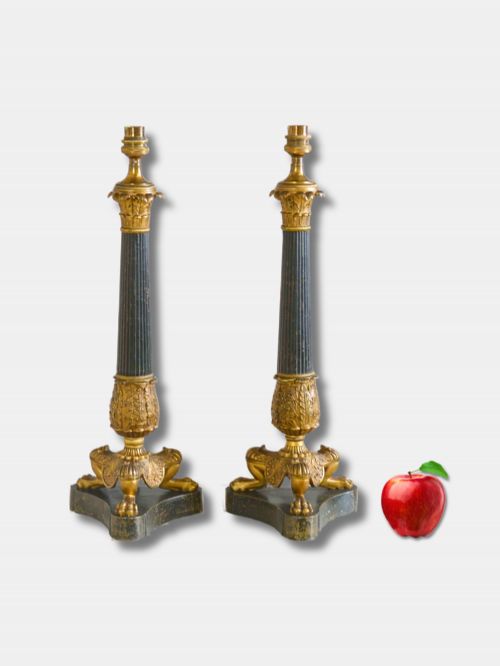
Makers and designers frequently incorporated figures such as cherubs, caryatids, putti, and animals alongside architectural columns and foliate motifs. Materials often extend beyond plain metal to include white and sienna marble, onyx, fluorspar, and champlevé enamel.
The selections on this page reflect diverse decorative movements, including Gothic revival, Neoclassical, and Art Nouveau styles. Such pieces served both practical lighting functions and decorative display purposes in period interiors.
How They Were Made
Foundry workers utilised bronze casting techniques to create the primary structural components and sculptural figures. Molten metal was poured into moulds, then finished by hand with chisels and files to sharpen details.
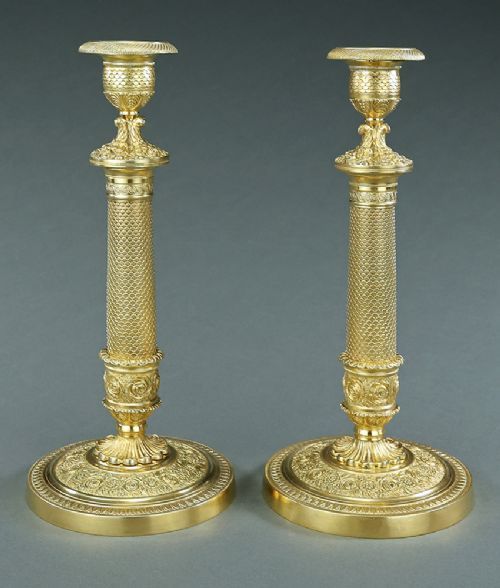
Gilding and chemical patination were applied to achieve contrasting surface effects between bright ormolu and dark patinated bronze. Ormolu components relied on a mercury gilding process that bonded gold to a copper base, producing a lasting metallic lustre.
Secondary materials like marble bases, onyx plinths, and glass lustres were joined to the metal framework using threaded rods, pins, and mechanical fixings.
Listings feature periods from the 18th century through the Edwardian era, incorporating marble, onyx, and champlevé enamel materials.
What Varies in Quality
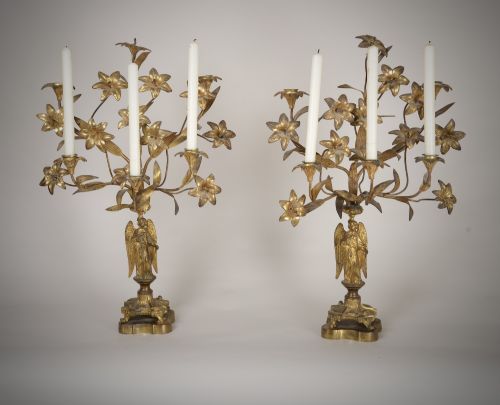
The combination of materials and the complexity of the composition influence the standing of a piece. Multi-branch candelabra incorporating stone bases, enamel work, and figural sculpture require greater technical skill than plain single-socket stems.
Surface preservation affects the overall integrity of the object. Retained fire gilding with distinct matte and burnished areas indicates careful historical maintenance compared to stripped or heavily re-plated surfaces.
Barbedienne Bronze·Francois Redmond·Dugourc·Abel Landry·Henri Picard
The Pair French Bronze Candlesticks Glossary
- Ormolu
- A gilded bronze surface created by applying an amalgam of gold and mercury to cast bronze before heating. This technique produces a rich golden finish characteristic of eighteenth and nineteenth-century decorative metalwork.
- Patinated Bronze
- Metal treated with chemical solutions to darken the surface to a deep brown or green tone. This treatment provides contrast against polished gilt highlights.
- Candelabra
- A branched lighting fixture designed to hold multiple candles simultaneously. These pieces often feature removable upper arms to function as standard candlesticks.
- Champlevé Enamel
- A technique where troughs are dug into the metal surface and filled with vitreous enamel powder before firing. The resulting coloured patterns decorate the stems and bases.
- Cassolette
- A decorative vessel with a reversible lid that functions as a candlestick on one side and an urn on the other. They appear frequently in neoclassical and Louis XVI decorative schemes.
Pair French Bronze Candlesticks: Frequently Asked Questions
How do I clean bronze and ormolu?
Dust gently with a soft dry brush to prevent dirt accumulation in recessed chased details. Avoid harsh commercial polishes that strip historical patination and remove gold leaf.
Moisture can damage stone bases and exposed metal pins. Keep these items away from damp environments and direct heat sources.
Were these pieces converted to electricity?
Many nineteenth-century examples were adapted for wired lamps during subsequent periods. Conversions frequently utilised the existing central channel without drilling the main bronze structure.
Collectors encounter both original candle-burning configurations and vintage wired adaptations across the market. Reversible wiring methods preserve the underlying metalwork integrity.
What is the difference between Empire and Louis XVI styles?
Louis XVI designs draw on ancient Roman and Greek motifs with symmetrical restraint, delicate swags, and fluted columns. The aesthetic emphasises balance and refined classical proportion.
Empire style reflects nineteenth-century military campaigns with heavier classical references like sphinxes, swans, and winged victories. The forms appear more imposing and draw heavily on Napoleonic symbolism.
How can I tell if a pair is genuine antique?
Examine the construction methods for hand-cut threads, bronze composition, and patination depth. Period pieces display casting flaws and wear patterns consistent with historical manufacturing techniques.
Inspect how base plates and mounting pins join the components together. Modern reproductions typically lack the weight, mercury gilding characteristics, and tool marks of nineteenth-century foundry work.