


French Figural Candlesticks
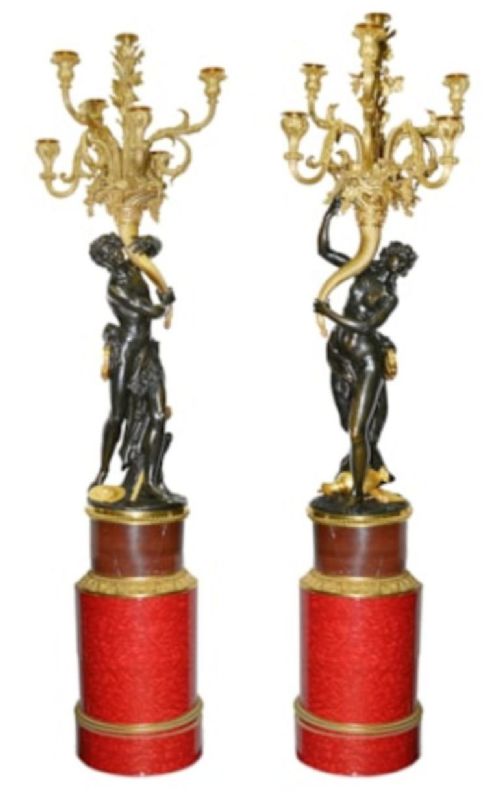
French figural candlesticks combine sculpture and lighting, bringing cast metal figures of cherubs, maidens and animals into nineteenth-century interiors.
French Figural Candlesticks
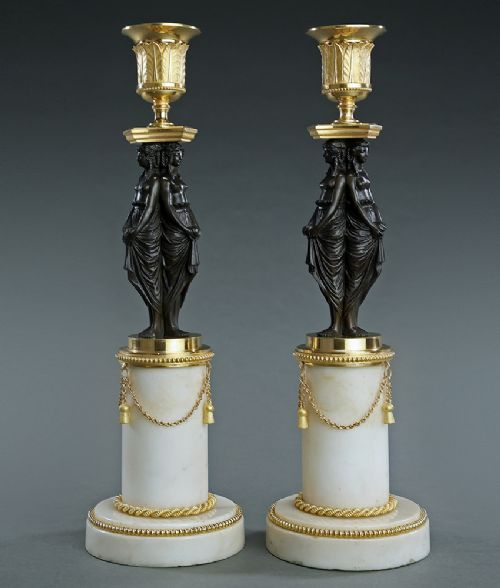
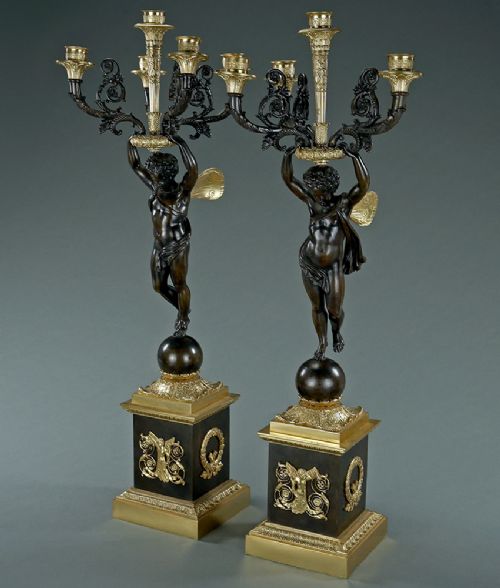
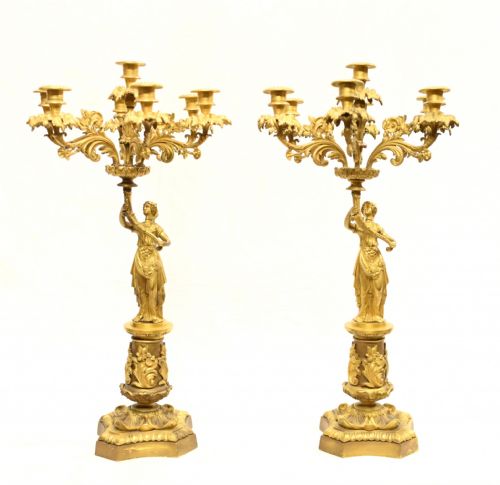
French figural candlesticks merge cast metal figures with practical candle holders, most frequently appearing as pairs dating from the nineteenth century. These sculptural objects draw on historical design idioms, spanning Louis XVI style, French Empire, Renaissance Revival and Rococo Revival aesthetics.
The figures themselves range from classical caryatids and puttis to mermen, storks, dogs and soldiers. They stand upon bases of marble, onyx or cast metal, supporting single sockets or branching candelabra arms.
How they were made
Foundries produced these pieces primarily in bronze, brass, ormolu, patinated bronze and spelter, occasionally combining metals with stone bases. Gilt highlights and parcel-gilt finishes enhanced the cast details of the sculptural forms.
Listings feature pieces cast in bronze, brass, spelter and marble, spanning the Regency era through to the end of the nineteenth century.
What varies in quality
The refinement of the casting and the crispness of the chasing separate standard production from finer work. Superior examples display subtle detail in the facial expressions and drapery of the figures rather than smoothed or generalised surfaces.
Material choice also dictates standard, where heavy bronze and fire-gilt ormolu outrank lighter spelter alternatives. The integration between the sculptural figure and the structural candle socket reveals the care taken in assembly.
Alexandre Clerget·Dugourc
The French Figural Candlesticks Glossary
- Ormolu
- Gilt bronze produced by applying an amalgam of gold and mercury to a bronze base and heating it. This technique creates a durable golden surface seen on many nineteenth-century pieces.
- Spelter
- A zinc alloy utilised as a cheaper alternative to bronze for sculptural castings. It is lighter in weight and often painted or bronzed to simulate more costly metals.
- Caryatid
- A sculpted female figure serving as an architectural support or pillar. In lighting, these figures often form the stem of the candlestick.
- Putto
- A figure of a small child, frequently winged, depicted in classical art. They appear often as cherubs holding candle nozzles.
- Grand Tour
- A cultural journey undertaken by nineteenth-century travellers who collected souvenirs. Candlesticks from this context often incorporate classical or exotic motifs.
French Figural Candlesticks: Frequently Asked Questions
Are these pieces wired for electricity?
Many examples retain their original configuration for wax candles, though some have been converted into table lamps over time.
Buyers should inspect the base and fittings to determine whether wiring has been added or if the piece remains in its original lighting state.
How do I clean bronze and ormolu?
Dusting with a soft, dry brush removes surface particles without harming the patinated or gilt finish. Water and chemical polishes should be avoided, particularly on ormolu, as moisture damages the delicate metallic surface.
Gentle care preserves the original historical skin and prevents the loss of surface gilding.
Why do some candlesticks have multiple arms?
Examples with branching arms are termed candelabra, allowing a single base to support several candles for increased illumination. These multi-light versions often feature removable top sections for easier cleaning.
Single candlesticks hold one candle, whereas candelabra provide grander visual weight for mantelpieces.
How do I identify the period?
Dating relies on stylistic clues, such as the classical restraint of Louis XVI revival versus the elaborate asymmetry of Rococo forms. The weight of the metal and the type of base material also offer indicators of the decade of production.
Nineteenth-century pieces frequently draw directly on earlier historical reigns, referencing past aesthetics with contemporary manufacturing techniques.