


Pair Framed Watercolour Pictures
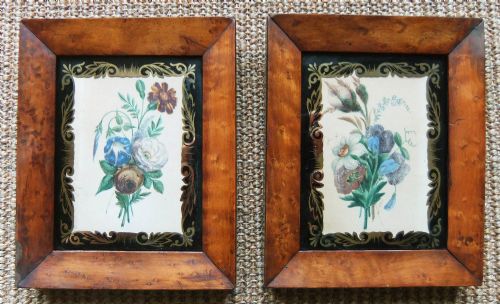
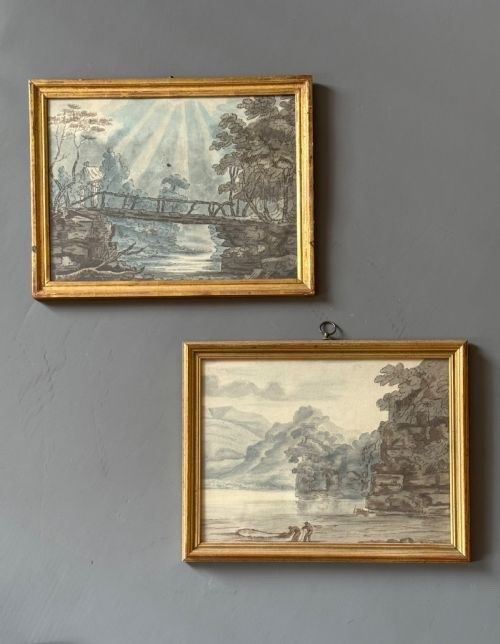
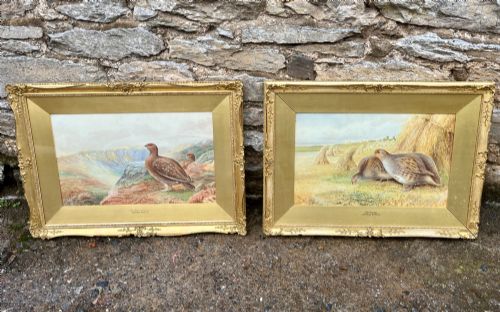
These pair framed watercolour pictures offer balanced compositions on paper, satisfying the desire for matched companion artworks on a wall.
Pair Framed Watercolour Pictures
When searching for pair framed watercolour pictures, you encounter matched sets of paintings executed on paper using watercolour pigments or gouache. The selections available span from the Georgian and Victorian eras through the Edwardian period and into the mid-twentieth century.
The subjects recorded on these sheets vary widely, taking in moorland landscapes, snowy scenes, coastal views, marine paintings, and street scenes of York and Hampstead. Other examples present genre scenes, sporting art, and individual portraits including miniature studies of ladies, gentlemen, soldiers, sailors, and children.
You will also find diptychs, oval formats, and round watercolours alongside Japanese paintings on silk. These works arrive ready to hang, often preserved as companion pieces created by the same hand to complement one another.
How they were made
The artists applied watercolour pigments onto paper sheets, sometimes utilising gouache for heavier opaque highlights. Certain works adopt silk as a primary ground instead of paper.
Protection and presentation rely upon traditional framing materials, predominantly wood enriched with gilt wood, gold leaf, and clear glass plates. These protective housings secure the delicate pigments from atmospheric moisture and handling.
A battle of frogs on silk proves that nineteenth-century artists possessed an wonderfully imaginative sense of humour.
What varies in quality
The distinction between tiers rests upon the confidence of the brushwork and the precision shown in the depiction of figures, architecture, or natural landscapes. Masterly handling of light and pigment transforms a standard topographical record into a compelling piece of fine art.
The preservation of the paper support and the integrity of the original gilt wood frames dictate the desirability of a set. Matched companion pieces that retain their synchronous frames maintain a stronger visual harmony on the wall.
George Rankin·F.J. Snell·Alfred George Morgan·Ernest Uden·George Whyatt·Robert Buchan Nisbet·Nora Cundell·George Hargreaves·Thomas Woolnoth·John Sanderson Wells·Thomas Bush Hardy·Karl Feiertag·Leon Girardet·Frank Dadd·Gordon Meadows
The Pair Framed Watercolour Pictures Glossary
- Watercolour
- A painting method where the paints are made of pigments suspended in a water-based solution. This technique allows for translucent washes of colour across a paper ground.
- Gouache
- An opaque water-based paint method that includes a white pigment mixed into the watercolour. It produces a heavier, more solid appearance on the paper surface.
- Diptych
- An artwork composed of two panels or sheets presented together as a pair. These companion pieces share a unified theme or narrative.
- Portrait Miniature
- A small, highly detailed painting depicting a person. These intimate works were frequently executed on a delicate scale.
- Gilt Wood
- Timber that has been decorated with a thin layer of gold leaf or metallic gilt powder. This finish adorns traditional picture frames to provide a reflective border.
Pair Framed Watercolour Pictures: Frequently Asked Questions
How do I hang a pair?
Hang the two pictures at equal eye level, spacing them closely enough to read them as a single visual unit rather than two isolated items. Aligning the centre points of the frames creates a balanced appearance on the wall.
Ensure the hardware on the back of each frame supports the weight securely, using two hooks per picture to prevent the frames from slipping out of alignment over time.
Where should I place watercolours?
Keep watercolours away from direct sunlight and areas prone to high humidity, as paper and pigments are sensitive to environmental extremes. Interior walls receiving ambient, indirect light provide the safest setting.
Displaying them in principal rooms or hallways allows the delicate details of the paper and the surrounding gilt wood frames to be appreciated without risking fading.
Why buy companion pictures?
Companion pictures provide an immediate sense of symmetry and balance to a decorative scheme, having been created as a matched set by the artist. They share a consistent palette, hand, and subject matter.
Collecting pairs ensures that the works converse with one another visually, offering a narrative depth that a single framed image cannot achieve on its own.
How are periods identified?
Dating relies on the costume of the figures, the framing styles typical of Victorian or Edwardian workshops, and signatures tied to active artist biographies. Signatures can often be cross-referenced with exhibition records from the nineteenth and twentieth centuries.
The paper stock, handwritten inscriptions on the reverse, and the construction methods of the wooden frames also offer reliable clues to the era of creation.