


Pair Entree Dishes
These pair entree dishes are matched serving vessels designed for the formal dining table, offering symmetry and utility for presenting courses.
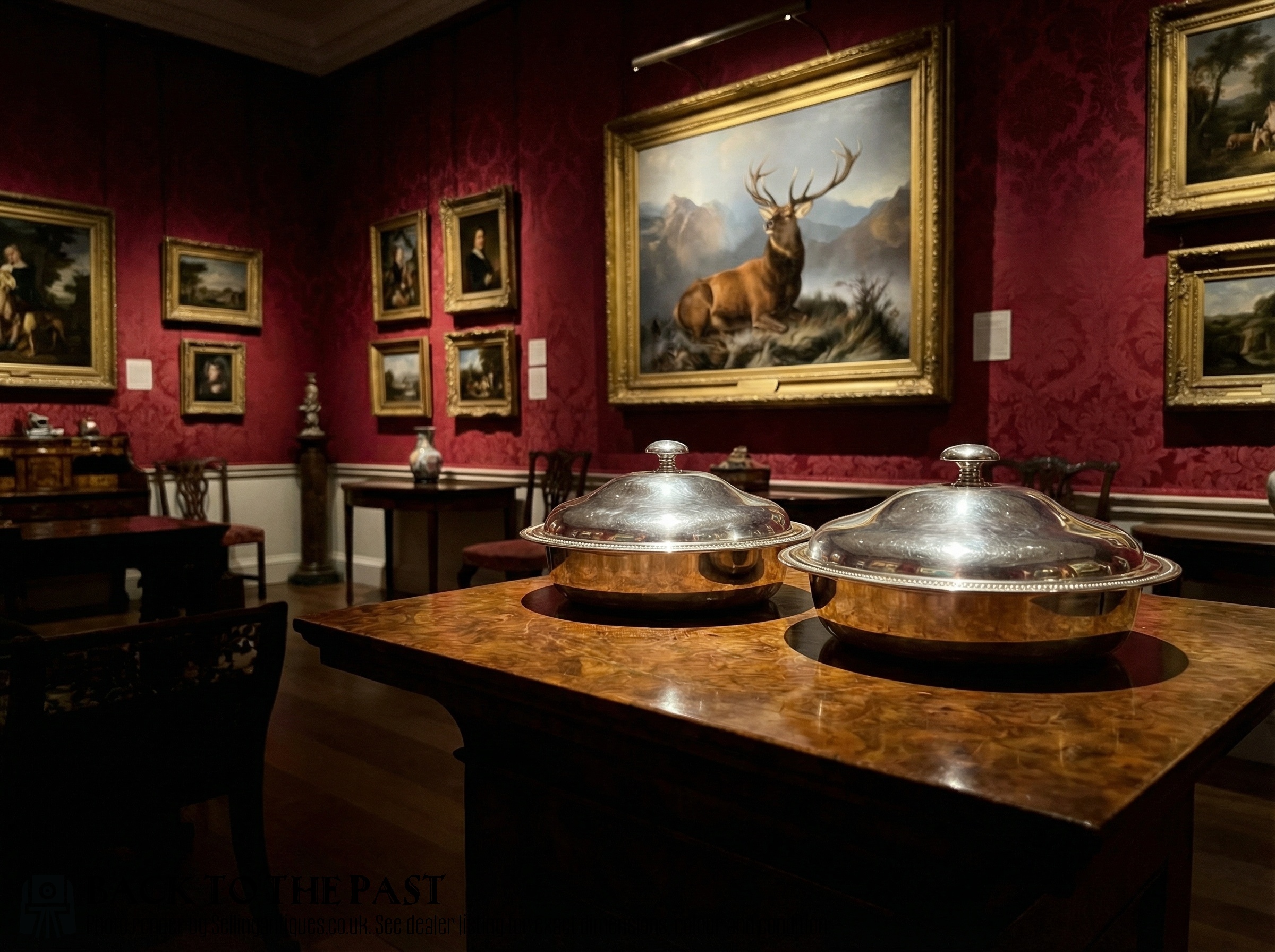
Pair Entree Dishes
When searching for pair entree dishes, collectors examine dual serving vessels intended for the presentation of courses at the dining table. These items typically comprise a base dish, a fitted cover, and often an inner liner or warming base designed to keep food hot. Most examples encountered on this page belong to the Victorian and Edwardian eras, alongside pieces originating in the Georgian period.
The forms span oval and rectangular serving dishes, sometimes described as tureens or chafing dishes. They reflect the dining customs of the nineteenth and early twentieth centuries, where matched sets provided a balanced arrangement upon the sideboard or dining table. The selection ranges from plain domestic serving pieces to elaborate designs bearing crests, handles, and engraved borders.
How They Were Made
The construction of these pieces relies heavily on silver plate, electroplated nickel silver, and Old Sheffield Plate over a base metal such as copper. Old Sheffield Plate involves a thin sheet of silver fused to a copper core, whereas later nineteenth-century manufacturing adopted electroplating techniques to deposit silver onto nickel silver or base metal. Sterling silver examples also appear, representing solid precious metal construction fashioned by silversmiths.
Craftsmen shaped the metal through hammering, rolling, and soldering, applying cast handles, finials, and decorative borders. Techniques such as engraving and piercing decorated the covers and rims, while specialised warming dishes incorporated compartments for hot water to maintain food temperatures.
Some nineteenth-century entree dishes feature clever removable handles, allowing the lid to be flipped over and used as a second serving dish.
What Varies in Quality
Quality in these serving vessels is determined by the weight of the metal, the crispness of the chased or engraved ornament, and the integrity of the plating. Heavier gauge metal provides structural rigidity, preventing distortion of the covers and bases over extended periods of use.
The distinction between standard domestic items and superior examples often rests upon the reputation of the maker, the presence of cast decorative mounts rather than stamped substitutes, and the retention of the original silver layer. Pieces retaining clear hallmarks or maker stamps demonstrate traceable provenance and higher manufacturing standards.
Edward and John Barnard·Walker and Hall·Elkington·Matthew Linwood·Cresswick·Dan Holy·Martin Hall and Co·Asprey·Roberts Smith and Co·Henry Atkins·Paul Storr·James Dixon and Sons·Stephen Smith and Son
The Pair Entree Dishes Glossary
- Old Sheffield Plate
- A method of fusing a thin sheet of silver to a copper ingot before rolling into sheets, producing a dual-metal material characteristic of late eighteenth and early nineteenth-century production. The underlying copper often shows through wear at high points.
- Electroplated Nickel Silver
- A base alloy of copper, nickel, and zinc coated with a layer of silver via an electrolytic process. This technique superseded older plating methods during the nineteenth century.
- Tureen
- A deep serving vessel equipped with a lid, utilised for presenting soups, vegetables, or entree dishes at the table. Many examples include detachable handles to allow the cover to double as a secondary shallow dish.
- Warming Dish
- A specialised serving dish featuring a double-walled base designed to hold hot water. This kept food warm during lengthy formal meals.
Pair Entree Dishes: Frequently Asked Questions
What are pair entree dishes?
These are matched sets of covered serving dishes designed for presenting food at the dining table. They typically include a base, a lid, and sometimes a warming stand or liner.
Historically, they formed part of larger dinner services used during multi-course meals in the nineteenth and early twentieth centuries.
How do I clean silver plated dishes?
Cleaning requires a soft cloth and a gentle silver polish formulated for plated items. Avoid abrasive pads or harsh chemical dips that can strip the thin silver layer from the base metal.
Regular washing in warm soapy water and immediate drying will help maintain the finish of the metal.
What is Old Sheffield Plate?
Old Sheffield Plate is an early form of plating where a sheet of silver is mechanically fused to a copper base before being shaped into an object. This technique was widely used before the invention of electroplating.
Under magnification or through wear, the reddish copper base metal becomes visible beneath the silver surface.
Can I use these for dining?
Many people continue to use these serving dishes for dinner parties and family gatherings. Their practical design makes them suitable for presenting hot vegetables, meats, or side dishes.
Care should be taken to wash and dry them by hand after use rather than placing them in a dishwasher.