
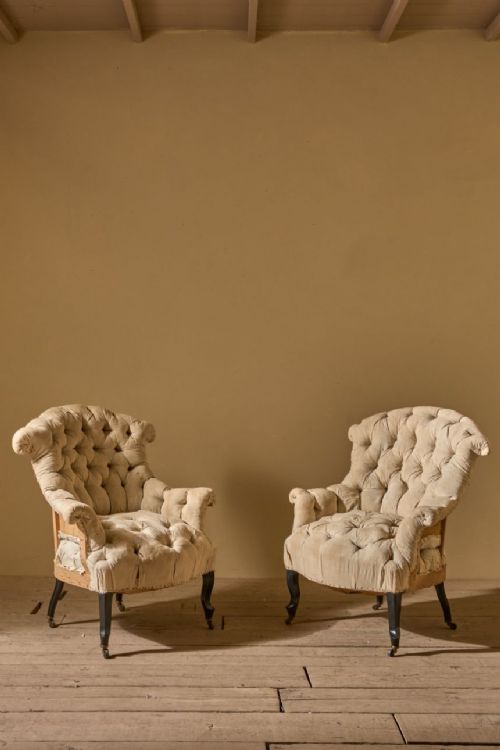
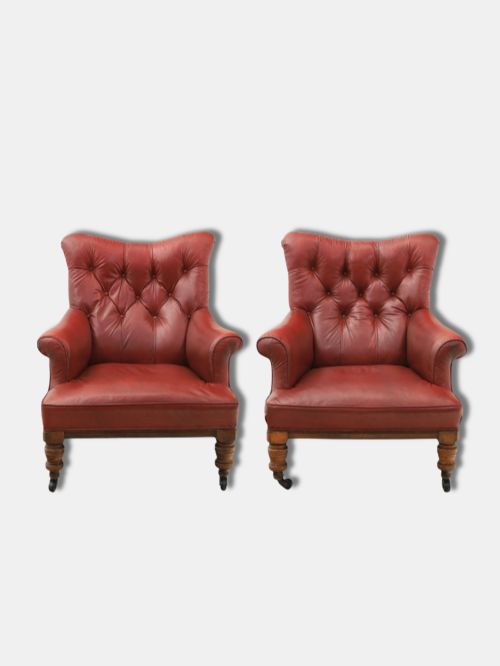
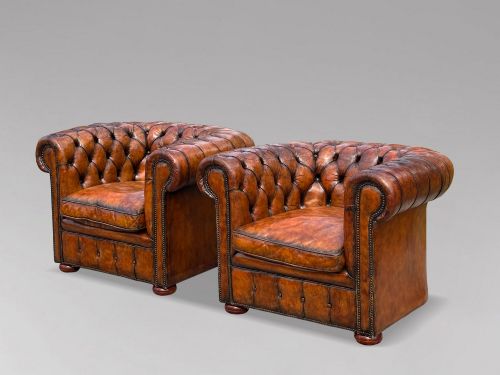
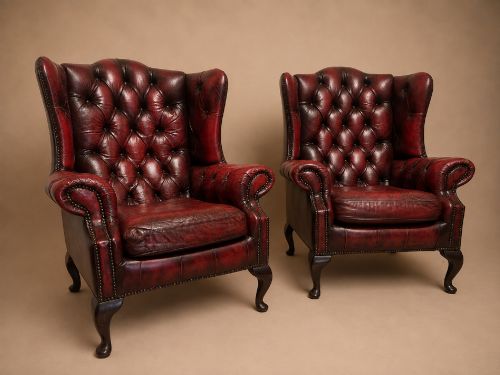

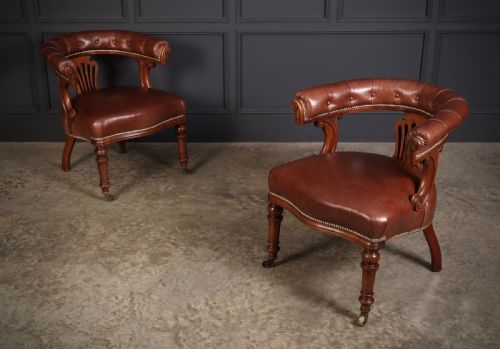


Pair Deep Buttoned Chairs
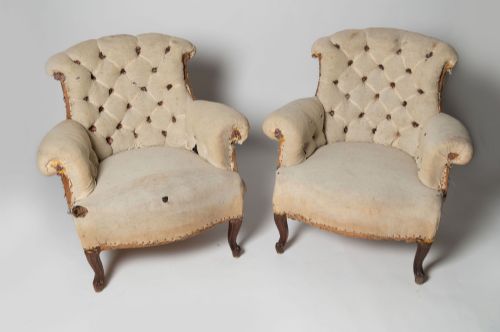
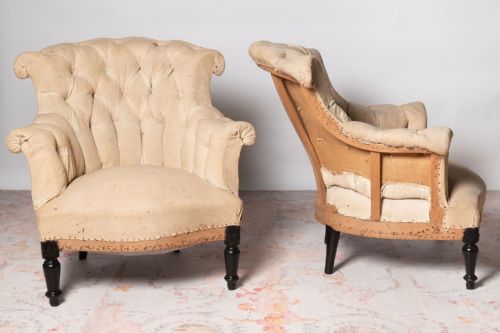
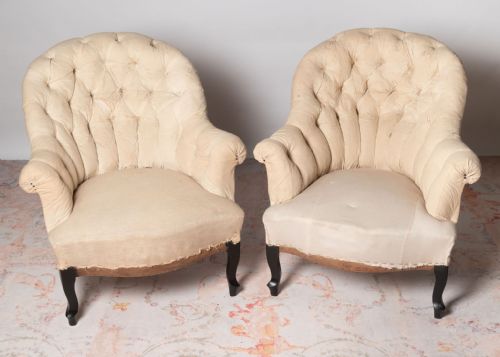
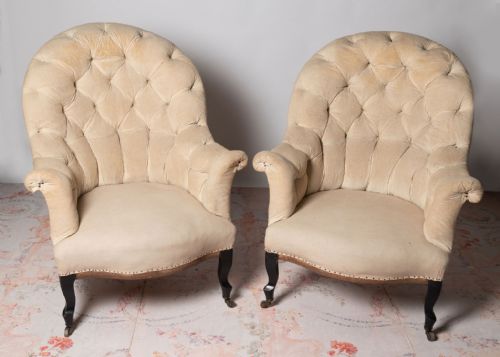
These pair deep buttoned chairs bring traditional seating forms into living spaces with upholstery anchored by rows of tight tufting.
Pair Deep Buttoned Chairs
When searching for pair deep buttoned chairs, buyers encounter matching sets of upholstered seating designed for drawing rooms, libraries, and studies. These forms span Victorian and Edwardian periods, alongside French Napoleon III and later interpretations.
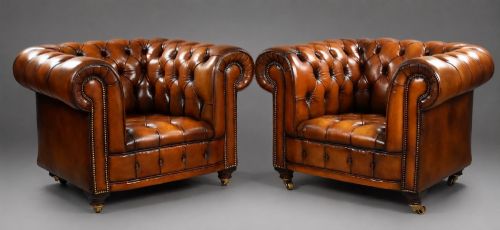
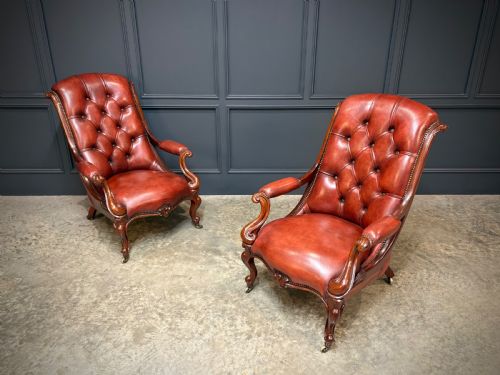
The most common variants on this page include leather Chesterfield club armchairs, wingback chairs, library armchairs, and low-slung bedroom or slipper chairs. Many examples originate from English workshops or French makers, employing generous padding and sprung seats.
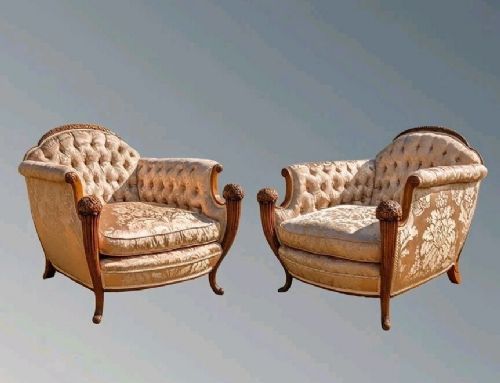
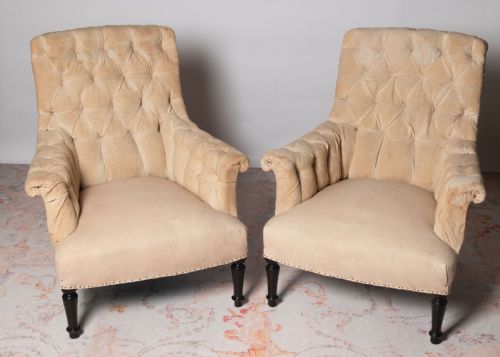
The defining characteristic across these styles is the deep tufting pattern across the backrest, which secures the internal stuffing while creating a distinct geometric texture.
How they were made
Makers constructed the frames using hardwoods such as mahogany, walnut, and general timber, joined to support heavy daily use. Upholstery techniques relied on coil springs tied by hand, horsehair or wool stuffing, and durable outer coverings of leather, Rexine, silk, velvet, or ticking.
Brass tacks frequently secure the edges of the upholstery to the wooden framework, while deep buttoning requires pulling twine tightly through the padding to anchor each button into the internal webbing.
Listings feature items built from mahogany, walnut, brass, leather, fabric, and calico.
What varies in quality
The distinction between tiers of quality rests upon the integrity of the internal frame construction and the proportion of the carved woodwork. Heavier frames with substantial timber and robust springing demonstrate superior workshop standards compared to lighter or later revival pieces.
Material choice also dictates the character of the seating, with high-grade cattle hide leather, pure silk, and heavy velvet showing finer ageing than utility fabrics like Rexine or standard cotton calico.
Howard and Sons·Gillows
The Pair Deep Buttoned Chairs Glossary
- Deep buttoning
- An upholstery technique where buttons are pulled deep into the padding at regular intervals, creating a diamond-tufted pattern that holds the internal stuffing firmly in place.
- Chesterfield
- A traditional English seating form characterised by rolled arms and a back of the same height, typically upholstered in leather with deep buttoning.
- Rexine
- A brand of leathercloth made from fabric coated with nitrocellulose, used as an alternative to genuine hide on mid-period chairs.
- Ticking
- A tightly woven, durable cotton fabric traditionally used as an under-layer or dust cover for upholstery stuffing.
Pair Deep Buttoned Chairs: Frequently Asked Questions
What rooms suit pair deep buttoned chairs?
These seating pairs fit well in studies, libraries, and drawing rooms where traditional furniture anchors the room scheme. Their substantial proportions require adequate floor space to sit comfortably alongside desks or fireplaces.
Matching pairs provide visual symmetry when placed opposite a sofa or flanking a central hearth. Their durable leather or fabric surfaces also handle everyday use in busy living areas.
How do I care for leather upholstery?
Leather surfaces benefit from regular dusting with a soft, dry cloth to prevent grit accumulation in the button folds. Applying a suitable leather conditioner periodically helps maintain the suppleness of the hide.
Avoid placing these chairs in direct sunlight or close to heat sources, which can dry out older leather and cause cracking over time.
Are these chairs comfortable for daily sitting?
Most examples feature deep sprung seats and generous padding designed for relaxation. The supportive backrests and arm heights vary by style, with club chairs offering deep lounging and library chairs providing a more upright seat.
Testing the spring tension and cushion firmness helps determine the best seat style for reading or long periods of rest.
How do I identify Victorian styles?
Victorian pieces often display darker hardwoods like mahogany and walnut, occasionally featuring carved wooden details on the arms and legs. The upholstery typically employs tight buttoning across curved tub chairs or high-backed library chairs.
Comparing the frame joinery, weight, and material choices against known nineteenth-century construction methods aids in dating individual pieces accurately.