

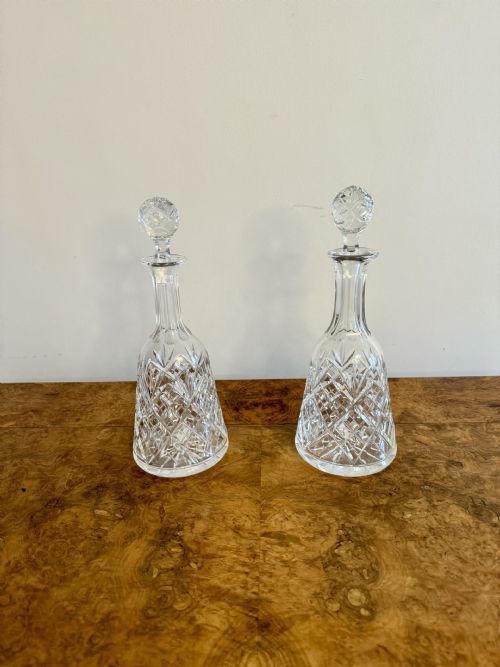


Pair Cut Crystal Decanters
These pair cut crystal decanters bring symmetry and sparkle to a sideboard, combining heavy lead glass with intricate wheel cutting.
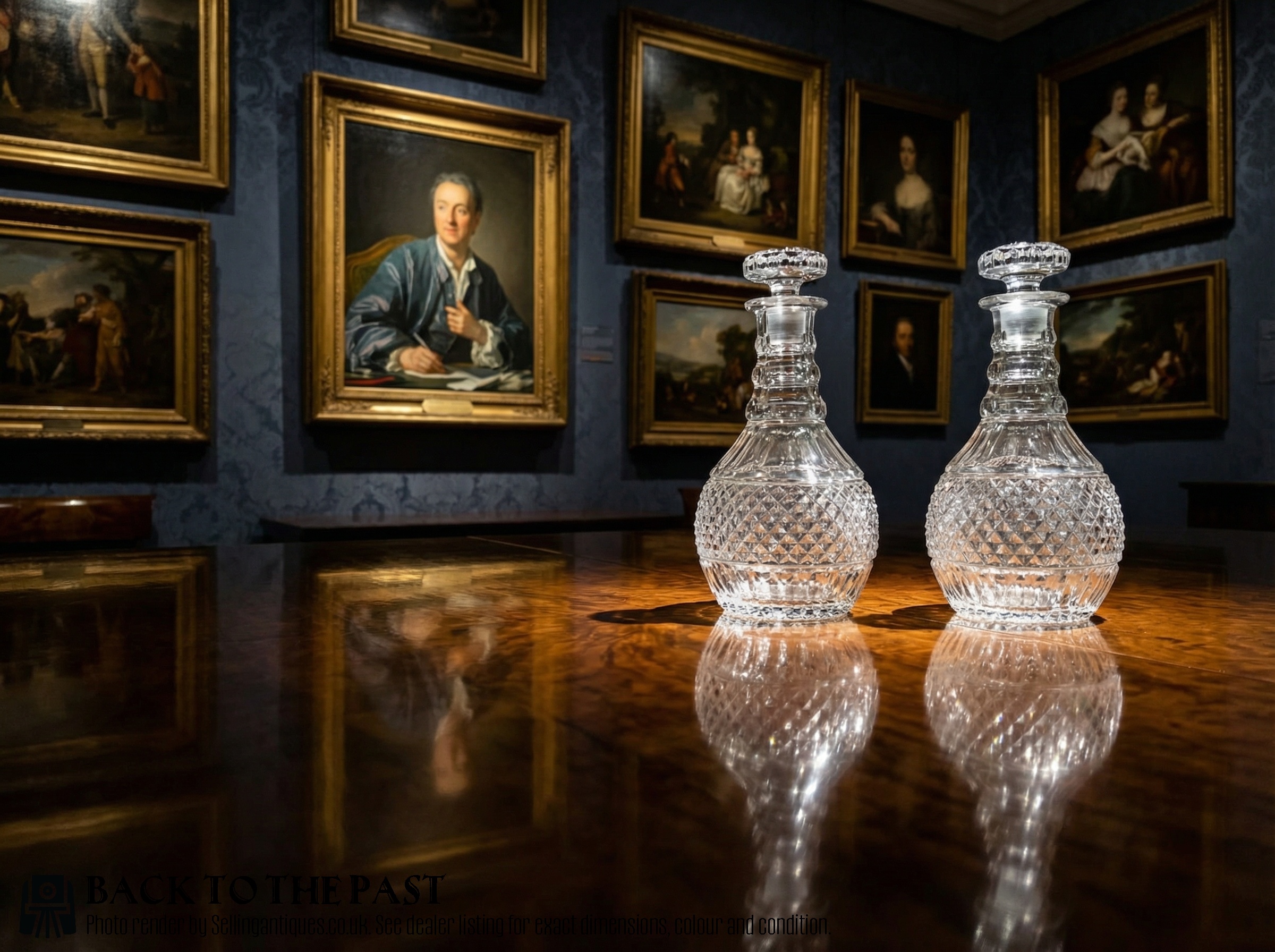
Pair Cut Crystal Decanters
A pair cut crystal decanters collection centres on matching vessels designed for serving wine, spirits and liqueurs from the Georgian, Victorian and Edwardian periods.
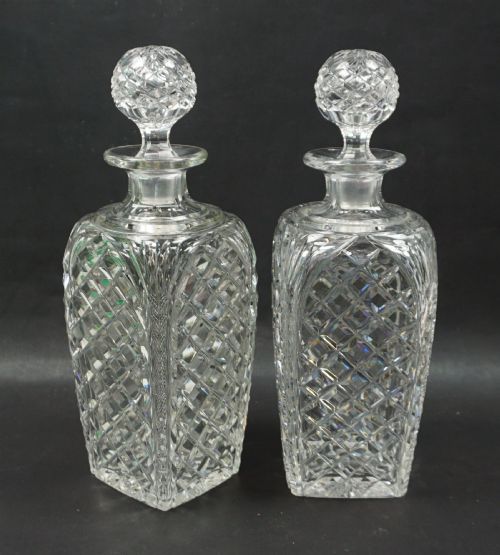
The most common examples on this page are Edwardian and Victorian matching sets, often featuring deep hobnail cutting, geometric panels or star engraving.
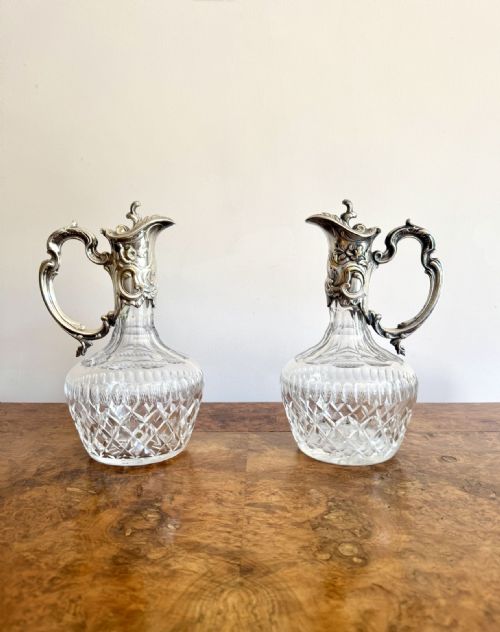
Beyond standard spirit decanters, the selection includes claret jugs with silver plated mounts, small perfume bottles and shaft and globe forms.
Manufacturing Methods
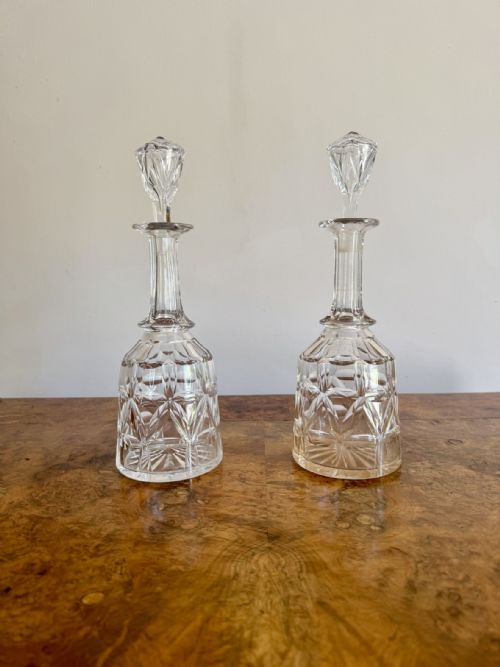
The vessels are formed from lead crystal or clear glass using traditional blowing techniques, sometimes utilising optical moulds to create internal ribs or flutes.
Artisans then apply decorative wheel cutting, engraving or etching to the exterior surface, creating facets that refract light through the heavy glass.
Many examples incorporate silver or silver plated collars, mounts and stoppers, combining metalwork with heavy glass bodies.
Listings span from George III pieces to Edwardian silver-mounted claret jugs in lead crystal and clear glass.
Quality Variations
The distinction between standard and superior pieces rests on the crispness and depth of the wheel cutting, where sharper facets catch the light more intensely.
Weight and metal content also differentiate the range, as heavy lead crystal combined with hallmarked silver or quality silver plate elevates a pair.
The presence of matching original stoppers and clear, unblemished glass without internal clouding marks the upper tier of surviving examples.
James Powell·Mappin & Webb·William Hutton & Sons
The Pair Cut Crystal Decanters Glossary
- Hobnail cut
- A pattern of prominent, pyramid-shaped facets resembling the hobnails on traditional boots. This heavy cutting creates exceptional tactile grip and light refraction.
- Prussian style
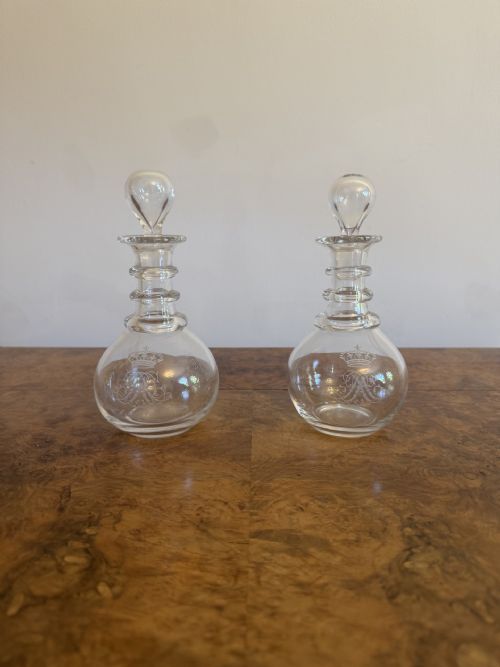
- A decanter shape characterised by a tapering body and three distinct neck rings. It originated in the Georgian era and remained popular into the nineteenth century.
- Shaft and globe
- A silhouette featuring a long, slender neck above a bulbous, rounded body. Victorian makers frequently utilised this form for engraved spirit containers.
- Silver plate
- A thin layer of silver fused to a base metal, commonly copper or brass. It appears frequently on Edwardian claret jug mounts and collars.
- Optically blown
- A technique where molten glass is inflated inside a ribbed mould to produce internal patterns. This method creates subtle texture within the walls of the vessel.
Pair Cut Crystal Decanters: Frequently Asked Questions
How were these decanters used?
These matching vessels served port, sherry, claret and spirits on dining tables and sideboards. They kept drinks ready for guests while displaying the host's refined taste.
The paired stoppers kept the contents fresh and prevented dust or insects from entering the wine between pours.
How can I tell Victorian from Georgian decanters?
Georgian pieces often feature heavier metal content, three distinct neck rings, and simpler geometric or fluted cutting. They tend to have a heavy pontil mark on the flat base.
Victorian examples frequently display denser hobnail patterns, etched floral motifs, or shaft and globe silhouettes reflecting nineteenth-century manufacturing shifts.
Do matching stoppers matter?
Original matching stoppers significantly enhance the integrity and collectability of a pair. Each stopper was typically ground to fit its specific neck during production.
Replacement stoppers often fit loosely or show subtle differences in glass colour and cut pattern under close inspection.