

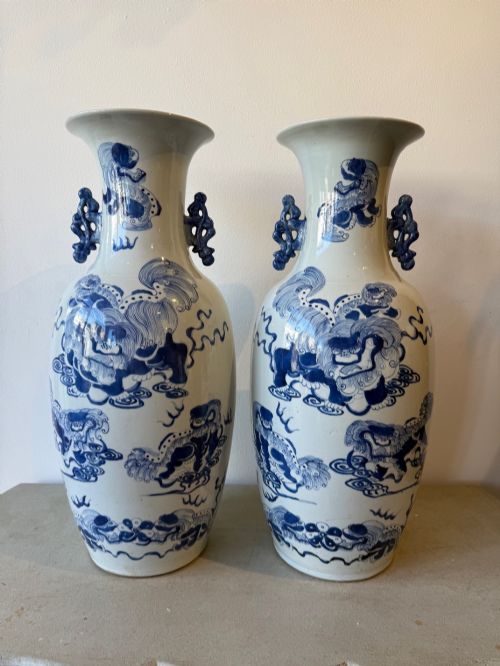
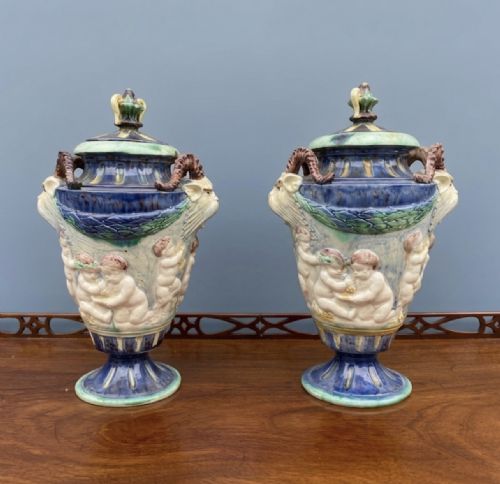
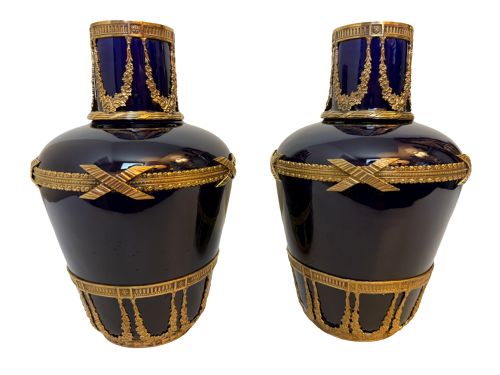
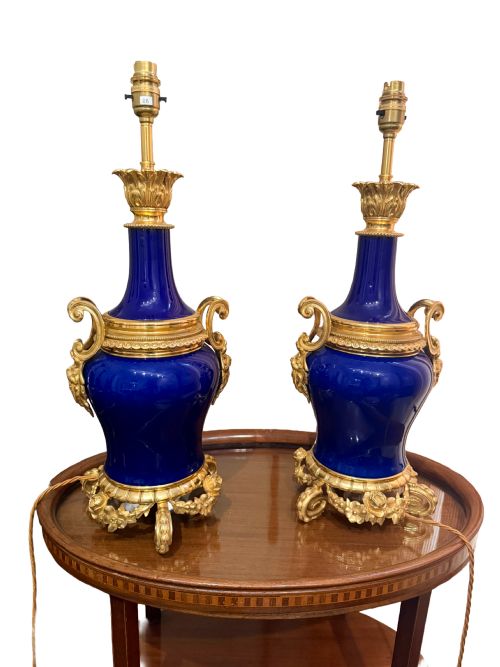


Pair Cobalt Urns
These pair cobalt urns bring rich blue depth and classical symmetry to any room, offering traditional elegance through centuries of ceramic artistry.
Pair Cobalt Urns
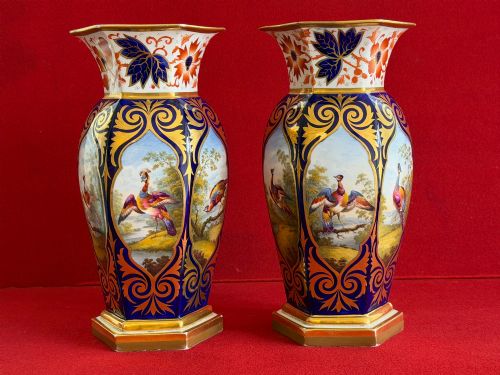
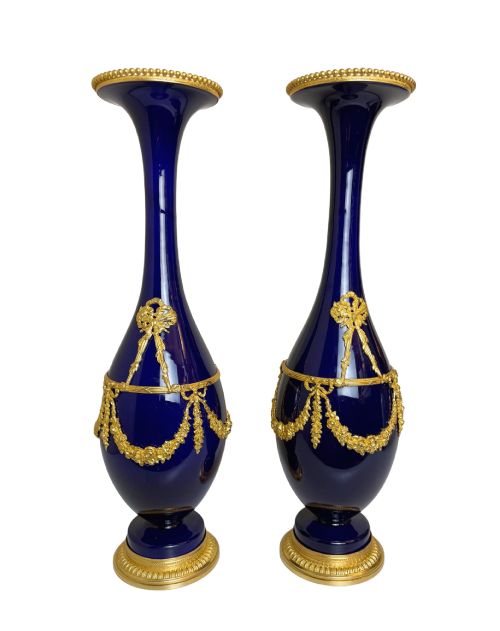
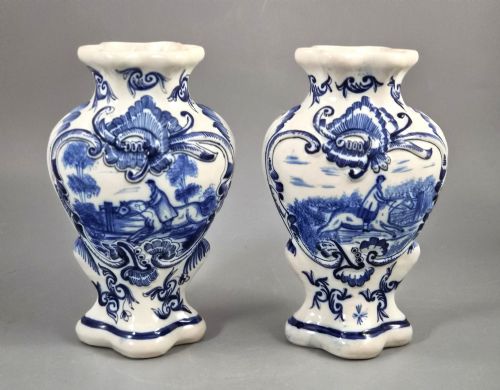
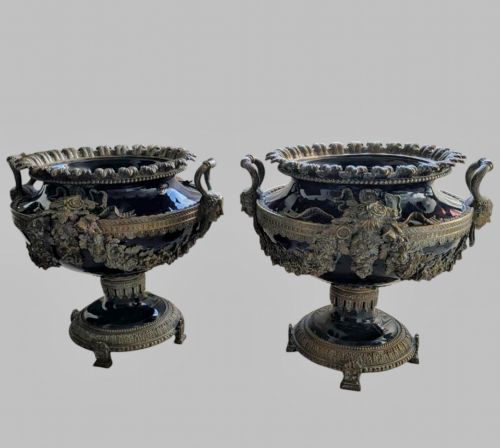
When you search for pair cobalt urns, you encounter matching dual vessels rooted in deep blue glazes and earthenware forms. These objects span decorative jars, lidded vessels, and table lamps originating from British, French, and Asian workshops.
The nineteenth century yields the most varied examples on this page, shifting from French porcelain and faience to Japanese Imari and Satsuma styles. Makers applied cobalt across baluster shapes, amphora profiles, and wide-rim vases designed for formal display.
How they were made
Potters shaped porcelain, earthenware, or ceramic bodies before applying rich cobalt oxide decoration beneath or over the glaze. Firing at high temperatures fixed the deep blue pigment permanently into the material.
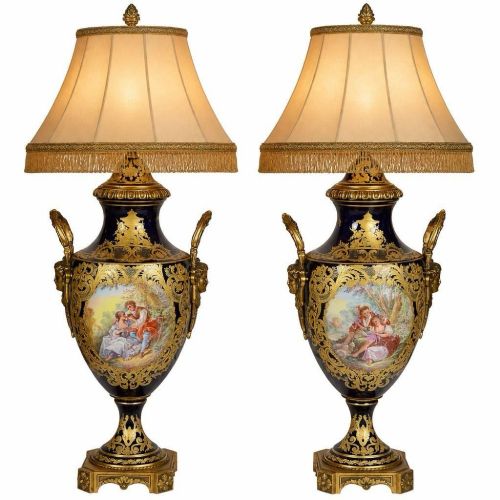
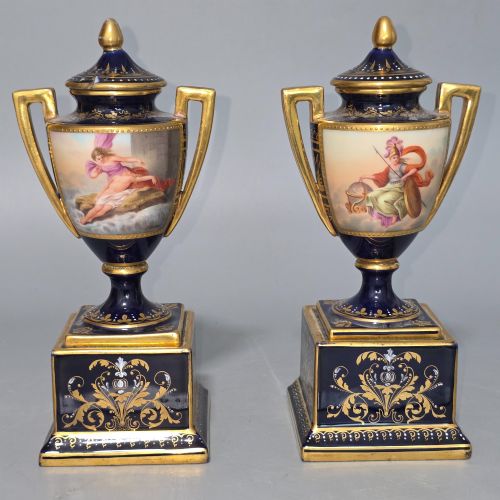
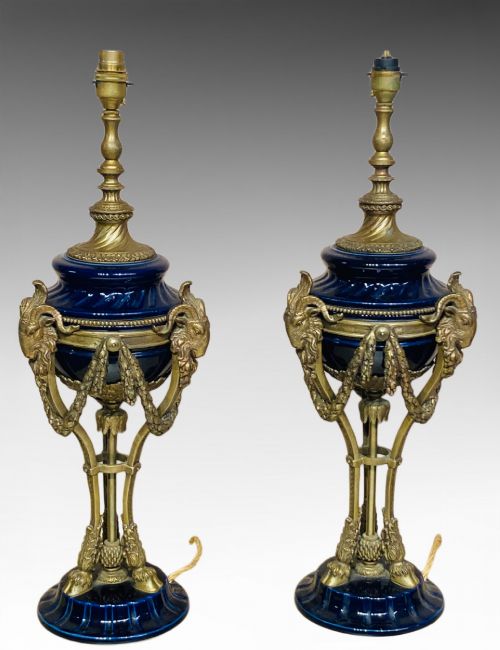
Many specimens combine ceramic bases with cast or gilded metal mounts such as ormolu and gilt bronze. Artisans frequently added hand-painted enamel details and heavy gold leaf highlights to enhance the cobalt ground.
Listings feature porcelain, earthenware, and ceramic bodies decorated with gold leaf, enamel, and ormolu mounts.
What varies in quality
The distinction between standard production and top-tier pieces rests on the precision of the hand-painting and the depth of the cobalt pigment. Superior items display crisp, detailed brushwork and richly layered gold leaf or moriage relief.
Mounts and hardware also define the grade of the work, where finely chased ormolu trim outclasses simple gilded metal. The harmony between the two matching vessels determines overall success.
Flight Barr And Barr·Fourmaintraux Courquin·Mason·Vienna Porcelain·Kinkozan·Carlton Ware·Sevres·Wedgwood·Doulton Lambeth·Royal Doulton·Royal Crown Derby·Ernst Wahliss·Samson
The Pair Cobalt Urns Glossary
- Cobalt
- A deep blue metallic oxide used to colour ceramics before or during glazing. It produces the rich, dark hue characteristic of these urns.
- Ormolu
- Gilded bronze mounts applied to the edges and bases of ceramic vessels. This technique was widely utilised in French decorative arts.
- Imari
- A Japanese export porcelain style featuring cobalt blue underglaze combined with iron red and gold. It gained immense popularity in Europe during the nineteenth century.
- Moriage
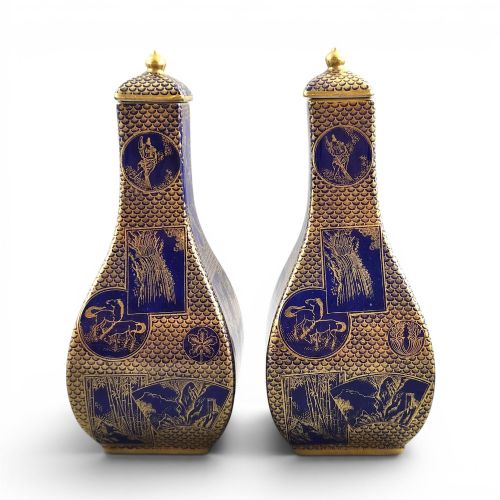
- A Japanese ceramic decoration technique using raised slip to create textured patterns. This method frequently frames panels of cobalt and gold.
- Baluster
- A vertical ceramic form with a rounded body tapering towards the base and neck. Many traditional urns and jars utilise this profile.
Pair Cobalt Urns: Frequently Asked Questions
How are pair cobalt urns traditionally displayed?
These matching vessels typically stand on mantelpieces, sideboards, or console tables to create symmetrical focal points in a room.
Collectors often position them as standalone decorative statements or pair them with matching lamp fittings for practical illumination.
What periods do these blue urns originate from?
The selection spans several centuries, with a heavy concentration of pieces dating from the nineteenth and early twentieth centuries.
Earlier examples from the seventeenth and eighteenth centuries also appear alongside Victorian and Edwardian interpretations.
Can these urns function as lamps?
Several pieces in this category arrive converted into table lamps with electrical fittings attached to the ceramic bodies.
Original lamp conversions often integrate ormolu bases and retain the balanced proportions of the initial lidded jars or vases.
How do I distinguish between Japanese and European styles?
Japanese variants frequently display Imari palettes or Satsuma earthenware with dense gold relief and pictorial panels.
European pieces generally lean towards French Rococo revival, neoclassical forms, or crisp blue and white Delft and Worcester designs.