



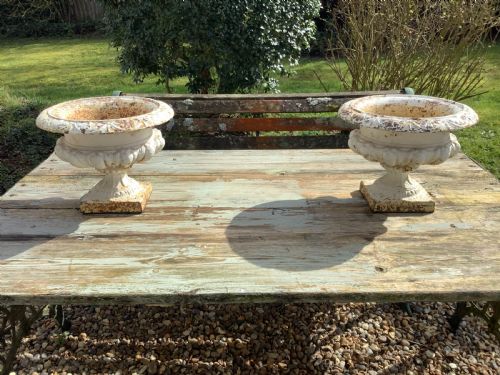


Pair Classical Garden Urns
Pair classical garden urns stand as formal ornaments for lawns and terraces, offering enduring architectural weight to outdoor spaces.
Pair Classical Garden Urns
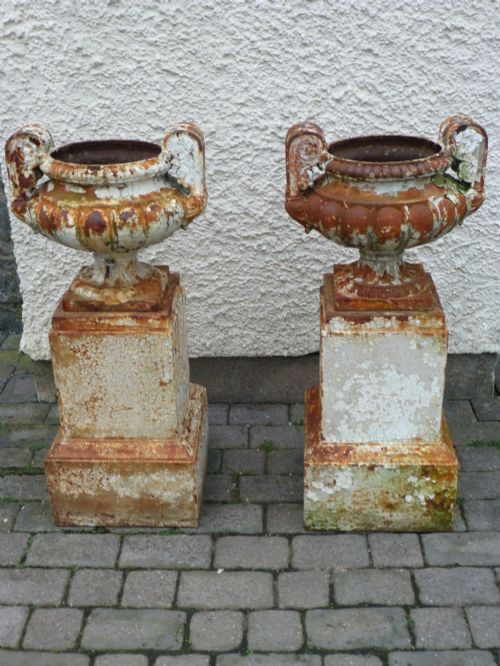
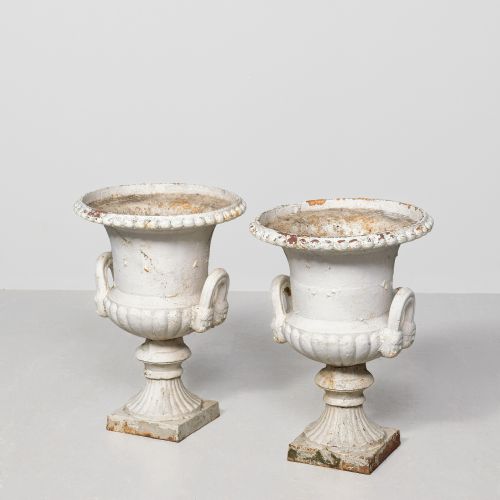
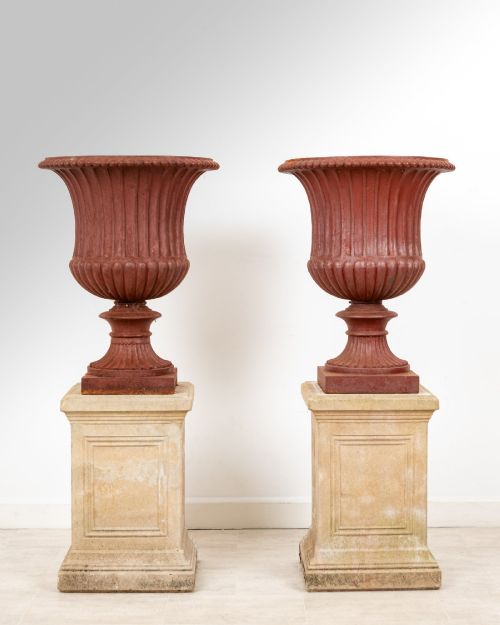
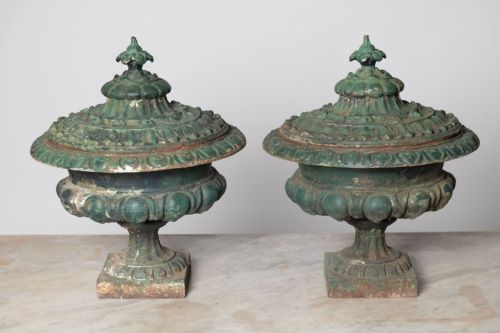
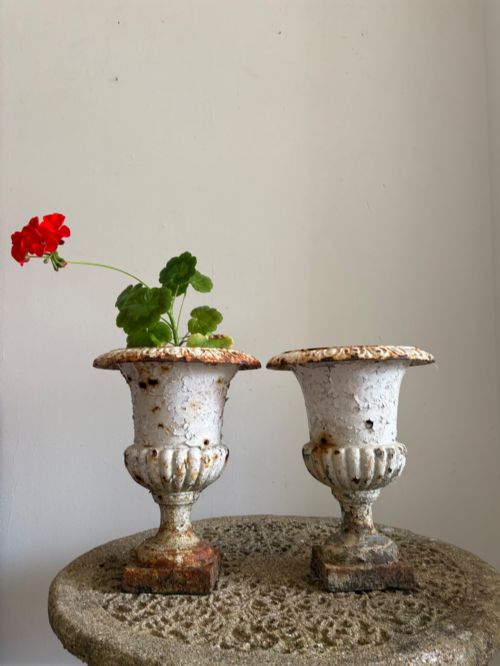
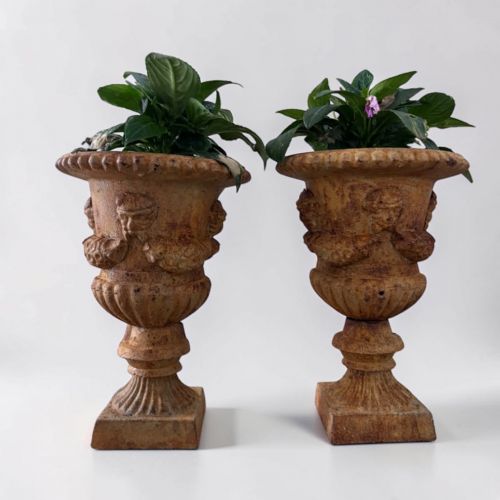
Pair classical garden urns take the form of heavy vessels designed to punctuate paths, terraces, and formal grounds. The most common version encountered on this page is the Campana shape cast in iron, often raised upon matching plinths or pedestals.
Makers and foundries shaped these vessels across the nineteenth century, drawing on Georgian and Regency design traditions. Examples span from Victorian cast iron models to twentieth-century iterations in stone and terracotta.
The objects serve primarily as structural focal points in garden design, balancing foliage with rigid classical geometry. They appear alongside related forms such as tazza urns, planters, and decorative columns.
Materials and Manufacture
Foundries produced metal versions by pouring molten iron into sand moulds, creating crisp foliage details and sturdy bodies. These iron vessels frequently retain remnants of original paint or show heavy weathering on the surface.
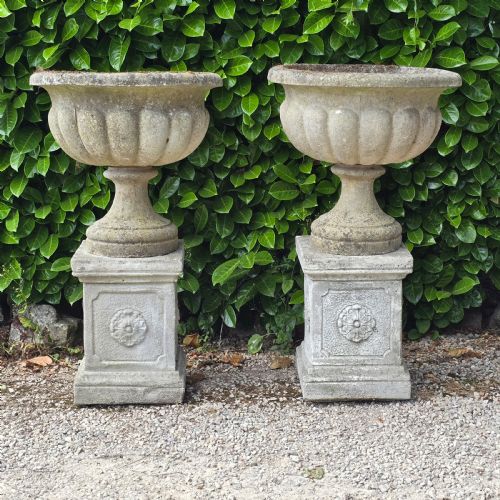
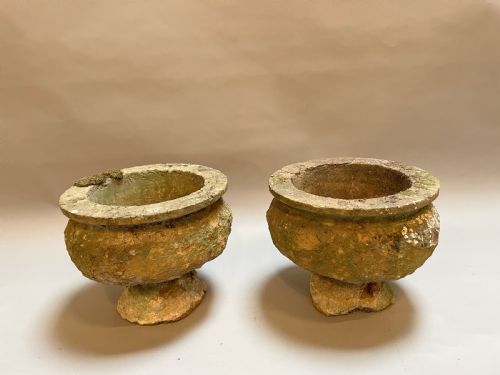
Masons carved stone and marble variants by hand, utilising limestone, soft stone, and white marble for monumental garden ornaments. Terracotta versions were shaped from clay and fired to create porous, warm-toned planters.
Many heavy iron urns were designed to sit upon stone pedestals or plinths, elevating the planting bowl to a commanding height.
Listings span iron, terracotta, limestone, and marble, predominantly originating from the nineteenth and early twentieth centuries.
Judging Quality and Character
Quality rests upon the crispness of the cast or the precision of the stone carving, where superior examples exhibit sharp acanthus leaves and well-defined classical moulding. Heavy metal casting indicates a sturdier vessel intended to endure centuries outdoors.
Completeness alters the character of a piece, particularly the presence of original lids, matching plinths, or untouched paint surfaces. The integrity of the material, whether solid iron or carved marble, separates utilitarian pots from sculptural works.
Falkirk Carron foundry·Coalbrookdale
The Pair Classical Garden Urns Glossary
- Campana
- A bell-shaped garden urn with a flared rim and a footed base. This silhouette dominates nineteenth-century metal and stone manufacturing.
- Tazza
- A shallow cup or bowl set upon a stem and foot. These wide vessels function as low garden planters.
- Reconstituted stone
- A composite material made from crushed stone and cement binder moulded into classical forms. It mimics natural stone at a heavier weight.
- Plinth
- A heavy base block supporting an urn or column. These elevate the vessel above ground level.
- Corinthian column
- A tall architectural support featuring carved acanthus leaves at the capital. They occasionally accompany garden urns on site.
Pair Classical Garden Urns: Frequently Asked Questions
What is a campana urn?
A campana urn is a bell-shaped vessel with a wide mouth and tapering body, designed for classical gardens.
These urns typically sit on pedestals and are cast in iron or carved from stone.
How do I date an iron urn?
Dating relies on foundry marks, the crispness of the casting, and the thickness of the metal wall.
Victorian and Regency examples often show heavier ironwork and weathered paint layers accumulated over decades.
Can these urns stay outside in winter?
Most cast iron and stone vessels tolerate cold weather, though terracotta requires protection from frost.
Heavy iron urns withstand winter conditions particularly well when properly drained.
What is the difference between cast iron and reconstituted stone?
Cast iron is poured molten into moulds to create thin, rigid walls with sharp decorative relief.
Reconstituted stone uses a cement and aggregate mixture pressed into forms to replicate natural carved stone.