




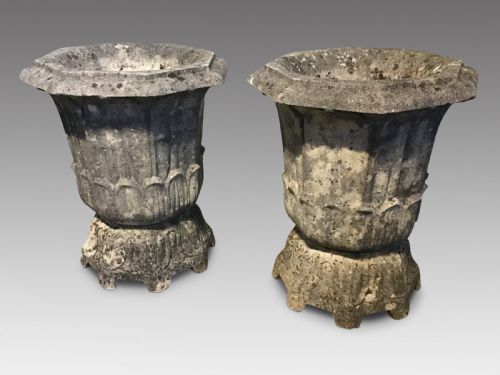


Victorian Style Garden Urns
Victorian style garden urns bring classic garden ornament and stately planting spaces to grounds large and small.
Victorian Style Garden Urns
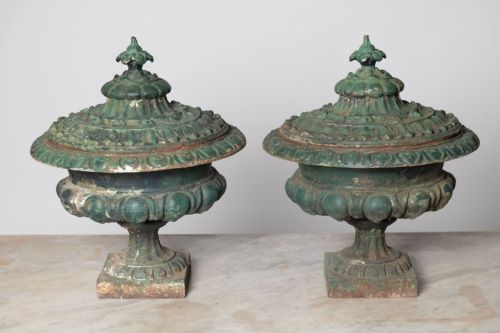
Victorian style garden urns are ornamental vessels designed for planting or architectural display in outdoor spaces. When you search for Victorian style garden urns, you encounter robust cast iron forms and weathered stone compositions rooted in nineteenth century classical design. These pieces anchor paths, terraces, and lawn edges with formal symmetry and enduring presence.
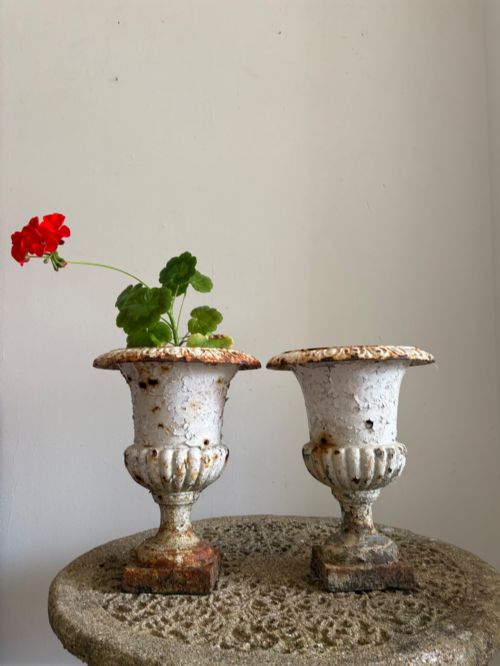
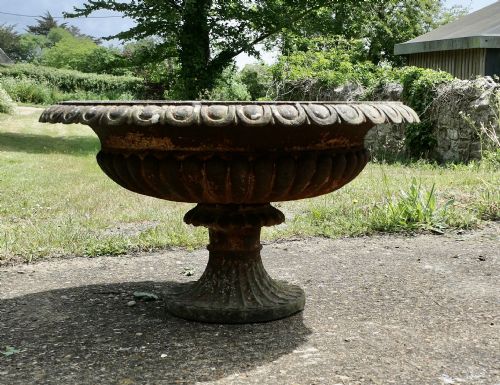
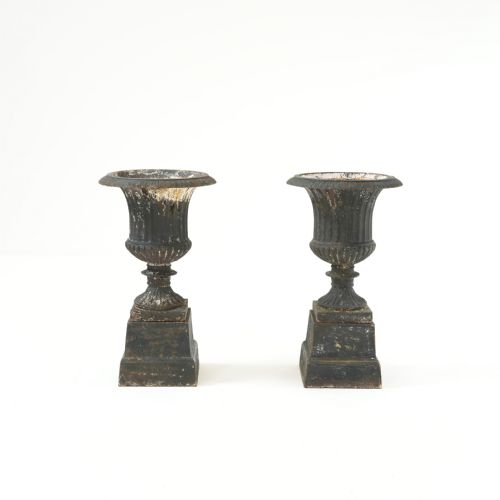
The versions most commonly met on this page span the nineteenth century through to mid twentieth century revivals. You see campana shapes, footed jardiniere vessels, and matched pairs standing upon dedicated plinth bases. Styles draw heavily upon neoclassical and classical revival traditions, featuring traditional motifs and robust proportions.
How they were made
Makers utilised durable metals and stone compositions suited to withstand the elements over generations. Cast iron forms emerge from foundry moulds, yielding crisp architectural detailing and heavy, resilient vessel walls designed to endure outdoor weathering. Paint finishes, sometimes surviving in original distressed states, coat the metal surfaces for protection and visual character.
Stone alternatives utilise cast stone and reconstituted stone materials moulded into solid, classical silhouettes. These aggregate mixtures replicate the appearance of quarried stone while offering consistent structural integrity for garden pedestals and lawn placements.
Victorian Style Garden Urns Retail Price Guide 2026
Typical asking prices for victorian style garden urns among the pieces listed under this phrase on Sellingantiques today, from the lower quarter to the upper quarter. They describe what is for sale here now, not the wider market.
Listings feature periods spanning the 19th century through to 1950, alongside cast iron and reconstituted stone materials.
What varies in quality
Quality rests in the crispness of the casting and the integrity of the original material. Finer examples display sharply rendered ornament, such as acanthus leaf detailing, where mould lines are clean and proportions feel balanced rather than heavy.
The presence of matched pairs and original supporting plinths elevates a piece significantly. Furthermore, surviving original paint surfaces or honest patination acquired through decades outdoors distinguish superior specimens from later reproductions.
The Victorian Style Garden Urns Glossary
- Campana urn
- A bell-shaped vessel with a flared rim and tapering body, widely utilised in classical garden design. This form has remained popular since antiquity.
- Jardiniere
- An ornamental pot or stand designed specifically for holding plants or flowers. These vessels often sit lower and wider than traditional tall urns.
- Reconstituted stone
- A composite material made from crushed stone bound with cement, cast into moulds to imitate natural stone. It provides durable garden ornamentation.
- Plinth
- A heavy base or pedestal upon which an urn stands to elevate its position. Plinths add architectural presence to garden displays.
Victorian Style Garden Urns: Frequently Asked Questions
Where should I place these urns?
These pieces suit formal lawns, terrace edges, and pathway intersections where their classical silhouettes command attention.
Pairs look particularly striking flanking an entrance or terminating a garden vista on stone plinths.
Are cast iron urns heavy?
Cast iron garden vessels possess substantial weight due to the density of the metal. This heavy construction ensures they remain stable outdoors without tipping.
Plan for adequate help when positioning larger examples on site.
Can I leave cast iron outdoors year round?
Cast iron withstands outdoor conditions well, especially when protected by durable paint layers or natural rust patination. The robust metal thrives in open garden environments.
Ensure drainage holes remain clear so water does not pool and freeze inside.
How do I identify a nineteenth century piece?
Nineteenth century examples typically display heavier metal casting techniques and deep, authentic patination developed over decades. Stylistic cues include classical revival motifs and robust campana proportions.
Compare surface textures and construction seams with known period standards.