



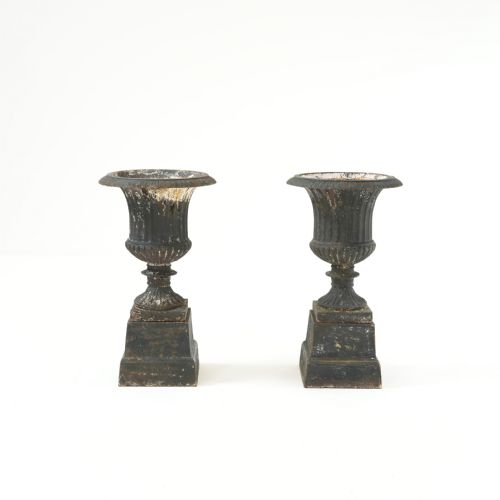


Campana Urns on Plinths
Campana urns on plinths are classical garden and decorative vessels elevated on sturdy bases, bringing formal proportion and antiquity to any setting.
Campana Urns on Plinths
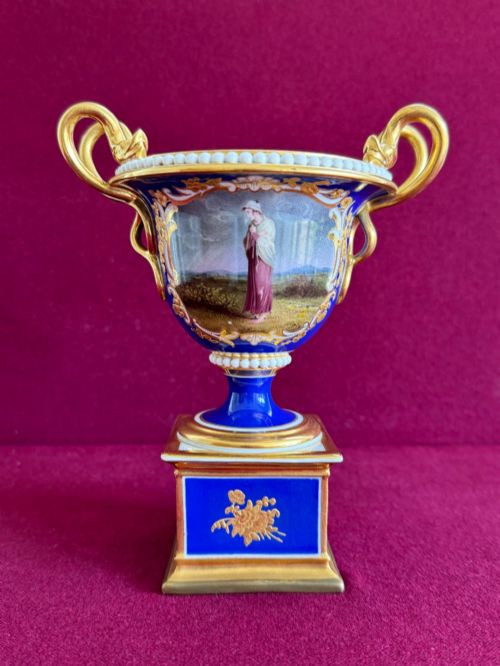
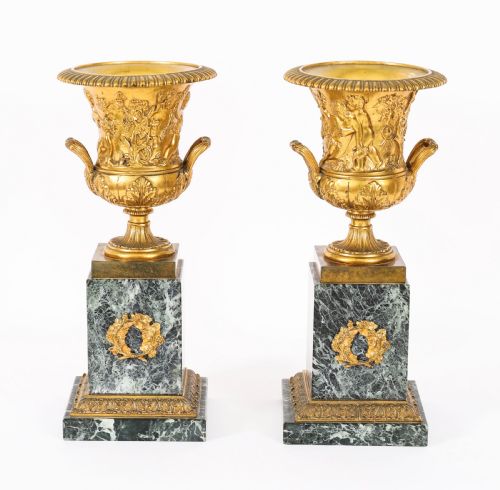
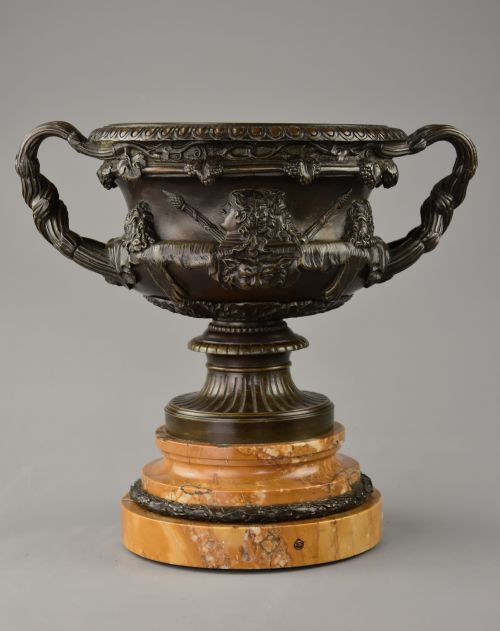
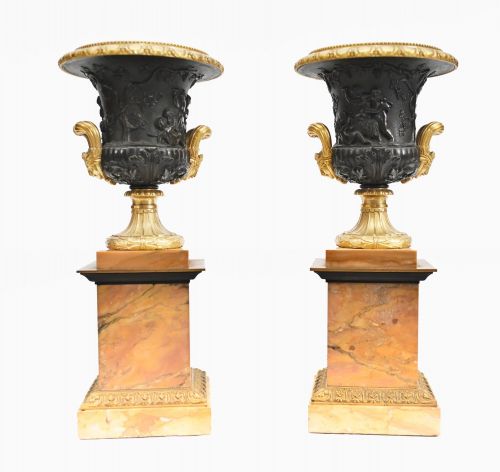
When you search for campana urns on plinths, you encounter classical vessels shaped like inverted bells, raised upon solid architectural bases or stepped plinths. These pieces draw heavily on ancient Roman models, adapted over successive centuries for both interior display and garden decoration.
The versions most commonly met on this page date from the nineteenth century, including Victorian, Edwardian, and Regency interpretations. Makers utilised durable cast iron for garden settings, while smaller indoor examples emerge in bronze, gilt bronze, marble, and spelter.
Many of these objects arrive as matched pairs, featuring decorative elements such as gadrooning, Bacchic motifs, and cherubs. They function equally as garden planters or as distinct sculptural objects derived from Grand Tour influences.
How they were made
Foundry workers cast larger garden examples in iron, pouring molten metal into sand moulds to create robust walls capable of withstanding outdoor elements. Smaller decorative versions utilise bronze and spelter, often finished with gilt or patinated surfaces to mimic ancient metalwork.
Masons and lapidaries shaped marble and stone varieties, sometimes incorporating Ashford marble for detailed inlaid work. Artisans chased and refined bronze casts by hand, adding crisp definition to classical details like handles, gadrooning, and classical friezes.
Campana Urns on Plinths Retail Price Guide 2026
Typical asking prices for campana urns on plinths among the pieces listed under this phrase on Sellingantiques today, from the lower quarter to the upper quarter. They describe what is for sale here now, not the wider market.
If standard foliage feels too restrained, a Bacchic campana urn brings dancing cherubs and grapevines straight to the terrace.
What varies in quality
The sharpness of the casting distinguishes superior examples from simpler production pieces, particularly in how cleanly the classical foliage, handles, and figures are rendered. Crisp, deep relief work indicates a careful foundry process and a high-grade original model.
Material choice dictates the intended environment and fineness of detail, with hand-chased bronze and worked marble occupying the top of the range for interior display. Iron garden castings rely on proportion and substantial plinths to achieve their architectural presence.
Andrew Handyside·Selim Bright
The Campana Urns on Plinths Glossary
- Campana urn
- A vessel shaped like an inverted bell, derived from classical pottery and stone forms. This silhouette forms the primary body of the urns found on this page.
- Plinth
- A heavy rectangular or stepped base that elevates an urn or statue. These architectural supports give the vessels vertical emphasis and stability.
- Grand Tour
- A cultural journey across Europe undertaken by wealthy young men during the eighteenth and nineteenth centuries. Travellers collected small bronzes and classical antiquities, inspiring later reproductions.
- Gadrooning
- A decorative carved or cast motif consisting of convex curves or flutes in a parallel series. This ornamentation frequently encircles the lower bowl of the urn.
- Spelter
- An alloy of zinc and lead, often cast and painted to imitate bronze. Makers utilised this material for decorative interior pieces during the nineteenth century.
Campana Urns on Plinths: Frequently Asked Questions
Are these urns meant for the garden?
Cast iron examples function outdoors as robust garden planters or focal points on lawns and terraces. Their durable metal construction withstands weathering while anchored securely on stone or iron plinths.
Smaller pieces cast in bronze, marble, or spelter suit interior display exclusively. These delicate materials belong indoors on side tables or pedestals to preserve their fine surfaces.
How do I identify a Grand Tour piece?
Grand Tour pieces typically date from the nineteenth century and scale down famous classical monuments or antiquities. Look for materials like bronze, gilt bronze, and marble used in cabinet-sized decorative objects.
Subject matter often includes classical vases, mythological figures, and architectural models collected during European travels. These items reflect an academic nineteenth-century interest in classical antiquity.
What is Ashford marble?
Ashford marble is not a true geological marble, but a dense black limestone quarried near Ashford in Derbyshire. Craftsmen used it as a dark base for intricate inlaid stone ornamentation.
Pieces utilising this material often date to the nineteenth century and display polished, smooth surfaces. The dark stone provides a stark contrast to applied decorative elements.
Do these urns come as pairs?
Many listings feature matched pairs designed for symmetrical placement on either side of a doorway, path, or mantelpiece. This balanced arrangement aligns with classical architectural principles.
Single urns also appear frequently, functioning effectively as standalone garden ornaments or interior decorative objects. Each listing specifies whether the piece is offered individually or as a pair.