



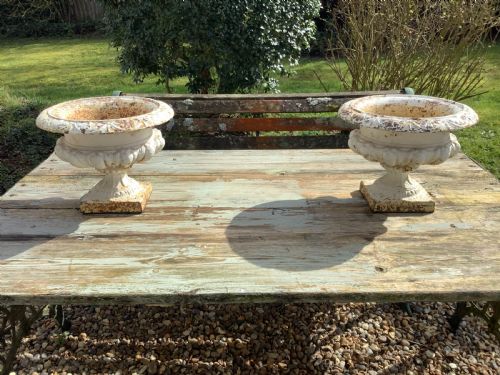


Painted Iron Garden Urns
Painted iron garden urns bring formal weight and classic silhouette to planting schemes, turning lawns and terraces into rooms.
Painted Iron Garden Urns
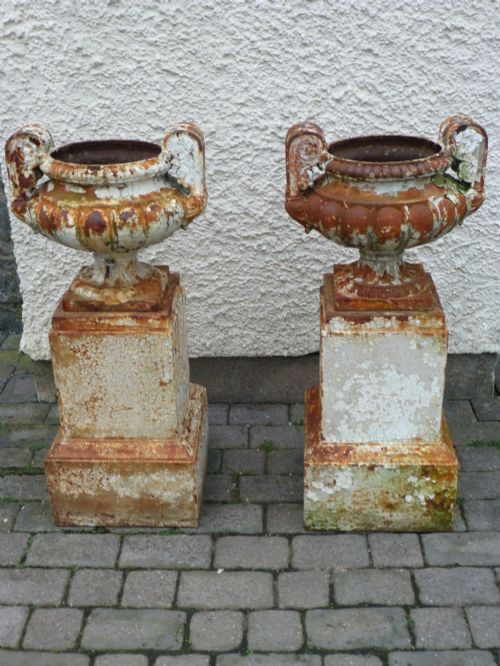
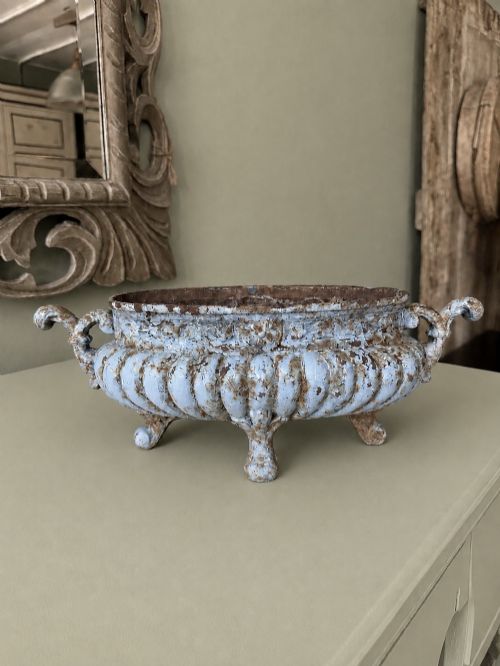
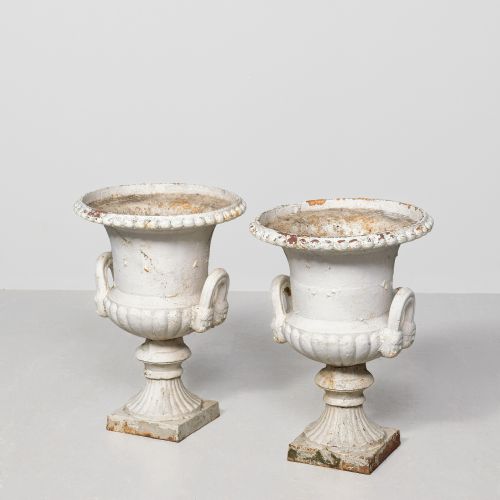
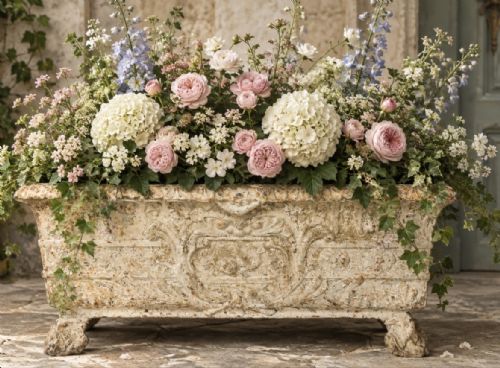
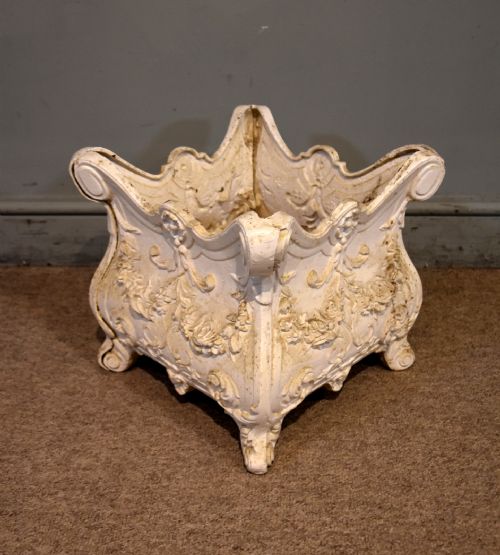
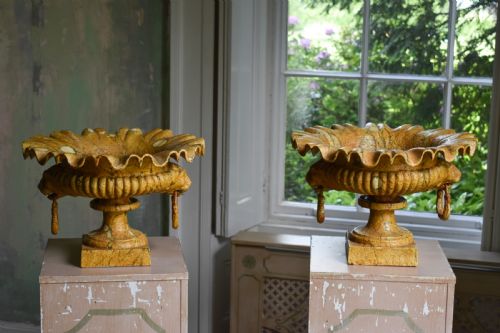
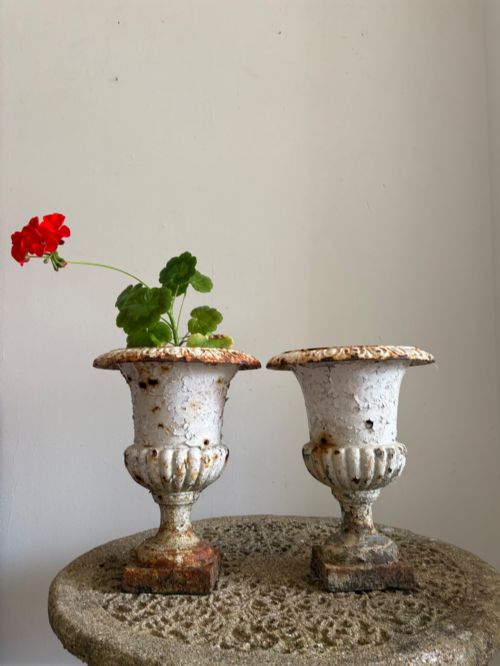
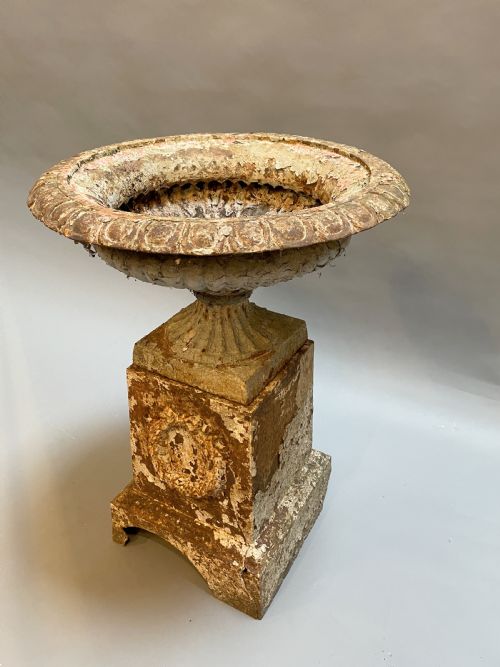
Painted iron garden urns are substantial vessels designed for outdoor planting, drawing on classical and neoclassical forms like the Campagna shape. When you search for painted iron garden urns, you encounter pieces spanning the nineteenth century up through the mid twentieth century, including Regency designs and Victorian examples. Most pieces take the form of garden urns, planters, and jardinieres, often raised on matching plinths or pedestals.
The selection ranges from small table urns measuring thirty-three centimetres to large pairs suitable for grand lawns. French nineteenth-century examples sit alongside British foundry work, offering both low classical bowls and towering vessels adorned with acanthus leaves or gadrooning.
Materials and foundry techniques
Foundries produced these vessels primarily in cast iron, pouring molten metal into sand moulds to achieve crisp classical relief details such as acanthus leaves and gadrooning. Some pieces incorporate wrought iron strapwork for structural bracing, while others utilise sheet iron construction.
The metalwork received protective and decorative coats of paint, with many surviving examples retaining original distressed painted finishes built up over decades of weathering.
Listings span the nineteenth and twentieth centuries, incorporating Victorian, Regency, and French chateau styles in cast iron, wrought iron, and sheet iron.
Judging quality and character
Quality rests in the crispness of the casting and the distinction of the foundry's hand, particularly visible in named works from makers like Falkirk Carron or Coalbrookdale. The presence of original plinths and matching pairs elevates a piece, as does an unusual design or fine classical proportions.
Surface history dictates visual depth, where layers of original distressed paint show genuine age rather than recent application. Heavy cast iron construction and robust pedestals separate standard garden vessels from superior foundry examples.
Falkirk Carron foundry·Coalbrookdale
The Painted Iron Garden Urns Glossary
- Campagna urn
- A bell-shaped vessel with a flared rim and footed base, heavily favoured in nineteenth-century garden design. This classic silhouette originates from classical antiquity.
- Gadrooning
- A decorative carved or cast motif consisting of convex curves or flutes moulding the lower bowl of an urn. It adds textural richness to the classical form.
- Plinth
- A heavy rectangular or square base block that elevates an urn above ground level. Many larger nineteenth-century garden urns sit on matching pedestals.
- Jardiniere
- A large ornamental pot or stand designed specifically for holding flowering plants or ferns. These appear frequently in French nineteenth-century courtyard contexts.
- Strapwork
- Ornamental metalwork formed of flat strips arranged in geometrical patterns or scrolls. This technique appears on specific wrought iron planters.
Painted Iron Garden Urns: Frequently Asked Questions
Can I leave iron urns outside all winter?
Cast iron stands up well to winter weather, though trapped damp soil can freeze and expand inside the bowl. Raising the urn slightly off the ground helps prevent moisture retention during prolonged frost.
Ensuring proper drainage holes remain clear allows excess rainwater to escape freely, protecting the metal and any painted surface finishes from undue stress.
How do I care for original distressed paint?
Original painted surfaces require gentle cleaning with soft brushes and plain water rather than harsh chemical strippers or high-pressure washers. Preserving the weathered patina maintains the historic character of the ironwork.
Touching up bare spots with compatible mineral paints stops active rusting without erasing the visual history earned over generations in the garden.
Are these urns too heavy for a terrace?
Nineteenth-century cast iron garden vessels possess considerable mass, especially large pairs and those mounted on stone or iron plinths. Assessing the load-bearing capacity of wooden decking or elevated stone balconies is wise before positioning them.
Distributing the weight or placing protective pads underneath protects delicate paving stones from rust staining and concentrated pressure.
How do I distinguish Regency from Victorian urns?
Regency designs lean towards strict neoclassical proportions and sharp, restrained detailing often associated with prominent foundries like Carron. Victorian pieces frequently embrace more exuberant ornamentation, including deep acanthus leaves and heavy gadrooned bowls.
Examining the casting seams and mounting methods provides further clues to the manufacturing decade, though many classical forms persisted across multiple periods.