
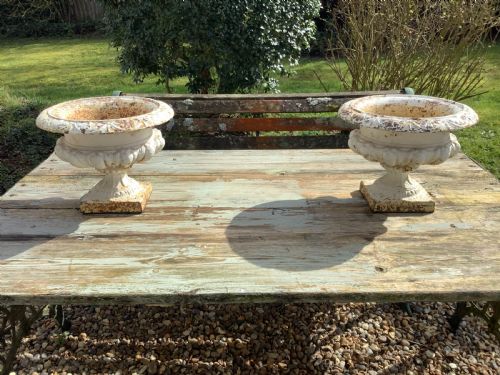


Antique Metal Planter Pair
An antique metal planter pair brings classical proportion and enduring weight to a garden or terrace.
Antique Metal Planter Pair
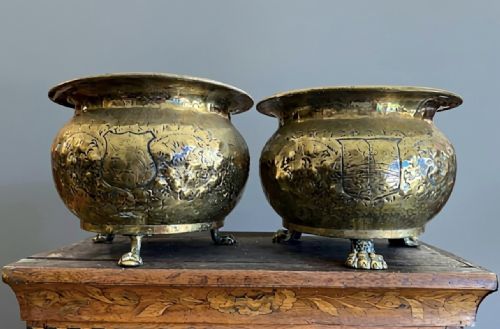
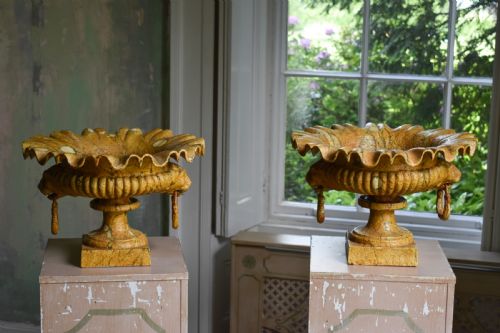
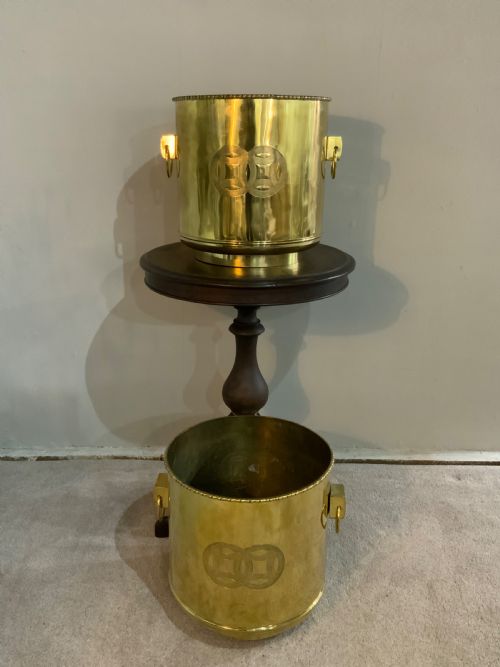
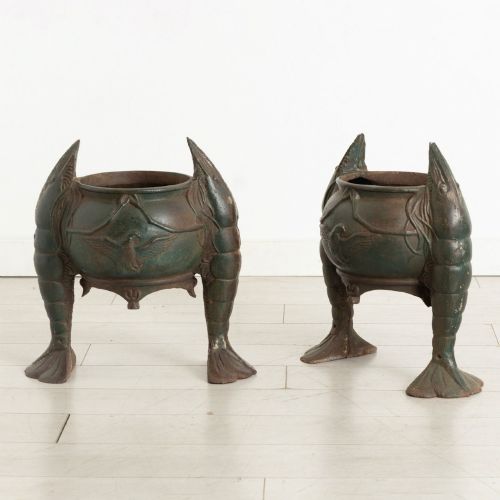
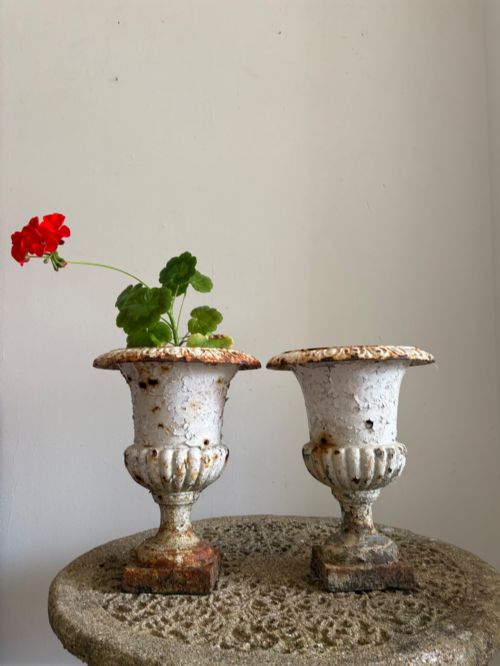
When searching for an antique metal planter pair, a buyer encounters dual vessels designed to flank a doorway, pathway or garden focal point. These matched objects range from substantial Victorian cast iron garden urns to refined Japanese bronze vases and brass jardinieres.
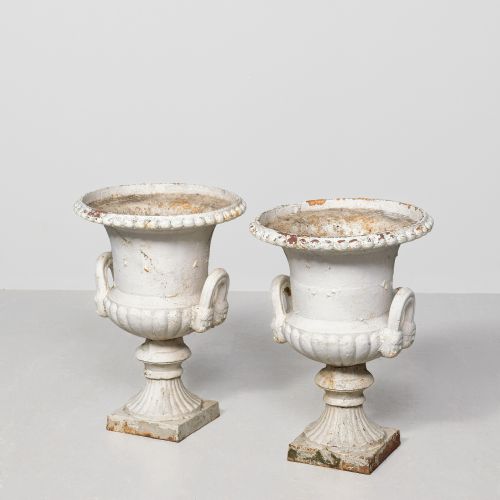
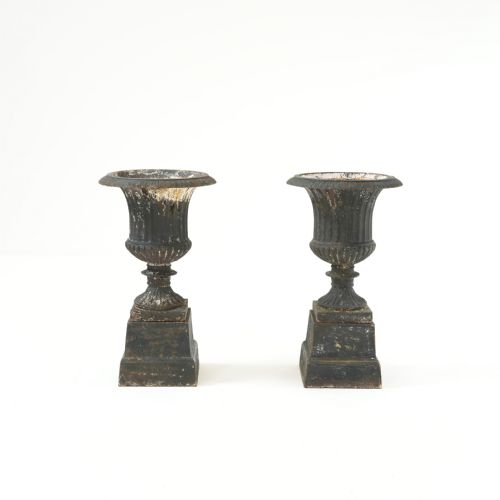
The versions most frequently met on this page belong to the nineteenth century, taking the form of Campagna urns, tazza urns or lidded cachepots. Makers utilised robust metals to create pieces capable of withstanding outdoor elements while retaining decorative clarity.
Materials and methods of construction
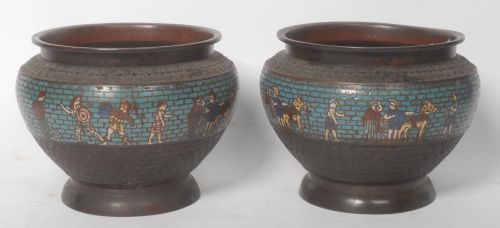
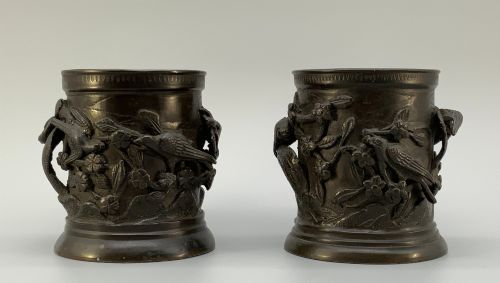
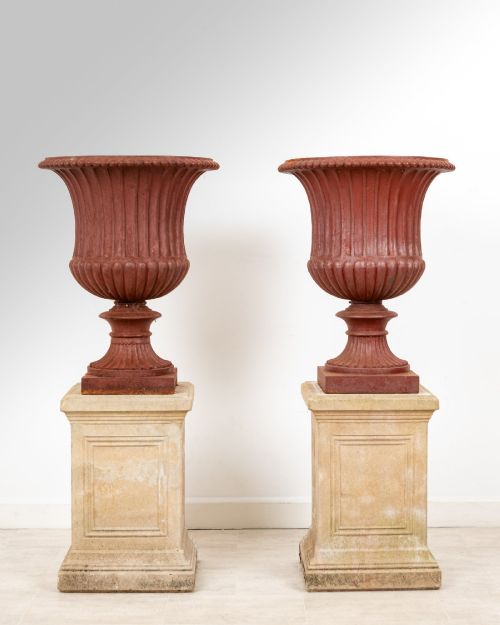
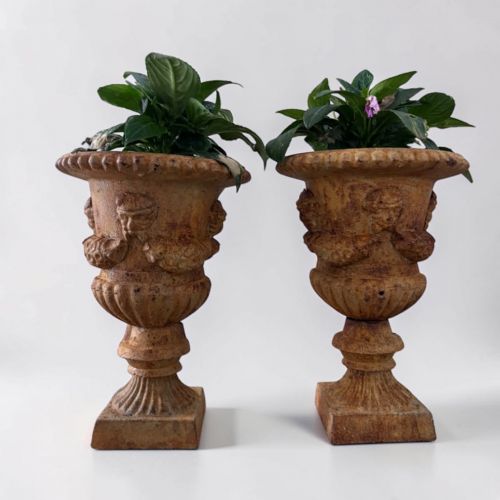
Cast iron and bronze dominate the construction of these items, shaped through traditional foundry casting and intricate hand-chasing. Iron pieces often display classical relief ornamentation or fluted bodies, whilst bronze and brass examples utilise surface embellishments such as champleve enamel or embossed dinanderie work.
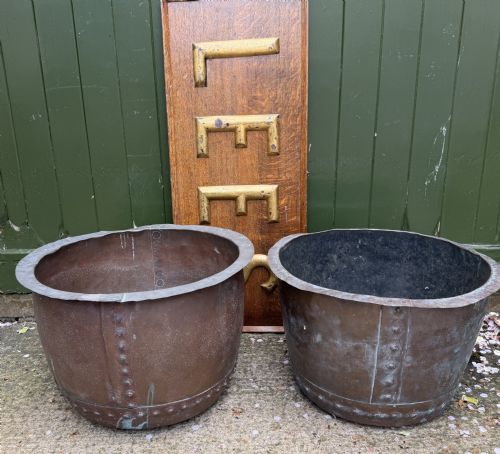
Secondary materials like wrought iron and copper appear in strapwork planters and weathered buckets, joined by structural paint finishes and natural patination. The integration of stone pedestals or plinths provides stable foundations for heavier garden urns.
Distinctions in execution and surface
Quality rests in the crispness of the cast and the integrity of the original surface, separating mass-produced utility items from finer decorative works. Sharp detailing in foliage or classical figures indicates superior foundry craftsmanship.
The character of the weathered patina significantly influences the visual appeal of cast iron and copper surfaces. Gradations in quality depend on whether age has added depth to the metal without compromising the structural form.
The Antique Metal Planter Pair Glossary
- Campagna urn
- A bell-shaped garden vessel with a flared rim, popular in classical design and frequently rendered in cast iron. This silhouette provides a stable planting volume.
- Jardiniere
- An ornamental pot or stand designed to hold growing plants indoors. These vessels often appear in polished brass or champleve enamel.
- Cachepot
- A decorative outer pot that conceals a plain plant container inside. Examples range from Chinese export bronze to nineteenth-century earthenware forms.
- Tazza
- A shallow bowl mounted on a stem and foot, used in garden settings for low-growing arrangements. Victorian examples often showcase fluted rims.
- Dinanderie
- An umbrella term for medieval and later brass or copper objects produced in Belgium and France. This technique involves beaten and embossed metalwork.
Antique Metal Planter Pair: Frequently Asked Questions
How do I care for cast iron urns?
Cast iron garden pieces require minimal upkeep beyond seasonal cleaning to remove debris and moisture accumulation.
Applying a protective coat of wax or suitable paint preserves the metal surface against accelerated weathering.
Where should I place heavy planters?
Heavy iron and bronze vessels need solid, level ground such as stone paving or dedicated plinths to prevent shifting over time.
Positioning them near structural entrances or terrace focal points maximises their architectural impact.
Are these planters frost resistant?
Nineteenth-century cast iron and bronze generally tolerate cold temperatures well when properly drained during winter months.
Using internal plastic liners and ensuring drainage holes remain clear prevents ice expansion from cracking the metal.