
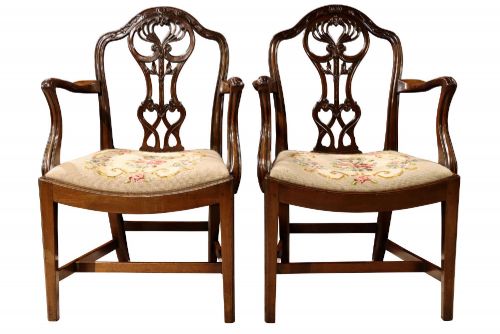


Pair Chippendale Armchairs
When buying pair chippendale armchairs, you are securing matching seating defined by mid-eighteenth-century carved timber and revival craftsmanship.
Pair Chippendale Armchairs
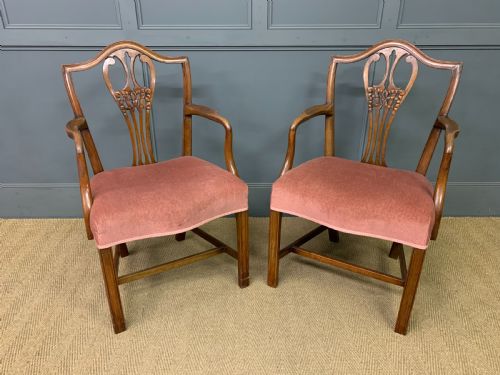
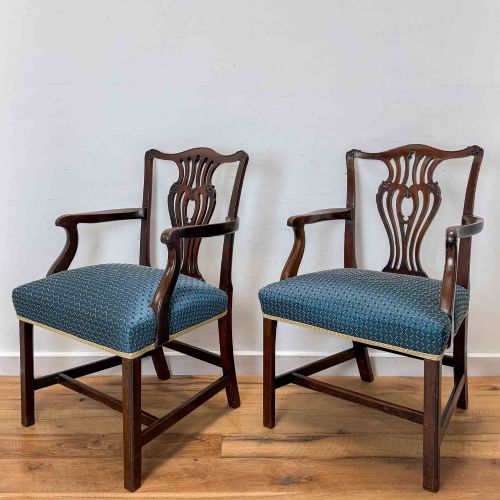
These listings comprise matching sets of seating built in the manner of Thomas Chippendale, encompassing open armchairs, library chairs, and upholstered carvers. Buyers encounter period eighteenth-century examples alongside nineteenth-century and early twentieth-century revival pieces modelled on Georgian designs.
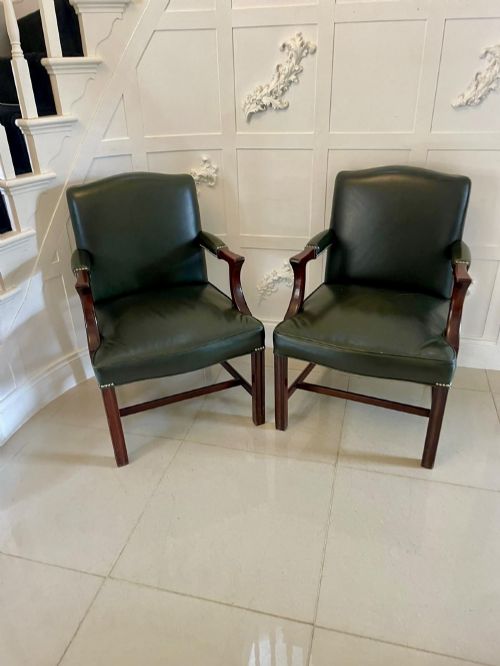
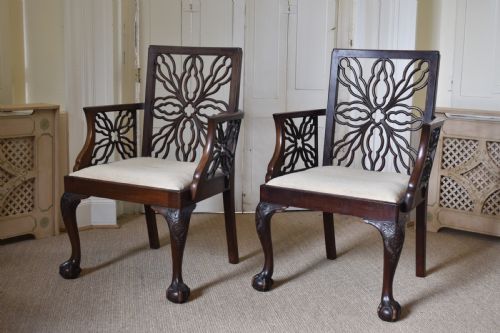
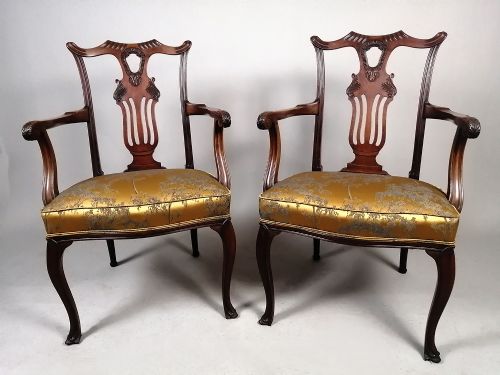
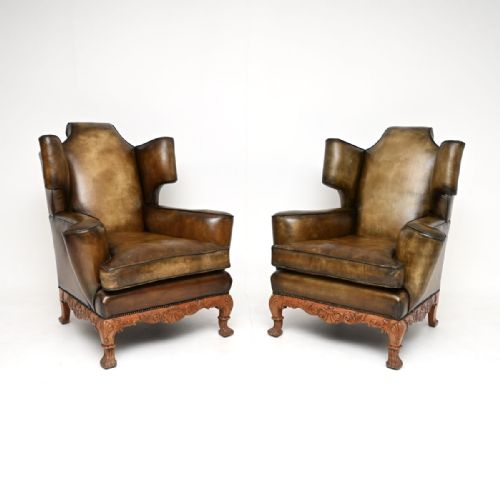
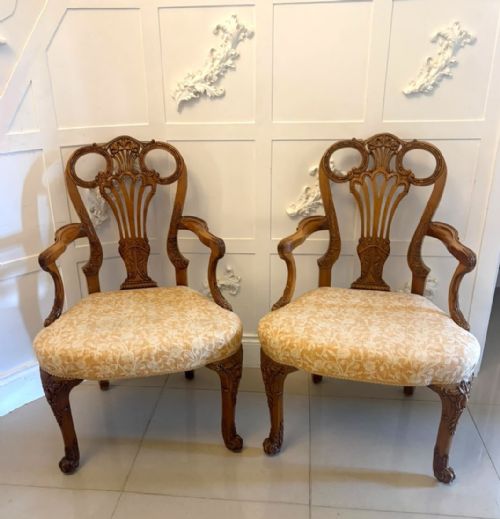
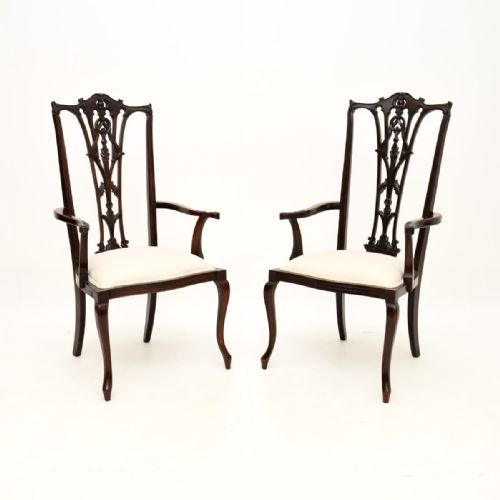
Forms range from simple open mahogany elbow chairs to substantial wingbacks and Gainsborough armchairs upholstered in leather, damask, or fabric. Many incorporate distinctive stylistic cues including carved splats, scroll arms, and cabriole legs terminating in claw and ball feet.
How they were made
Cabinetmakers constructed the frames principally from solid mahogany and walnut, occasionally utilising other timbers like oak for internal framing. Selected pieces feature elaborate hand-carving along the top rails, arm terminals, and chair legs.
Upholstered variants rely on traditional webbing and stuffing secured beneath leather, velvet, or woven fabric, often fastened with brass tack detailing.
Listings feature mahogany, walnut, leather, velvet, and damask across Georgian and revival periods.
What varies in quality
The degree of crispness in the wood carving dictates the distinction between standard production and superior craftsmanship. Deeper relief work and precise joinery distinguish finer workshop output.
The choice of timber grain, the integrity of the frame construction, and the preservation of original surfaces separate exceptional survival examples from later interpretations.
T Willson London
The Pair Chippendale Armchairs Glossary
- Chippendale Style
- A decorative design vocabulary originating from the director books of Thomas Chippendale, featuring Gothic, Rococo, and Chinese influences applied to seating.
- Gainsborough Armchair
- A wide upholstered armchair with open padded arms, short cabriole or straight legs, and a square back, popular for desks and libraries.
- Carver Chair
- A sturdy wooden armchair, often styled to match a set of dining chairs and traditionally placed at the table head.
- Cuban Mahogany
- A dense, dark timber imported from the Caribbean, utilised extensively in high-status eighteenth-century cabinet making.
- Splat
- The vertical central piece of wood connecting the crest rail to the seat in an open chair back.
Pair Chippendale Armchairs: Frequently Asked Questions
How do I spot a true period piece?
Examine the timber shrinkage, joinery methods, and tool marks visible on the underside of the chair frame. Eighteenth-century construction techniques differ markedly from later machine-made revival methods.
Compare the proportions and carved details against documented workshop examples from the Georgian era to confirm authenticity.
Are these chairs suitable for daily dining use?
Many sturdy mahogany armchairs and carvers function well around a dining table, provided the seat height and depth match your table requirements. Check the structural stability of the joints before regular use.
Upholstered library and desk chairs suit occasional seating or study environments better than heavy dining duties.
What is the difference between period and revival?
Period pieces date directly to the eighteenth century during the working life of Thomas Chippendale or shortly thereafter. They carry the patina and structural hallmarks of that specific era.
Revival pieces date from the nineteenth or early twentieth centuries, constructed by later cabinetmakers reproducing those historic Georgian aesthetics.
How should I care for the leather upholstery?
Maintain leather surfaces by applying a specialist wax or conditioner periodically to prevent drying and cracking. Keep the chairs away from direct sunlight and heat sources.
Dust wooden frames regularly with a soft cloth and avoid chemical cleaning agents that might strip the historic polish.