





Pair Chinese Accent Chairs
Pair Chinese accent chairs bring sculptural timber forms and centuries of craftsmanship into modern rooms.
Pair Chinese Accent Chairs
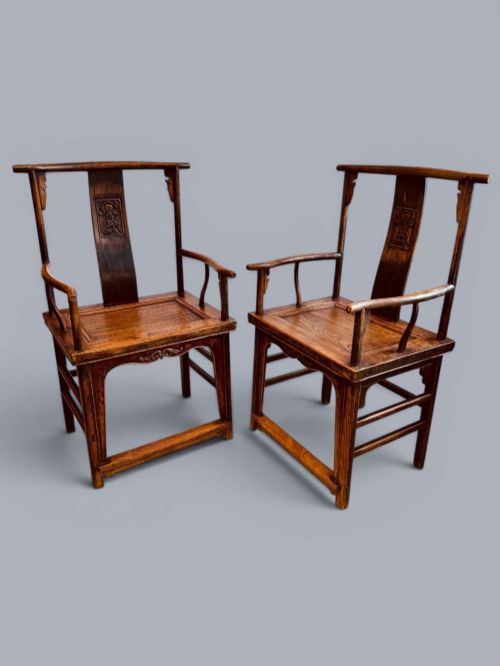
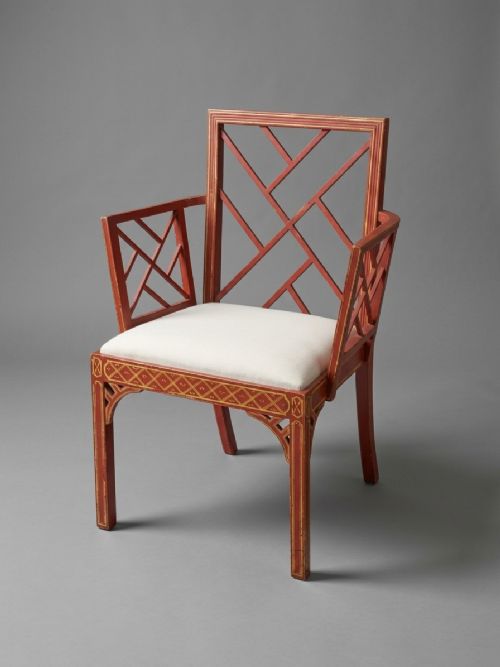
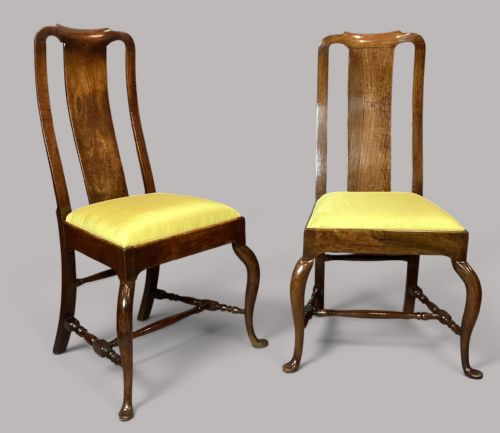
Pair Chinese accent chairs encompass timber armchairs, side chairs, hall chairs, and dining chairs originating from the 18th century through to the 1920s. Buyers searching for pair chinese accent chairs encounter regional seating forms influenced by the Qing dynasty, Chinese Export markets, and Chinese Chippendale styles.
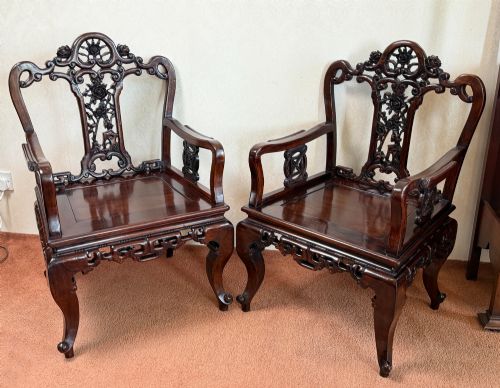
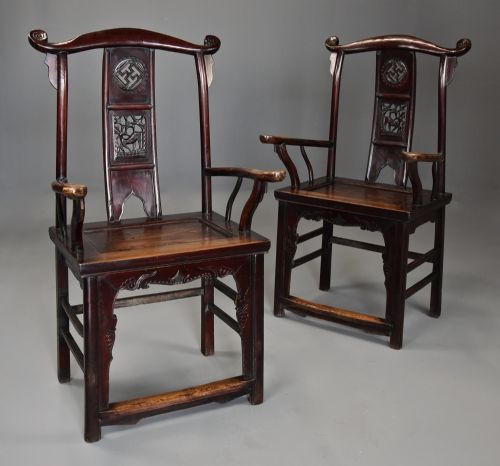
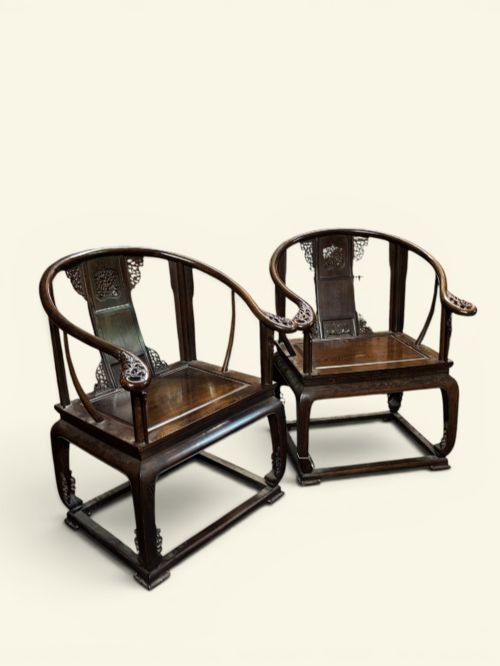
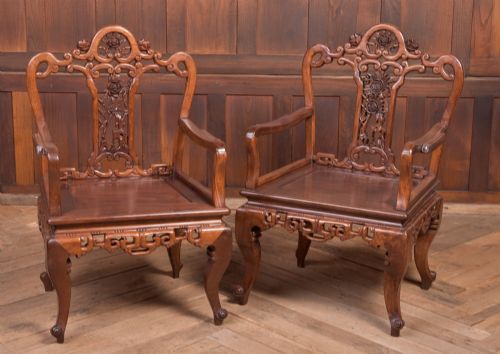
The selection ranges from elm yokeback armchairs and horseshoe-back designs to hongmu throne chairs, concubine chairs, and cane-work bamboo seats. Most examples date from the 19th century, utilising traditional joinery and distinct timber framing.
Makers and workshops constructed these matching pairs for scholarly use, reception halls, and export trade, leading to varied forms such as lamp hanger chairs and brass-inlaid armchairs. Each set demonstrates the symmetry and structural balance characteristic of classical Chinese seating.
Materials and construction methods
Craftsmen built these chairs using dense timbers including hardwood, elm, rosewood, mahogany, teak, and huanghuali. Many pieces incorporate secondary materials such as cane, fabric upholstery, and red lacquer finishes.
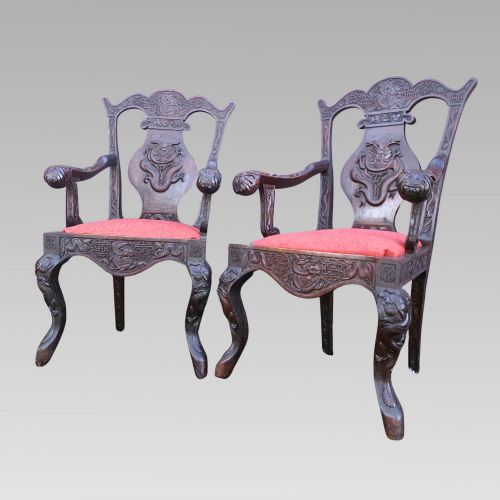
Joinery techniques relied on interlocking wood joints rather than metal fixings, allowing the timber frames to expand and contract naturally. Artisans also applied intricate hand-carved dragon motifs, brass inlays, and painted surfaces to selected hardwood and elm structures.
Pair Chinese Accent Chairs Retail Price Guide 2026
Typical asking prices for pair chinese accent chairs among the pieces listed under this phrase on Sellingantiques today, from the lower quarter to the upper quarter. They describe what is for sale here now, not the wider market.
Listings feature 19th-century elm, hardwood, and hongmu chairs, alongside Qing dynasty styles and 18th-century huanghuali examples.
Factors determining quality
The standard of carving and the integrity of the timber grain dictate the distinction between everyday items and exceptional pieces. Chairs retaining original red lacquer, patinated surfaces, or intact cane-work demonstrate superior preservation.
Construction precision, such as the tightness of traditional joinery in horseshoe-back and yokeback frames, separates standard regional output from fine throne chairs and scholarly seating.
The Pair Chinese Accent Chairs Glossary
- Yokeback chair
- A traditional chair design featuring a stepped or curved top rail resembling a yoke. This form provides ergonomic support for the sitter's upper back.
- Horseshoe-back chair
- A seating form characterised by a continuous curved crestrail and armrests that sweep forward in a single horseshoe shape. It represents a classic shape in classical Chinese furniture.
- Hongmu
- A translation meaning red wood, used to describe dense, dark tropical hardwoods favoured in Qing dynasty furniture. It polishes to a deep natural lustre.
- Canework
- Woven cane or rattan material utilised for seat panels and backrests. It offers lightweight flexibility while maintaining structural strength.
Pair Chinese Accent Chairs: Frequently Asked Questions
How do I identify a Qing dynasty chair?
Look for dense hardwoods like hongmu or carved dragon motifs that reflect imperial stylistic traditions.
Examine the joinery and overall form, as Qing dynasty pieces often display robust proportions and formal symmetry.
What are yokeback scholarly chairs?
Scholars chairs feature a distinctive curved top rail designed for upright posture during reading and writing.
These pieces typically utilise elm or hardwood materials with restrained carving rather than heavy ornamentation.
Are these chairs suitable for daily use?
Many sturdy hardwood and elm examples withstand normal seating when placed in stable indoor environments.
Chairs with delicate canework or original lacquer surfaces require more careful placement away from direct heat.
How should I care for lacquered elm furniture?
Keep lacquered and elm surfaces away from direct sunlight and dramatic humidity changes to protect the finish.
Dust gently with a soft dry cloth without applying modern chemical polishes.