



Oriental Carved Side Chairs
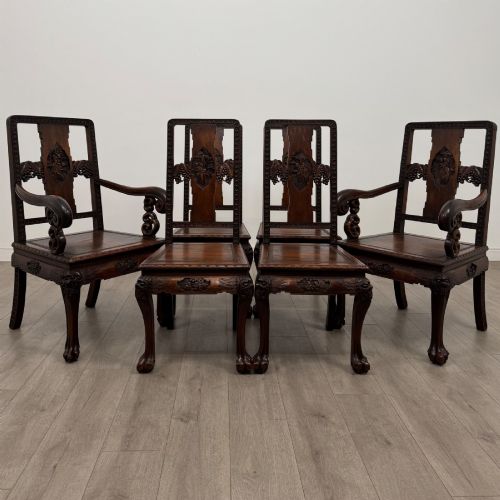
Oriental carved side chairs bring deep architectural form and rich dense timbers into a room, offering both seating and sculptural presence.
Oriental Carved Side Chairs
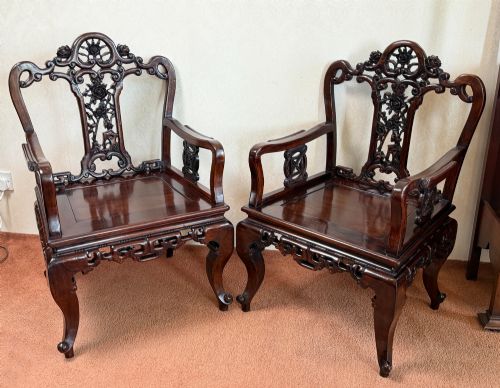
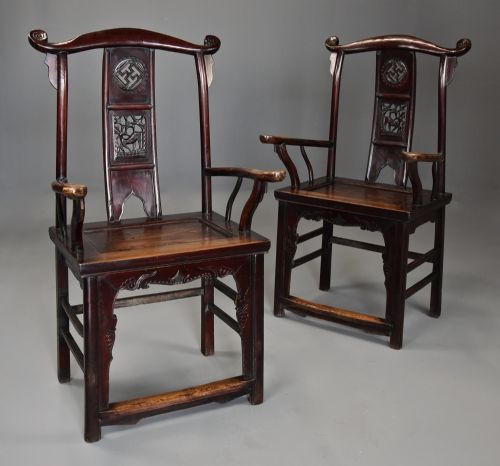
Oriental carved side chairs encompass a variety of seating forms originating from Asian workshops, frequently arriving in domestic spaces as side chairs, hall chairs, and occasional seating. These pieces range from restrained elm yokeback designs to heavily carved hardwood models created during the nineteenth century.
The selections available here lean heavily into Chinese Qing Dynasty and Victorian-era interpretations, alongside specific regional variations such as Burmese folding chairs and Indian wedding chairs. Buyers encounter everything from simple elm frames to elaborate lacquered elbow seats and throne chairs.
Many of these examples survive in matched pairs or small sets, making them useful for flanking a console or placing in an entrance hall. The construction typically reflects traditional joinery methods suited to dense regional timbers.
Materials and construction methods
Cabinetmakers utilised heavy tropical hardwoods, notably rosewood, hongmu, and elm, relying on their natural weight and density to achieve rigid structural integrity without excessive framing. These timbers allowed artisans to carve deep relief patterns directly into the structural members.
Surface treatments frequently involved natural lacquers applied over prepared wood substrates, sometimes preserving original red tones or deep black finishes alongside visible wood patination. Certain seating surfaces incorporated woven cane panels to provide flexible support within rigid wooden frames.
Oriental Carved Side Chairs Retail Price Guide 2026
Typical asking prices for oriental carved side chairs among the pieces listed under this phrase on Sellingantiques today, from the lower quarter to the upper quarter. They describe what is for sale here now, not the wider market.
Some nineteenth-century makers cleverly disguised structural joins beneath layers of red lacquer, leaving future admirers guessing where the tree ended and the art began.
Assessing quality and craftsmanship
Quality in these chairs rests upon the crispness of the hand-carved detail and the selection of the timber, where dense grain and rich, undisturbed patination indicate superior original stock. Finer pieces demonstrate precise joinery that remains tight despite changes in humidity over the decades.
The integrity of the original surface finish, whether clear polished hardwood or intact red lacquer, heavily influences the standing of a piece. Examples retaining their original cane work or structural hardware without modern replacement parts command greater regard among collectors.
The Oriental Carved Side Chairs Glossary
- Yokeback
- A traditional Chinese chair design featuring a crestrail that resembles the yoke of an ox, curving outward for upper back support.
- Hongmu
- A category of dense, dark tropical hardwoods utilised in traditional Chinese furniture making, prized for its weight and ability to take fine carving.
- Patina
- The surface sheen and coloration developed by wood and lacquer over years of handling, exposure, and age.
- Cane
- Woven material derived from rattan palm used to form light, flexible panels for seats and backrests.
Oriental Carved Side Chairs: Frequently Asked Questions
How do I care for antique hardwood chairs?
Keep these pieces away from direct heat sources and sudden humidity fluctuations to prevent timber movement or splitting.
Dust regularly with a soft, dry cloth and apply a neutral beeswax sparingly only when the wood appears dry.
Can I use these chairs for daily dining?
Most nineteenth-century side and hall chairs are structurally sound for occasional sitting, but their historic joints require thoughtful treatment.
Avoid heavy daily use at a busy dining table to preserve antique joinery and fragile carved crest rails.
What does yokeback mean?
The term describes a chair back where the top rail sweeps upward and outward in a gentle curve resembling an animal yoke.
This ergonomic shape provides comfortable shoulder support while maintaining a clean, architectural silhouette.
How do I identify Qing Dynasty furniture?
Look for dense tropical hardwoods, traditional mortise and tenon joinery without metal fasteners, and deep relief carvings of traditional motifs.
Pieces from this era often display a deep natural patina and structural forms refined over centuries of woodworking tradition.