
Dark Brown Hall Chairs
Dark brown hall chairs are timber entrance seats shaped by centuries of formal design, offering a grounded presence and a practical perch for an entryway.
Dark Brown Hall Chairs
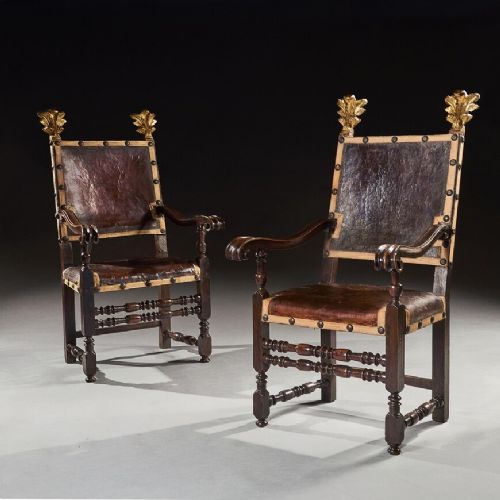
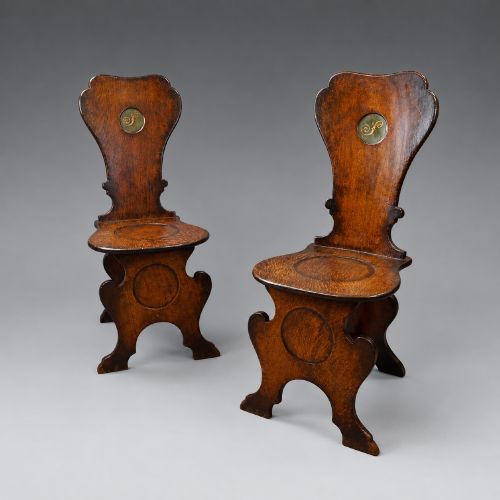
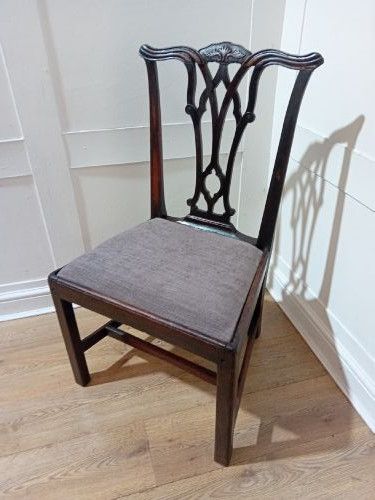
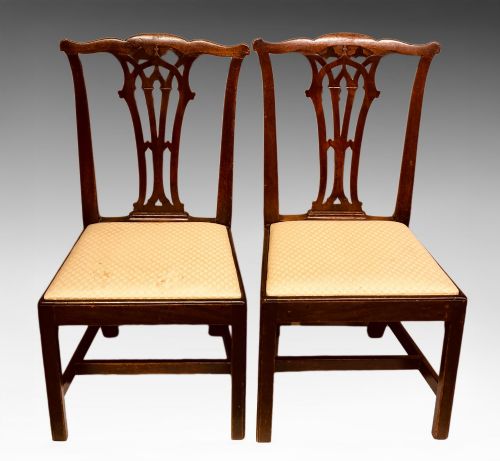
When you search for dark brown hall chairs, you encounter robust wooden seating designed historically for grand entryways and passages. These pieces often feature timber frames in rich, deep tones such as oak, mahogany, and walnut.
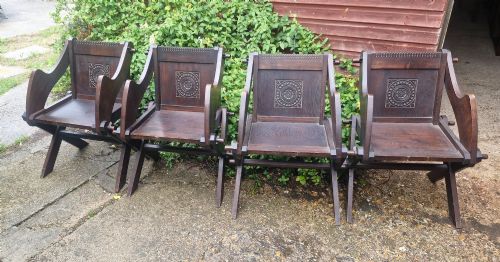
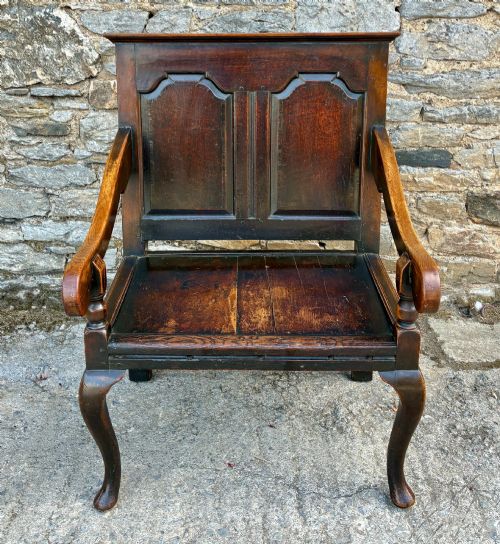
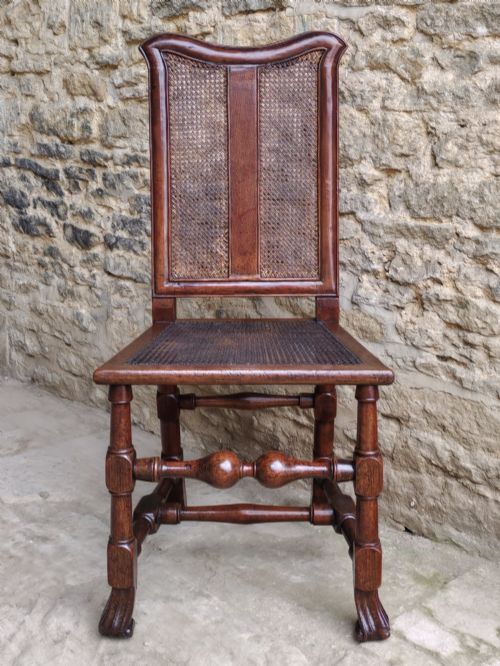
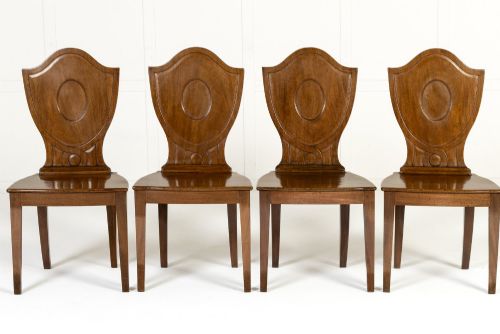
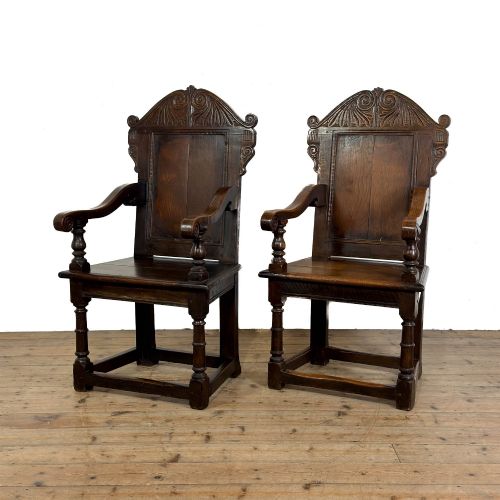
The selections available range from sturdy George III mahogany models to nineteenth-century Gothic Revival interpretations and seventeenth-century styles. Many examples present rigid wooden backs, sometimes carved with crests or shields, prioritising upright posture over deep lounge comfort.
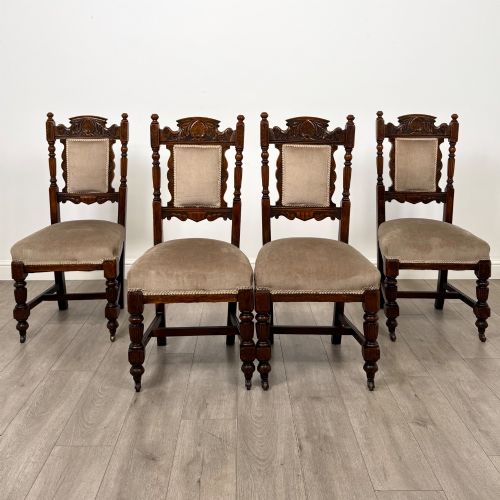
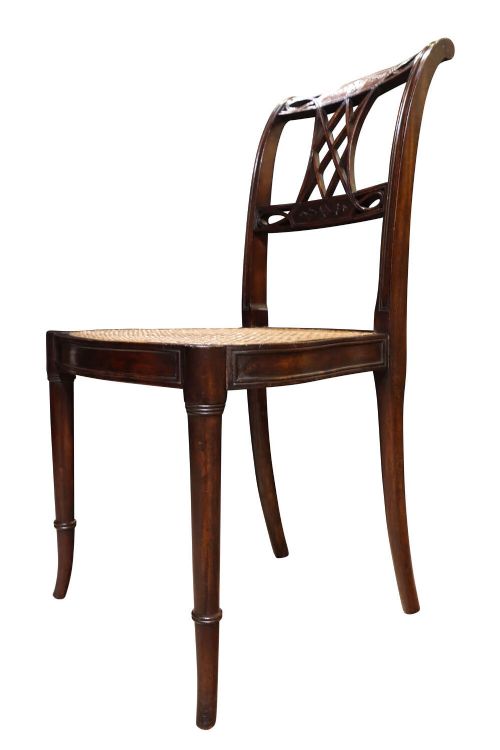
Beyond strict hall chairs, the broader category includes side chairs, armchairs, and wainscot variants sharing similar dark timber patination. These forms reflect the functional needs of historic domestic and ecclesiastical interiors.
Materials and Construction
Cabinetmakers built these seats primarily using dense hardwoods like oak, mahogany, and walnut, which naturally yield deep brown colouration as timber ages. Joinery relied on traditional mortise and tenon frames, ensuring structural rigidity for high-traffic entrance spaces.
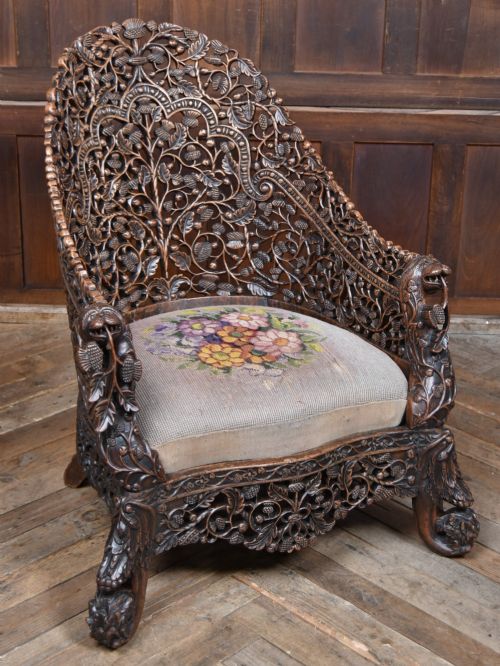
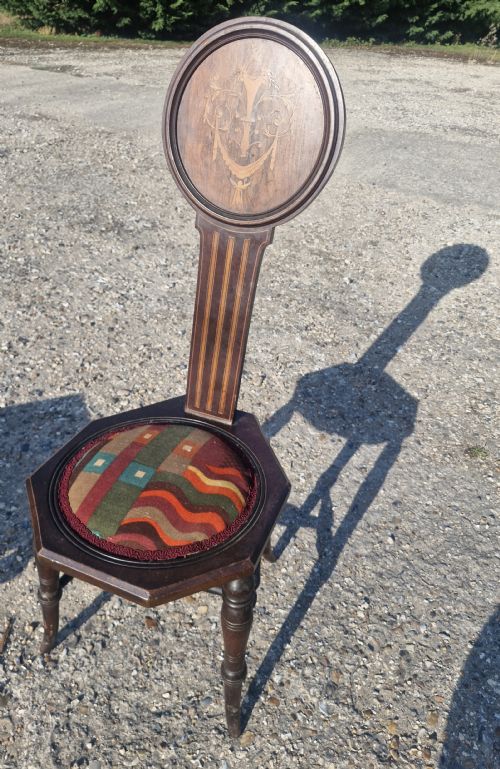
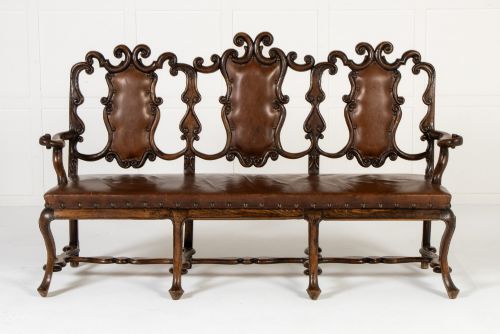
Surfaces frequently show hand-carved details, turning, or parcel-gilt highlights applied to the native wood. Where seats include cushioning, materials such as leather, fabric, or woven cane integrate directly into the wooden framework.
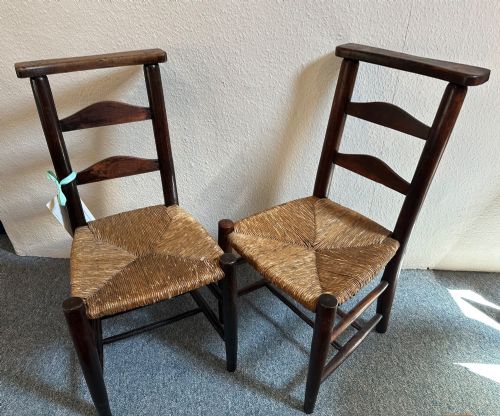
Some nineteenth-century makers drew inspiration from church furniture and cathedral seating to bring solemn Gothic drama straight into the domestic hallway.
Distinctions in Quality
Quality rests in the crispness of the timber carving and the selection of figured grain across primary surfaces. Superior examples display thoughtful proportions and tight, original joinery that withstands centuries of use.
The integrity of the wood's natural dark patina and the authenticity of period elements dictate the standing of a piece. Lesser examples often show tired secondary woods or heavy-handed later restorations that obscure the original maker's hand.
The Dark Brown Hall Chairs Glossary
- Hall chair
- A rigid wooden seat intended for an entrance hall, typically featuring a solid timber back carved with crests or armorial bearings.
- Wainscot chair
- An early heavy wooden armchair constructed primarily from panelled oak with solid arms and a high back.
- Sgabello
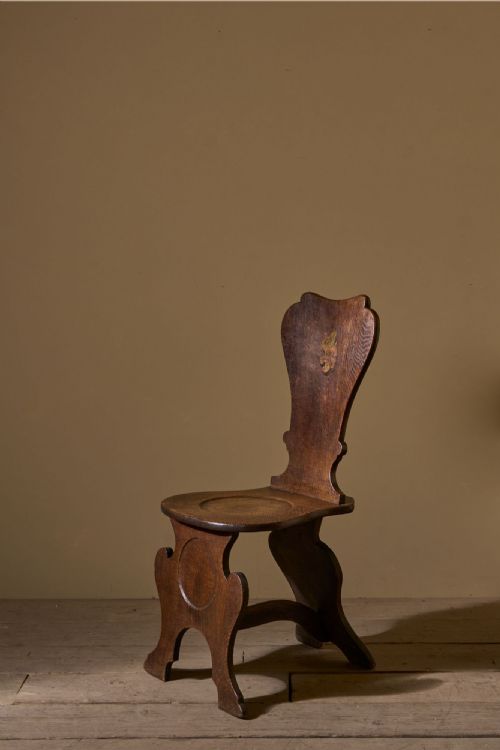
- A Renaissance-style chair type with a narrow wooden back and trestle supports instead of conventional legs.
- Shield back
- A chair back shaped like a heraldic shield, popular during the Georgian period.
- Patina
- The deep surface sheen and dark colour developed by aged wood over centuries of handling and exposure.
Dark Brown Hall Chairs: Frequently Asked Questions
Where were dark brown hall chairs placed?
These seats stood primarily in grand entrance halls, corridors, and reception spaces of historic houses.
Guests used them briefly while waiting to be received, which explains their traditionally upright and firm wooden construction.
How do I care for antique dark brown hall chairs?
Maintain the timber by keeping the pieces away from direct heat sources and sudden humidity shifts.
Apply a microcrystalline wax periodically to nourish the wood and preserve the deep natural patina.
Are these chairs comfortable for daily sitting?
Most historic examples feature solid wood seats and straight backs designed for formal posture rather than lounging.
They function best as occasional seating or decorative anchor points in a hallway.
How do I distinguish eighteenth-century pieces from later revivals?
Examine the timber construction under the seat and behind the back for tool marks, peg construction, and natural wear patterns.
Nineteenth-century revival pieces often display machine precision or uniform dark staining that differs from genuinely aged wood.