




Chinoiserie Dining Chairs
Chinoiserie dining chairs bring painted lacquer, bamboo forms and carved mahogany together around a table with distinctive decorative flair.
Chinoiserie Dining Chairs
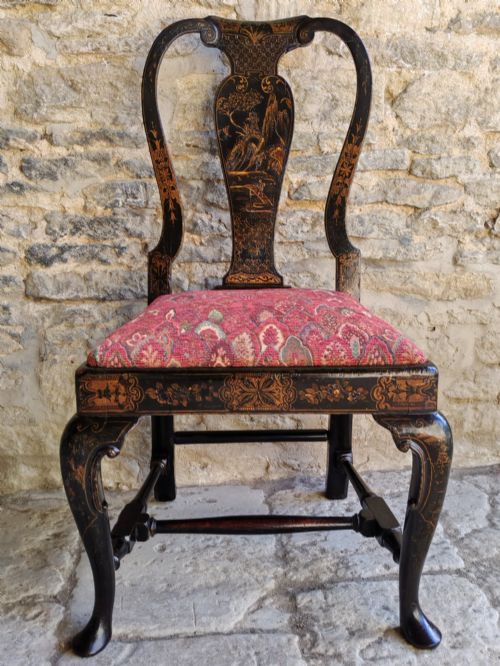
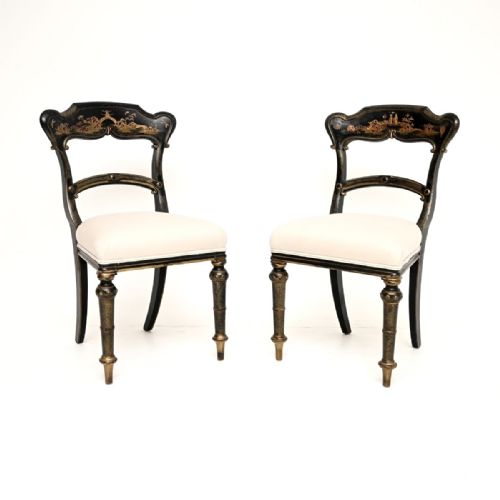
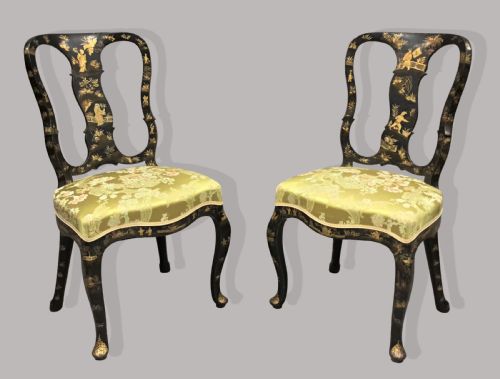
Chinoiserie dining chairs cover a broad span of forms, ranging from early eighteenth century side chairs to Victorian lacquered seating and Regency faux bamboo designs. These pieces draw on Asian decorative motifs interpreted through European craftsmanship, appearing as side chairs, armchairs, hall chairs and dining chairs.
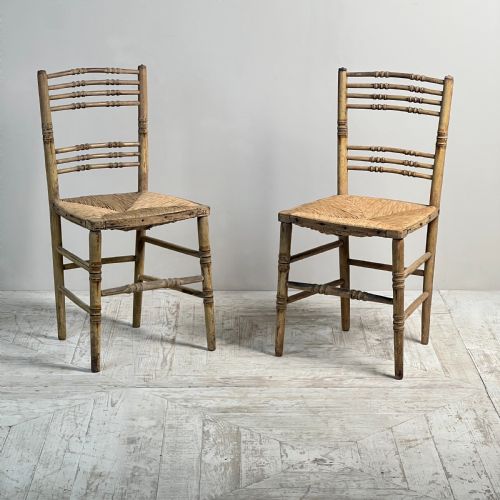
The most common examples on this page are side chairs and pairs of chairs executed in painted wood, lacquered wood or simulated bamboo. They often feature rush or fabric seats alongside distinct ornamentation derived from Georgian Chinese Chippendale and Victorian chinoiserie styles.
How they were made
These chairs rely heavily on timber foundations such as mahogany or turned wood shaped into faux bamboo frames. Makers applied black lacquer, paint and gilt decoration to build up the characteristic surface patterns and metallic highlights.
Seating areas incorporate traditional materials like woven rush or upholstered fabric to complete the construction. Surface finishes range from Dutch lacquered schemes with original gilt work to carved wooden details.
Chinoiserie Dining Chairs Retail Price Guide 2026
Typical asking prices for chinoiserie dining chairs among the pieces listed under this phrase on Sellingantiques today, from the lower quarter to the upper quarter. They describe what is for sale here now, not the wider market.
Listings include mahogany, lacquered wood, paint and gilt, spanning periods from the eighteenth century to nineteen twenty.
What varies in quality
Quality rests in the crispness of the carving, the execution of the painted or lacquered decoration, and the preservation of original gilt work. Pieces attributed to master makers show superior control over proportion and ornamental detail compared to simpler commercial output.
The integrity of the structural wood and the survival of early surface finishes distinguish finer examples. Original decoration and well-preserved lacquering elevate the standing of a piece within its period.
Thomas Chippendale
The Chinoiserie Dining Chairs Glossary
- Chinoiserie
- European decorative style reflecting Chinese artistic influences. It appears frequently in painted and lacquered furniture.
- Japanned
- European imitation of Japanese and Chinese lacquerwork. This technique uses layered varnish and often incorporates gilt decoration.
- Faux bamboo
- Turned and painted wood carved to resemble natural bamboo stalks. It is a common feature on Regency and nineteenth century seating.
- Rush
- Woven marsh plant material used for seating. It provides a traditional textured seat for chairs.
- Gilt
- Gold leaf or gold powder applied to surfaces. It highlights carved details and painted motifs on antique frames.
Chinoiserie Dining Chairs: Frequently Asked Questions
What periods do these chairs come from?
The listings span from the early eighteenth century through the Georgian and Regency eras, extending into the Victorian period and the early twentieth century.
Different decades brought distinct interpretations, from early lacquered side chairs to later painted bamboo designs.
How do I identify faux bamboo chairs?
Faux bamboo chairs feature turned wooden frames carved to mimic the joints and segments of natural bamboo stalks.
They appear frequently in Regency and nineteenth century pieces, often finished with paint, ebonising or gilt.
What is the difference between side chairs and armchairs?
Side chairs are built without armrests, making them compact enough to fit neatly around a dining table or line a hallway.
Armchairs include supportive armrests, offering a more substantial profile often suited to the head of a table.
How should I care for lacquered wooden chairs?
Lacquered surfaces require gentle dusting with a soft, dry cloth to protect the decorative finish from damage.
Keep them away from direct sunlight and moisture to preserve the underlying wood and paintwork.