




Carved Lattice Back Chairs
Carved lattice back chairs bring intricate pierced wooden geometry to a dining room, offering both sculptural presence and enduring structural support.
Carved Lattice Back Chairs
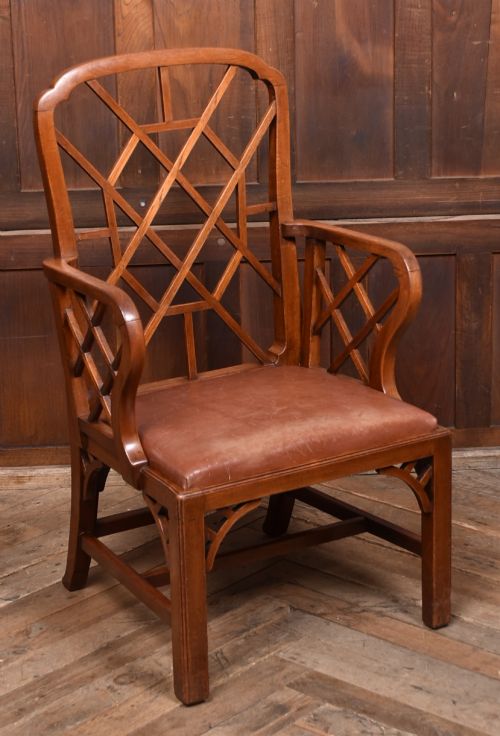
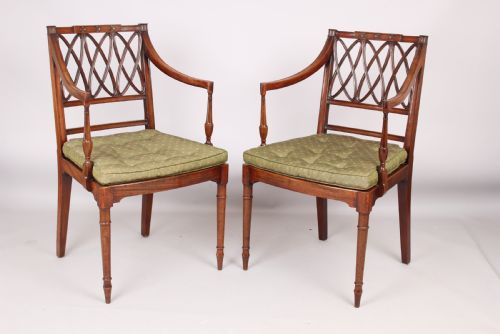
These carved lattice back chairs encompass dining chairs, armchairs, hall chairs, and garden seats spanning from the Georgian period through the nineteenth century and into revival styles of nineteen hundred and nineteen twenty. Buyers seeking carved lattice back chairs encounter mahogany and oak constructions alongside elm, walnut, and cast iron iterations.
The selections on this page range from George III originals to Chippendale revival sets, Victorian examples, Jacobean style seating, and Chinese export pieces. Most frequent are eighteenth and nineteenth century mahogany dining chairs and elbow chairs displaying openwork splats.
Forms vary from single hall chairs and pairs of armchairs to extensive dining sets numbering up to fourteen pieces. Regional and stylistic influences span English cabinet-making traditions, Chinese export work, and Arts and Crafts design.
Materials and construction
Cabinet-makers relied heavily on dense, durable timbers such as mahogany, oak, and walnut, shaping the openwork lattice frames by hand to maintain structural integrity under load. Upholstered drop-in seats and fixed pads utilise fabric, tapestry, leather, and cane inserts.
Surface treatments combine clear polishing of timber with occasional painted finishes and cast iron components seen in garden seating. Joinery techniques secure the pierced splats firmly into the upright stiles and back rails.
Some nineteenth-century makers applied outdoor paint directly to sturdy iron frames so diners could take their geometric lattice work straight onto the lawn.
Assessing quality and distinction
Depth and crispness of the hand-carving define the upper tier of these chairs, where intricate geometric fretwork and pierced patterns remain sharp and well-defined. Lesser examples show softer, shallower detailing with less refinement in the back splat joinery.
Timber selection dictates visual weight and durability, with straight-grained mahogany and figured walnut sitting above plainer secondary woods. The integrity of the original frame construction and matching proportions across larger sets separate functional seating from exceptional cabinet-maker output.
Thomas Chippendale
The Carved Lattice Back Chairs Glossary
- Chippendale
- A style originating from the mid-eighteenth century following the designs of Thomas Chippendale, known for intricate fretwork and Gothic or Chinese motifs. These chairs frequently feature elaborate pierced splats.
- Cockpen
- A specific Chinese-influenced lattice chair design featuring an open square back filled with a geometric grid pattern. This form became popular in British seating during the eighteenth and nineteenth centuries.
- Splat
- The vertical central strip of wood in the back of a chair, connecting the seat to the top rail. In these pieces, the splat is pierced and carved into openwork lattice patterns.
- Elbow chair
- An armchair featuring wooden arm supports attached to the sides of the seat. These often accompany larger dining sets as carvers at the head of the table.
- George III
- A British historical period spanning from seventeen sixty to eighteen twenty, noted for refined cabinet-making and classical proportions. Furniture from this era forms the benchmark for later revival pieces.
Carved Lattice Back Chairs: Frequently Asked Questions
What defines a carved lattice back chair?
These chairs feature an openwork wooden backrest carved into geometric, interlaced, or fretwork patterns rather than a solid wooden panel or plain spindles. The pierced design lightens the visual weight while providing sturdy back support.
Craftsmen achieved these intricate patterns through careful hand-sawing and chiselling of timber, most commonly mahogany or oak.
How do I date a lattice back chair?
Dating relies on examining the timber species, joinery methods, and the specific style of the carving. Georgian and George III pieces exhibit hand-cut joinery and period-appropriate wood patination.
Later revival pieces from the nineteenth and early twentieth centuries often display machine assistance, standardised dimensions, or revival markers associated with Arts and Crafts or Chippendale revival movements.
Can these chairs be used for daily dining?
Most of these historic and revival chairs remain structurally robust enough for regular daily use around a dining table. Solid timber frames and traditional joinery ensure long-term durability.
Care should be taken with delicate cane seats or antique upholstery fabrics, which may require gentle handling or periodic professional reupholstery.
What is the difference between a dining chair and a carver?
Dining chairs are side chairs built without arms to allow multiple seats to fit compactly around a dining table. Carvers are larger armchairs traditionally placed at the head and foot of the table.
Sets often include a matched combination of side chairs and carvers, sharing the same carved lattice back design.