


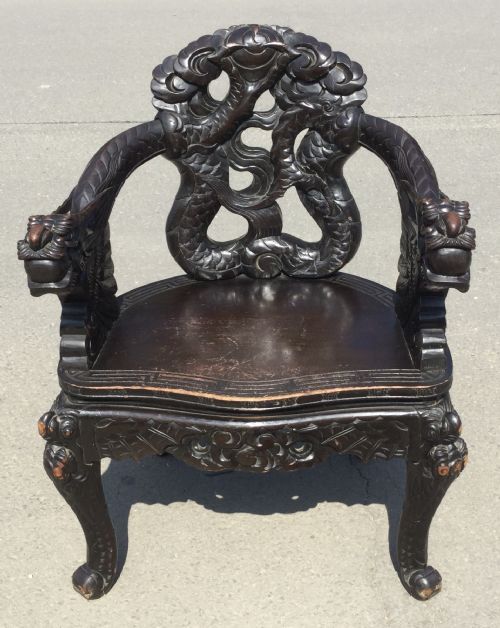


Vintage Hardwood Accent Chairs
These vintage hardwood accent chairs bring global character and heavy timber structure into a room, offering striking seating with genuine age.
Vintage Hardwood Accent Chairs
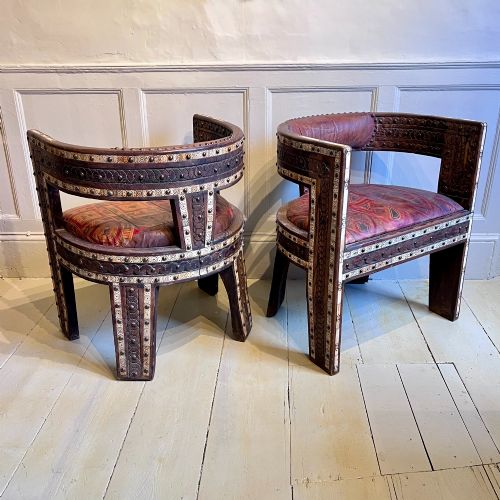
When you search for vintage hardwood accent chairs, you encounter a diverse collection of imported and regional seating spanning from the eighteenth century through the early twentieth century. The selection leans heavily towards pieces originating from China, India, North Africa, and Europe, reflecting distinct regional craftsmanship.
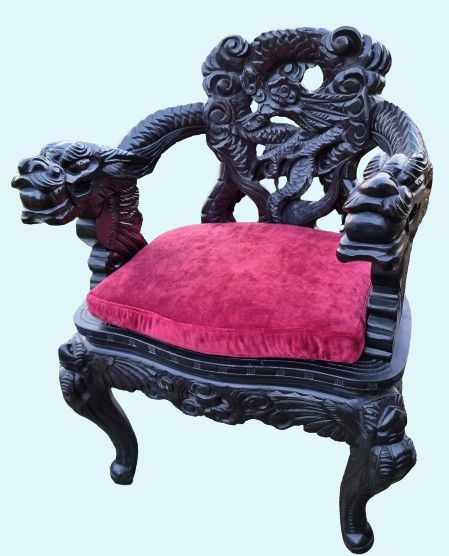
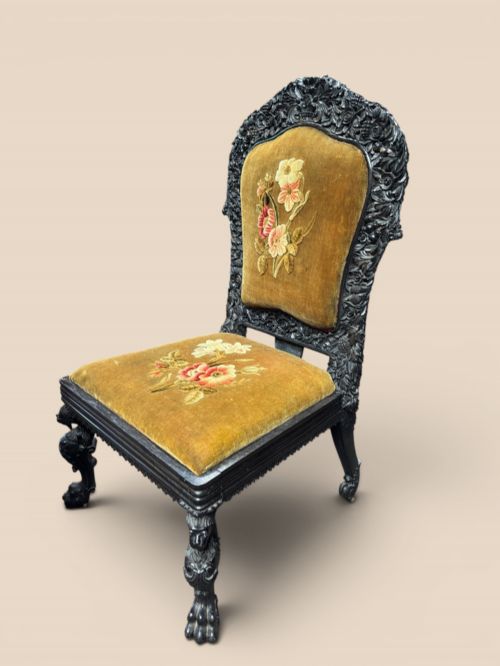
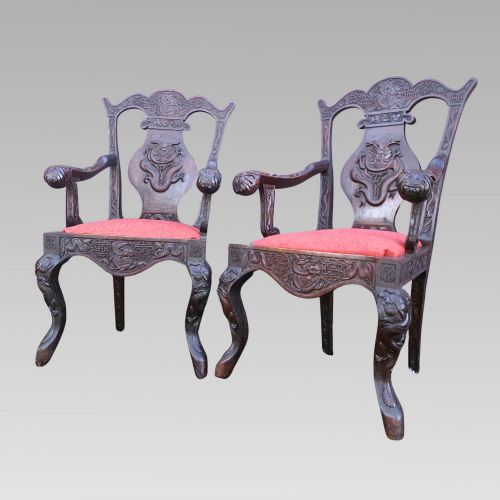
The forms vary across armchairs, side chairs, hall chairs, and corner armchairs. You will frequently find Chinese export examples, Anglo-Indian carvings, Moorish influences, and Art Nouveau French designs shaping the selection.
These items serve primarily as focal seating within a domestic interior, prized for dense timber frames and intricate surface detail. The materials and regional styles define the visual weight each chair brings to a space.
How they were made
Makers utilised dense timbers such as hardwood, teak, ebony, and assorted regional varieties to build rigid, long-lasting chair frames. These woods were chosen for their natural strength and ability to hold deep, detailed hand carving.
Surface ornamentation involved intricate hand-carved motifs, bone inlays, and brass wire or sheet inlays set directly into the timber. Upholstery materials such as velvet and leather were incorporated into specific armchairs and matching settees.
Vintage Hardwood Accent Chairs Retail Price Guide 2026
Typical asking prices for vintage hardwood accent chairs among the pieces listed under this phrase on Sellingantiques today, from the lower quarter to the upper quarter. They describe what is for sale here now, not the wider market.
An eighteenth-century Chinese export corner armchair brings an eccentric, curvaceous geometry straight from the drawing rooms of the past.
What varies in quality
The depth and crispness of the hand carving separate standard production from exceptional examples, as skilled carvers achieved greater relief and sharper anatomical or floral details. The density and grain of the chosen timber also dictate the structural integrity and visual depth of the frame.
Proportion and stylistic cohesion determine the visual success of the piece, with eccentric forms like corner armchairs requiring precise joinery to maintain balance. The integration of contrasting materials, such as brass inlay on ebony or hardwood, shows the maker's technical precision.
The Vintage Hardwood Accent Chairs Glossary
- Savonarola style
- A type of folding armchair characterised by interlocking curved legs forming a lattice structure. This form originates from the Italian Renaissance but appears in later Indian adaptations.
- Chinese export
- Items manufactured in China specifically for Western markets, blending traditional Eastern construction with forms desired by European buyers. These often incorporate distinct regional motifs interpreted for international interiors.
- Hall chair
- A rigid, upright wooden seat traditionally placed in a grand entrance hall. They typically lack upholstered arms and feature prominent back panels designed to display family crests or elaborate carving.
- Corner armchair
- A seat designed to fit into the corner of a room, featuring a continuous curved armrest supported by multiple vertical posts. This unusual geometry creates an enclosed, supportive seating position.
- Bone inlay
- A decorative technique where small pieces of animal bone are shaped and set into hollowed recesses within the wooden surface. It creates high-contrast geometric or floral patterns against dark hardwoods.
Vintage Hardwood Accent Chairs: Frequently Asked Questions
What defines a vintage hardwood accent chair?
These pieces are distinct seating items built from dense timbers like teak, ebony, and general hardwoods, featuring regional decorative carving or inlay. They originate from various global workshops across the eighteenth, nineteenth, and early twentieth centuries.
Buyers choose them to introduce sculptural form and rich timber textures into modern or traditional interiors. Each piece functions as a standalone decorative object as well as a usable seat.
How do I identify Chinese export chairs?
Chinese export chairs combine traditional Chinese joinery techniques with stylistic elements requested by Western traders. You will often see dragon motifs, carved panels, and characteristic proportions.
These pieces demonstrate how local workshops adapted their traditional vocabulary for international buyers during the Qing dynasty and subsequent periods.
Where should I place a Savonarola chair?
A Savonarola chair works best as an accent piece in a study, library, or drawing room where its intricate X-shaped frame can be viewed from multiple angles. Because of its rigid wooden construction and absence of soft padding, it functions well as occasional seating.
Pair it with a plain wall or position it near a reading lamp to highlight the brass inlay and curved wooden slats.
How do I care for antique hardwood furniture?
Maintain these chairs by keeping them away from direct heat sources and rapid temperature fluctuations that can cause timber to dry out or split. Dust the intricate carvings regularly with a soft brush to prevent buildup in the recessed areas.
Apply a microcrystalline wax sparingly if the timber appears dry, avoiding any areas covered in delicate leather or fabric upholstery.
What is the difference between hall chairs and armchairs?
Hall chairs are designed with upright wooden backs and no arms, intended for occasional use in hallways rather than long periods of sitting. They focus heavily on carved back panels and sturdy structural posts.
Armchairs provide broader proportions, enclosed armrests, and sometimes integrated leather or velvet pads for extended seating comfort.