




Antique Yoke Back Chairs
Antique yoke back chairs combine sculptural Chinese scholar forms with robust domestic timbers, offering striking vertical lines and practical seating for modern rooms.
Antique Yoke Back Chairs
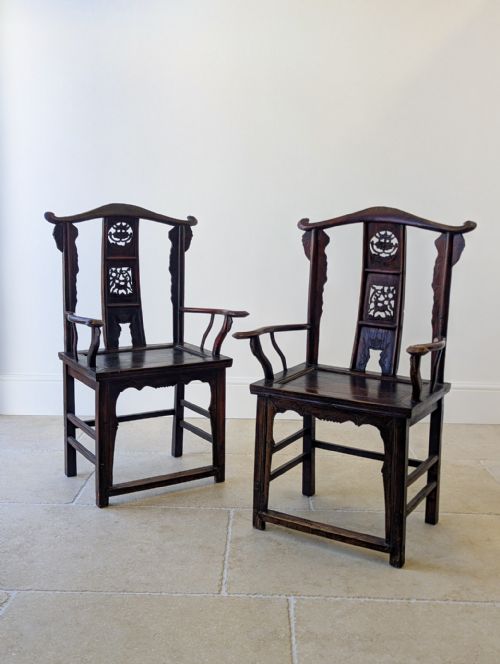
When you search for antique yoke back chairs, you encounter seating distinguished by a curved top rail resembling a traditional ox yoke. These pieces draw primarily from Qing Dynasty traditions and encompass scholarly armchairs as well as simpler side chairs.
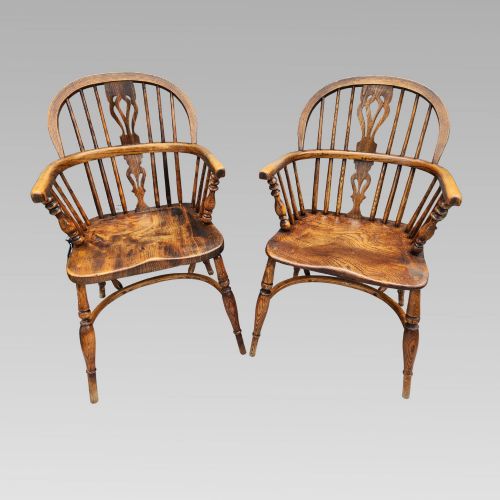
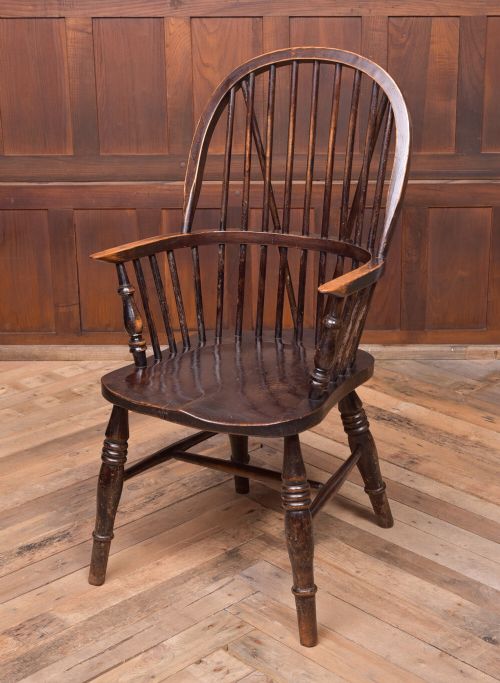
The selection on this page leans heavily toward Chinese forms from the nineteenth century, alongside occasional English country Windsor designs and Georgian revival pieces. You will find elm, hardwood, and lacquered surfaces forming the core of the available selection.
Makers produced these chairs as functional furniture for scholars, officials, and households, incorporating subtle ergonomic curves into the backsplats. Today, buyers select them to anchor minimalist interiors or to introduce organic timber textures into traditional spaces.
How they were made
Cabinetmakers constructed these chairs using dense native timbers such as elm, ash, and blonde wood, often employing mortise and tenon joinery without metal fasteners. This rigid framing allowed the timber to expand and contract seasonally while maintaining structural integrity over generations.
Surface treatments range from clear finishes that highlight natural wood grain to vibrant red lacquer layered with gold leaf detailing. Craftsmen shaped the iconic crestrail by steaming or joining sections of timber to create the sweeping, continuous curve characteristic of the form.
What varies in quality
The distinction between ordinary examples and superior pieces rests on the crispness of the joinery and the selection of timber figures. A well-balanced frame maintains harmonious proportions between the high crestrail, the sweeping armrests, and the supportive splat.
The integrity of the original surface finish, whether aged elm or intact red lacquer, dictates the visual presence of the chair. Subtle carving details and the clever shaping of the backsplat distinguish workshop output intended for scholars from standard domestic seating.
The Antique Yoke Back Chairs Glossary
- Yoke-back
- A chair style featuring a curved top rail that resembles a traditional animal yoke. This distinctive silhouette provides ergonomic support for the sitter's shoulders.
- Scholar's chair
- A traditional Chinese seating form characterised by clean lines and upright posture, historically used by literate officials. These designs prioritise functional elegance over excessive ornamentation.
- Crestrail
- The uppermost horizontal member of a chair back. On these pieces, it sweeps outward and upward to form the characteristic yoke shape.
- Elm
- A durable, fibrous hardwood utilised extensively in traditional Chinese cabinetmaking. Its interlocking grain resists splitting under structural stress.
- Lacquer
- A durable resin finish applied in multiple layers to wood surfaces. It provides a glossy, protective coating that often accepts decorative pigment or gold leaf.
Antique Yoke Back Chairs: Frequently Asked Questions
Where were antique yoke back chairs placed?
These chairs traditionally occupied studies, reception rooms, and halls within traditional households, positioned to maintain an upright, formal posture. Scholars and officials utilised them for reading, writing, and receiving guests.
In contemporary homes, they function well as standalone accent pieces in hallways, living rooms, or bedrooms, adding architectural height against plain walls.
How do I care for elm and lacquered surfaces?
Maintain the wood by dusting with a soft, dry cloth and avoiding direct sunlight, which can dry out nineteenth-century timber and fade pigmented finishes. Keep indoor humidity stable to prevent timber movement.
Avoid chemical polishes or abrasive cleaners, which strip historic patinas and damage delicate lacquer or gold leaf layers.
Are yoke back chairs comfortable for daily seating?
The upright design encourages an alert posture rather than relaxed lounging, featuring a contoured backsplat that supports the spine. They suit dining tables, desks, or occasional seating rather than prolonged resting.
Adding a simple loose silk or cotton cushion can soften the wooden seat while respecting the aesthetic of the piece.
How can I tell a scholar's chair from a standard chair?
Scholar's chairs typically exhibit refined proportions, specific joinery to support upright posture, and occasionally more deliberate use of blonde wood or elm. They reflect specific aesthetic codes associated with the scholarly class.
Standard hall chairs or side chairs often feature simpler construction and heavier scaling intended for communal domestic use rather than scholarly study.