


Chinese Side Chairs Pair
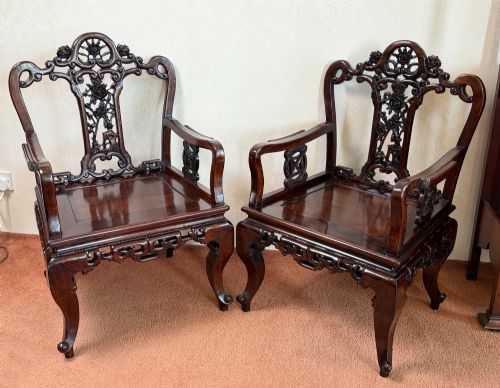
These chinese side chairs pair examples bring together the clean lines of Qing Dynasty seating and the distinctive interpretations of Chinese Chippendale.
Chinese Side Chairs Pair
When searching for a chinese side chairs pair, a buyer encounters forms that span centuries of woodworking tradition, from formal hall furniture to domestic seating. The selection here leans heavily towards nineteenth-century examples alongside eighteenth-century finds, offering everything from carved hardwood to elm yokeback designs.
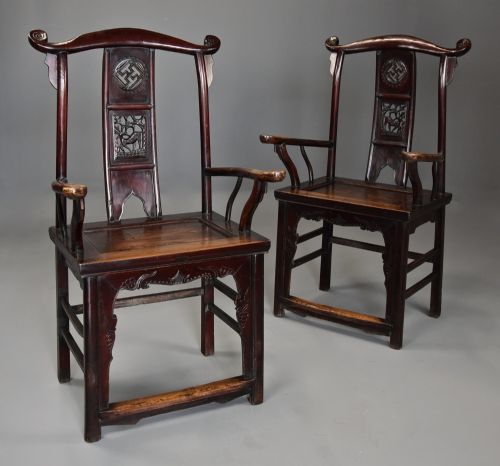
The objects take various shapes, including yokeback chairs, concubine chairs, lamp hanger chairs, and hall chairs. Many originate from the Qing Dynasty or employ Chinese Chippendale styles, presenting purchasers with options ranging from lacquered finishes to unadorned timber.
These chairs serve as statement pieces in contemporary interiors, functioning equally well in pairs around a dining table or as standalone accent seating. Their distinct silhouettes reflect regional craftsmanship traditions adapted for both domestic utility and formal reception spaces.
What varies in quality
Quality differentiates itself through the crispness of carved motifs and the preservation of original surfaces such as red lacquer or deep wood patina. Superior examples retain their structural stability and joinery integrity without intrusive modern alterations.
The choice of timber significantly influences the tier of the piece, with dense hardwoods like huanghuali and hongmu sitting at a different level from domestic elm or ash alternatives. Balance in proportion and subtlety in proportion separate standard production from masterwork execution.
The Chinese Side Chairs Pair Glossary
- Yokeback chair
- A traditional Chinese chair style featuring a top crestrail that resembles the yoke of an ox, curving outward and upward for upper back support.
- Hongmu
- A translation meaning 'red wood', categorising a group of dense tropical hardwoods used in traditional Chinese furniture making.
- Lamp hanger chair
- A lightweight armchair design with protruding crestrail ends, traditionally resembling poles used for hanging lanterns.
- Cane
- Woven material made from the outer skin of rattan palms, utilised to create breathable and flexible seating panels within wooden frames.
Chinese Side Chairs Pair: Frequently Asked Questions
How were Chinese side chairs used historically?
These chairs were positioned against walls in formal reception halls or used around tables for dining and scholarly pursuits. Pairs often flanked doorways or focal points within a room to create symmetry.
Their upright proportions encouraged formal posture, reflecting the social hierarchy and etiquette of traditional households where status dictated seating arrangements.
How should I care for antique hardwood chairs?
Maintain these pieces in stable indoor environments away from direct sunlight and sudden temperature shifts to prevent timber splitting. Dust regularly with a soft, dry cloth and avoid harsh chemical polishes.
Applying microcrystalline wax periodically helps preserve the patina of unlacquered hardwoods without building up heavy residues over time.
Are elm and hardwood chairs equally durable?
Elm offers robust structural qualities and flexibility, making it a reliable domestic timber utilised frequently in regional seating. Hardwoods such as rosewood and huanghuali provide superior density, resistance to wear, and heavier weight.
Both materials survive centuries of use when constructed with traditional joinery, though hardwood variants generally command higher regard among collectors.