
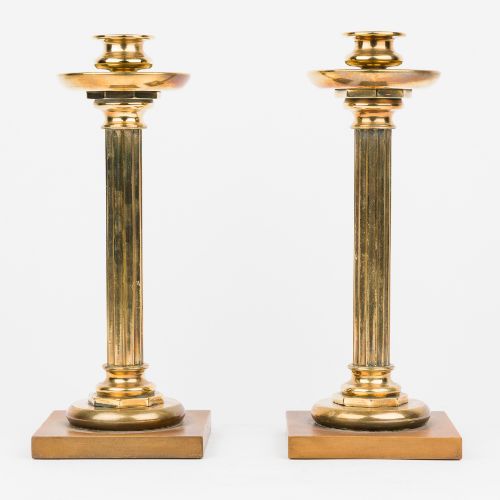
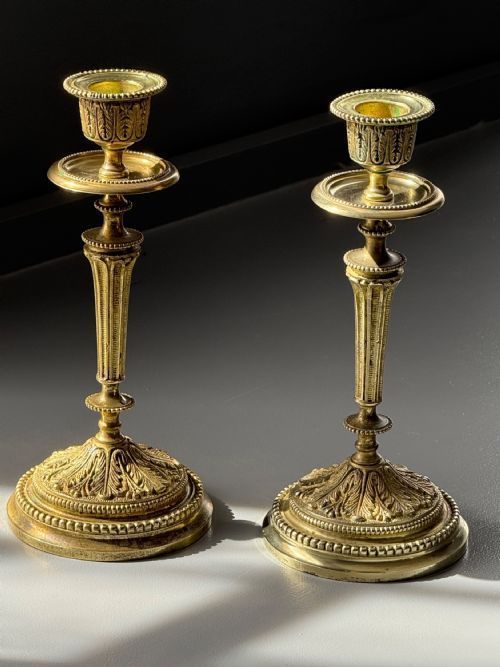
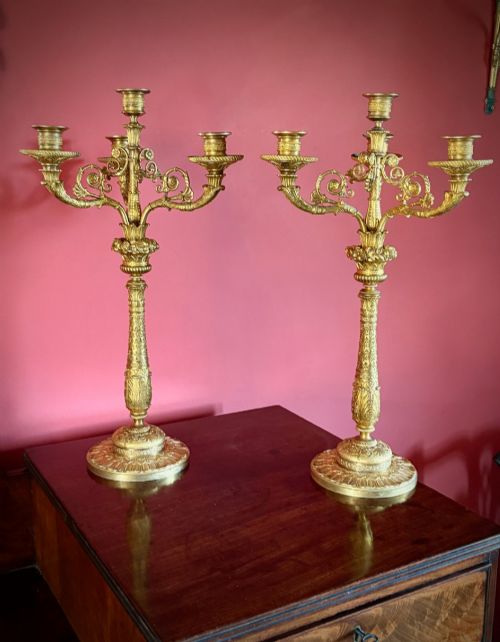
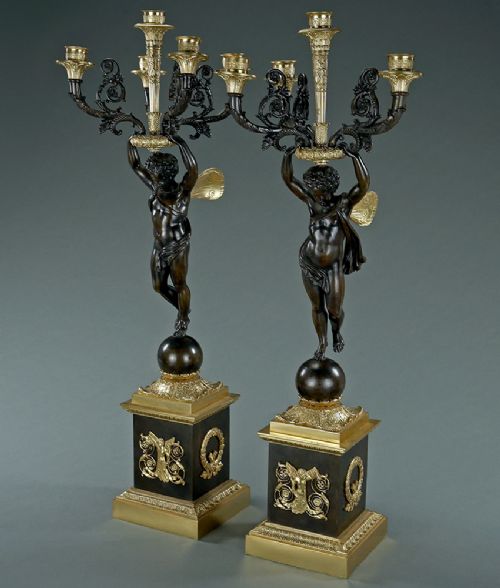



Pair Bronze Table Candlesticks
Pair bronze table candlesticks bring sculptural weight and warm metallic lustre to a room, spanning French Empire, Regency and Victorian designs.
Pair Bronze Table Candlesticks
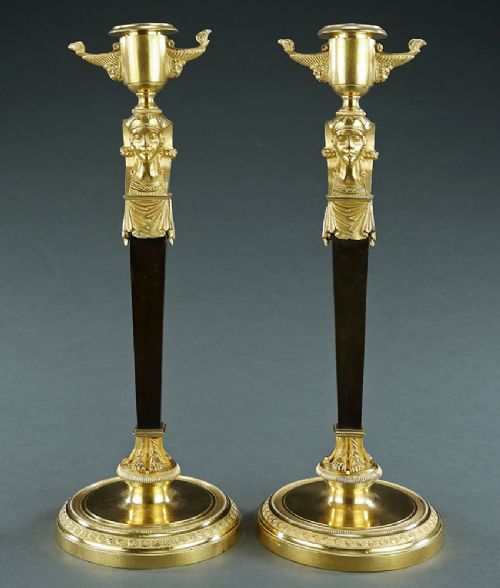
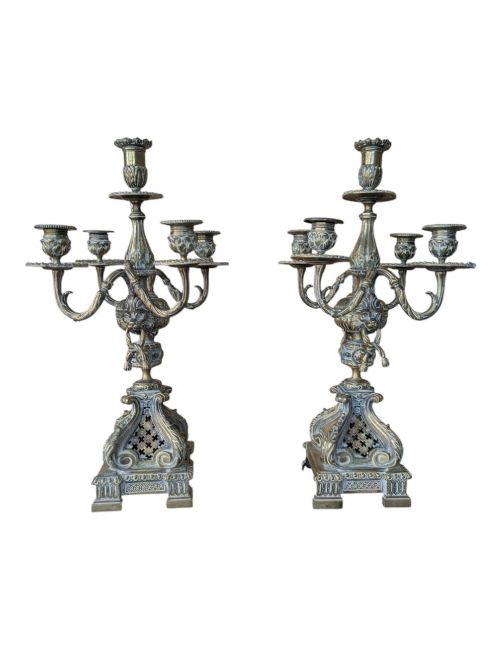
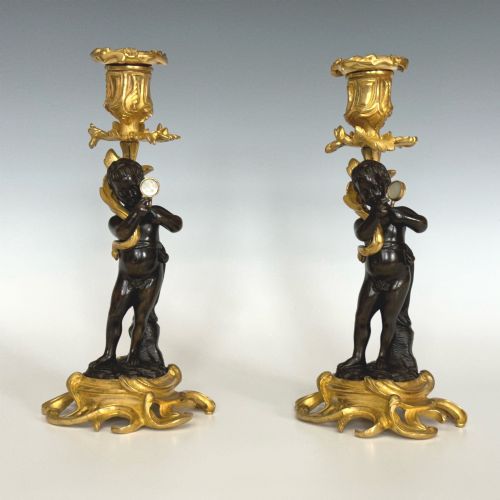
Pair bronze table candlesticks encompass short single-light sticks, multi-branch candelabra and figural supports cast in metal. The selection on this page leans heavily towards nineteenth-century French production, particularly Regency, Louis XVI style and Empire designs.
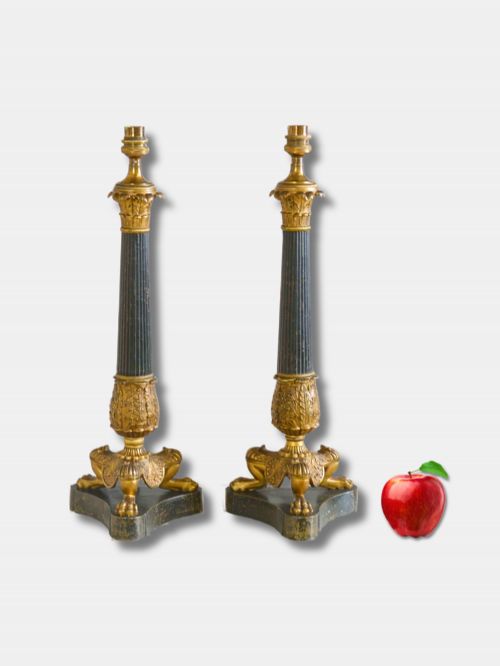
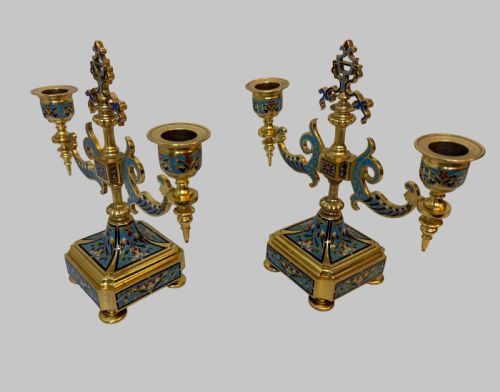
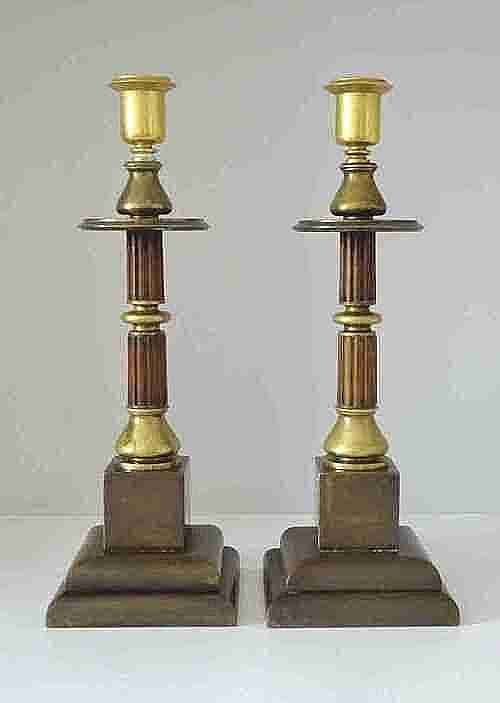
Buyers encounter patinated bronze, gilt ormolu, brass and spelter, often mounted on marble bases or combined with enamel and glass lustres. Many examples from this era show adaptations into table lamps through subsequent electrification.
Methods and materials
Foundry work relied on casting bronze or brass in sections, which were then chased, filed and fitted together to build up columns, figures and scrolling arms. Gilding was applied using mercury or electrical methods to produce a rich ormolu finish against contrasting dark patination.
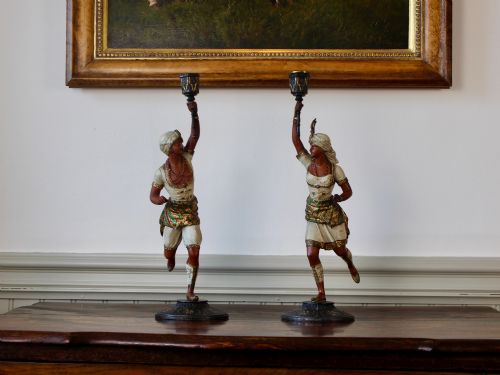
Secondary materials included white or coloured marble for plinths, champlevé enamel for decorative panels, and glass drops known as lustres. Cold painting and patination created specific surface colours on bronze and spelter figures.
Listings feature items spanning the eighteenth, nineteenth and early twentieth centuries, incorporating materials such as marble, fabric, enamel and gilt bronze.
Qualities of execution
Integration of components defines better items, where joints fit tightly and heavy cast elements maintain balance. Weight and the depth of mercury gilding or patination distinguish finer nineteenth-century objects from later reproductions.
The Pair Bronze Table Candlesticks Glossary
- Ormolu
- Gilded bronze produced by applying a mercury-gold amalgam to the metal surface and heating it to vaporise the mercury. This technique creates a durable, luminous golden finish characteristic of French decorative arts.
- Patination
- The surface colour and texture developed naturally over time or artificially through chemical treatment. On bronze, patination ranges from deep brown to near-black tones.
- Champlevé
- An enamelling technique where troughs or cells are hollowed out in the metal surface and filled with vitreous enamel powder before firing. The design stands out in the raised metal partitions.
- Candelabra
- A branched candlestick holding multiple taper candles or light fittings. Examples often feature a central light surrounded by detachable scroll arms.
- Spelter
- A zinc alloy used as a less expensive alternative to bronze for cast figures. It takes patination and paint well but is softer and lighter than genuine bronze.
Pair Bronze Table Candlesticks: Frequently Asked Questions
How do I date pair bronze table candlesticks?
Dating relies on stylistic clues, casting methods and material combinations. Pieces frequently align with specific nineteenth-century revivals such as Louis XVI, Empire or Regency.
Examining construction marks, screw threads and the quality of the bronze cast helps narrow down the decade of manufacture between the early nineteenth and early twentieth centuries.
Were these candlesticks converted to lamps?
Many nineteenth-century examples undergo conversion to table lamps by running a cord through the central column. This modification allows the use of fabric shades while retaining the original bronze or ormolu base.
Conversions can sometimes be reversed if the original wiring channel was drilled carefully without damaging the structural metalwork.
What is the difference between bronze and spelter?
Bronze is an alloy of copper and tin offering high durability, crisp casting detail and heavy weight. Spelter is a zinc-based metal that feels lighter and softer to the touch.
Items made from spelter often show cold-painted surfaces rather than genuine fire-gilding or deep chemical patination.
How do I clean gilt bronze and ormolu?
Maintenance requires only gentle dusting with a soft, dry brush to prevent dirt accumulation in recessed chased details. Water and chemical polishes strip away fragile mercury gilding and damage the historic patination.
Professional conservation is recommended for pieces showing active tarnish or structural instability.