
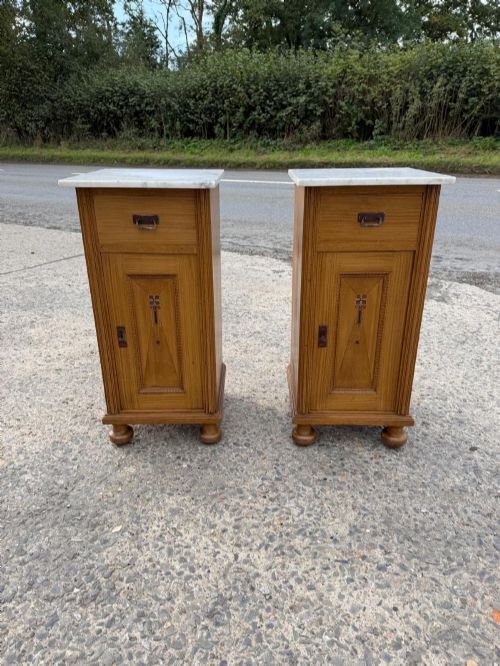
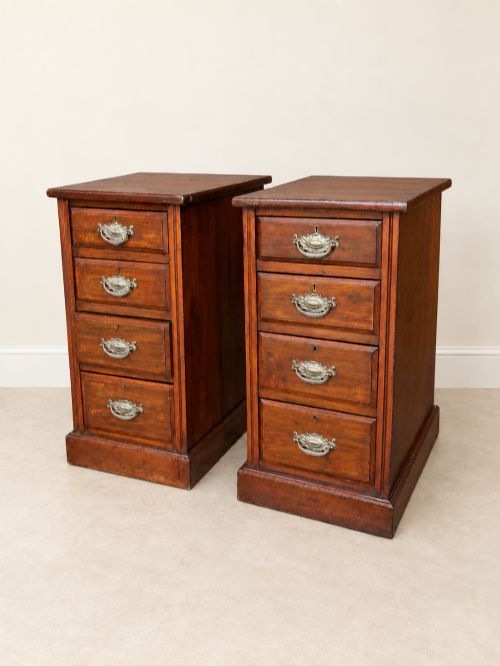
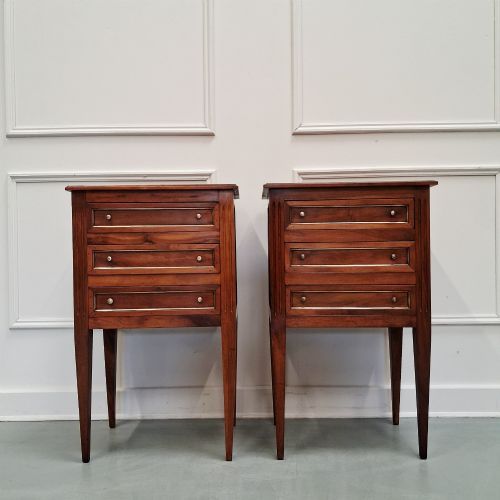
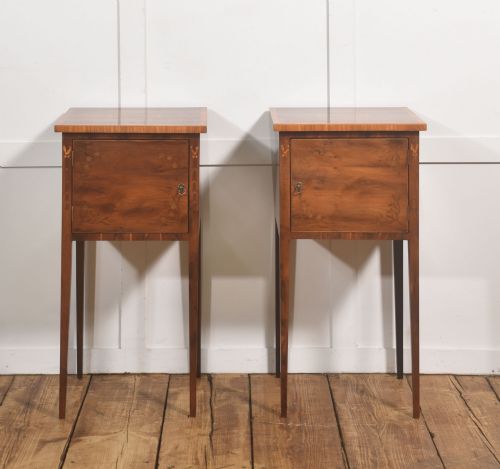
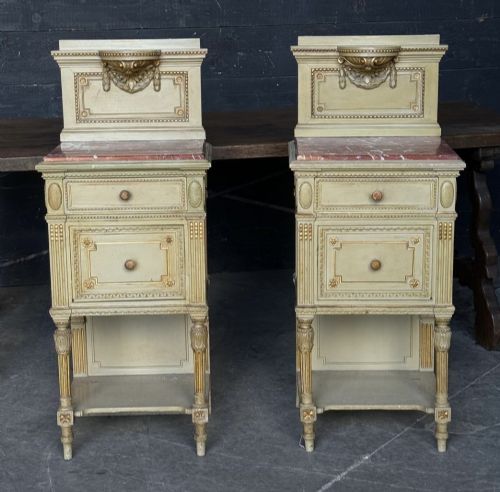
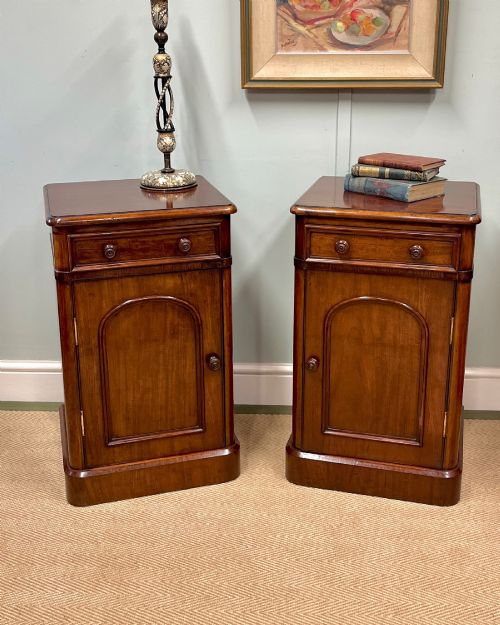
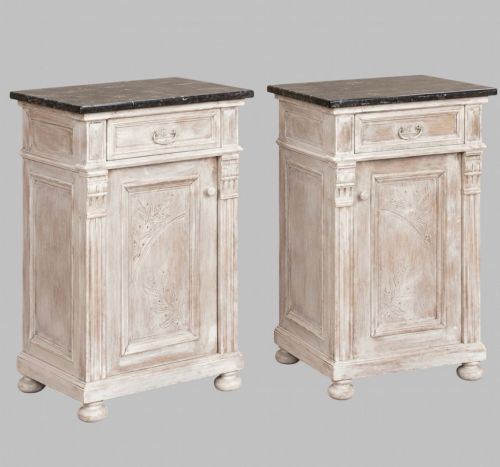
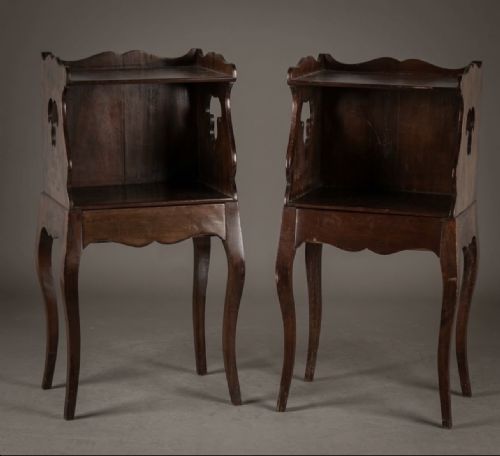

Pair Bedroom Tables
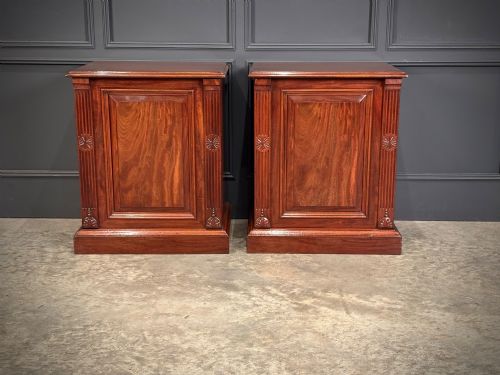
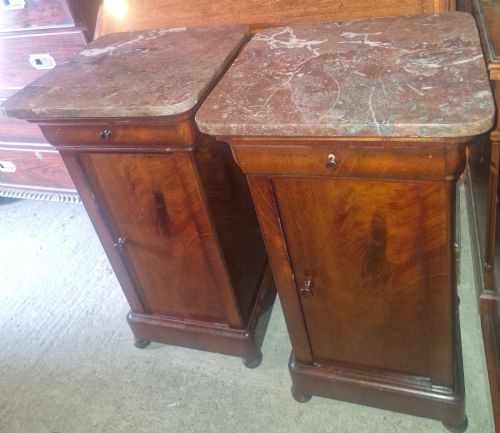
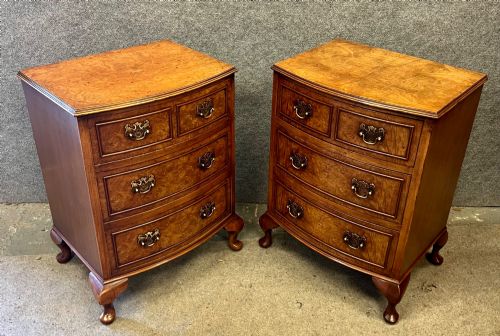
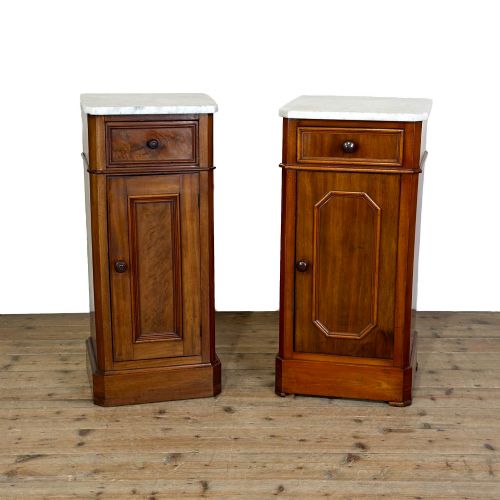
These pair bedroom tables provide matched bedside storage across Victorian, Edwardian, and Art Deco designs.
Pair Bedroom Tables
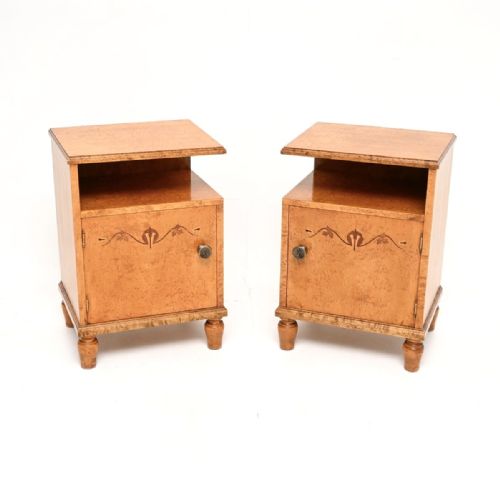
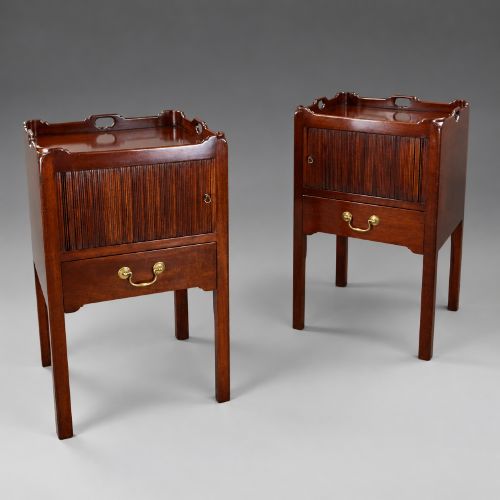
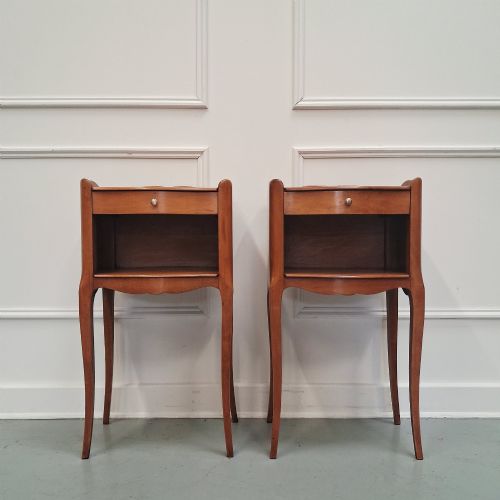
When you search for pair bedroom tables, you encounter matched bedside cabinets, chests, and lamp tables designed to sit on either side of a bed. The selection spans the nineteenth century through the Art Deco era of the 1930s, encompassing styles from plain Georgian revival to ornate French provincial.
Mahogany forms the backbone of these pieces, alongside walnut, burr walnut, satinwood, oak, and occasional chrome or brass accents. You will frequently meet Edwardian inlaid designs and Victorian three-drawer bedside chests alongside streamlined 1930s walnut models.
How they were made
Cabinet makers utilised dense hardwoods like mahogany and walnut, often applying decorative veneers such as burr walnut or flame mahogany over secondary timbers. Inlaid examples display contrasting satinwood or boxwood stringing set directly into the primary surfaces.
Construction methods rely on traditional dovetail joints for drawer boxes and mortise and tenon frames for structural stability. Later Art Deco pieces employ curved wood veneers and streamlined geometric shapes, occasionally paired with marble tops or chrome details.
Mahogany, walnut, and satinwood dominate the timber selections across Victorian, Edwardian, and Art Deco periods.
What varies in quality
The standard of timber selection dictates much of the value, with highly figured flame mahogany and richly patterned burr walnut sitting at the upper end of the scale. Subtle details like hand-cut dovetailing and crisp inlay separate standard utility items from finer workshop pieces.
Proportion and matching also define the better examples, ensuring the grain patterns and heights align correctly between both pieces of the pair. Altered or adapted pieces appear in the record, where older timber has been reconfigured into bedside chests.
Waring & Gillows
The Pair Bedroom Tables Glossary
- Bedside cabinet
- A small enclosed cupboard designed to sit beside a bed, usually featuring a single door and interior shelf.
- Nightstand
- An alternative term for a bedside table or small chest used to hold lamps and nighttime essentials.
- Flame mahogany
- A distinct timber veneer pattern resembling flickering flames, prized for its dramatic visual movement.
- Burr walnut
- A highly figured wood grain obtained from walnut tree growths, creating intricate circular and swirling patterns.
- Inlay
- A technique where contrasting woods or metals are inserted into recessed portions of a base surface for decoration.
Pair Bedroom Tables: Frequently Asked Questions
How do I identify Edwardian bedroom tables?
Edwardian tables often display lighter timber tones, delicate satinwood inlay, and tapered legs influenced by Sheraton revival styles.
They generally date from around 1900 to 1910, bridging the heavy Victorian aesthetic and the cleaner lines of the twentieth century.
Are Art Deco bedside tables made of solid wood?
Art Deco pieces predominantly utilise timber framing covered in decorative veneers such as burr walnut, satinwood, or figured mahogany.
This technique allowed cabinet makers to display striking geometric grain patterns across curved surfaces that solid timber could not easily achieve.
What are adapted Victorian bedside chests?
Adapted chests are older furniture pieces that have been altered, reduced in height, or reconfigured from larger items to serve as bedside tables.
These modifications are recorded by makers to suit modern proportions while retaining antique timber and construction methods.