
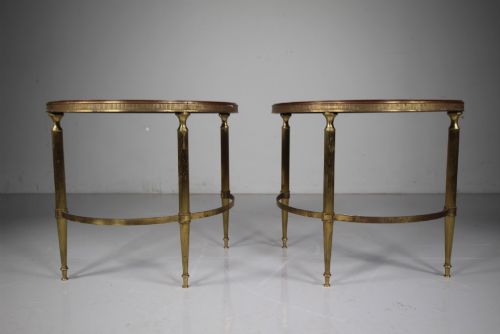
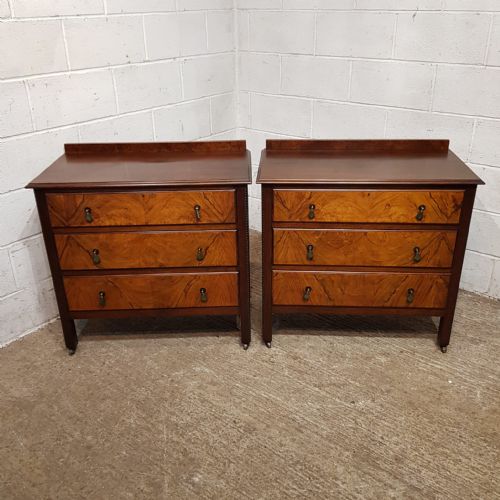
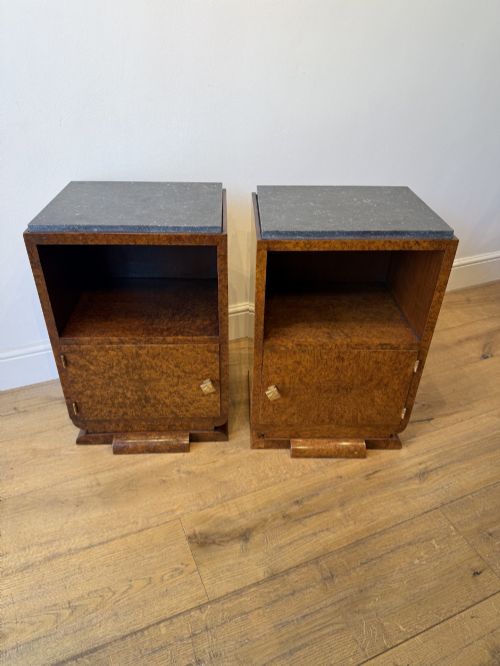

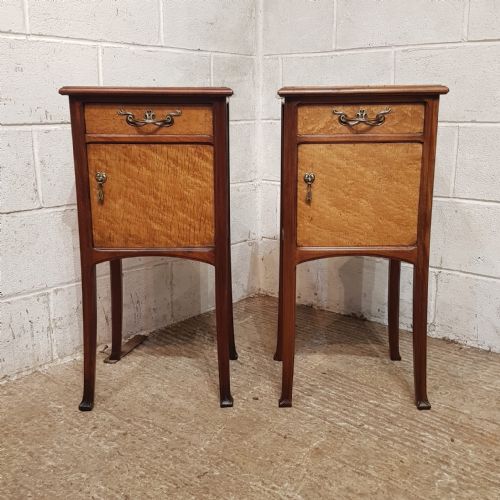
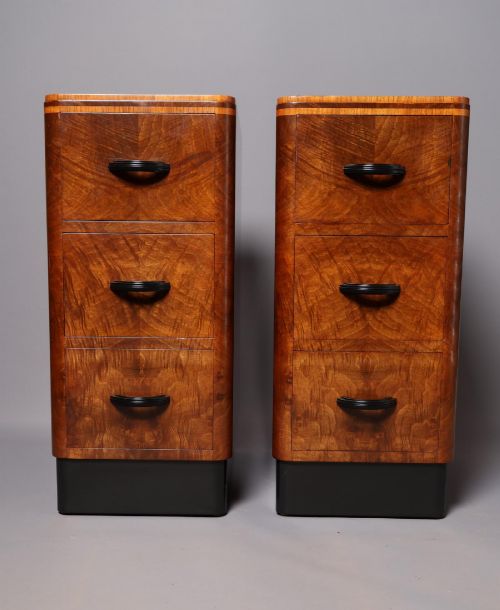
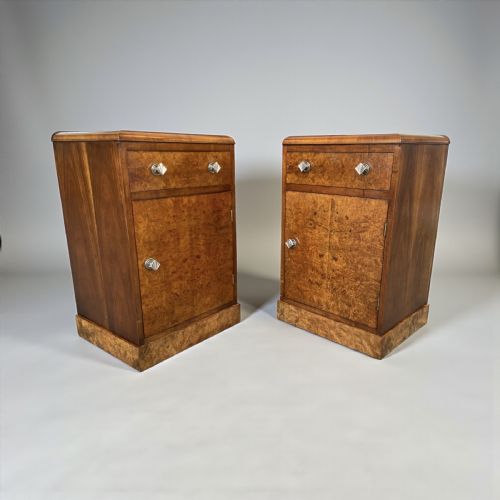

Pair Art Deco Tables
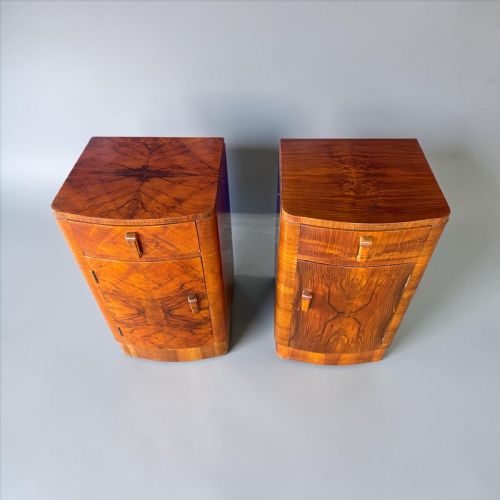
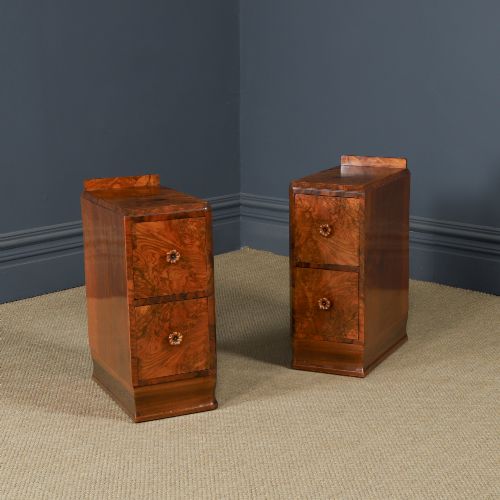
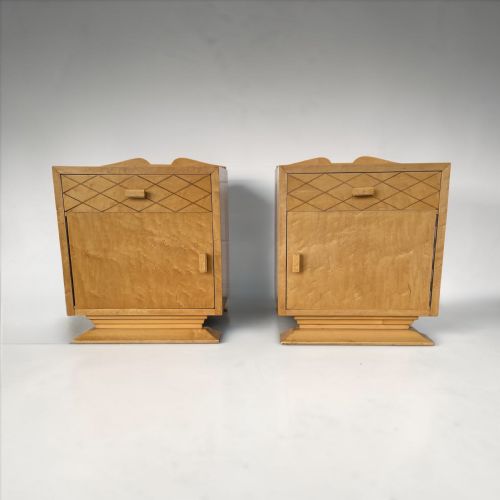
These pair art deco tables bring together matching geometric forms and period materials from the nineteen twenties and thirties.
What pair art deco tables are
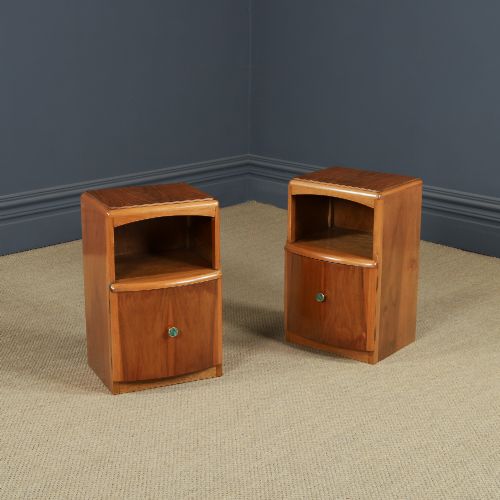
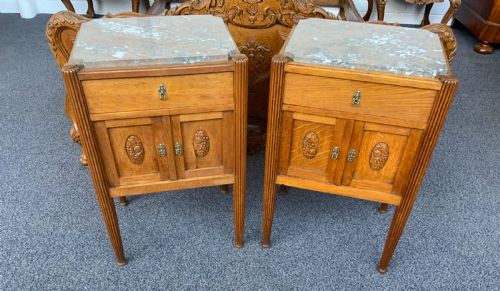
When you search for pair art deco tables, you encounter matching sets designed for use beside beds, sofas or in hallways. Side tables and bedside tables dominate the selection, alongside console, lamp, coffee and occasional tables.
The surviving pieces originate primarily from the nineteen twenties and nineteen thirties, reflecting the streamlined aesthetics of the period. Many examples function as standalone items, whilst others form part of larger bedroom suites with attached headboards or beds.
How they were made
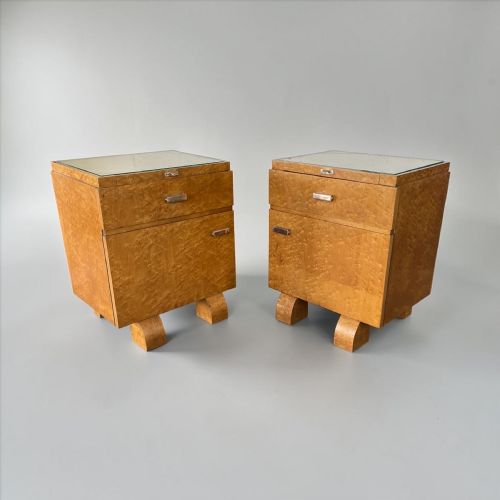
Cabinet makers utilised wood and wood veneer as the primary structural elements, favouring walnut, burr walnut, Italian walnut, French walnut and palm wood for their striking grain patterns. Selected pieces incorporate inlay work or contrasting banding to accentuate the geometric lines.
Surface treatments and secondary materials define the distinctive visual language of the period. Workshops employed peach mirror glass, vellum, brass and marble tops to introduce texture, reflection and durability to the designs.
Listings for pair art deco tables span two distinct decades, with pieces recorded from both nineteen twenty and nineteen thirty.
What varies in quality
The distinction between standard production items and exceptional pieces rests in the selection of timber veneers and the precision of the matching. Makers who booked walnut or burr walnut grains across both surfaces achieved a balanced symmetry that lesser examples lack.
Construction methods and secondary details elevate specific pieces above routine manufacturing. Integrated multi-tiered architecture, specialist metal mounts and the inclusion of unusual materials like peach mirror glass or vellum signal higher workshop ambition.
Hille·Harry and Lou Epstein·Brynmawr Furniture·Bowman Brothers
The Pair Art Deco Tables Glossary
- Burr walnut
- A prized timber harvested from the growths of walnut trees, displaying intricate, swirling grain patterns. It was frequently utilised for veneering prominent surfaces.
- Vellum
- Calfskin prepared for writing or as a decorative covering. Applied to furniture surfaces, it provides a smooth, tactile pale finish typical of modernist design.
- Peach mirror glass
- Tinted reflective glass with a warm pinkish hue. It appeared in table tops and panelling during the interwar years.
- Modernist
- A design movement prioritising function, clean lines and unornamented surfaces. It stripped away historical revivalism in favour of industrial simplicity.
- Console table
- A table designed to stand against a wall, often supported by brackets or pedestals. In pairs, they balance symmetrical hallway or living room layouts.
Frequently Asked Questions
Where should I place these tables?
These matched sets work best where symmetry matters most, such as flanking a bed or positioned at either end of a sofa. Console variants suit hallways and entrance spaces where a balanced display surface is required.
Because they originate from the interwar period, their distinct geometric forms anchor a room without overwhelming surrounding furnishings.
How do I identify nineteen thirties pieces?
Look for characteristic materials like burr walnut veneer, peach mirror glass and contrasting metal accents. The construction typically emphasises clean horizontal and vertical lines.
Makers working during this era often utilised specific woods such as palm wood or incorporated tiered structures into side and lamp tables.
Are matching pairs difficult to find?
Original matched pairs are scarcer than single tables because items often became separated over decades of use. Many surviving pairs originated as bedside cabinets or lamp tables designed specifically as twins.
Listings occasionally feature tables that formed part of larger bedroom suites complete with attached headboards.
Can I use them as bedside storage?
Bedside cabinet variants provide enclosed storage alongside surface space for lamps and books. Their compact proportions make them suitable for modern bedroom layouts.
Open side and lamp tables offer a lighter visual profile if you prefer a less bulky appearance beside a bed.