
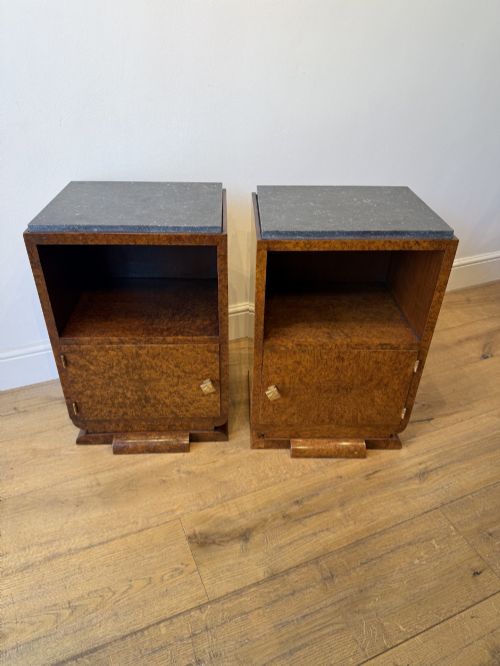


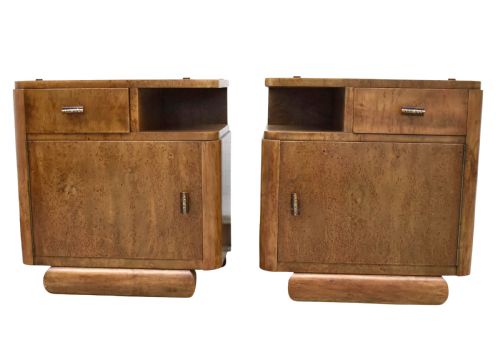
Streamline Moderne Bedside Tables
Streamline moderne bedside tables are striking interwar pieces that bring curved, aerodynamic lines and rich veneers directly to the bedroom.
Streamline Moderne Bedside Tables
Streamline moderne bedside tables represent the sleek, forward-looking aesthetic of the interwar period, combining practical storage with horizontal emphasis and curved corners. When you search for streamline moderne bedside tables, you encounter compact cabinets and tables produced primarily during the nineteen-thirties.
The pieces appearing here span compact bedside cabinets, side tables, and occasional nightstands sharing the overarching art deco and modernist idiom. Most examples originate from the nineteen-thirties, with occasional pieces from adjacent decades.
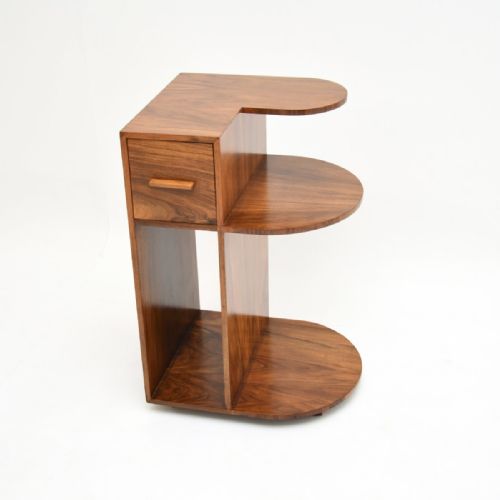
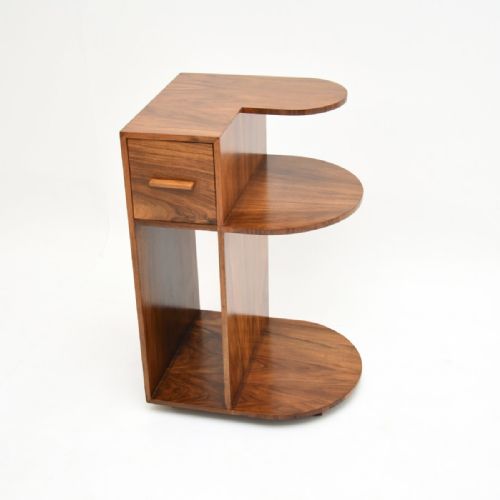
Makers and designers working in this style utilised distinctive forms, frequently presenting pairs or matching sets designed to flank a bed. The prevailing forms rely on clean geometric silhouettes softened by rounded edges and nautical-inspired porthole motifs or sweeping veneers.
How they were made
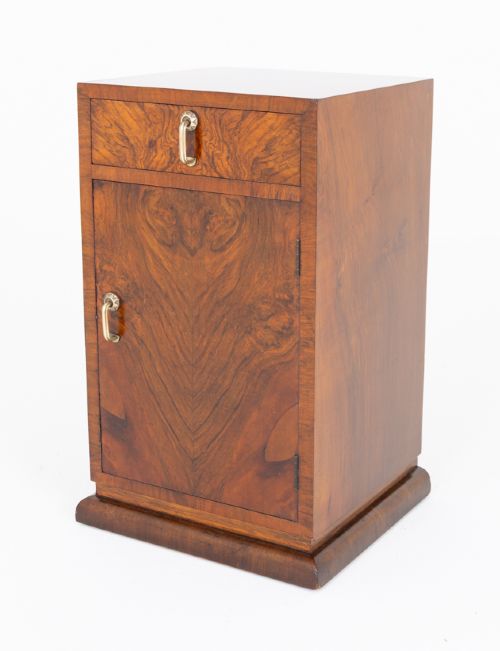
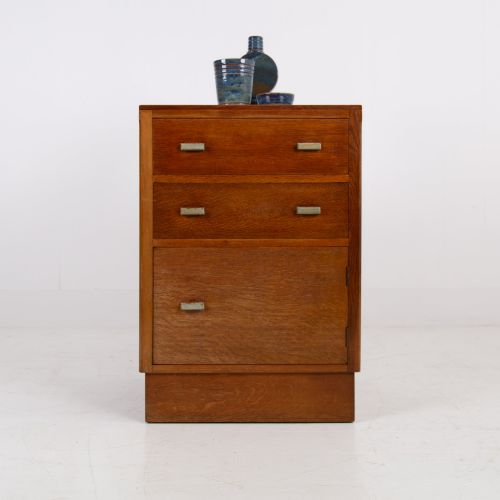
Cabinet makers constructed these pieces using solid timbers like oak and mahogany as a stable carcase, then applied decorative figured veneers such as walnut, burr walnut, burr elm, and birdseye maple to the primary surfaces. This technique allowed workshops to display dramatic wood figure across curved drawer fronts and cabinet doors.
Metal and brass components provided structural accents and hardware, contributing to the industrial, machine-age aesthetic characteristic of the movement. Bakelite occasionally appeared in electrical or decorative elements on associated items like table lamps.
Lightning flash lighting designs from nineteen-forty prove that even bedside illumination took inspiration from electrical storms.
What varies in quality
The distinction between standard production items and superior pieces rests on the choice and book-matching of decorative wood veneers. Cabinets featuring symmetrical burr walnut or birdseye maple grain across curved surfaces represent a higher standard of manufacture.
Construction methods also separate workshop output, with superior pieces showing meticulous joinery on curved carcases and integrated hardware. The presence of documented makers or distinct modernist proportions elevates certain examples above standard commercial output.
Gomme·Betty Joel
The Streamline Moderne Bedside Tables Glossary
- Veneer
- A thin slice of figured wood applied to a stable underlying timber carcase. This technique allowed cabinet makers to display striking grain patterns across curved streamline surfaces.
- Art Deco
- A design movement spanning the twenties and thirties characterised by sleek geometric shapes, streamlined forms, and modern materials. It heavily influenced the development of streamline moderne furniture.
- Burr
- A tree growth resulting in distorted wood grain that produces intricate, swirling patterns when sliced. Burr walnut and burr elm were prized for high-end modernist cabinetry.
- Modernist
- An aesthetic approach prioritising clean lines, functional form, and the rejection of historical revivalism. It manifests in these tables through unadorned surfaces and geometric emphasis.
Streamline Moderne Bedside Tables: Frequently Asked Questions
How do I identify streamline moderne tables?
Look for horizontal emphasis, curved corners, and sweeping veneer patterns that reject traditional period ornamentation in favour of aerodynamic forms.
These characteristics reflect the influence of interwar industrial design applied to domestic bedroom furniture.
Are these tables usually found in pairs?
Many examples survive as matched pairs intended to flank a bed symmetrically, though single bedside cabinets and side tables also appear frequently.
Pairs generally command stronger interest from collectors seeking a balanced bedroom arrangement.
What woods were used in these cabinets?
Makers utilised a foundation of solid woods like oak or mahogany, overlaid with decorative figured veneers including walnut, burr walnut, burr elm, and birdseye maple.
These varied timbers provided the striking visual patterns characteristic of the period.
How do I care for veneered surfaces?
Protect delicate wood veneers by keeping pieces away from direct sunlight and maintaining stable room humidity to prevent lifting or cracking.
Regular dusting with a soft, dry cloth preserves the polished finish without damaging the antique timber.