

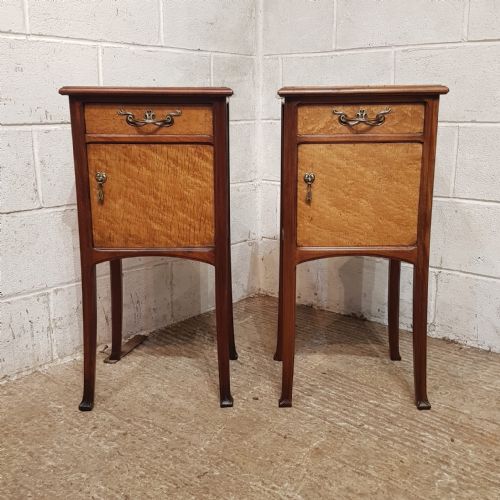
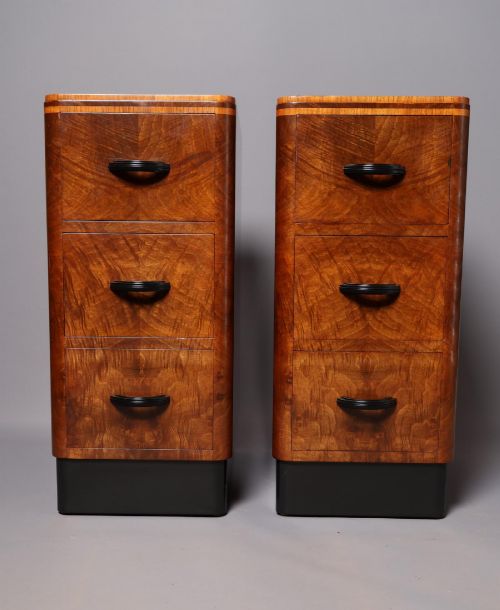
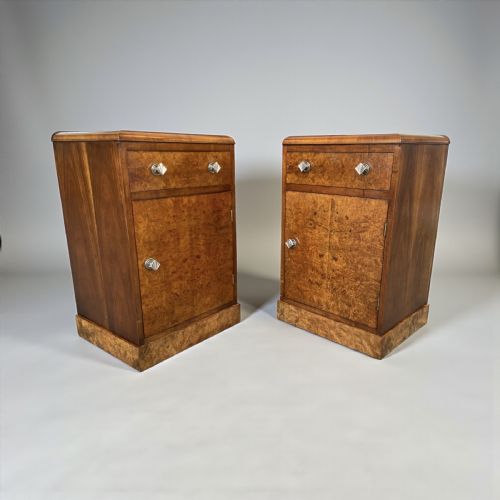


Pair Art Deco Nightstands
These pair art deco nightstands bring distinct nineteen-thirties geometry and practical bedside storage into a bedroom.
What these pair art deco nightstands are
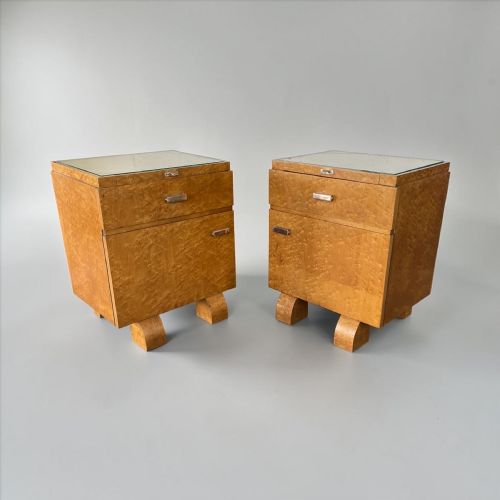
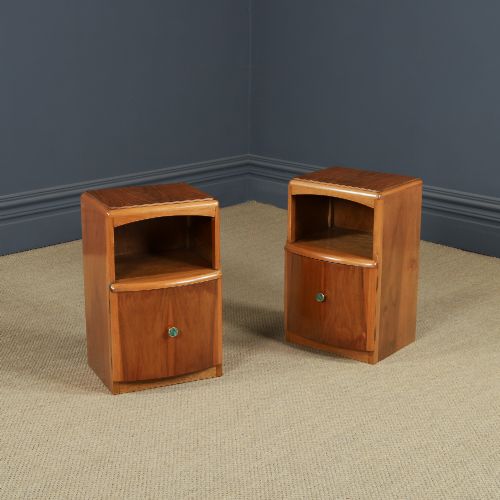
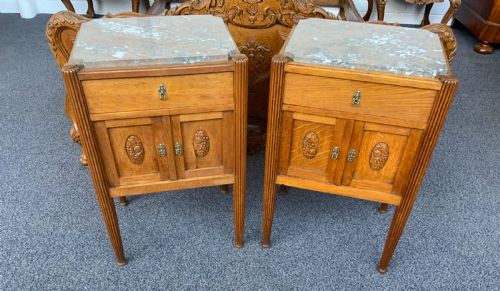
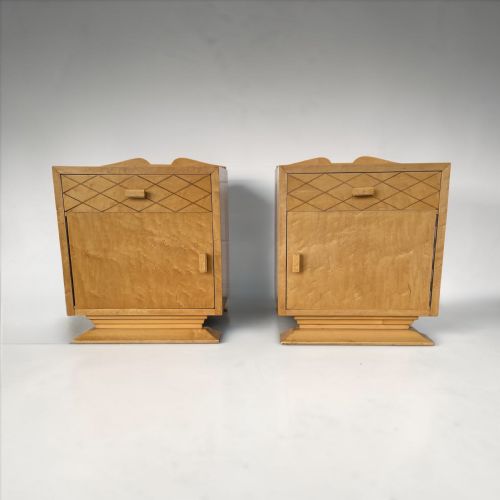
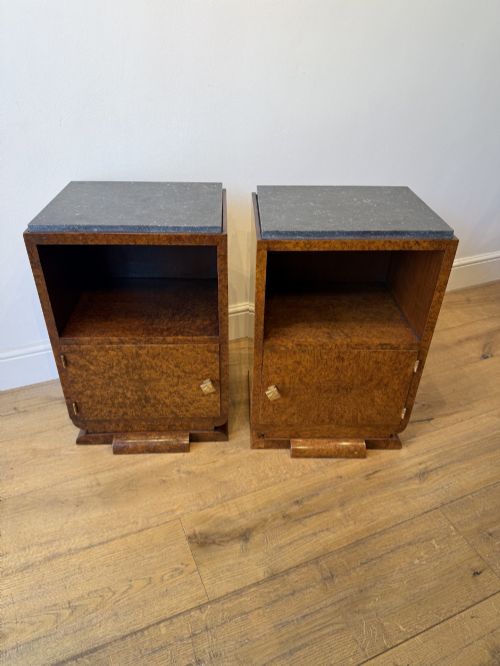
These pieces are matching bedroom storage units designed in the Art Deco style, most commonly found originating from England and Italy around nineteen thirty. You will frequently encounter them described as bedside cabinets, tables, or chests, incorporating both open areas and enclosed cupboards.
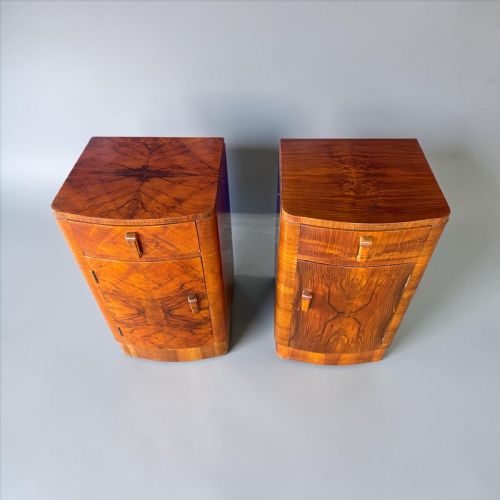
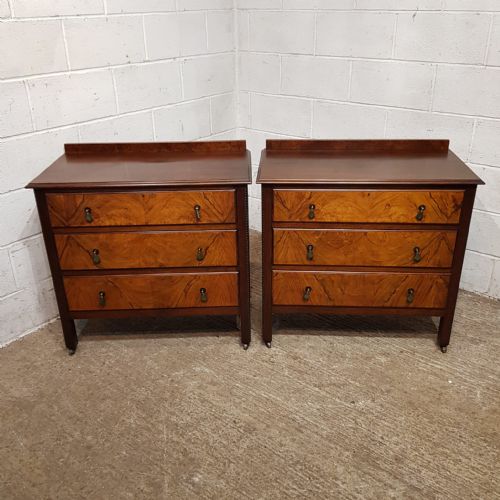
The designs rely on balanced symmetrical forms intended to sit neatly on either side of a bed. English examples often showcase figured walnut veneers, while Italian variations lean towards distinct proportions and matching sets.
Builders constructed these bedside pieces to offer functional surfaces alongside hidden storage for nighttime essentials. The pairing remains essential for maintaining visual symmetry in a period bedroom layout.
How they were made
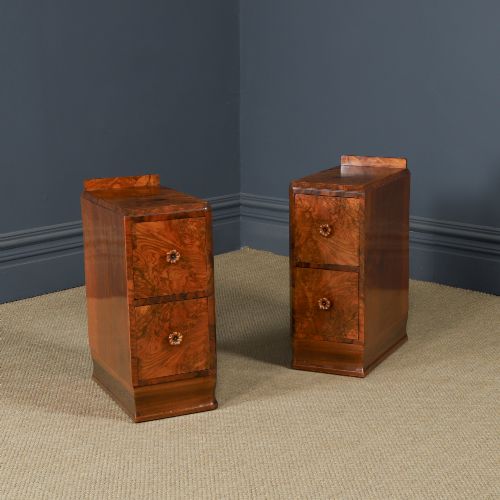
Craftsmen built the core structures from sturdy timber like oak and general wood before applying decorative surface veneers. These outer layers typically consist of walnut, burr walnut, figured walnut, or birdseye maple, chosen for their striking natural grain patterns.
Details such as bakelite handles and metal accents provide the characteristic hardware touches of the period. Wood veneers were carefully cut and arranged to create symmetrical geometric designs across the drawer fronts and cupboard doors.
Retail Price Guide 2026
Typical UK retail prices for pair art deco nightstands, calculated from the Sellingantiques database of over a million retail prices indexed since 2003. This retail price guide relies exclusively on Sellingantiques data; no external sources or auction records are used, so the figures do not describe the wider market.
Materials recorded across these bedside tables include walnut, burr walnut, birdseye maple, oak, bakelite, and metal.
What varies in quality
The choice of surface timber dictates much of the visual distinction, moving from standard walnut up to highly figured burr walnut and birdseye maple veneers. Exceptional examples display continuous grain matching across paired cabinet doors.
Construction methods and hardware integration separate standard production from superior pieces. The precision of the veneer work and the original condition of integrated bakelite or metal fittings define the upper tier.
The Pair Art Deco Nightstands Glossary
- Bakelite
- An early synthetic plastic utilised for durable handles and decorative hardware during the period. It provides a smooth, tactile finish distinct from metal.
- Veneer
- A thin layer of superior wood adhered to a stable secondary timber base. This technique allowed makers to display dramatic grain figures without using solid expensive timber.
- Bow front
- A convex curved cabinet face that softens the geometric rigidity typical of the nineteen-thirties style. This shape requires advanced carpentry skills to execute properly.
Frequently Asked Questions
Are these cabinets matched sets?
Yes, these items were built and sold as intentional matching pairs to flank a bed symmetrically.
The shared timber and design details ensure a balanced appearance in a bedroom setting.
What wood was used?
The primary visible surfaces feature decorative veneers including walnut, burr walnut, figured walnut, and birdseye maple.
Underlying structural frames utilise solid timbers such as oak and general wood.
Where were they made?
Surviving examples show strong origins in England and Italy during the nineteen-thirties.
English and Italian workshops each brought distinct regional interpretations to the Art Deco aesthetic.
How do I use them today?
These cabinets serve as functional bedside storage providing surface tops, open display areas, and enclosed cupboards.
Their compact scale suits modern bedrooms while offering period character.