


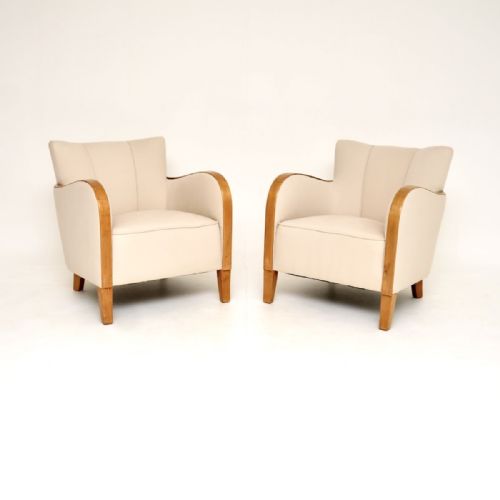
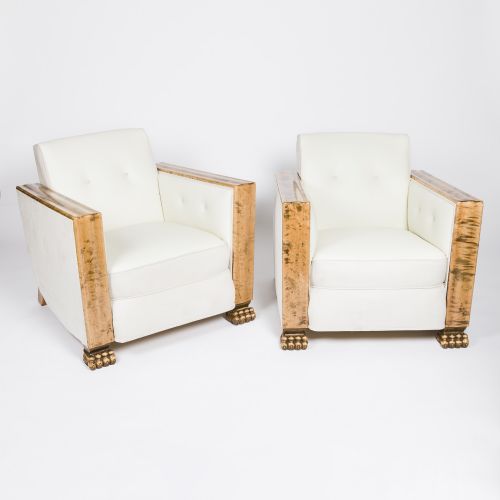
Pair Art Deco Club Chairs
Pair art deco club chairs combine deep, enveloping comfort with architectural geometry, offering a substantial seat designed for relaxed, low-slung lounging.
Pair Art Deco Club Chairs
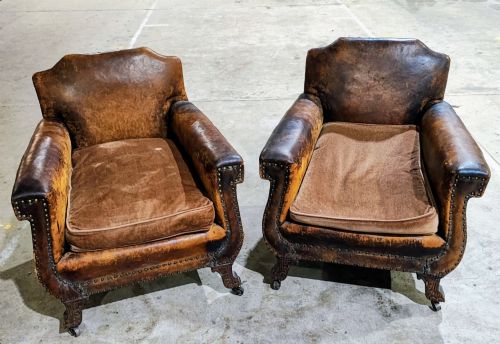
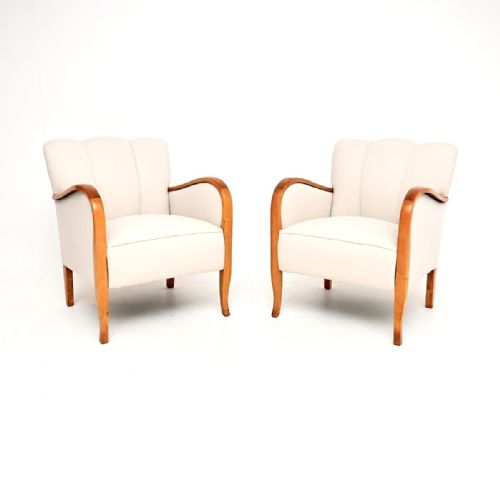
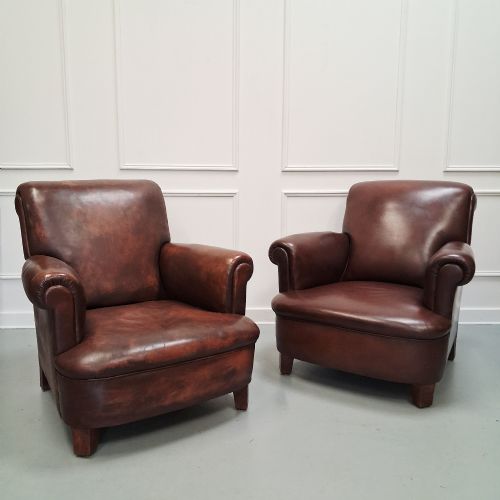
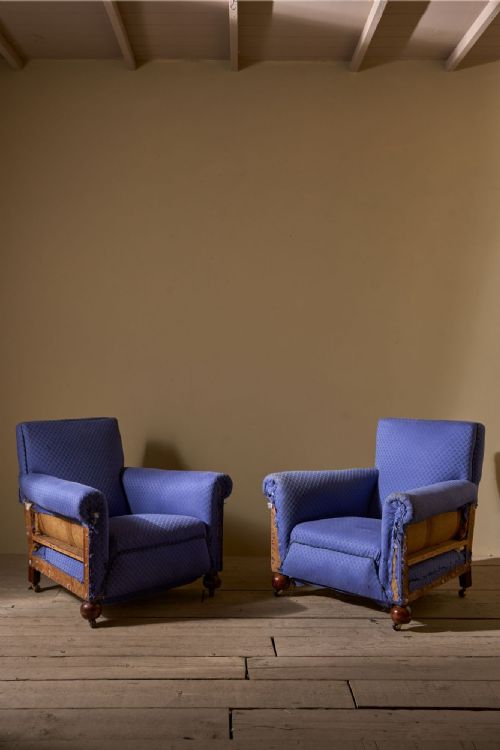
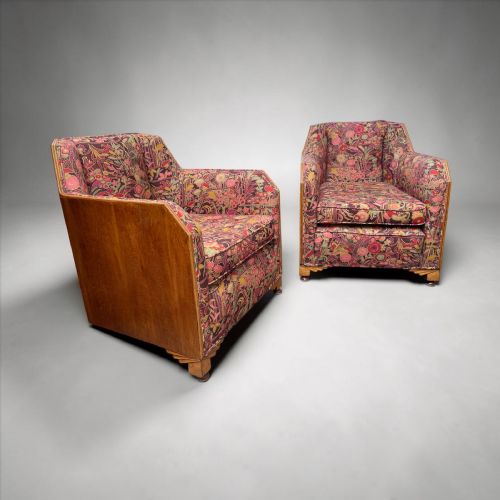
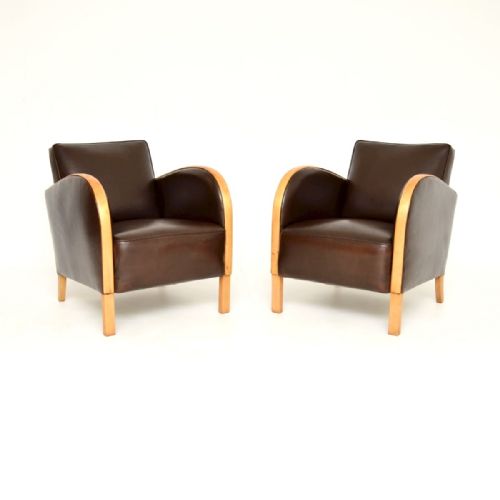
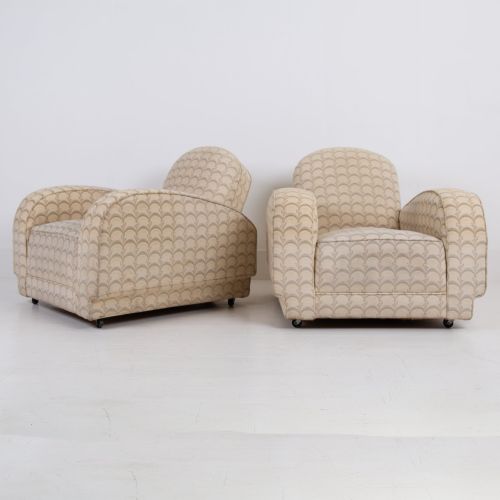
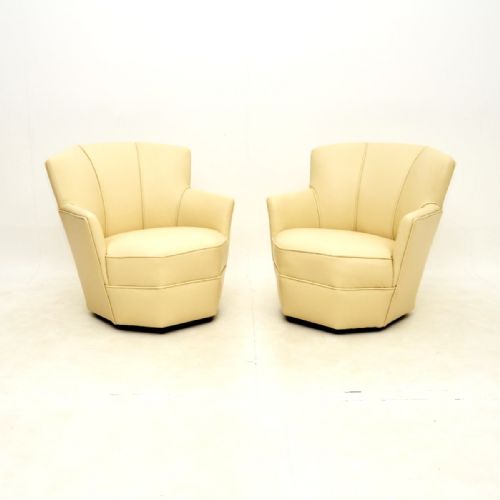
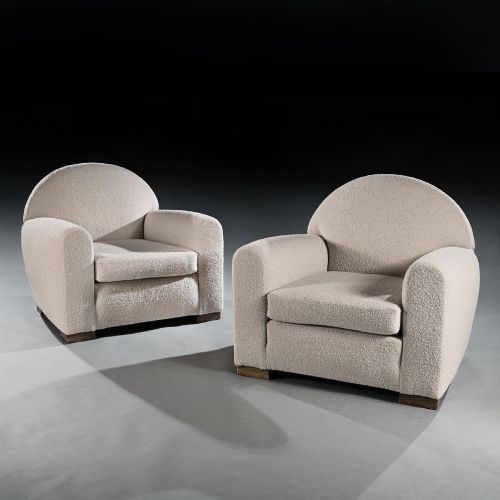
When searching for pair art deco club chairs, buyers encounter sturdy upholstered armchairs originating primarily from the 1920s, 1930s, and 1940s. These twin seating options span French, Swedish, and English origins, often taking the form of low-profile loungers, tub fauteuils, and generous bridge chairs.
The aesthetic bridges traditional gentleman's library seating and sleek modernist principles, manifesting in both streamlined geometric frames and rounded, cloud-like forms. Most examples appear paired as matching sets, frequently accompanied by occasional chairs or larger sofa suites.
Originating heavily from French Parisian studios and Swedish workshops, these duos reflect an era of international design where comfort met bold, decorative silhouettes.
How they were made
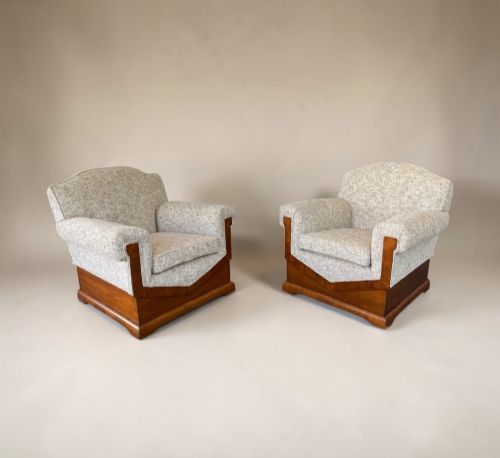
Makers constructed the supportive frames of these seats using robust hardwoods including walnut, oak, elm, and maple, paired with timber inner structures. This solid framework provided the necessary skeleton to sustain deeply padded, sprung interiors.
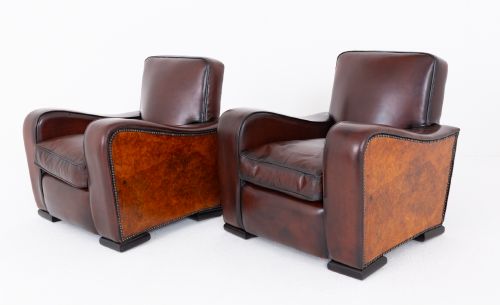
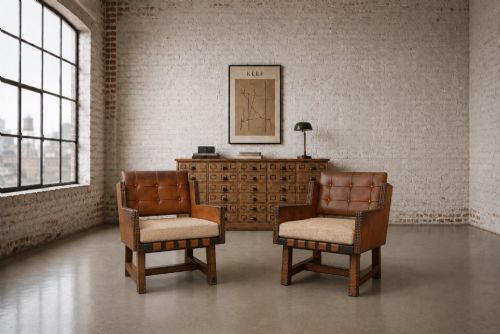
Upholstery relied heavily on tactile natural hides, ranging from cigar brown to green leather, alongside soft velvet, fabric, and woven cane. Decorative surfaces often incorporated exotic veneers such as satin birch and burr birch, complemented by subtle brass details.
Listings feature walnut, oak, elm, and maple wooden frames paired with leather, velvet, and satin birch surfaces.
What varies in quality
The caliber of these seating pairs is dictated by the selection of primary timbers and the sophistication of the veneer work, with burr birch and figured walnut marking the higher tiers. Expertly matched grain patterns across both chairs indicate superior cabinet-making pedigree.
Upholstery execution heavily dictates the standard, distinguishing between straightforward production runs and bespoke workshop pieces finished with meticulous button-back detailing or specialty hides.
Hille·Harry and Lou Epstein
The Pair Art Deco Club Chairs Glossary
- Fauteuil
- An open-armed upholstered armchair originating in France, designed for comfortable indoor sitting. These pieces frequently feature exposed wooden frameworks alongside padded armrests.
- Satin Birch
- A pale, lustrous timber utilised extensively in Swedish modern and art deco cabinetry for decorative veneer work. It provides a striking, light-toned contrast to darker leather upholstery.
- Bergere
- An enclosed armchair with a wooden frame where the sides are upholstered or filled with cane lattice. This style appears frequently across early twentieth-century seating options.
- Bridge Chair
- A compact, easily moveable armchair designed originally for card games and domestic gatherings. They offer a smaller footprint while retaining supportive upholstered backs and seats.
- Burr Birch
- A figured wood grain formed from tree growths, producing swirling, intricate patterns prized by cabinet makers. It adds ornamental depth to the surfaces of luxury lounge seating.
Pair Art Deco Club Chairs: Frequently Asked Questions
How do I identify true art deco chairs?
Authentic art deco seating typically exhibits symmetrical geometric lines, stepped profiles, or rounded cloud-like contours characteristic of the interwar period. Materials like satin birch, walnut, and rich leather further anchor these pieces securely in the 1920s and 1930s aesthetic.
Construction methods from this era rely on solid timber frames and traditional sprung interiors rather than modern foam block fillings. Examining the joinery and timber selection helps separate genuine period examples from later reproductions.
Were these chairs made in pairs originally?
Many seating options from the interwar period were produced as matched twin sets to furnish formal drawing rooms, libraries, and smoking lounges. Interior schemes of the 1920s and 1930s frequently employed mirrored furniture arrangements.
Finding surviving pairs ensures consistent patination, matching wood veneers, and identical upholstery treatments across both items. This matched provenance remains highly desirable for cohesive interior styling.
What is the difference between French and Swedish styles?
French designs often lean towards luxurious leather upholstery, generous club proportions, and dramatic curved silhouettes designed for deep relaxation. Walnut frames and button-back detailing frequently characterise these Parisian workshop pieces.
Swedish interpretations tend to showcase pale, figured woods like satin birch and elm combined with clean, architectural lines. This Scandinavian approach emphasises light timber tones and refined geometric balance.
How do I care for antique leather upholstery?
Preserving vintage leather requires maintaining ambient room humidity away from direct heat sources to prevent the natural hide from drying out. Regular dusting and occasional specialist conditioning help maintain the supple texture of aged leather.
Avoiding harsh chemical cleaners ensures the original patina and rich brown or green tones remain undisturbed over decades of domestic use.