

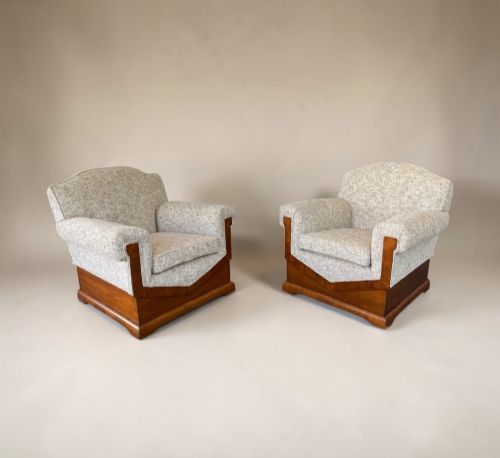

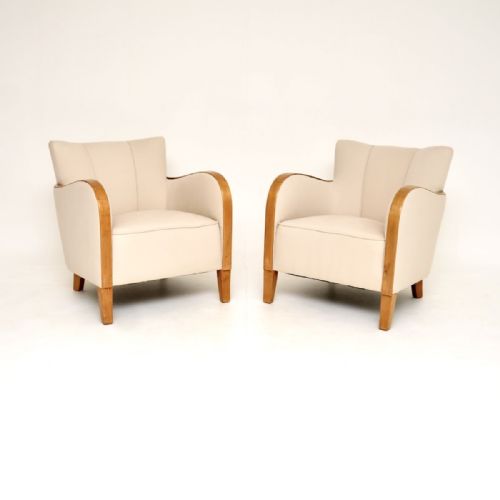
Art Deco Seating Pair
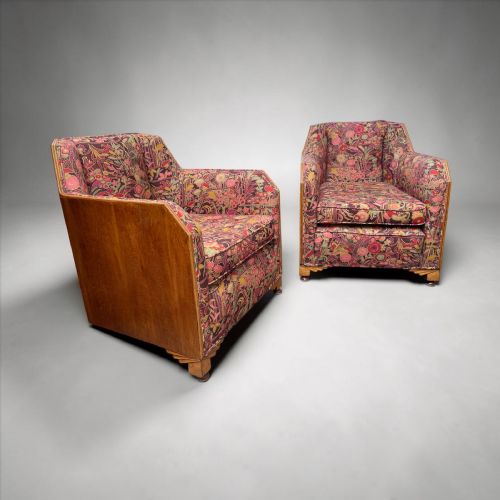
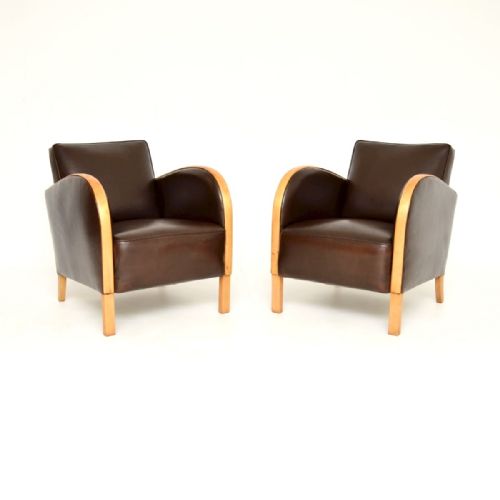
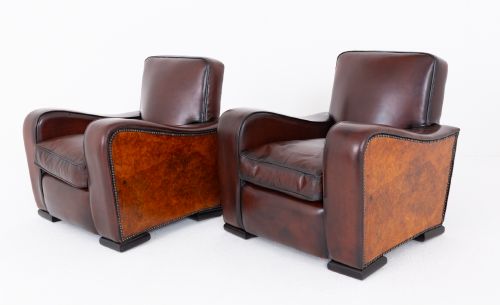
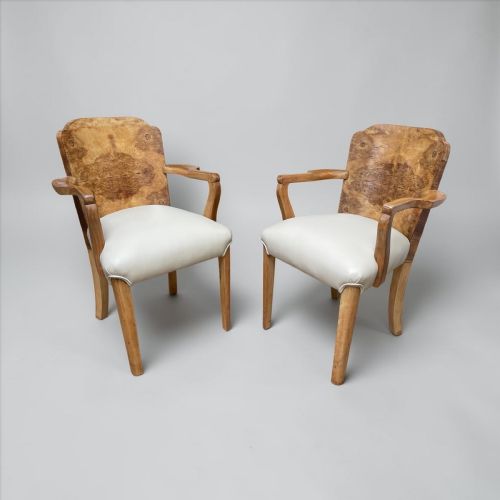
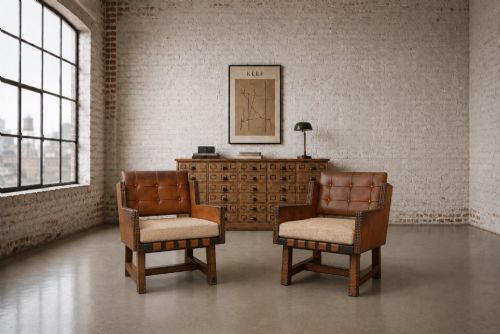
These art deco seating pair examples bring robust leather and warm birch together to anchor a room.
Art Deco Seating Pair
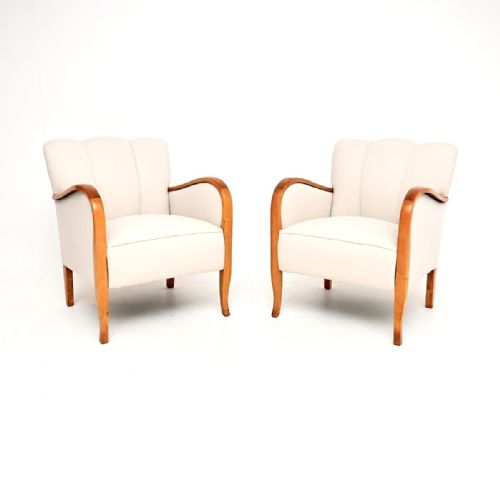
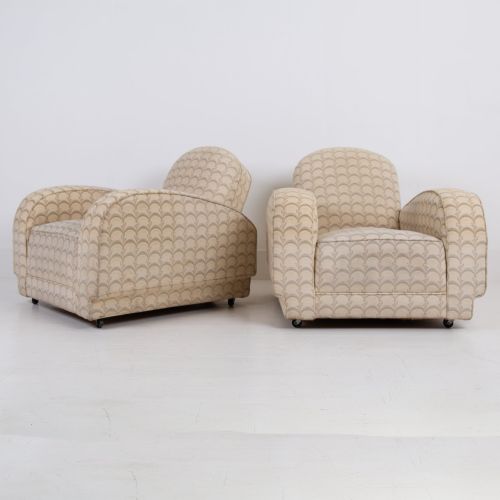
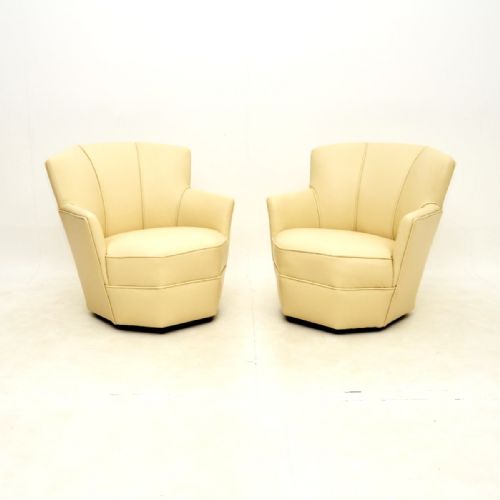
An art deco seating pair consists of matched twin chairs or small suites produced principally during the nineteen-thirties, drawing on styles ranging from English traditional to French and Swedish interpretations. Buyers encounter armchairs, club chairs, and side chairs constructed for domestic reception rooms and lounges. The forms utilise distinct regional characteristics, such as the pale grains found in Scandinavian birch work or the deep proportions of French club seats.
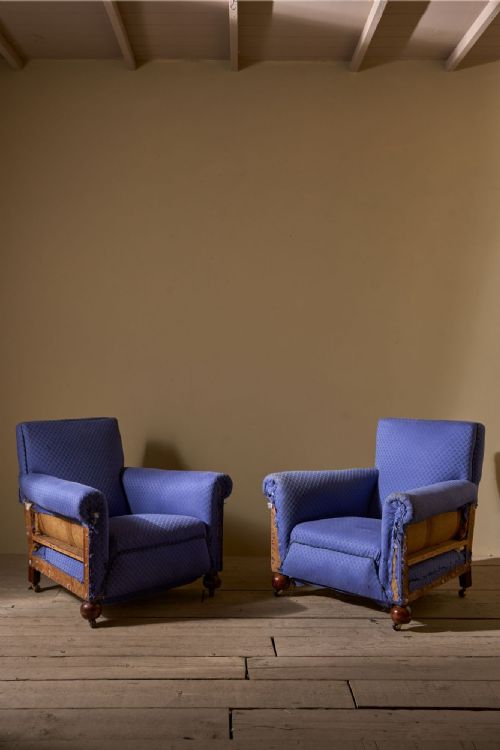
Most entries belong firmly to the nineteen-thirties, though earlier Victorian and nineteen-ten pieces appear alongside nineteen-twenty examples. Alongside standard armchairs, occasional chairs and bar stools emerge within the selection. The fundamental appeal lies in the symmetry of matched seating designed for formal domestic spaces.
Materials and Construction
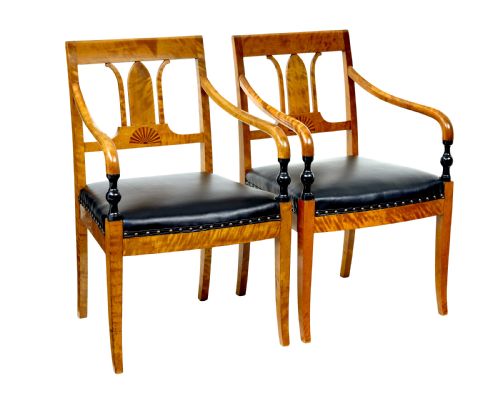
Cabinet makers relied on hardwoods and timber frames, employing walnut, elm, and exotic satin birch veneers to shape the structural silhouettes. Surfaces often highlight the natural figure of the wood, particularly in burr birch variants where the grain patterns dictate the visual character. Frames support padded upholstery or woven cane panels depending on the regional origin of the workshop.
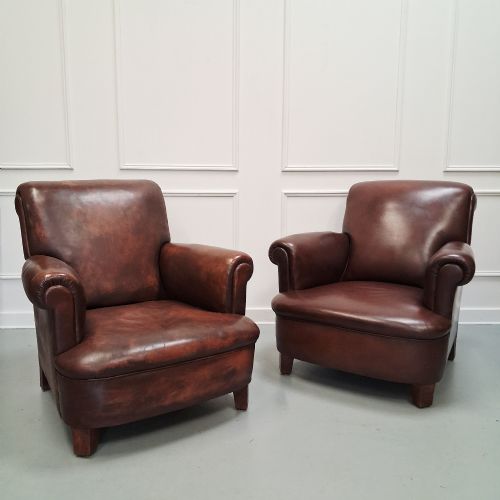
Leather forms the primary upholstery covering for club chairs, often appearing in button-back configurations or smooth cigar-brown finishes. Workshops combined these robust hide coverings with sturdy timber foundations to endure heavy daily use. Metal elements occasionally support specific forms such as bar stools and menu holders.
Listings feature items dated from the Victorian era through to the nineteen-thirties, with walnut and leather appearing frequently.
Distinctions in Quality
The standard of execution depends heavily on the selection of timber veneers and the integrity of the underlying frames. Pieces utilising figured satin birch or burr birch display superior grain matching across the twin chairs. The application and stitching of the leather upholstery further separate standard productions from finer workshop outputs.
Attribution to documented makers introduces a distinct tier of craftsmanship within the category. Proportion and silhouette also dictate distinction, particularly where unusual regional styles like Swedish or Anglo-Indian interpretations diverge from standard English designs.
Hille·Harry and Lou Epstein
The Art Deco Seating Pair Glossary
- Club chair
- A deep, heavily upholstered armchair designed for comfort, typically finished in leather. These seats form a staple of nineteen-thirties seating.
- Satin Birch
- A pale, lustrous timber utilised extensively in Swedish pieces for its striking grain. Cabinet makers selected it to highlight clean geometric lines.
- Cloud shape
- A rounded, bulbous upholstery silhouette popular during the period. The contours mimic soft formations while maintaining structural rigidity.
- Cane seat
- A seating surface woven from rattan or similar plant material. This technique appears in Anglo-Indian variants to provide ventilation.
Art Deco Seating Pair: Frequently Asked Questions
What defines an art deco seating pair?
These matched chairs reflect the design principles of the early twentieth century, combining geometric symmetry with practical comfort.
They appear predominantly in wood and leather, shaped by international workshops during the nineteen-thirties.
How do French and Swedish styles differ?
Swedish examples frequently utilise pale satin birch and elm with streamlined, rectilinear silhouettes. French variants lean towards deep, leather-clad club seating designed for relaxation.
Both regional approaches maintain the characteristic symmetry required for matched twin furniture.
Where were these chairs used?
Owners placed them in reception rooms, smoking rooms, and domestic lounges where matched twin seating provided balance. They served as primary seating for conversation and reading.
Smaller occasional chairs functioned as flexible additions around the perimeter of a room.
How do I care for leather upholstery?
Keep finished hides away from direct sunlight and excessive heat to prevent drying out. Regular dusting and occasional treatment with appropriate leather dressings preserve the surface texture.
Avoid placing heavy items on the arms to maintain the structural padding underneath.