


Pair Decanter Coasters
Pair antique decanter coasters protect table surfaces while holding wine bottles, bringing period elegance to a dining setting.
Pair Decanter Coasters
Pair antique decanter coasters serve as decorative stands designed to hold wine bottles and decanters on the dining table. These items appear frequently in forms originating from the Georgian, Regency, and Victorian periods.
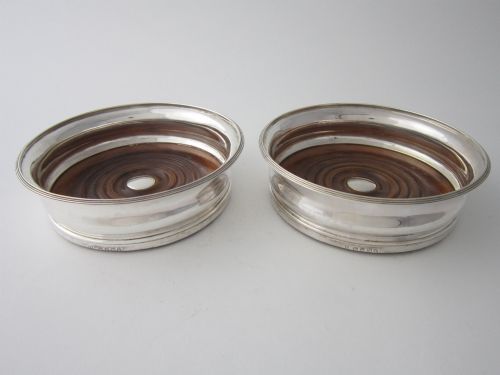
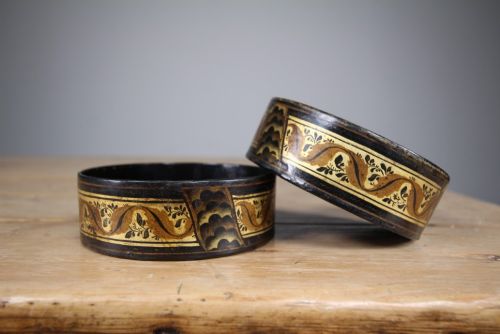
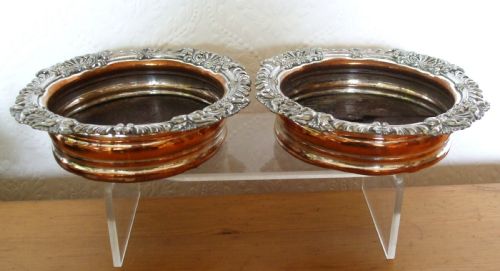
The selections available here include sterling silver, silver plate, Old Sheffield plate, mahogany, rosewood, and papier-mâché examples. Buyers will find items ranging from the early nineteenth century through to later twentieth-century pieces.
Most examples function primarily as bottle stands or wine coasters intended to catch condensation and drips. The objects reflect the dining customs of past centuries, when portable bottle trays were passed along the table.
How they were made
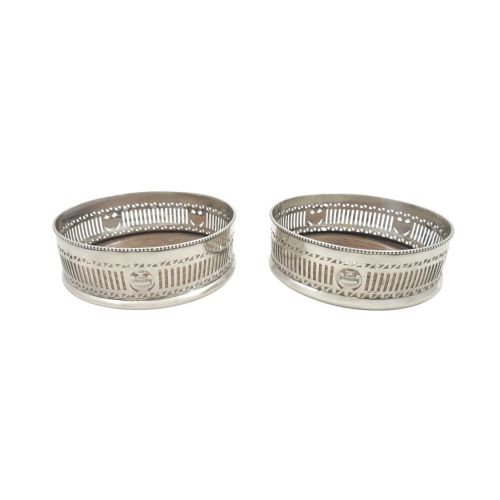
Metal examples utilise sterling silver, silver plate, or Old Sheffield plate, often combined with turned wooden bases made from mahogany or rosewood. Silversmiths formed the gallery rims by piercing, embossing, or casting floral and geometric motifs.
Papier-mâché versions involve pressed paper pulp treated with layers of lacquer, frequently featuring gilded decoration or hand-painted details. Wooden coasters employ traditional turning techniques on a lathe to create raised circular galleries around a central wooden floor.
Some nineteenth-century drinkers entrusted their wine to papier-mâché trays that started life as mashed paper.
What varies in quality
Quality depends upon the crispness of the chased or pierced metalwork and the structural integrity of the turned wooden bases. Finer examples display detailed crests, armorial bearings, or cast borders rather than simple rolled metal edges.
The integration between the metal gallery and the central base determines the overall durability of the piece. Superior craftsmanship shows in the weight of the silver or silver plate and the preservation of the original felt lining beneath.
Matthew Boulton·John and Thomas Settle·Asprey
The Pair Decanter Coasters Glossary
- Old Sheffield plate
- A composite material made by fusing a thin sheet of silver to a thicker copper base. This technique was widely employed before modern electroplating became standard.
- Papier-mâché
- A durable composite material formed from paper pulp mixed with glue and resin, then pressed and lacquered. It provided a smooth black surface suitable for gilding.
- Gallery
- The raised circular rim of a coaster designed to keep the bottle secure. Galleries often feature openwork piercing or cast decorative borders.
- Hallmark
- Official stamps applied to precious metals indicating the assay office, metal purity, and date letter. These marks help verify the origin of silver coasters.
Pair Decanter Coasters: Frequently Asked Questions
How were pair antique decanter coasters used?
These items stood on dining tables to hold wine bottles and prevent condensation rings on polished mahogany surfaces. Diners passed them around the table during port and wine courses after dinner.
The raised galleries kept bottles secure while servants or guests moved the stands between places. They remain useful for serving wine at modern dining tables today.
What materials are common in these coasters?
The listings show a mix of sterling silver, silver plate, Old Sheffield plate, and various woods including mahogany and rosewood. Papier-mâché versions with gilded decoration also appear among the selections.
Metal examples often incorporate turned wooden bases with green felt linings on the underside. This variety reflects changing dining fashions across the Georgian, Regency, and Victorian eras.
How do I date a pair of coasters?
Silver coasters frequently bear hallmarks that indicate the exact year of assay and the workshop that produced them. Stylistic clues such as Regency motifs or Georgian piercing also help narrow down the period.
Items made from papier-mâché or treen rely on construction methods, wood types, and decorative styles for dating. Comparing the gallery design to known manufacturing periods provides further chronological context.
Can I use them with modern wine bottles?
Most standard wine and decanter bottles fit comfortably within the interior diameter of these nineteenth-century stands. Standard bottle dimensions have remained relatively consistent over time.
It is advisable to check the internal width of the gallery if you intend to use them with unusually broad modern bottles. Their primary function remains protecting table surfaces from moisture.