


Antique Wooden Wine Coasters
Antique wooden wine coasters protect dining tables from bottle rings while carrying decanters across mahogany boards with old weight and polish.
Antique Wooden Wine Coasters
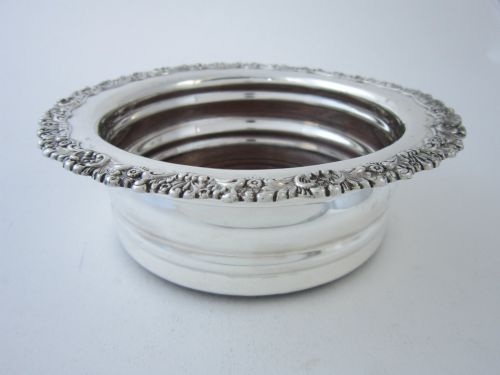
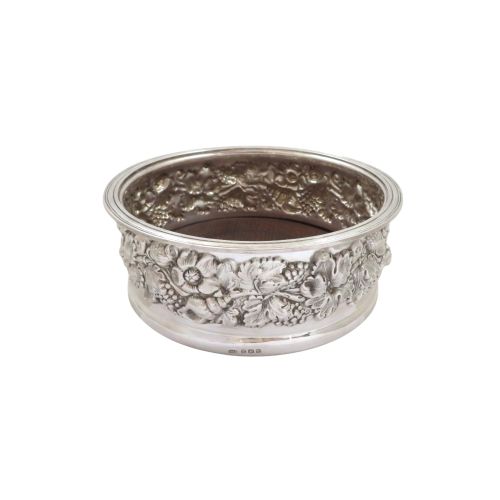
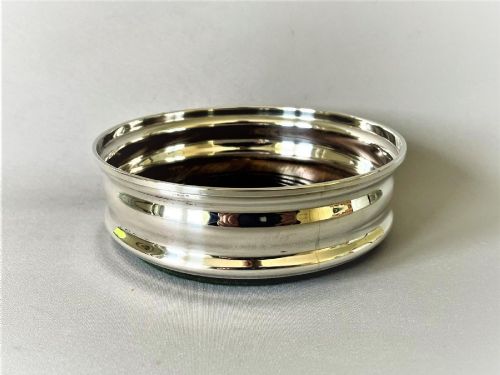
Antique wooden wine coasters appear in forms such as circular single stands, multi-bottle holders, and large trays dating from the Georgian, Victorian, and Edwardian periods. Mahogany and rosewood form the bulk of these pieces, often paired with boxwood stringing or carved details.
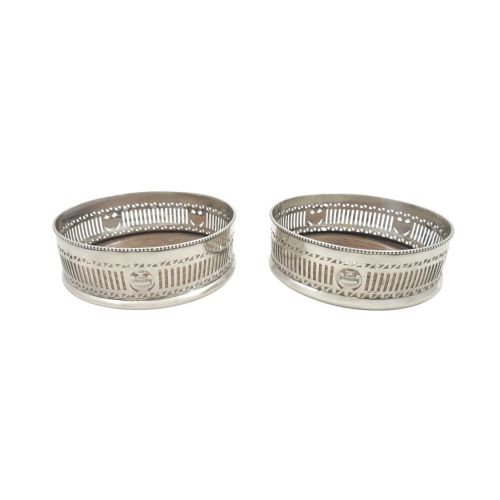
Buyers meet single decanter stands most frequently, alongside pairs designed to circulate port and claret around the dining table. Treen examples and larger freestanding bottle holders also emerge from 18th-century and 19th-century workshops.
The objects serve to slide smoothly across polished dining surfaces without scratching the wood. Their raised rims keep bottles secure during dinner service.
Materials and construction
Turned mahogany and rosewood provide the structural bodies, shaped on lathes or carved by hand into solid circular rims. Boxwood inlay adds linear contrast through delicate stringing and banded details set into the primary timber.
Metal elements integrate directly into the wooden framework, utilising silver plate, sterling silver, or brass for central bosses and gallery rims. Inserts often incorporate turned wooden bases lined with green baize or felt to cushion the glass decanter.
Listings feature woods spanning mahogany, rosewood, and boxwood, alongside silver, silver plate, and brass hardware.
What separates the finest examples
Grain selection dictates the visual depth of the timber, where dense flame mahogany or rich rosewood figures elevate a piece above plain utility. Crispness of hand-carved decoration and precision in inlaid boxwood stringing distinguish master craftsmanship from standard production.
Structural integrity in the turned wooden walls and the secure fit of metal mounts determine longevity. Original baize linings and well-preserved surface patination separate untouched specimens from later restorations.
James Mein of Kelso·John and Thomas Settle
The Antique Wooden Wine Coasters Glossary
- Treen
- Small handmade wooden household objects and utensils turned or carved from local timbers. It encompasses domestic items like bowls, stands, and boxes valued for their utilitarian form and age.
- Stringing
- A narrow inlay of contrasting wood, such as boxwood, set flush into channels carved within a darker primary timber. It creates delicate geometric borders on furniture and coasters.
- Old Sheffield Plate
- A fused composite material made by heating a thin sheet of silver to a thicker copper base. The two metals bond permanently before rolling into sheets for manufacturing tableware.
- Decanter coaster
- A low portable tray or ring designed to hold a glass bottle or decanter. It protects table linen and polished wood surfaces from moisture rings.
- Armorial
- A design displaying a heraldic coat of arms or crest. These motifs are often engraved onto metal mounts or silver shields set into wooden pieces.
Antique Wooden Wine Coasters: Frequently Asked Questions
How do I care for wooden wine coasters?
Keep wooden wine coasters away from direct heat sources and strong sunlight to prevent the timber from splitting or warping.
Clean surfaces with a dry cloth and occasionally feed the wood with a traditional wax to maintain the polish.
Can I still use these for modern wine bottles?
Standard 75th-litre wine bottles and most modern decanters fit comfortably inside traditional single coaster rings. Standard dimensions accommodate standard bordeaux and burgundy bottle bases easily.
Check the internal diameter if you collect larger magnum bottles or vintage port flasks, as some historical sizes vary.
How do I date an antique wooden coaster?
Examine the turning marks on the base and the species of timber used, as Georgian pieces favour rich mahogany while later Victorian items often employ rosewood or walnut. Metal mounts and hallmarks on silver or silver plate offer precise decades.
Construction methods such as hand-cut dovetails or old inset baize help separate 18th-century examples from later revival pieces.
Why do some coasters have green felt underneath?
Green baize or felt protects the dining table from friction when the coaster slides across polished wood. It also dampens the sound of glass meeting timber during dinner service.
Original felt linings add authenticity to antique pieces, though many have been renewed over centuries of use.