
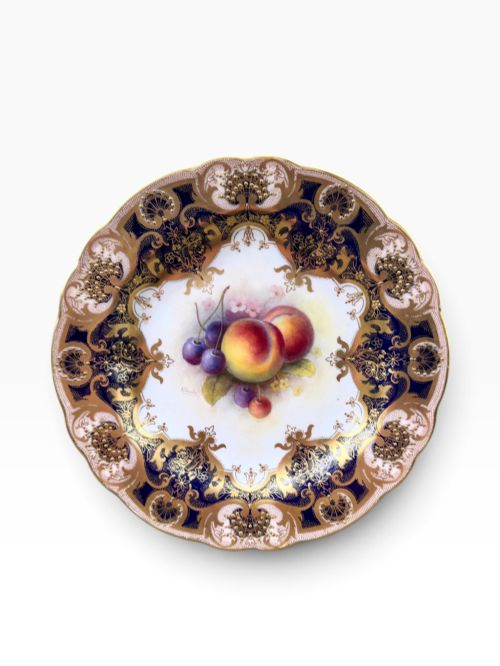
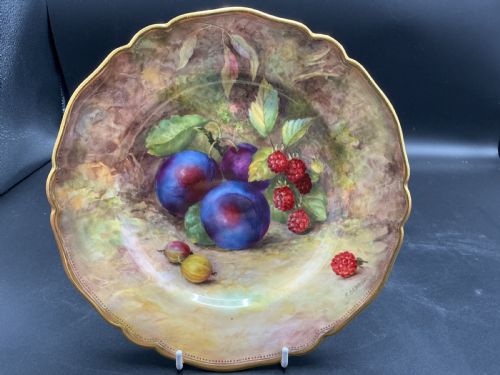
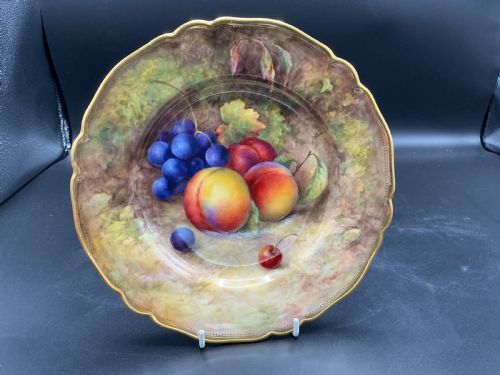
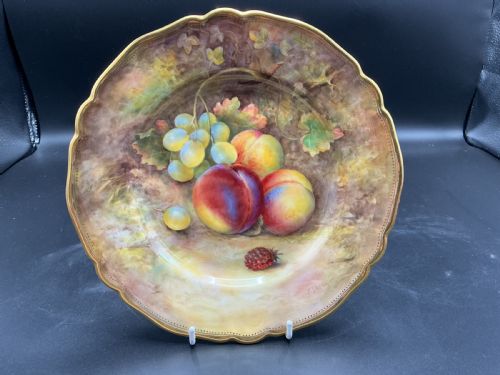
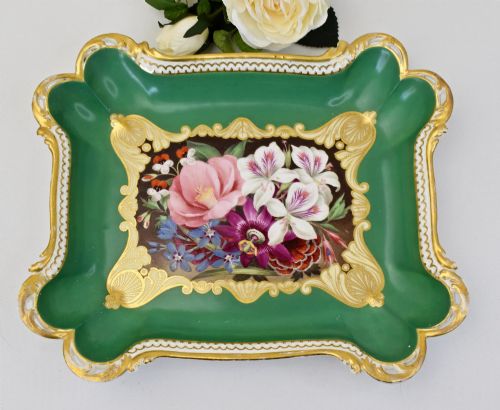


Painted Worcester Display Dish
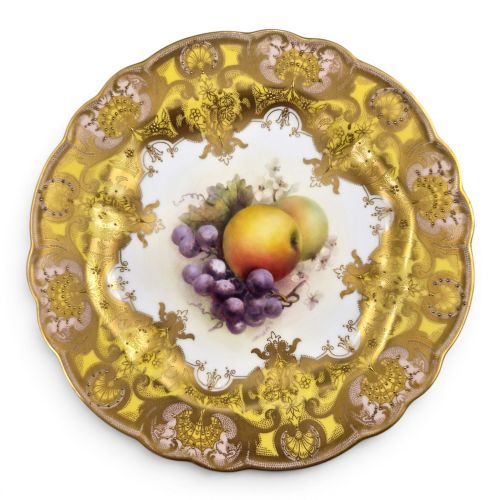
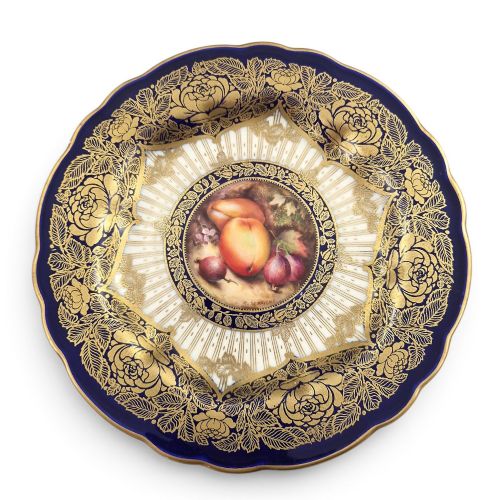
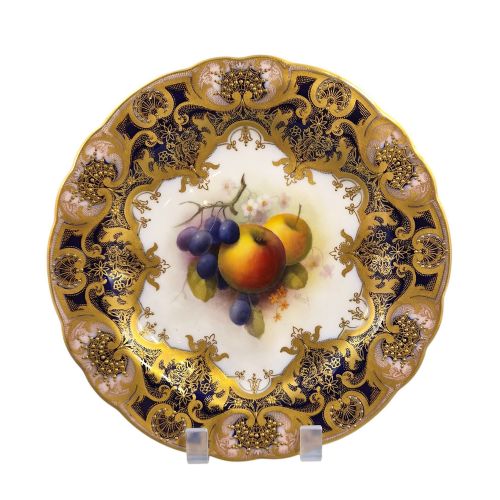
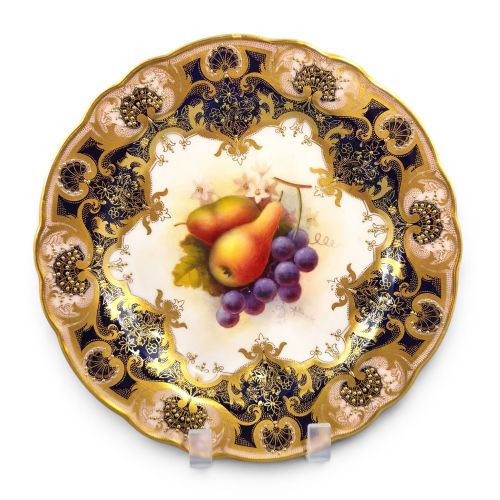
A painted worcester display dish brings the height of hand-painted floral and fruit porcelain into the room, prized for intricate brushwork and rich gilding.
Painted Worcester Display Dish
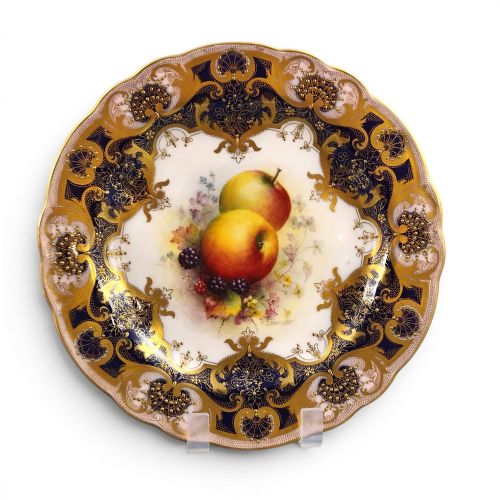
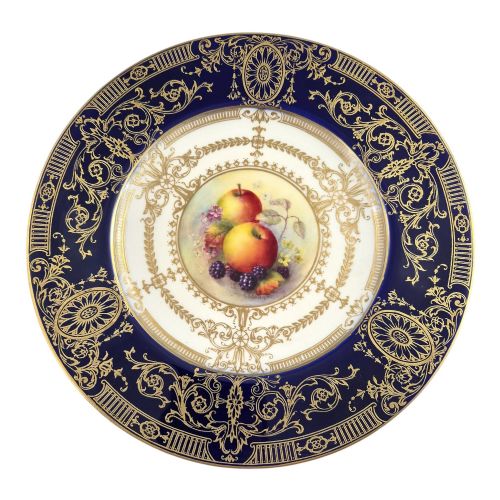
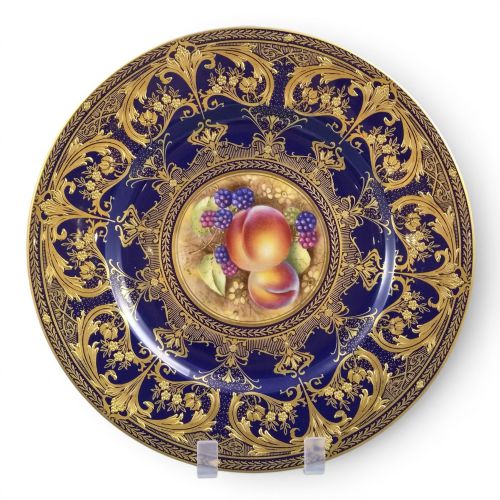
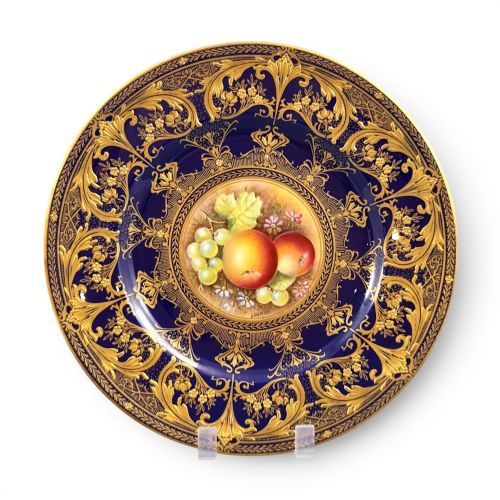
A painted worcester display dish encompasses cabinet plates, decorative trays, dessert plates, and decorative bowls created for visual appreciation rather than daily dining. These pieces range from Regency-era porcelain by Barr, Flight and Barr to twentieth-century Royal Worcester fruit and floral designs.
The version most commonly met on this page is the Royal Worcester cabinet plate featuring hand-painted fruit, produced across the Edwardian period, the 1920s, and the 1930s. Alongside these, earlier nineteenth-century Regency plates and later mid-century works provide a broad span of forms.
Makers such as Doe & Rogers, Flight, Barr & Barr, and Royal Worcester shaped this tradition through meticulous artistry. Forms extend from standard cabinet plates to large rope edge plates and bowls, each serving as a canvas for detailed enamel and paint.
What varies in quality
Quality depends heavily on the renown of the hand painter and the complexity of the brushwork. Plates signed by celebrated artists command greater attention due to their superior artistic execution and distinct provenance.
The intricacy of the surrounding decoration, such as tooled gilt work, cobalt borders, and raised enamel details, elevates a piece. Finer examples display a harmonious balance between the central painted subject and the gilded framing.
Listings span from the Regency period through Edwardian, Victorian, and mid-twentieth-century decades, utilising porcelain, bone china, gold leaf, and enamel.
Royal Worcester·Doe and Rogers·Barr Flight and Barr·Flight Barr and Barr
The Painted Worcester Display Dish Glossary
- Cabinet plate
- A decorative ceramic plate intended for display in a cabinet or on a wall rather than for practical table use. These typically feature elaborate hand-painted scenes.
- Tooled gilding
- Gold leaf application that is indented or textured with specialised tools to create light-reflecting patterns. This technique adds depth and tactile richness to plate borders.
- Bone china
- A type of soft-paste porcelain composed of bone ash, feldspathic material, and kaolin. It offers high mechanical strength and translucency.
- Enamel
- Vitreous material fused to the surface of porcelain through firing to provide vibrant colour. Enamels allow for detailed polychrome painting on display dishes.
Painted Worcester Display Dish: Frequently Asked Questions
What is a painted worcester display dish?
It is a decorative porcelain plate, tray, or bowl featuring hand-painted designs created primarily for display rather than dining. These items showcase the artistic output of Worcester porcelain factories over multiple centuries.
Most examples highlight natural subjects like fruit or floral arrangements, often accented with gilding or enamel borders. They reflect the shifting artistic styles from the Regency period through the mid-twentieth century.
How do I identify a Regency period piece?
Regency pieces often bear specific factory marks associated with early nineteenth-century iterations like Barr, Flight and Barr or Flight, Barr & Barr. Their forms and decorative motifs align with the neoclassical tastes of that era.
Examining the paste, form, and backstamps helps distinguish these earlier works from later Victorian and twentieth-century productions.
How should I display these porcelain pieces?
Porcelain display dishes are traditionally housed in secure cabinets or mounted securely on walls using appropriate plate hangers. Keeping them away from direct foot traffic prevents accidental knocks.
Proper lighting inside a cabinet can enhance the visibility of tooled gilding and detailed brushwork without exposing the enamel to harsh conditions.