
Hand Painted Fruit Dishes
Hand painted fruit dishes bring rich botanical decoration and skilled brushwork directly to the table.
Hand Painted Fruit Dishes
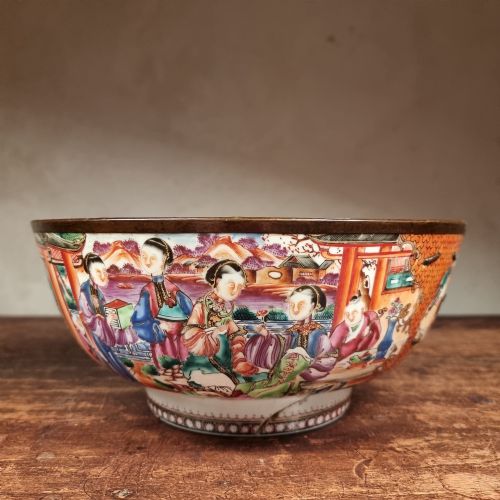
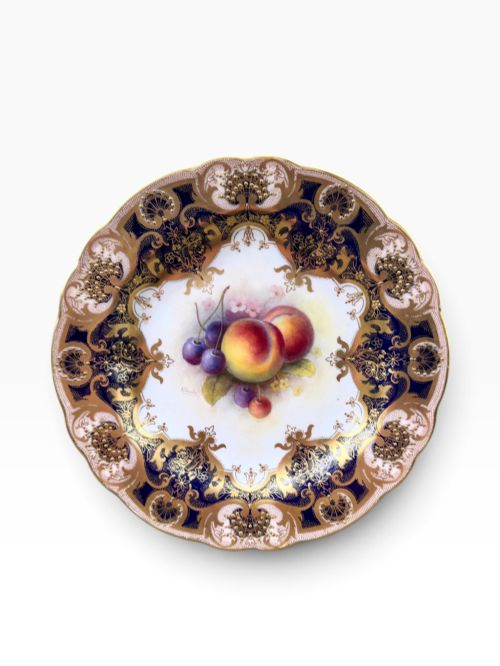
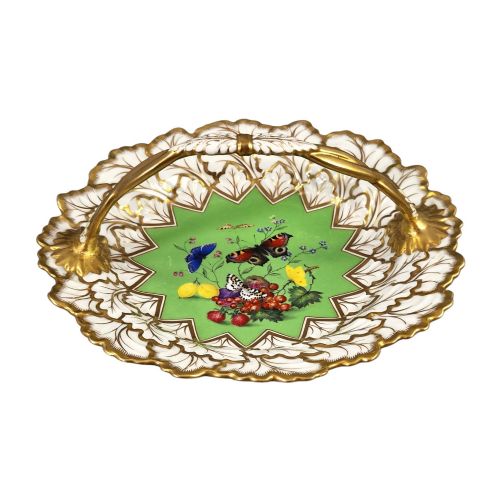
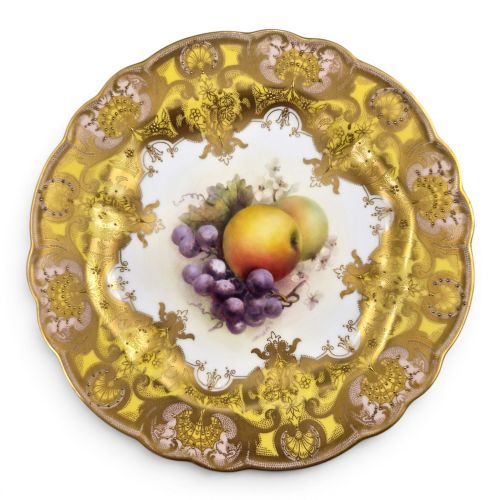
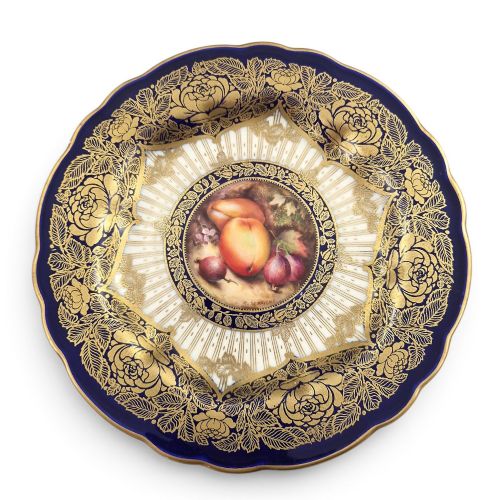
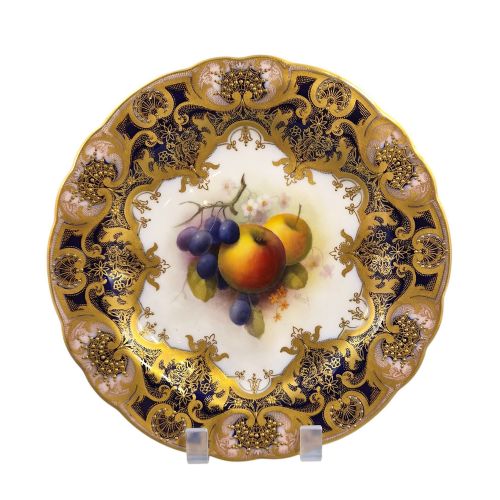
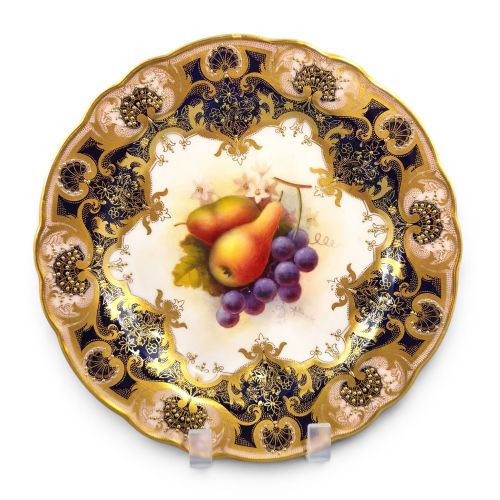
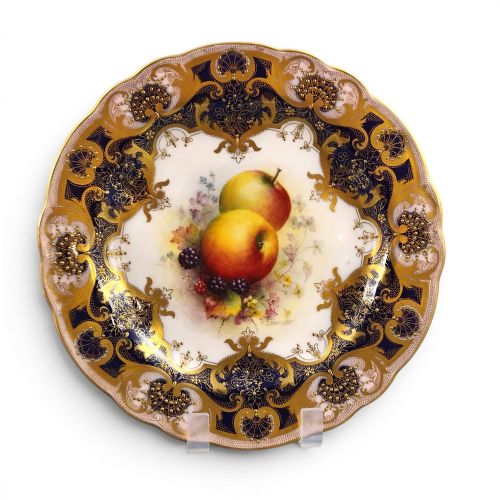
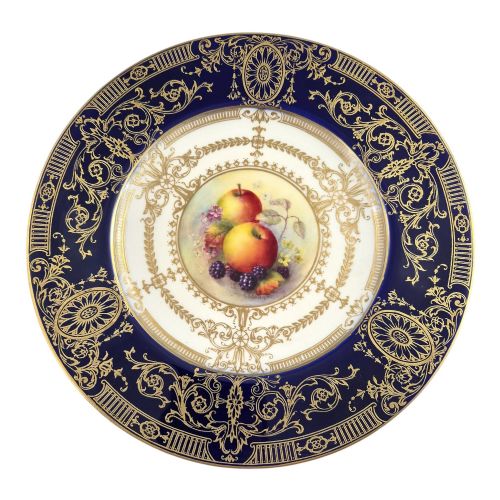
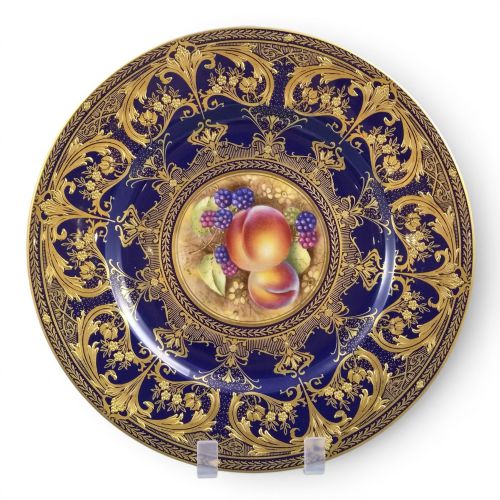
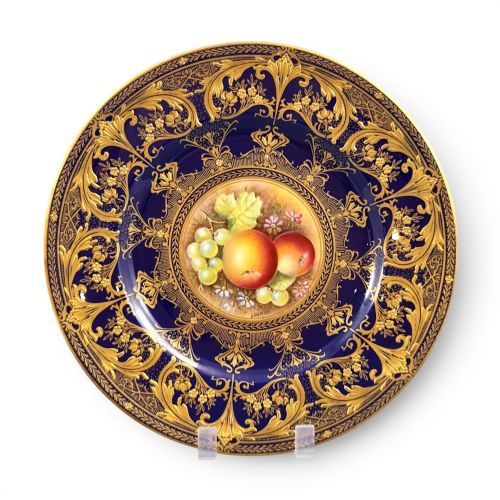
When you search for hand painted fruit dishes, you encounter plates, bowls, and comports created across several centuries to display natural motifs. These objects range from eighteenth-century porcelain dessert dishes bearing botanical specimens to twentieth-century cabinet plates adorned with studies of apples and peaches.
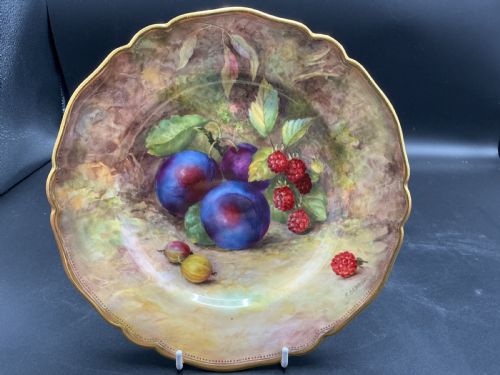
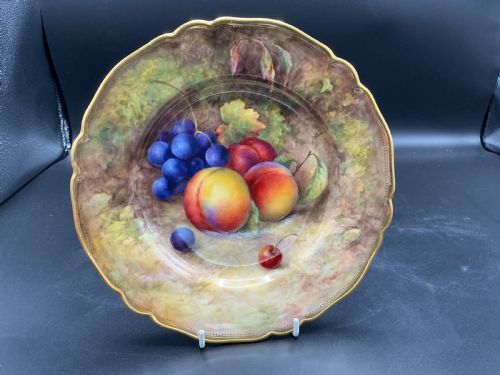
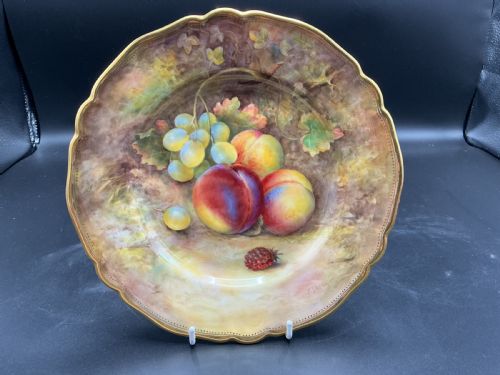
The selection on this page relies heavily on English porcelain from factories like Royal Worcester, alongside Japanese Imari porcelain and various continental wares. Cabinet plates and footed bowls form the majority of the available items, often retaining rich gilding alongside the painted fruit.
Earlier examples frequently employ botanical arrangements on square lobed dishes or shaped plates intended for formal dining. Later nineteenth and twentieth-century pieces lean towards naturalistic fruit studies framed by elaborate gilt borders.
Materials and methods
Porcelain, bone china, and ironstone serve as the primary ceramic bodies for these pieces, providing a smooth white or cream surface suitable for detailed pigments. Makers applied underglaze colours and overglaze enamel paints by hand, firing the ceramics multiple times to set the polychrome details permanently.
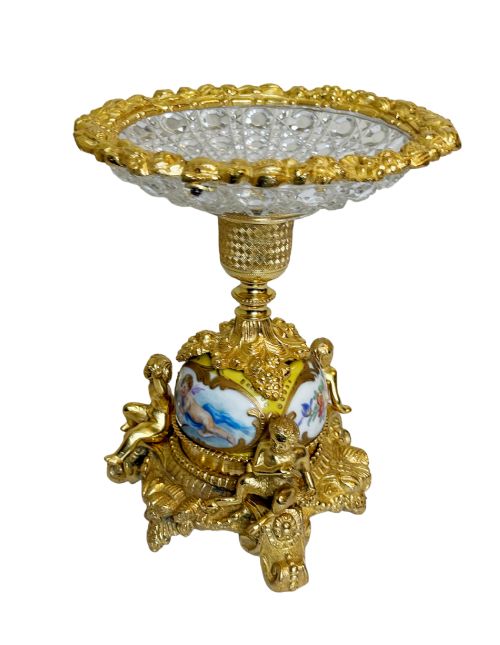
Gold leaf, gilding, and enamel embellishments highlight the painted central motifs, particularly on cabinet pieces designed for display. Bronze mounts and cut crystal appear in larger centrepieces, combining metalwork and glass with traditional ceramic construction.
Several cabinet plates bear signatures from artists who clearly spent more time studying plums and peaches than they did learning legible handwriting.
Judging the work
Quality in these ceramics rests primarily on the skill of the brushwork and the precision of the painted detail. The finest pieces demonstrate a lifelike depth in the rendering of fruit, showing subtle tonal gradations and careful shading rather than flat application.
The crispness of the gilt borders and the weight of the porcelain body also distinguish standard production wares from master-painted cabinet plates. Signed pieces by established painters carry distinct artistic weight through the fidelity of their botanical studies.
Royal Worcester·Flight, Barr & Barr·Sèvres·Royal Doulton·Kornilov Brothers
The Hand Painted Fruit Dishes Glossary
- Cabinet plate
- A decorative ceramic plate intended purely for display in a cabinet or on a wall rather than for serving food. These often feature elaborate hand-painted scenes and rich gilding.
- Comport
- A shallow footed dish or bowl elevated on a pedestal, traditionally used for serving fruit or sweets at the table. Low comports sit closer to the surface with short feet.
- Enamel
- Opaque vitreous paint applied over the glaze of fired ceramic pieces before undergoing a low-temperature kiln firing. It provides vibrant reds, blues, and greens in painted patterns.
- Imari
- A style of Japanese export porcelain characterised by underglaze blue, iron red, and abundant gold accents. This aesthetic influenced numerous European factories during the eighteenth and nineteenth centuries.
- Tazza
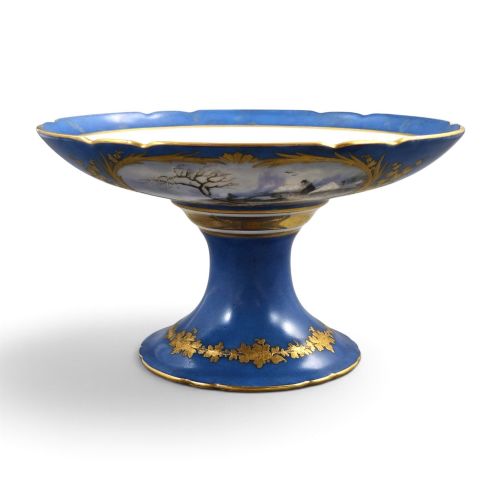
- An ornate pedestal plate or shallow bowl resembling a saucer on a foot, derived from Renaissance metalwork. It frequently serves as a centrepiece on dining tables.
Hand Painted Fruit Dishes: Frequently Asked Questions
How were hand painted fruit dishes used?
These pieces served practical dining functions on formal tables during dessert courses or acted as decorative centrepieces to display fresh produce.
Over time, many fine examples transitioned from dining utility to cabinet display, specifically intended to showcase the skill of the ceramic painter.
How do I identify Royal Worcester fruit plates?
Royal Worcester pieces generally feature factory backstamps that date the manufacture, alongside signature scripts from artists who specialised in fruit studies.
Look for detailed botanical paintings framed by heavy raised gilding on white porcelain bodies dating from the late nineteenth or early twentieth centuries.
What is Japanese Imari porcelain?
Japanese Imari ware is a distinct style of porcelain produced in Arita and exported heavily to Europe, recognised by a palette of cobalt blue and iron red augmented with gold leaf.
These pieces frequently incorporate floral, panel, and shell motifs that were later imitated by English and continental European factories.
How should I display cabinet plates safely?
Cabinet plates require secure wall hangers lined with protective material or dedicated display stands that support the entire base without exerting pressure on the painted rim.
Keep porcelain pieces away from direct sunlight to protect enamel colours and metallic gilding from fading over prolonged periods.