

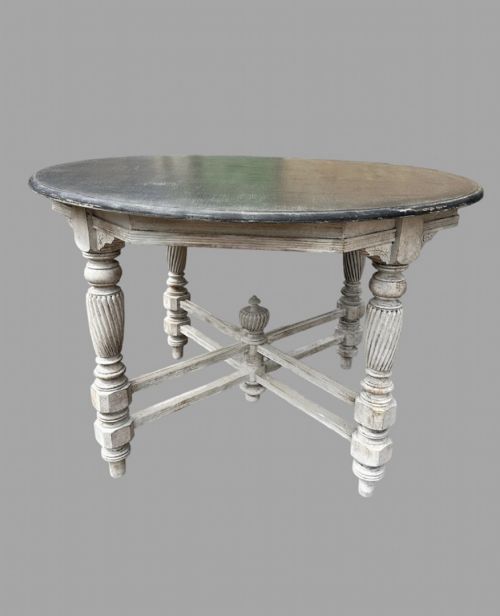
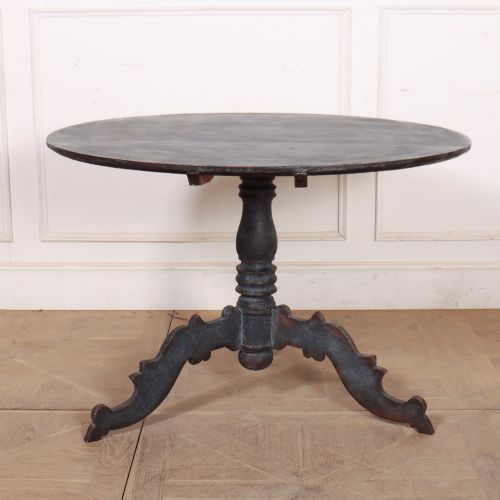
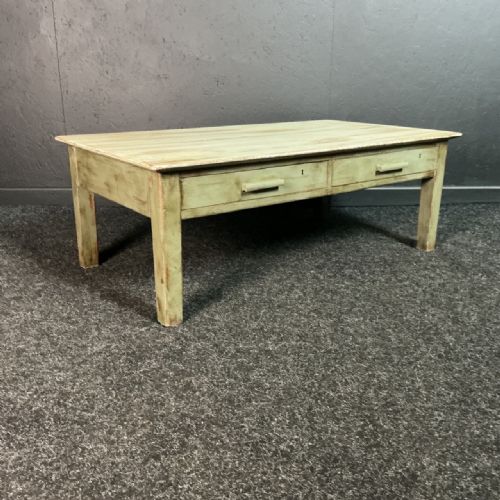


Painted Wooden Centre Table
A painted wooden centre table anchors a room with colour and history, offering a surface for daily life that carries the character of past centuries.
Painted Wooden Centre Table
A painted wooden centre table is a freestanding piece designed to sit in the middle of a room, serving as a focal point for display or gathering. These tables appear across multiple periods, including the Regency era, the nineteenth century, and the early twentieth century.
The versions most commonly met on this page include nineteenth-century Scandinavian and Swedish painted pieces, English country house prep tables, and occasional tables with painted timber. Forms range from round and oval formats to supper tables and coffee tables.
Origins vary from English and German workshops to Swedish country makers and French ateliers. Many examples show regional stylistic influences such as Gustavian, French Louis XVI style, or rustic farmhouse traditions.
Materials and construction
Construction relies on traditional timbers recorded in the listings, predominantly pine, oak, hardwood, sycamore, and general painted wood or timber. Cabinet makers built these frames to endure daily use in domestic and country house settings.
Surfaces receive layers of paint, sometimes combined with parcel-gilt details or paired with heavy stone inserts. Several examples integrate inset marble tops that provide a cool, durable surface contrasting with the wooden bases.
Painted Wooden Centre Table Retail Price Guide 2026
Typical asking prices for painted wooden centre table among the pieces listed under this phrase on Sellingantiques today, from the lower quarter to the upper quarter. They describe what is for sale here now, not the wider market.
Listings feature painted wooden centre tables spanning the nineteenth and early twentieth centuries, incorporating pine, oak, hardwood, and marble.
Distinctions in quality
Quality rests in the integrity of the timber frame, the harmony of the proportions, and the authenticity of the painted surface. Tables originating from specific design traditions like the Regency period or Gustavian style demonstrate finer carving and more considered lines.
The character of the paint application dictates much of the visual appeal. Original layered pigment and restrained gilt accents elevate a piece far above utilitarian examples, whilst integrated marble slabs add weight and material depth.
The Painted Wooden Centre Table Glossary
- Centre table
- A freestanding table finished on all sides, intended to stand away from walls in the middle of a room.
- Parcel-gilt
- Woodwork decorated with partial gilding, where thin gold leaf highlights specific carved details or mouldings against a painted background.
- Gustavian
- The Swedish interpretation of neoclassical design, characterised by light paint colours, restrained fluting, and elegant tapered legs.
- Sycamore
- A dense hardwood belonging to the maple family, valued for its pale colour and smooth grain in traditional table construction.
- Prep table
- A utilitarian wooden table historically used for food preparation or domestic chores in large country houses, often featuring a robust scrubbed or painted top.
Painted Wooden Centre Table: Frequently Asked Questions
Where should I place a painted wooden centre table?
These pieces suit positions where foot traffic flows around all sides, functioning as a landing spot in a generous hallway or a gathering point in a principal room.
Because they are finished uniformly, they do not need to anchor against a wall and work well beneath central lighting fixtures.
How do I care for a marble top table?
Marble requires protection from acidic liquids such as wine or citrus juice, which can etch the polished surface over time. Wipe the stone regularly with a damp cloth and mild soap.
Avoid abrasive cleaners that dull the polish of the inset stone.
What is the difference between a supper table and a coffee table?
A supper table originates from periods when dining habits involved smaller, movable surfaces for evening meals before lower lounge furniture became standard. They typically stand at standard dining or occasional height.
Coffee tables are lower formats designed specifically for seating areas in twentieth-century interiors.
How do I identify a nineteenth-century piece?
Nineteenth-century construction relies on hand-cut joints, solid timber framing, and historical paint layers that show natural ageing and wear. Joinery methods and material choices reflect the hand tools of the period.
Stylistic cues such as neoclassical revival motifs or regional Swedish forms also help date the work.