
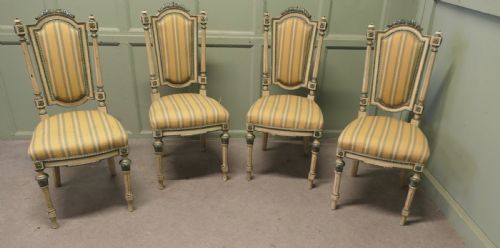
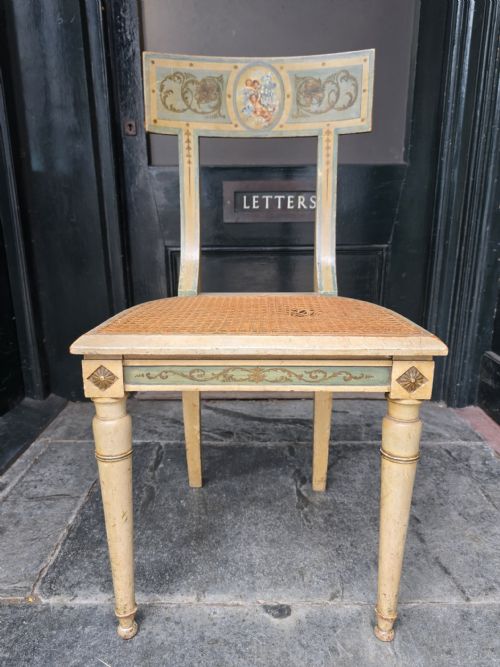
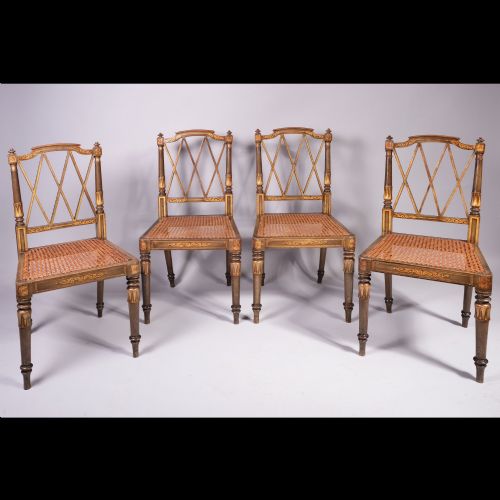
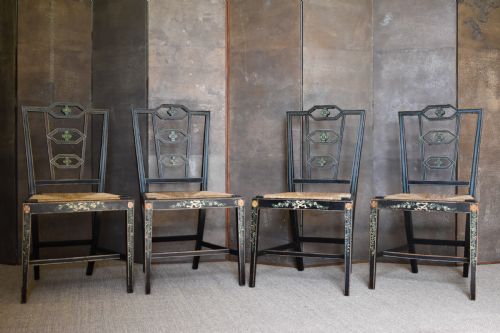


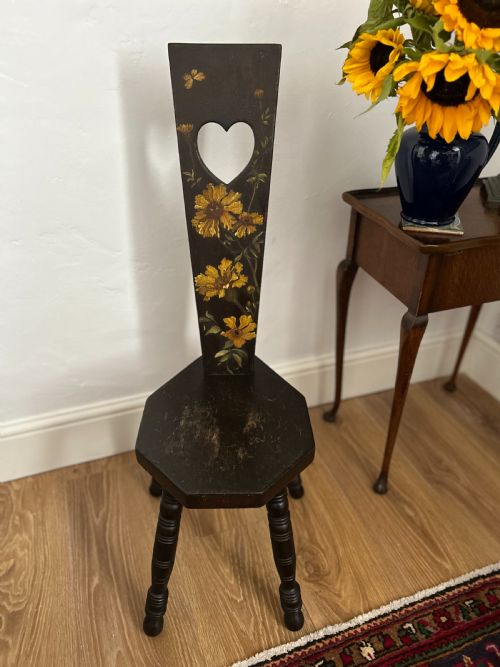


Painted Wood Side Chair
A painted wood side chair brings colour and texture to a room, offering practical seating shaped by centuries of craftsmanship.
Painted Wood Side Chair
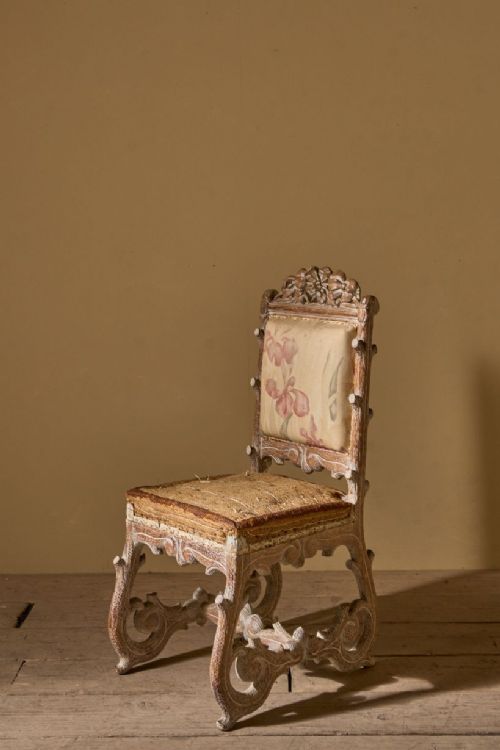
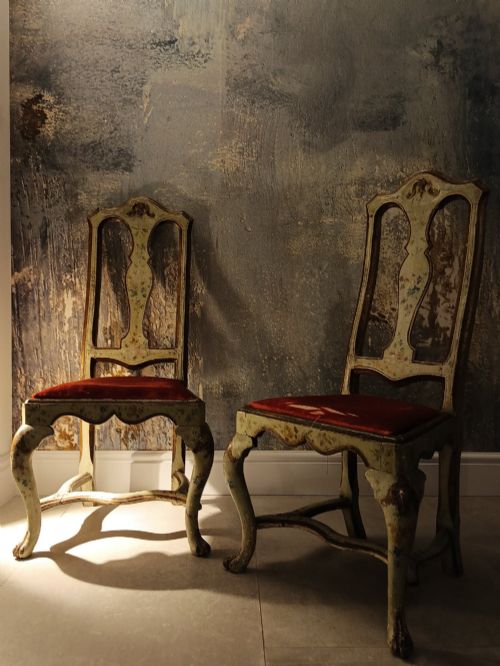
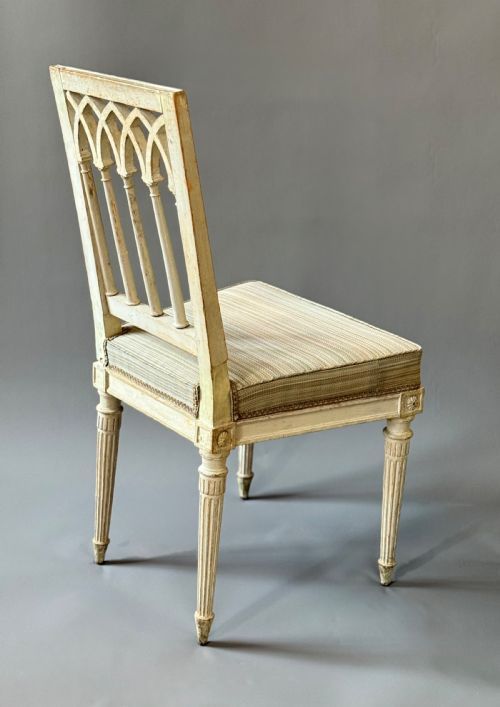
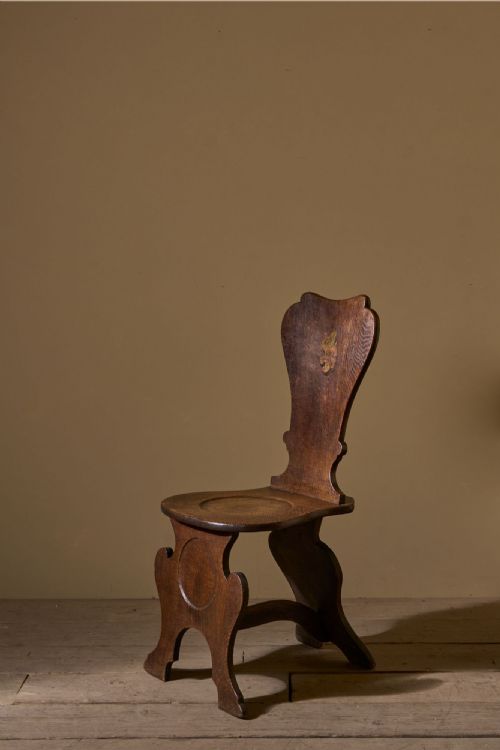
A painted wood side chair is a functional seat designed to stand against a wall or accompany a dining table, defined primarily by its decorated wooden frame. The examples found here span several centuries, including Georgian, Regency, and later periods, featuring forms such as hall chairs, salon chairs, and dining chairs.
The regional origins of these pieces vary widely, encompassing English oak and mahogany designs alongside Italian, French, and Swedish styles. Buyers frequently encounter sets or pairs displaying finishes ranging from muted greys and faux bamboo effects to intricate floral decoration.
Materials and construction methods
Makers utilised native and exotic timbers such as oak, mahogany, ash, and satinwood to build the structural frames of these seats. Joinery techniques relied on traditional mortise and tenon joints to ensure stability over generations of daily use.
Surfaces were prepared with primers before receiving layers of pigment, sometimes highlighted with gold leaf or decorative motifs. Seats frequently incorporated organic materials like cane, rush, or plaited straw, alongside upholstered pads covered in fabric.
Painted Wood Side Chair Retail Price Guide 2026
Typical asking prices for painted wood side chair among the pieces listed under this phrase on Sellingantiques today, from the lower quarter to the upper quarter. They describe what is for sale here now, not the wider market.
Listings feature 18th-century, 19th-century, and early 20th-century periods, utilising materials including paint, fabric, cane, rush, gold leaf, and carved wood.
Evaluating quality and execution
Quality in these pieces rests upon the precision of the initial woodworking and the integrity of the surviving paint surface. Skilled carving on the frame and well-executed decorative motifs distinguish higher-tier examples from simpler utility seating.
The preservation of original or early surface decoration dictates much of the character of each piece. Later repainting alters the historical honesty of an object, whereas undisturbed layered paintwork retains the subtle patina accumulated through years of existence.
The Painted Wood Side Chair Glossary
- Faux bamboo
- A decorative technique where wood is turned and carved to imitate the segmented stalks of natural bamboo. This style gained popularity during the Regency period.
- Sgabello
- A light wooden chair featuring solid slab supports rather than four legs, often heavily carved and historically used in hallways. Examples appear in Italian designs.
- Súgán chair
- A traditional Irish wooden chair fitted with a seat made from twisted straw or hay rope. These pieces represent vernacular rural craftsmanship.
- Parcel gilt
- A method of decorating furniture where specific carved details or highlights are coated in thin gold leaf while the rest of the surface is painted. This finish adds contrast to Regency and 18th-century pieces.
- Gustavian
- A Swedish aesthetic inspired by French neoclassical design, characterised by pale painted finishes and restrained classical ornamentation.
Painted Wood Side Chair: Frequently Asked Questions
Where should I place a painted wood side chair?
These chairs function well in hallways, bedrooms, or occasional seating areas where their decorative surfaces add visual interest without overcrowding the room.
Because many historic examples feature delicate frames or woven seats, they suit low-traffic areas rather than heavy daily dining use.
How do I care for painted wooden surfaces?
Dust the surfaces regularly with a soft, dry cloth to prevent the accumulation of dirt that can dull the pigment.
Avoid using liquid cleaners or modern chemical polishes, as these can soften or strip historical paint layers over time.
Are these chairs comfortable for daily sitting?
Comfort varies significantly depending on the original purpose and seat construction of the specific piece. Upholstered salon chairs or those with padded seats offer softer support than rigid wooden hall chairs.
Many period side chairs were intended primarily for posture and appearance rather than lounging for extended periods.
How can I tell the age of a painted chair?
Dating relies on examining the underlying wood construction, tool marks, and the chemical composition of the paint layers. Stylistic indicators such as Regency faux bamboo or Louis XVI neoclassical motifs provide further clues to the period of manufacture.
Comparison with documented pieces from the 18th and 19th centuries helps narrow down the decade of production.