


Painted Wood Religious Statue
A painted wood religious statue brings centuries of devotion, ritual, and folk expression directly into a room through carved timber and layered pigments.
Painted Wood Religious Statue
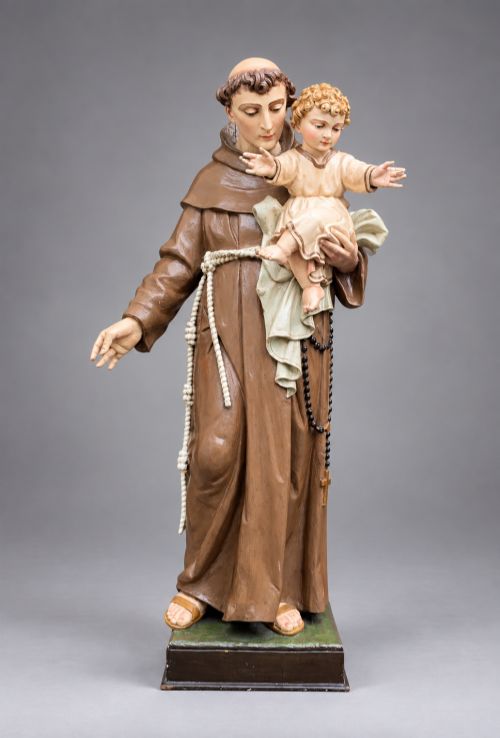
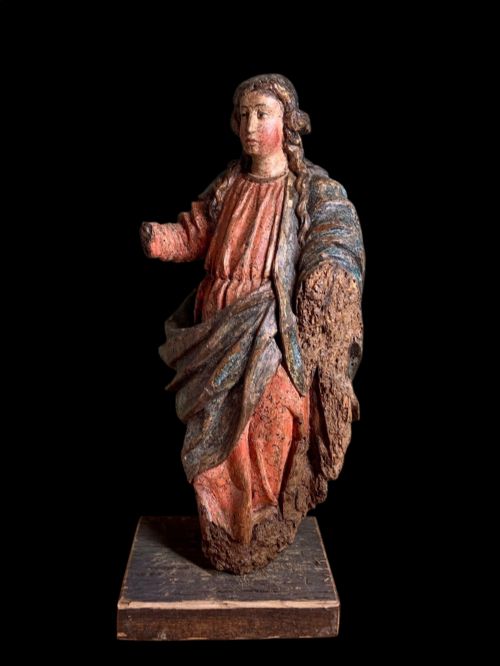
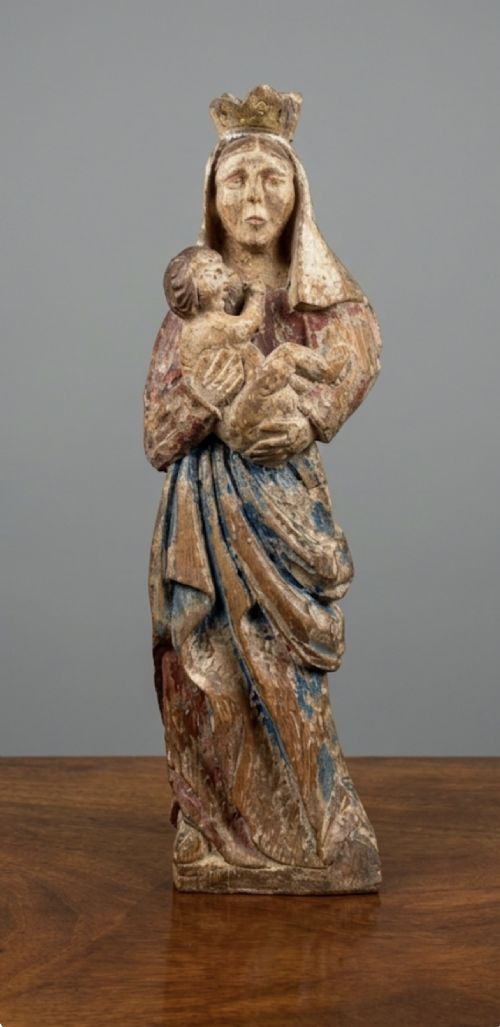
A painted wood religious statue spans multiple centuries of devotional sculpture, ranging from early sixteenth-century carvings to late nineteenth-century folk pieces. These works include figures of saints, Madonnas, cherubs, and home altars created across European and Asian traditions.
The pieces appearing in these listings stretch from intimate domestic shrines to large monumental figures. Buyers encounter Italian and Spanish folk art alongside Baroque and Renaissance interpretations of sacred figures.
Formations vary from solitary standing saints and putti on clouds to complex reliefs and home altars. Each sculpture captures specific regional traditions of faith and woodcarving.
Materials and construction methods
Carved wood forms the structural core of these statues, utilising timber shaped with hand chisels and gouges. Artisans then applied gesso as a smooth preparatory ground over the timber surface before painting.
Polychrome paint, pigments, and occasional gold leaf bring the carved surfaces to life with colour and luminosity. This multi-layered approach allowed makers to depict garments, flesh tones, and decorative attributes with realistic depth.
Several putti spend their time lingering on carved wooden clouds, proving that heavenly infants take flight with considerable theatrical flair.
Distinctions in quality and execution
The survival and application of the original polychrome surface dictate the visual impact of each statue. Skill in pigment blending and the subtle application of gold leaf elevate the piece's artistic merit.
Bohumil Kafka
The Painted Wood Religious Statue Glossary
- Polychrome
- Decorated in a variety of colours. This term describes statues finished with multiple painted pigments on wood.
- Gesso
- A plaster mix applied to wood as a base. It creates a smooth surface for subsequent layers of paint and gold leaf.
- Putto
- A figure of a small chubby male child, often winged. These appear frequently as cherubs or attendant spirits in religious art.
- Home Altar
- A small domestic shrine or structure for private worship. They often house carved religious figures and devotional objects.
- Baroque
- An artistic style marked by ornate detail and dramatic movement. Pieces from this period display dynamic gestures and emotional intensity.
Painted Wood Religious Statue: Frequently Asked Questions
How old are these wooden statues?
The available pieces span several centuries, with examples originating from the sixteenth century through to the early twentieth century. Earlier items often reflect Renaissance or Gothic traditions, while later ones encompass regional folk art.
Date attribution relies on stylistic traits, tool marks, and the ageing of the underlying wood and paint layers. Each era brought distinct approaches to carving proportions and surface decoration.
What is polychrome paint?
Polychrome paint refers to the multi-coloured pigments applied directly to the carved wooden surface of the sculpture. Artisans used these colours to render lifelike skin tones, patterned garments, and gilded highlights.
Over time, these painted surfaces develop a distinct patina through natural ageing. The interplay between the visible wood grain and remaining pigment layers defines the visual character of each piece.
Where were these statues displayed originally?
These sculptures served various devotional functions, ranging from large church altarpieces to intimate home shrines and domestic altars. Figures of saints and the Madonna were central to both public liturgy and private prayer.
Domestic pieces were designed for personal contemplation within the home. Larger sculptures often occupied prominent positions within religious institutions or community gathering spaces.
How should I care for a painted wooden sculpture?
Maintenance requires stable environmental conditions with minimal fluctuations in humidity and temperature. Excessive dryness can cause the wood to split, while moisture threatens the adherence of the gesso and paint layers.
Dusting should be performed gently using a soft, dry brush without chemical cleaning agents. Keeping the sculpture away from direct sunlight protects the historic pigments from fading.