

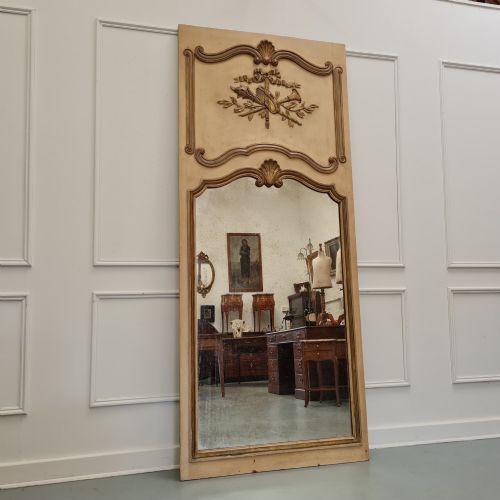


Painted Wood Pier Mirror
When choosing a painted wood pier mirror, you select a tall vertical glass designed to sit between windows or above low furniture.
Painted Wood Pier Mirror
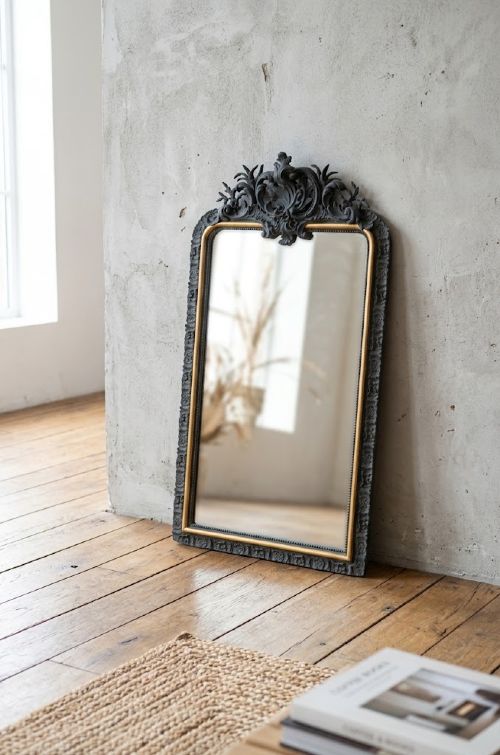
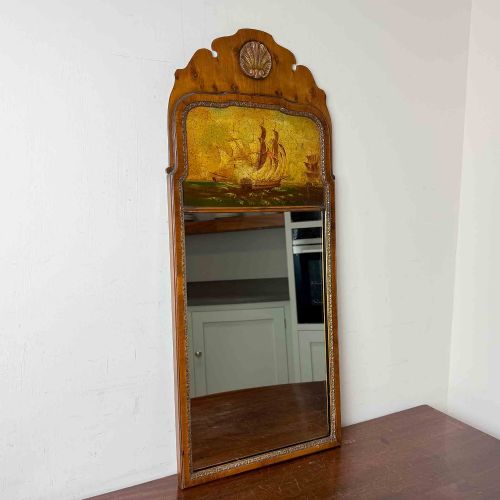
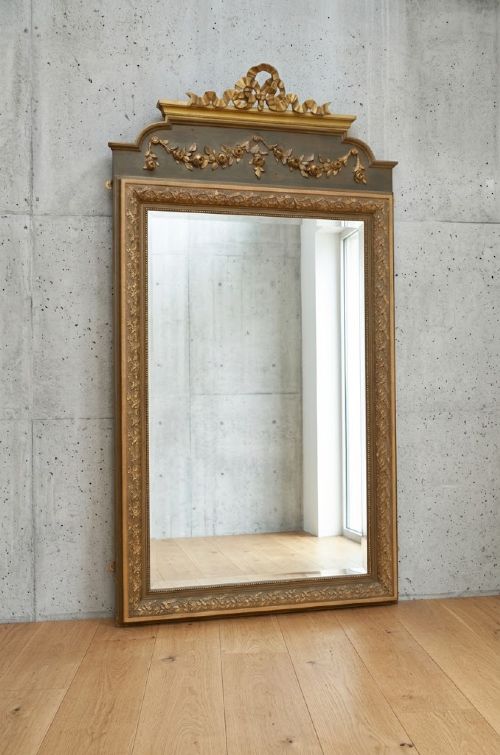
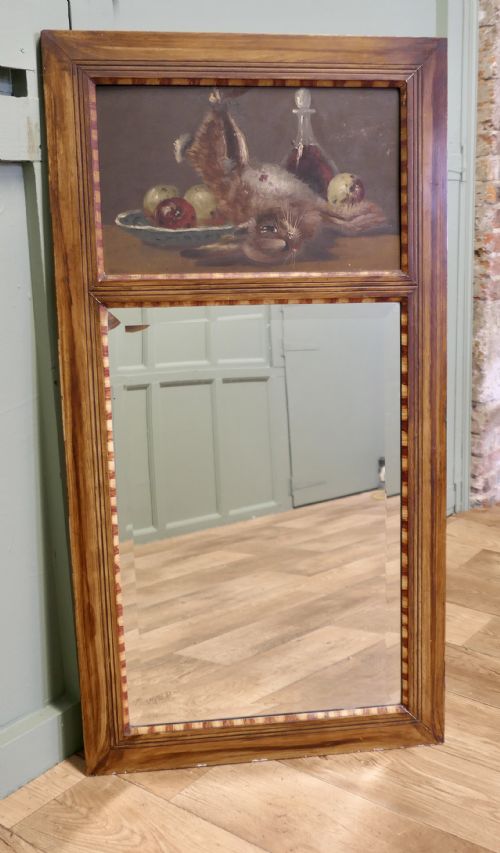
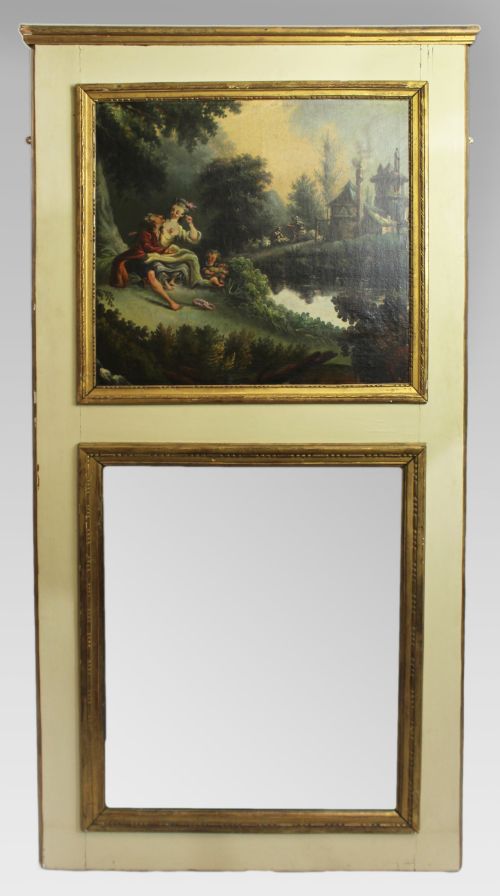
A painted wood pier mirror brings height and reflected light to a room, historically positioned on the narrow wall between two windows. On this page, French 19th century examples dominate, often incorporating carved wood and gesso frames alongside integrated oil paintings or pastoral panels.
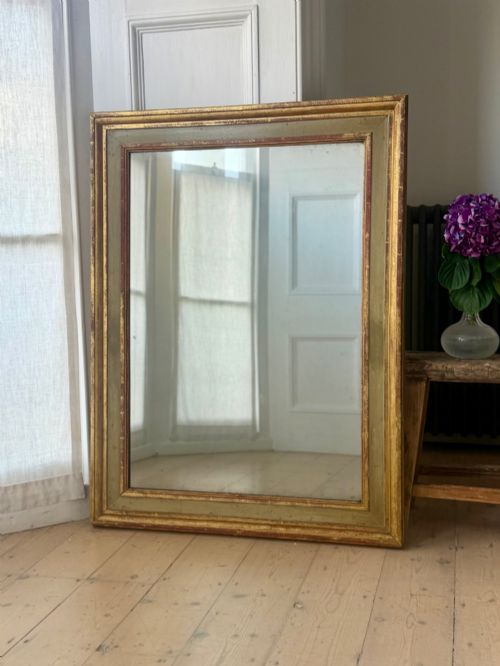
Buyers encounter architectural trumeau forms as well as simpler country house styles, spanning the eighteenth century through to the early twentieth century. Many pieces combine painted surfaces with parcel gilding or silvering to highlight carved details.
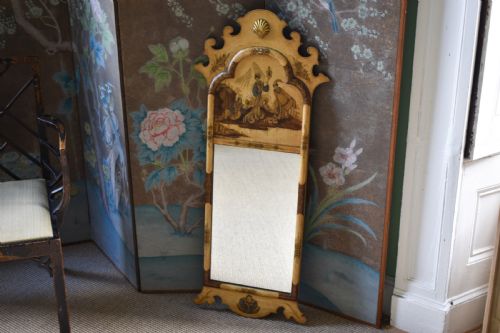
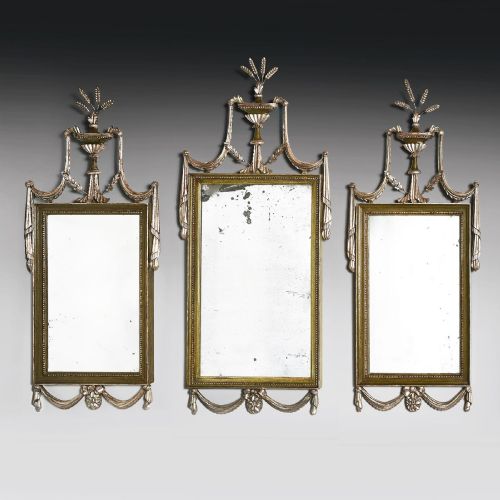
Regional variations include Italian rococo and neoclassical designs alongside English country pieces and French provincial formats. These mirrors function equally well above console tables or as standalone wall centrepieces.
Materials and construction methods
Craftsmen shaped frames from solid timber such as pine, walnut, or mahogany, applying layers of gesso to build up intricate relief decoration before painting. Gilding and parcel gilt accents were frequently added using gold leaf over bole to catch the light.
Early glass plates were hand-silvered, sometimes showing the characteristic imperfections of mercury backing, whilst later examples utilise standard silvered plate. Frames were assembled using traditional joinery, often featuring carved ribbon crests, rope twist mouldings, or architectural columns.
Several mirrors retain their original pastoral oil paintings, offering a landscape view that remains permanently fixed indoors.
Distinguishing quality across pieces
The sophistication of the hand-carved gesso relief and the crispness of the underlying wooden mouldings dictate the tier of craftsmanship. Original painted surfaces with untouched patination and integrated oil paintings hold greater depth than later over-painted restorations.
Proportion and scale drive desirability, with taller arched or shaped top formats demonstrating greater architectural ambition. The survival of original glass plates and uncompromised structural framing separates standard utility items from exceptional decorative examples.
Gillows Of Lancaster
The Painted Wood Pier Mirror Glossary
- Trumeau
- An architectural mirror panel that incorporates an oil painting or decorative panel within the upper section of the frame. These were built specifically to fit narrow wall spaces between room openings.
- Gesso
- A plaster-like mixture applied to wooden frames to provide a smooth surface for subsequent carving, painting, or gilding. It allows for crisp relief details that wood alone cannot hold easily.
- Parcel Gilt
- A decorative treatment where selected portions of a painted or stained surface are highlighted with gold leaf. This technique creates contrast between the base colour and the gilded highlights.
- Mercury Glass
- An early type of mirror plate produced by pouring a mercury and tin amalgam behind the glass. It typically exhibits characteristic clouding, speckling, and a warm reflective depth.
- Pier Glass
- A tall mirror specifically proportioned to hang on the wall space between two windows. They frequently sit directly above matching console tables.
Painted Wood Pier Mirror: Frequently Asked Questions
How do I hang a heavy pier mirror?
Due to the substantial weight of carved wood and gesso frames combined with thick glass plates, these mirrors require professional wall anchoring into structural studs or masonry.
Weight distribution must be managed carefully using heavy-duty mirror brackets secured directly to the wooden framing rather than relying on decorative hanging loops.
Where should I place a pier mirror at home?
Traditionally hung between windows to bounce natural light deeper into a room, these tall mirrors work equally well above console tables, sideboards, or low mantelpieces.
Their vertical proportions help visually elevate low ceilings while adding a strong focal point to hallways and principal reception rooms.
How do I date an antique pier mirror?
Examine the construction of the wooden backboards, joining techniques, and the characteristics of the glass plate to determine the period. Hand-carved gesso motifs, original paint patination, and mercury silvering typically point towards eighteenth or nineteenth-century origins.