
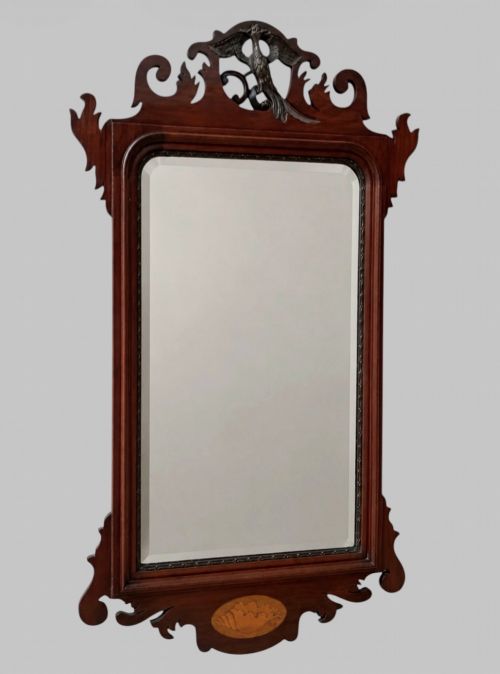
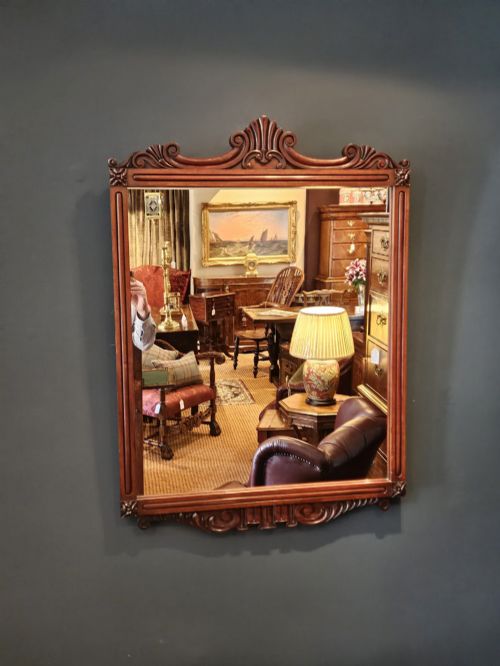

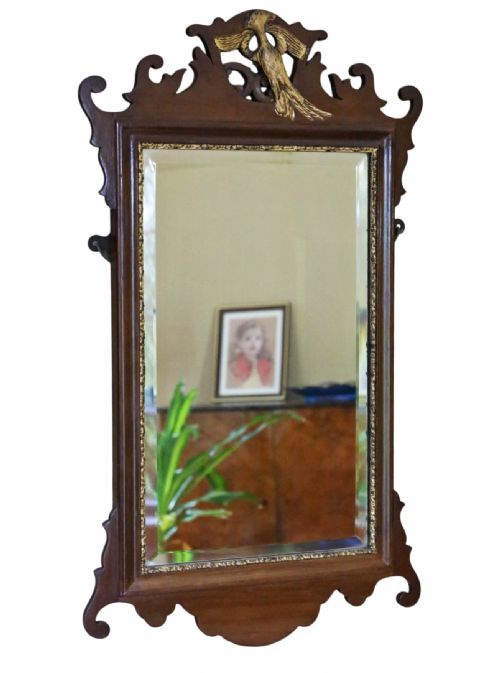


Edwardian Carved Crest Mirror
An edwardian carved crest mirror brings light and period character to a room through traditional craftsmanship and decorative timber framing.
Edwardian Carved Crest Mirror
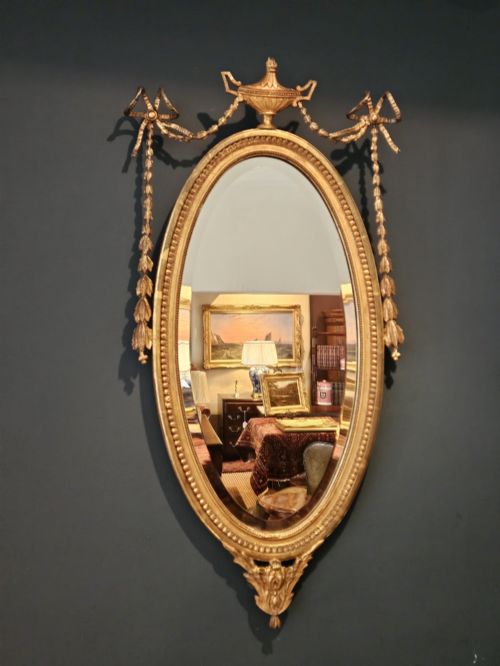
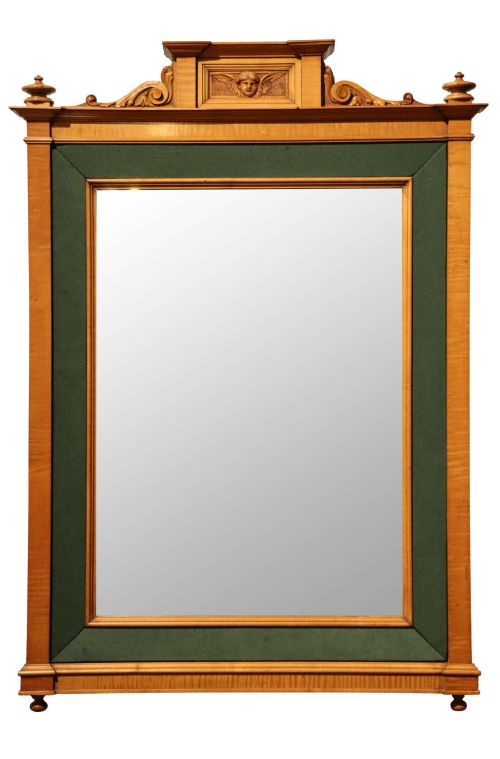
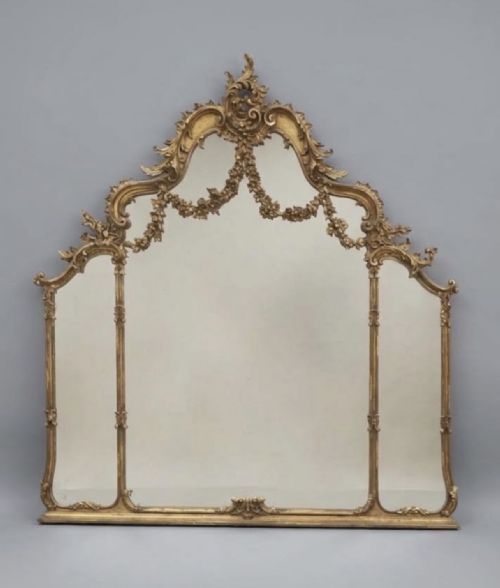
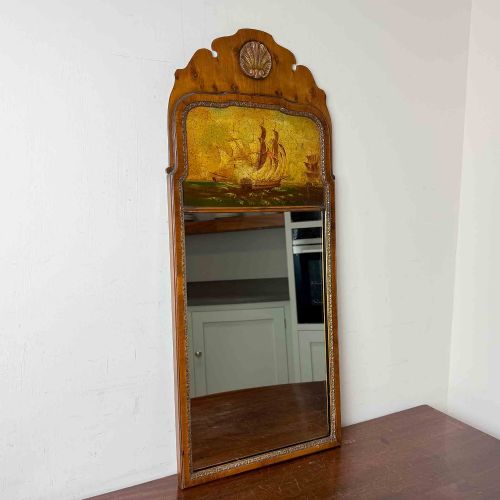
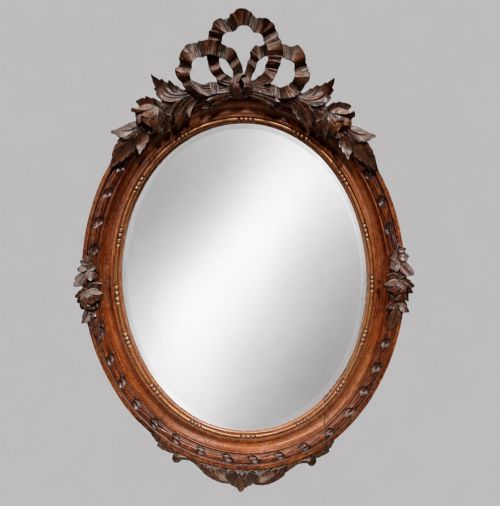
When you search for an edwardian carved crest mirror, you are looking at wall-hanging and overmantel pieces defined by elaborate cresting and period timber frames. The selection on this page spans the Edwardian era alongside related Victorian and revival designs from the late nineteenth and early twentieth centuries.
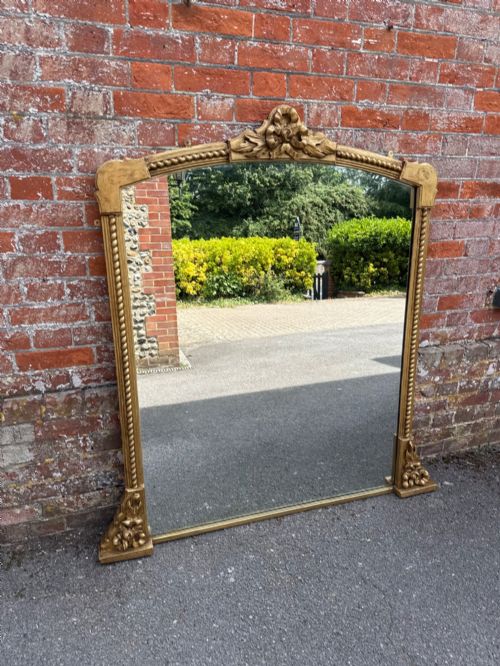
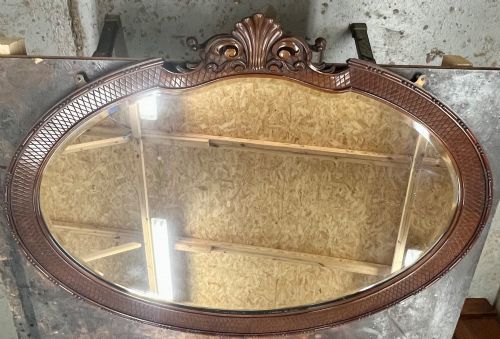
The forms range from large architectural overmantels designed for placement above a fireplace to compact wall-hanging ovals and fretted dressing mirrors. Walnut, mahogany, yew wood and painted pine provide the structural foundations, often paired with giltwood crests and decorative mouldings.
How they were made
Makers shaped solid timber and applied composition ornament to create ornate crests and moulded frames. Giltwood and gold leaf were frequently layered over gesso to catch the light, whilst other examples relied on inlaid veneers and fret-cut fretwork.
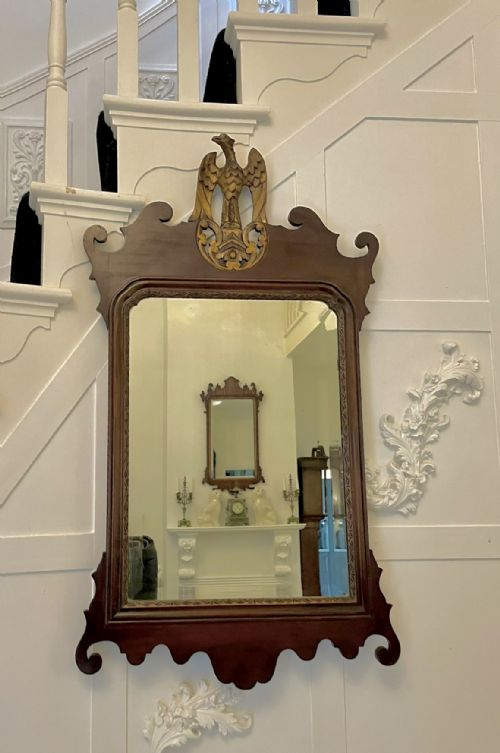
Mirrors incorporated flat glass plates, often with bevelled edges, secured into heavy wooden backs. Painted finishes, parcel gilt detailing and carved wooden motifs such as eagles or putto cresting completed the construction.
Certain mirrors feature carved putto cresting or perched wooden eagles keeping watch from the very top of the frame.
What varies in quality
The distinction between standard domestic mirrors and finer examples lies in the depth and crispness of the carved ornament. Hand-carved wooden crests and detailed composition mouldings show sharper definition than mass-produced alternatives.
Subtlety of finish also separates the tiers, with well-preserved gilding, clean bevel-edged mirror glass, and sound timber frames demonstrating superior workshop standards during assembly.
The Edwardian Carved Crest Mirror Glossary
- Giltwood
- Timber that has been coated with gold leaf or metallic paint to create a luminous decorative surface. This finish is typical on formal wall and overmantel mirrors.
- Gesso
- A plaster-like mixture applied to wood frames as a base for gilding and detailed moulded relief work. It allows for intricate scrollwork and crest designs.
- Overmantel
- A large mirror specifically proportioned to hang on the wall directly above a fireplace mantelpiece. These pieces often feature wide landscape formats and ornate cresting.
- Fretwork
- Openwork ornamentation cut out of thin timber boards using a fret saw. It frequently appears on the frames of wall mirrors from the Edwardian and revival periods.
- Bevel-edged
- Glass whose outer perimeter is cut and polished at an angled slope to catch the light. This technique adds depth and refinement to the mirror plate.
Edwardian Carved Crest Mirror: Frequently Asked Questions
Where should an overmantel mirror hang?
These large mirrors traditionally sit directly above a fireplace mantelpiece to reflect light and anchor the room's proportions.
They also function effectively on principal living room walls when secured firmly to wall studs to support their weight.
How do I identify an Edwardian mirror?
Edwardian pieces often combine lighter timber frames like mahogany or inlaid woods with classical revival motifs and refined crests.
They frequently display softer lines and less heavy ornamentation compared to earlier Victorian counterparts.
Can these mirrors be cleaned safely?
Use a soft, dry cloth to remove dust from the carved wooden frame and gilt crest without disturbing the finish.
Apply glass cleaner sparingly to a cloth rather than spraying directly onto the mirror to protect old wooden backing joints.
What is fret-cut decoration?
Fret-cut decoration involves piercing thin wooden panels in geometric or scroll patterns using fine-bladed saws.
This technique creates lightweight, intricate framing borders around the central glass plate.
Are these mirrors heavy?
The combination of solid timber, gesso moulding, and thick glass plates creates substantial weight in larger overmantel and floor-standing formats.
Proper wall fixings and brackets rated for heavy loads are essential for secure hanging.