



Painted Wood Entry Table
A painted wood entry table brings character and a functional surface to a hallway, drawing the eye with its historic finish.
Painted Wood Entry Table
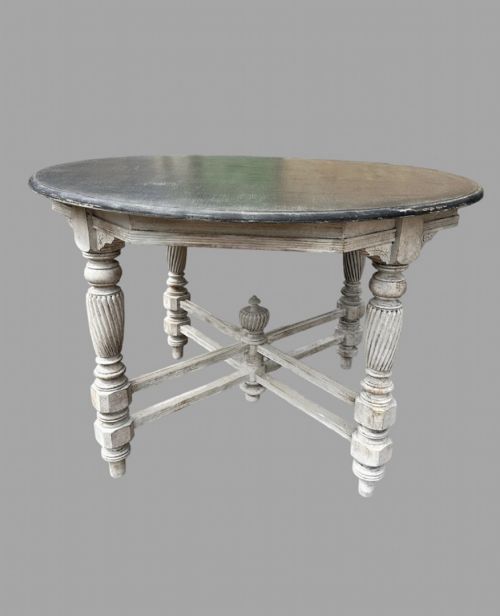
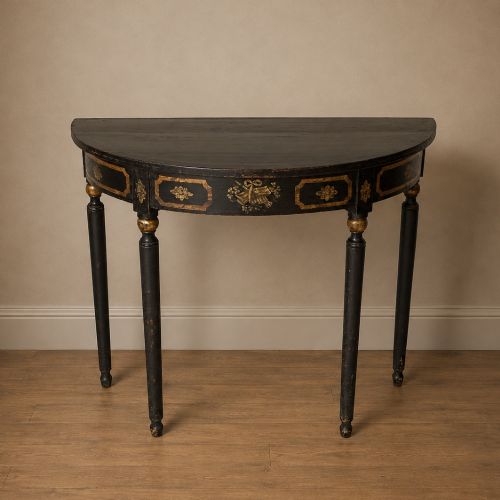
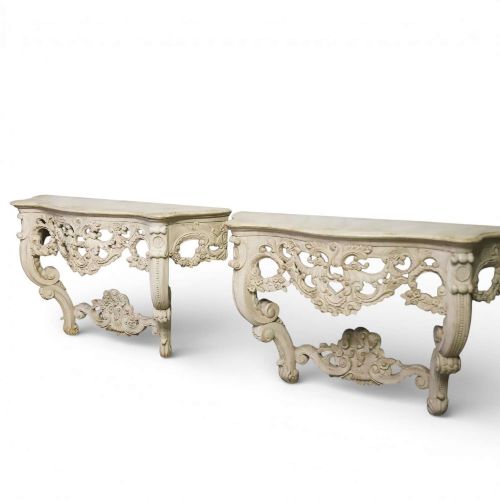
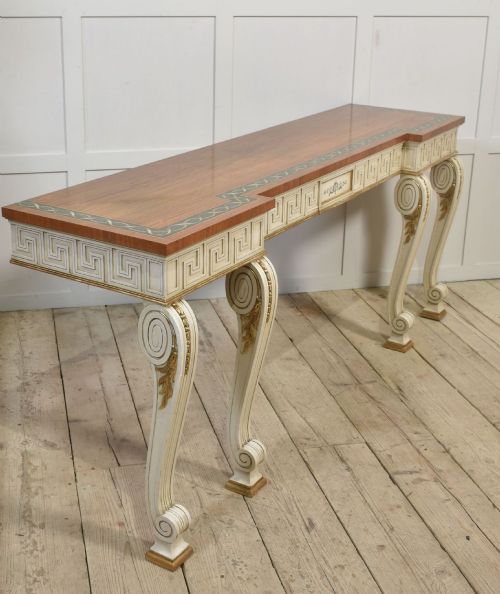
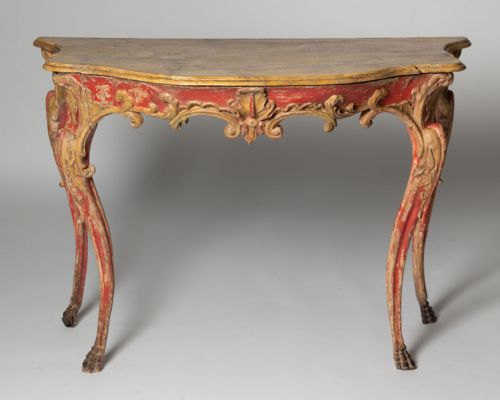
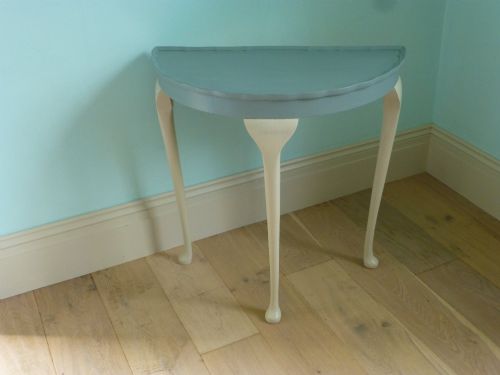
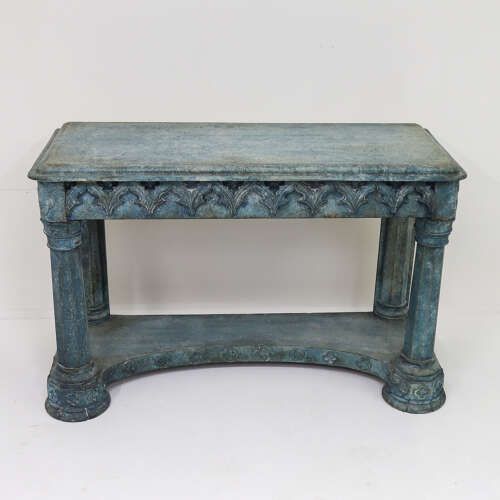
A painted wood entry table comprises console tables, centre tables, and side tables designed for halls and reception rooms. These pieces appear in forms such as demi-lune shapes, serpentine fronts, and rectangular surfaces.
The selection ranges from 18th-century Italian neo-classical examples to 19th-century French chateau and English country designs. Buyers frequently encounter demi-lune console tables intended to sit flush against a wall in a narrow space.
Origins span across Europe and beyond, including Swedish, German, Spanish, Dutch, and Chinese export pieces. Regional styles reflect local tastes, from folk-made constructions to formal neoclassical proportions.
How they were made
Construction relies on timber and carved wood frameworks finished with paint, gesso, and gold leaf. Many surfaces employ layered paint schemes in antique white, black, or red lacquer.
Top surfaces often incorporate contrasting materials, notably marble or faux porphyry. Carving and parcel gilt details accent the wooden structures, aligning with Regency, Rococo, and Gothic tastes.
Regional variations represented include French, Italian, Swedish, German, Spanish, Dutch, and English workshop traditions.
What varies in quality
Quality rests in the harmony of the proportions and the depth of the painted surface. Hand-carved details and original finishes hold more distinction than later decorative updates.
The choice of top material elevates a piece, with heavy marble slabs and specialist faux porphyry finishes marking the upper tier of craftsmanship.
The Painted Wood Entry Table Glossary
- Demi-lune
- A half-moon shape designed to stand flat against a wall. This profile suits narrow hallways and entryways.
- Console table
- A table supported by wall brackets or legs, historically designed to stand against a wall. They frequently serve as decorative side furniture in entrance halls.
- Gesso
- A plaster-based material applied to wood to provide a smooth surface for painting or gilding. It allows for crisp carved relief details.
- Faux porphyry
- A decorative paint technique imitating the rich purple-red igneous rock used in antiquity. It creates an opulent surface on tabletops.
Painted Wood Entry Table: Frequently Asked Questions
Where should I place a painted wood entry table?
These tables find their natural home in hallways, corridors, and entrance spaces where floor area is restricted. Their shallow depth allows them to sit against a wall without obstructing passage.
Pair the surface with a mirror or a lamp to create a welcoming focal point for visitors entering the home.
How do I care for a painted wooden surface?
Dust the surface regularly with a soft, dry cloth to prevent the accumulation of dirt. Avoid harsh chemical cleaners that can damage historic paint layers or disturb underlying gesso.
Use coasters and felt pads beneath objects placed on the table to protect the finish from moisture and scratches.
What is the difference between a console and a centre table?
Console tables are built to stand flat against a wall and often rely on that placement or wall brackets for complete stability. Centre tables are freestanding and finished on all sides to sit in the middle of a room.
In modern settings, both types function well in entryways depending on the available floor space.
How can I identify a neoclassical style table?
Neoclassical pieces draw inspiration from classical Greek and Roman design, showing restrained ornamentation and symmetrical proportions. Look for straight tapered legs, urn motifs, and balanced architectural lines.
These designs often feature neutral paint finishes and marble inserts that emphasise classical geometry.