




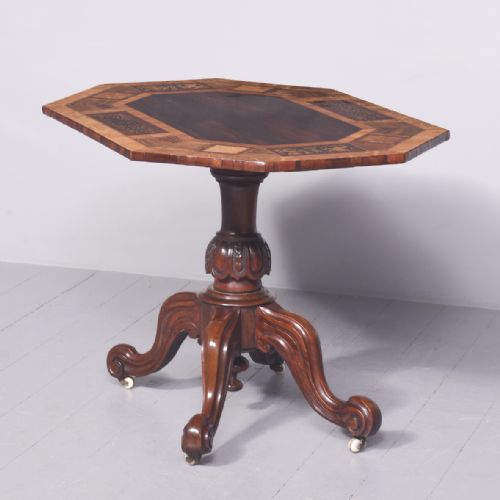


Scroll Leg Centre Table
Scroll leg centre table pieces are freestanding timber surfaces designed for the middle of a room, bringing rich nineteenth-century woods and curved supports to domestic interiors.
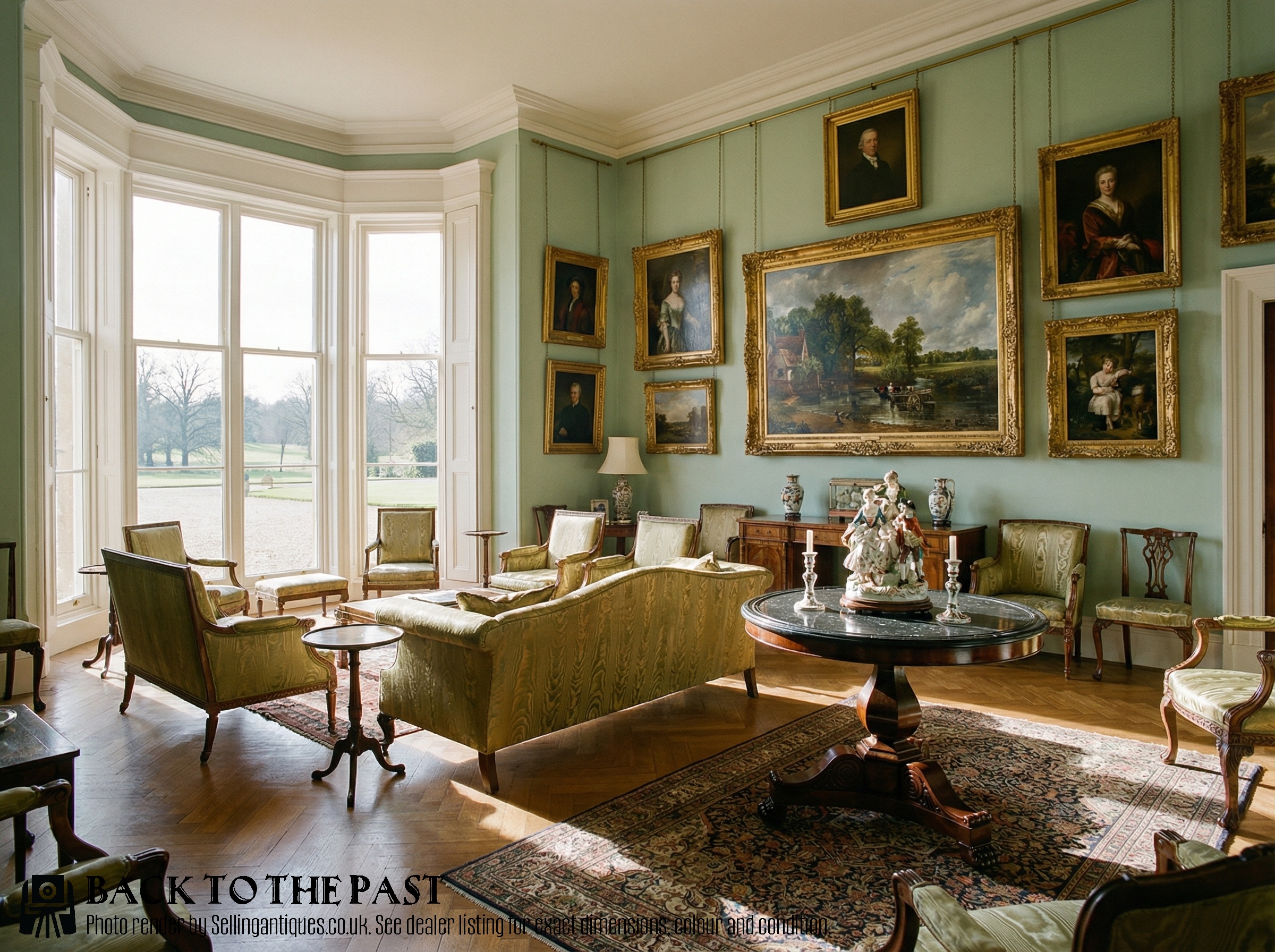
Scroll Leg Centre Table
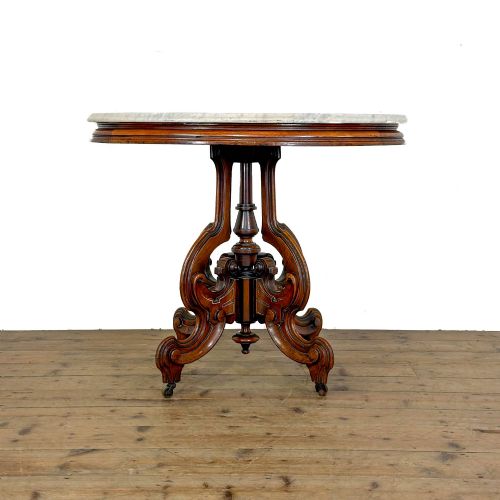
A scroll leg centre table is a freestanding piece designed to sit away from walls, allowing access from all sides within a room. When you examine a scroll leg centre table, you encounter forms that span dining, breakfast, side, and occasional tables from the nineteenth century.
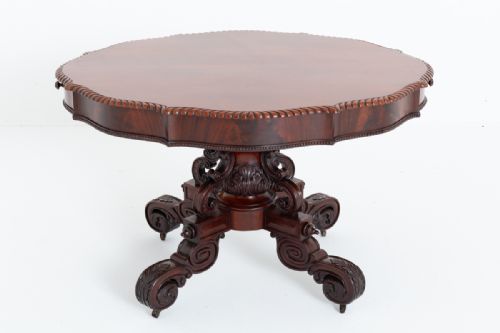
The pieces on this page originate predominantly from the Victorian period, alongside examples associated with Regency and French styles. Makers and designers utilised shapes such as circular, oval, octagonal, and shaped tops supported by pedestals or distinct leg configurations.
Materials span dark and figured timbers including mahogany, walnut, burr walnut, and rosewood, occasionally finished with marble, leather, brass, or ceramic details. These tables function historically as central display pieces or functional surfaces in principal reception rooms.
Assessing Quality and Execution
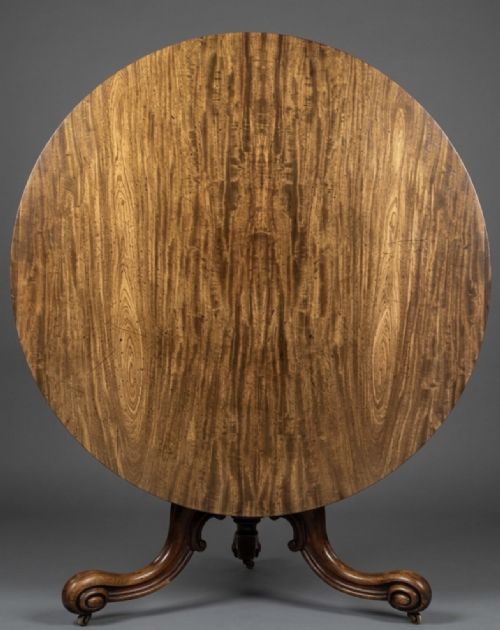
Quality in these tables rests upon the selection of timber veneers and the crispness of the carved scroll work on the legs or pedestal. Superior examples display carefully matched grain patterns across the top, particularly on burr walnut and mahogany surfaces.
Construction methods determine longevity, visible in the tight joinery of the pedestal base and the seamless integration of shaped table tops. Tables featuring supplementary materials like brass mounts or inlaid satinwood demonstrate higher levels of craftsmanship.
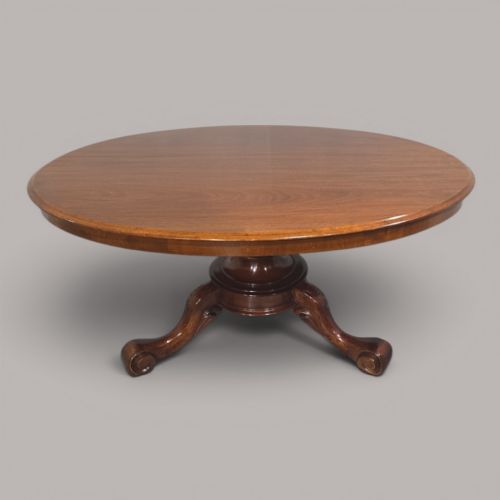
Object forms include dining, breakfast, side, occasional, and coffee tables, alongside French gueridons with marble, leather, and ceramic accents.
The Scroll Leg Centre Table Glossary
- Centre table
- A freestanding table designed to be viewed from all sides and placed in the middle of a room rather than against a wall.
- Burr walnut
- A prized timber veneer obtained from the deformed growth or knot of a walnut tree, displaying highly intricate, swirling grain patterns.
- Gueridon
- A small French table, typically round and supported by a single central pillar or several legs, often used for display.
- Breakfast table
- A nineteenth-century table with a round or oval top, frequently featuring a tilt-top mechanism supported by a heavy pedestal base.
- Regency
- An architectural and design period spanning the early nineteenth century, characterised by classical restraint and influence from ancient Greece and Rome.
Scroll Leg Centre Table: Frequently Asked Questions
Where should I place a centre table?
A centre table is designed to stand free in the middle of a room rather than pushed against a wall. It functions well in large entrance halls or principal reception spaces where people can walk around it.
Ensure there is adequate clearance on all sides for movement. These pieces naturally draw the eye as focal points.
What is the difference between a centre table and a side table?
Centre tables are finished on all sides and built to be seen from any angle in an open space. Side tables are generally constructed to sit flat against a wall or in a corner.
While both offer surface space, centre tables carry decorative detailing around the entire base and underframe.
How do I care for nineteenth century polished wood?
Keep wooden surfaces away from direct sunlight and heat sources to prevent the timber from drying out or splitting. Use coasters and felt pads under objects placed on the surface.
Apply a traditional beeswax polish occasionally to nourish the grain. Avoid chemical sprays that can damage historic finishes.
Can I use a breakfast table for dining?
Victorian breakfast tables were originally built for morning meals and informal gatherings in private rooms. Their circular tops and sturdy pedestal bases make them practical for everyday dining.
Check the height and leg clearance of the specific table to ensure comfortable seating. Many include tilt mechanisms for convenient storage when not in use.