



Victorian Gueridon Table
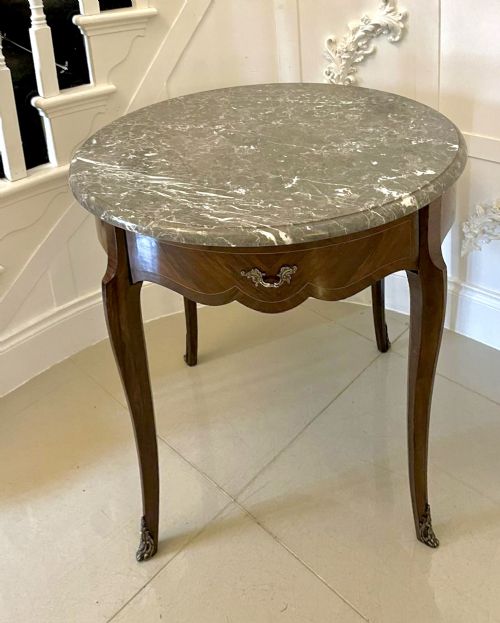
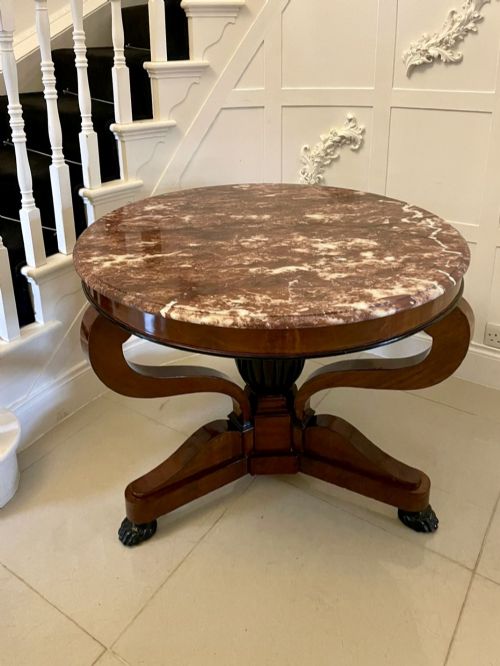
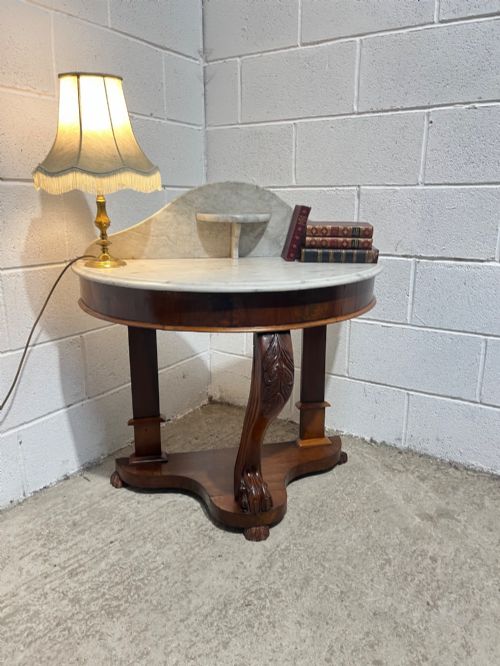
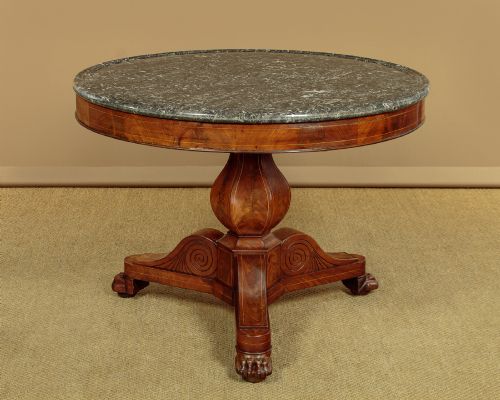
A victorian gueridon table brings French elegance to an English room, offering a round marble top raised on a sturdy pillar or tripod base.
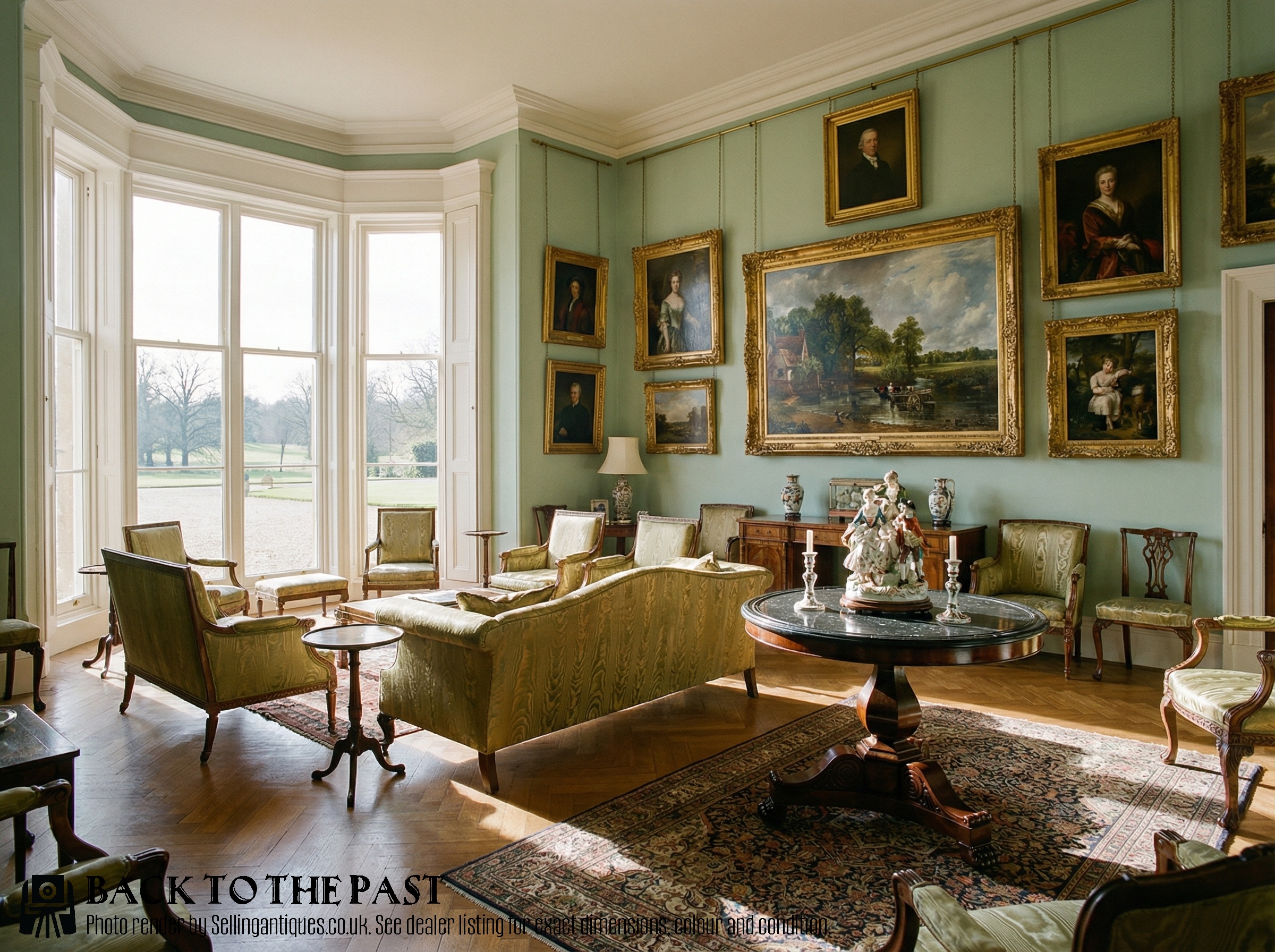
Victorian Gueridon Table
A victorian gueridon table typically takes the form of a freestanding centre table, lamp table, or occasional table designed for display in a principal room. These pieces combine British Victorian manufacturing periods with French stylistic influences, ranging from French Chateau and Rococo to Second Empire and Restoration designs.
Buyers looking at this page are most likely to meet circular marble-topped tables supported by walnut, mahogany, kingwood, or carved wooden stands such as tripod bases and swan supports. The listings also include related console tables, plant stands, and pedestals with crouching figure or blackamoor supports from the nineteenth century.
How they were made
Cabinet makers constructed the frames of these tables using dense timbers like mahogany, walnut, and kingwood, often enhanced with intricate marquetry inlay, carving, or gilded brass mounts and ormolu. Tops were predominantly formed from heavy white or grey marble, fitted precisely into wooden rims.
Specialised techniques such as specimen marble work brought together geometric patterns of varied stone, while structural supports ranged from simple tripod legs to elaborate carved figural pedestals.
The listings span the nineteenth century, featuring materials such as marble, mahogany, brass, walnut, grey marble, kingwood, ormolu, and inlay.
What varies in quality
The distinction between ordinary and superior pieces rests on the choice of materials and the crispness of the carving or brass mounts. Tables featuring solid kingwood, detailed figural carving, or complex specimen marble tops demonstrate a higher level of workshop skill than plain mahogany versions.
Proportion and stability also mark out better examples, where the heavy marble top is balanced securely by a well-weighted pillar and robust feet.
The Victorian Gueridon Table Glossary
- Gueridon
- A small circular table on a central pillar or pedestal, originally introduced in France during the seventeenth century. Victorian examples frequently paired these stands with marble tops for use as lamp or centre tables.
- Ormolu
- Gilded bronze or brass mounts applied to furniture for decorative effect. This technique was widely utilised in French-influenced nineteenth-century pieces to highlight structural joints and borders.
- Specimen marble
- A decorative surface composed of various coloured marbles arranged in geometric patterns or pictures. It requires considerable skill from the stonemason to cut and fit each precise piece.
- Kingwood
- A dense, richly figured timber native to Brazil, prized by cabinet makers for veneer and inlay. Its dark brown colour and distinctive lighter grain markings made it popular for high-end Victorian and French-style tables.
- Tripod table
- A piece supported by three legs branching from a central pillar. This form provides a stable base for heavy stone tops without requiring four legs.
Victorian Gueridon Table: Frequently Asked Questions
Where should I place a gueridon?
These tables work well as freestanding centre pieces in a hallway or as lamp tables beside a sofa.
Because they are finished on all sides, they do not need to be pushed against a wall.
Are marble tops removable?
Most marble tops simply rest in the wooden frame under their own heavy weight rather than being screwed down.
This makes moving the table easier, provided two people lift the stone separately from the base.
How do I clean the marble?
Wipe the surface with a soft, damp cloth using mild, neutral soap and dry it immediately with a lint-free towel.
Avoid acidic cleaners like vinegar or lemon juice, which can etch and dull polished stone.
What is the difference between a gueridon and a centre table?
A gueridon specifically denotes a round table on a central pillar, whereas a centre table can take square, rectangular, or oval shapes on various support structures.
In nineteenth-century usage, the terms often overlapped when describing French-style pieces.