







French Chateau Centre Table
These french chateau centre table pieces bring stately presence and working surface to a room, drawing the eye with carved detail and marble tops.
French Chateau Centre Table
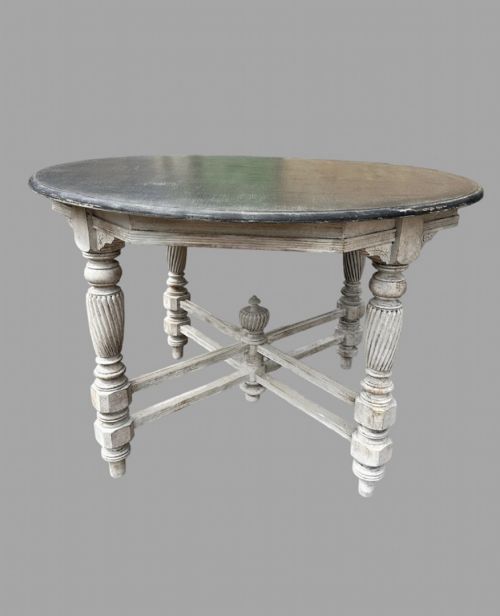
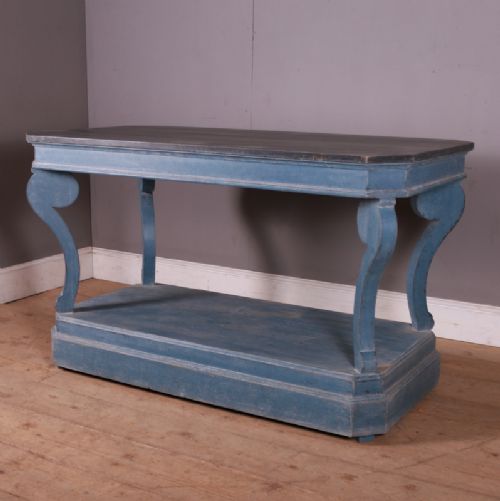
A french chateau centre table embodies the grand domestic scale of continental reception rooms, designed to stand free in the middle of a space rather than against a wall. The examples collected under this search phrase span the nineteenth and early twentieth centuries, drawing on Victorian, Louis XVI, and Rococo revival idioms alongside Italian neoclassical design.
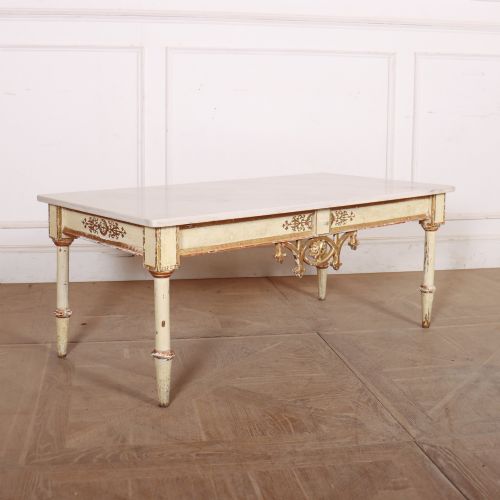
The primary forms on this page include substantial centre tables, lower coffee tables adapted from earlier formats, side tables, writing tables, and occasional stands. Buyers will regularly encounter pieces featuring shaped wooden frames, decorative carving, and polished stone surfaces suited to prominent display.
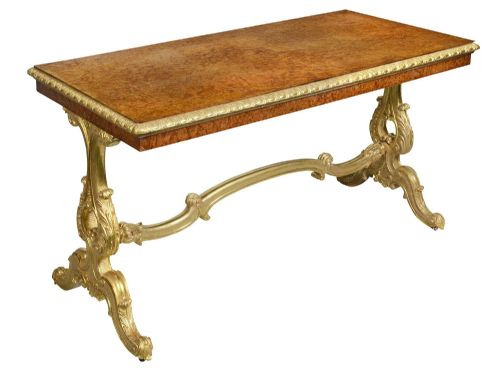
Origins represented in the current selection range from English cabinetmakers influenced by French tastes, such as Holland and Son, through to continental workshops working in painted wood, giltwood, and walnut. These tables served as architectural anchors in formal interiors, offering both decorative presence and a functional central platform.
Materials and construction
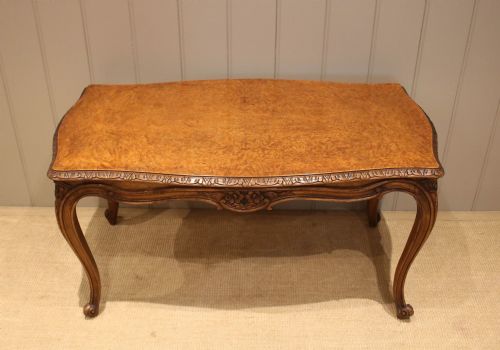
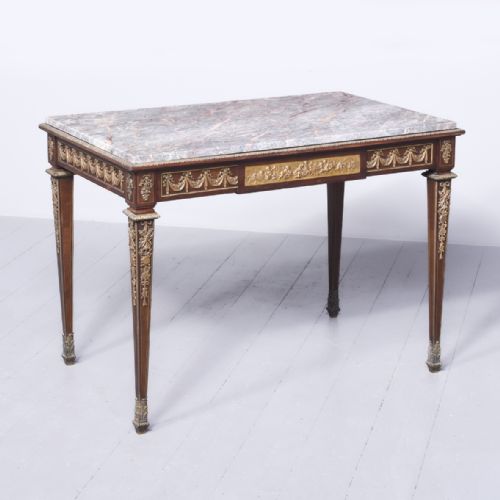
Makers utilised timber frames of walnut, mahogany, and oak, frequently applying gesso, paint, or surface gilding to achieve the desired decorative finish. Burr walnut veneers and intricate marquetry inlays provided rich surface grain and pattern on tabletops and friezes.
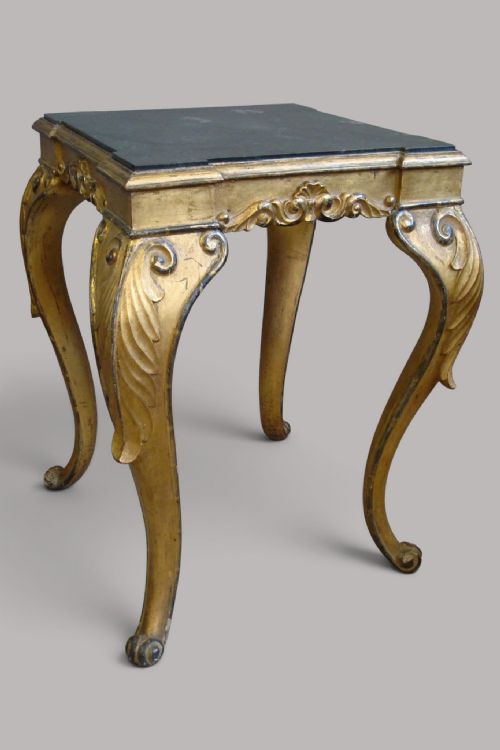
Heavy marble slabs form the tops of numerous pieces, requiring sturdy underlying joinery and structural support from carved aprons and legs. Brass and ormolu mounts punctuate corners and legs, while hand carving shapes the wooden cabriole or tapered supports characteristic of the period.
French Chateau Centre Table Retail Price Guide 2026
Typical asking prices for french chateau centre table among the pieces listed under this phrase on Sellingantiques today, from the lower quarter to the upper quarter. They describe what is for sale here now, not the wider market.
Swans make a sculptural appearance on at least one table frame, proving that nineteenth-century joiners enjoyed talking to their waterfowl.
Assessing quality in period tables
Quality rests in the crispness of hand carving on the wooden frames and the depth of figure in burr walnut or mahogany veneers. Finer pieces demonstrate precision in marquetry work and secure fitting of heavy marble tops into rebated wooden surrounds.
The integration of cast ormolu mounts and the weight and finish of the timber ground separate standard regional production from workshop pieces associated with notable makers. Structural integrity in the legs and aprons determines how well a table withstands daily freestanding use.
Holland and Son
The French Chateau Centre Table Glossary
- Ormolu
- Gilded bronze mounts applied to furniture for decorative accent. This technique was widely used in French neoclassical and revival cabinetmaking.
- Marquetry
- Fitted pieces of wood veneer assembled to form decorative pictures or geometric patterns on a surface. It requires considerable skill to cut and lay without gaps.
- Cabriole leg
- A furniture leg that curves outward in an arc and then bends inward toward the foot, echoing animal limbs. It is a defining feature of Rococo and revival furniture.
- Giltwood
- Wood that has been coated with thin gold leaf or powder over a prepared gesso ground. It creates a bright reflective surface common on formal tables.
French Chateau Centre Table: Frequently Asked Questions
What is a french chateau centre table?
A french chateau centre table is a freestanding piece of furniture designed to be viewed from all sides in the middle of a room, rather than pushed against a wall. These tables often feature decorative timber frames, carved details, and marble or wooden tops.
The examples on this page date from the nineteenth and early twentieth centuries, drawing on French and Italian design traditions such as Louis XVI revival and Rococo styles.
How were these tables used originally?
In large reception rooms and salons, centre tables served as decorative focal points where lamps, ornamental objects, or books could be displayed. Some variants functioned as writing tables or central architectural anchors for the room.
Their freestanding nature meant they required finished detail on every side, making them central to the social and visual layout of historic interiors.
How do I style a centre table today?
Placing a table in the middle of a room creates a natural circulation path and breaks up large floor areas. You can use the surface for curated arrangements of books, ceramics, or lamps, letting the carved wood and marble tops remain visible.
Ensure there is sufficient clearance around the table for movement, allowing the piece to function as both a practical surface and a visual anchor.
How can I tell different periods apart?
Distinguishing between periods involves looking at the carving styles, hardware, and structural woods. Mid-nineteenth century pieces often show Victorian revival influences with heavy carving, while later nineteenth and early twentieth-century examples lean into lighter Louis XVI neoclassical lines.
Materials also offer clues, as giltwood and heavy ormolu mounts typically align with more formal revival pieces, whereas painted finishes often point to later decorative adaptations.